 There are not many things that will grow in my zone that I will not at least try to grow if I have the space and resources to do so. I really like to grow fruits and vegetables, particularly those that I am familiar with from when I was young. They are just as productive now as they were then. The only problem is that I do not know how to cook. I can freeze, can or pickle large quantities of produce, but cooking is something that I leave to experts.
I notice that almost all garden columns or blogs include recipes for the produce grown in home gardens. Mine does not. Except for a few recipes for pickles, jams and jellies, I just do not have any recipes that I would share.
When I get big winter squash, I really do not know what to do with them. I sometimes give them away to those who will cook them. Sometimes, I just cut them up, cook them, and then freeze what I can not eat. They are fun to grow, and I really like how I can keep them around for such a long time before I get around to cooking them; but they would be so much easier to work with if they were small like summer squash.
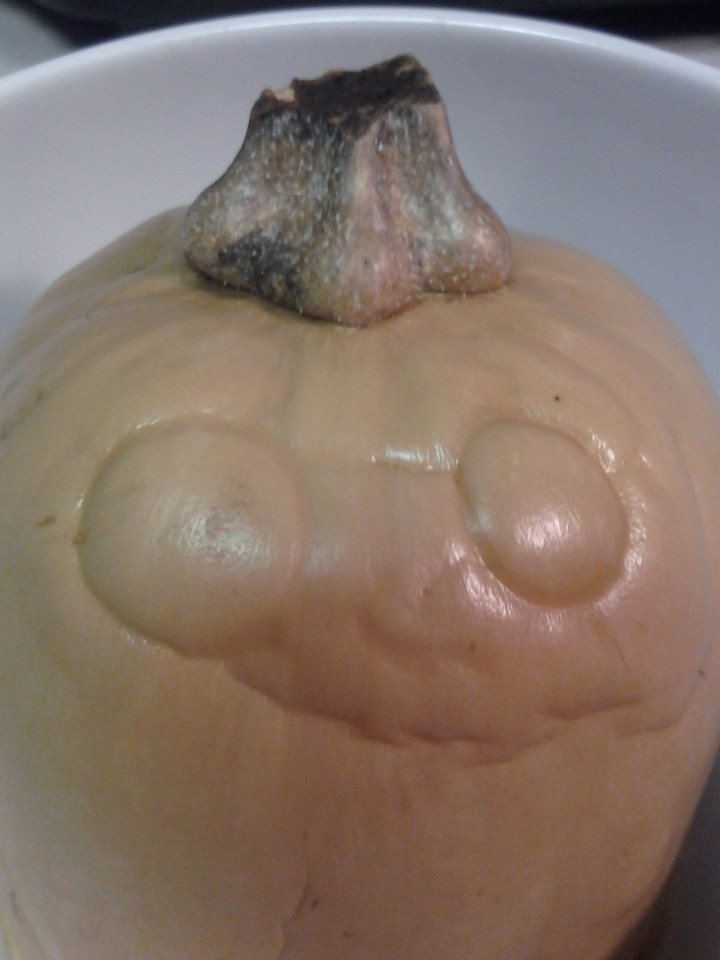
This weird squash was on the kitchen counter for a long time. Before it was cooked, it was very smooth, without any lumps, bumps or beady eyes. It was not ridiculously big. In fact, I only cut in half and ate it in two days. At the time, I was in a situation where I had a microwave oven in which to cook it, so I did so for several minutes. With a bit of butter, the first lower half was quite good, and separated nicely from the outer skin. I cooked the upper half in the same manner on the second day. It was making weird noises as it cooked, as if it were very unhappy about something. It was hissing and spitting for the several minutes that it was in there.
When I opened the door, this is what I found staring back at me from a small puff of steam! It looked angry! Apparently, it did not like to be cooked that way; or perhaps it was just a hateful squash. Regardless, it was rather creepy, and difficult to enjoy. I peeled the outside away and discarded it, but could not help to think that it was still watching me from the trash can with those beady tan eyes and crooked mouth! I do not think that I will be growing this variety again.
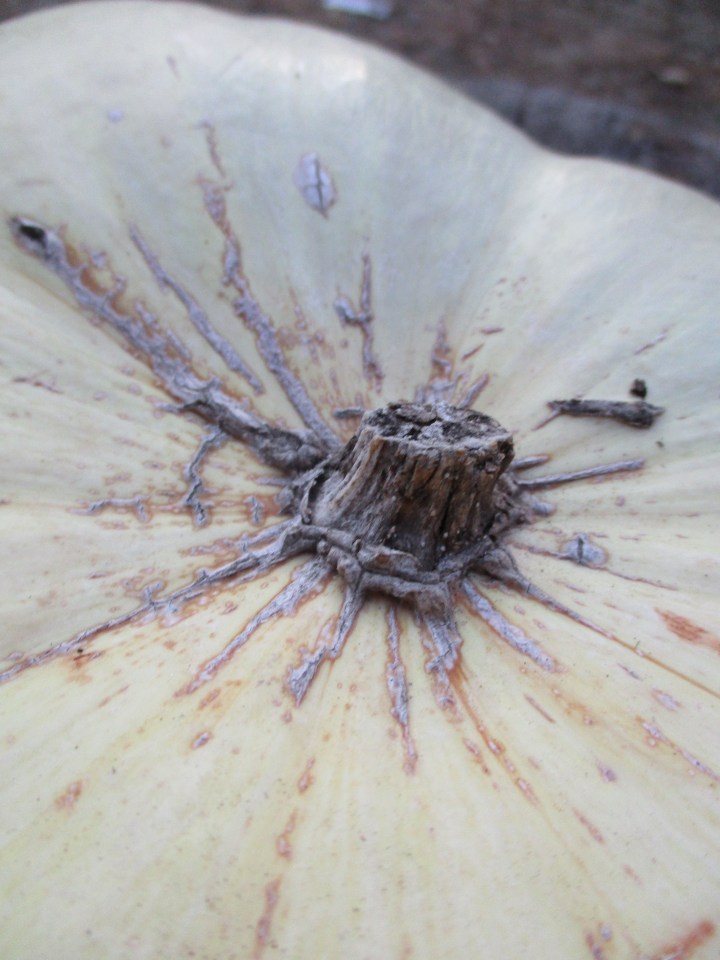 Things might have gone better for Cinderella if she had taken a Buick to the ball instead of that detrimentally punctual pumpkin coach. It was on such a tight schedule! It might have seemed like a good idea on the way too the ball. It certainly was a unique ride. The problem was that it made no accommodation for Cinderella’s tardiness at midnight. It adhered firmly to its own strict schedule.
 Tony Tomeo