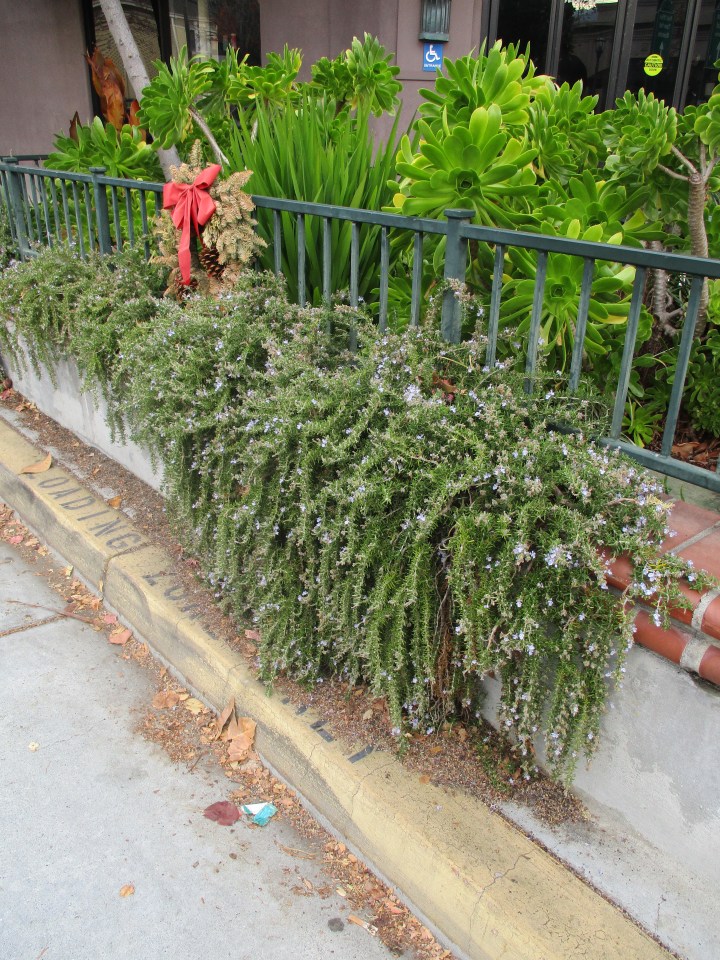
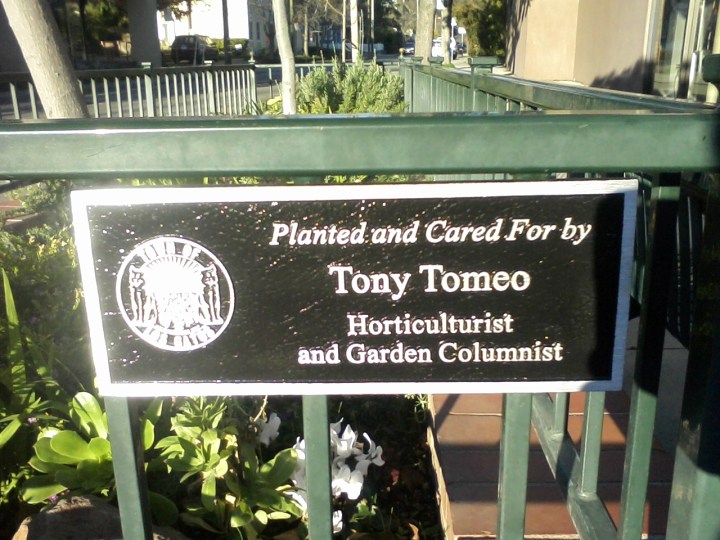
 My little planter box downtown that I wrote about last week and earlier must be the weirdest garden that I have ever tended to. ( https://tonytomeo.wordpress.com/2017/11/04/my-tiny-downtown-garden/ ) I certainly enjoy it. There are not many horticultural problems that can not be remedied by simply removing plants that should not be out there anyway. The weirdness though is just . . . weird . . . and unique to the situation of a tiny garden in such a public space.
I have had weird neighbors before. Hey, I live where I do. Well, a resident of Nicholson Avenue saw me working on my garden one day and stopped to tell me what I should plant in it for compatibility with the color scheme of the front garden of her home a block and a half to the west. You see, she payed a lot of money for her home, and I payed nothing for my planter box that belonged to the town that her expensive taxes sustain. I just smiled and nodded my head until she drove away. I then continued to plant flowers that were compatible with the color scheme of Mike’s Bikes, the bicycle store that my planter box happens to be in front of.
Being in front of a bicycle store, the planter box collects quite a bit of discarded bicycle parts. Just about any part that can be purchased in the store and changed on the sidewalk out front has ended up in the planter box. I also find nice beer and wine glasses discarded by patrons of local bars. A worse aspect of the proximity to bars is that those who imbibe excessively sometimes barf into the planter box. Speaking of puddles, a contractor who was doing some tile work at Mike’s Bikes dumped a bucket of slurry from the mortar into my planter box, leaving a puddle of mortar that solidified into a round concrete disc about two and a half feet wide and an inch and a half thick. Cannas, housleeks, aloes and nasturtiums were all encased, and had to be removed with the concrete!
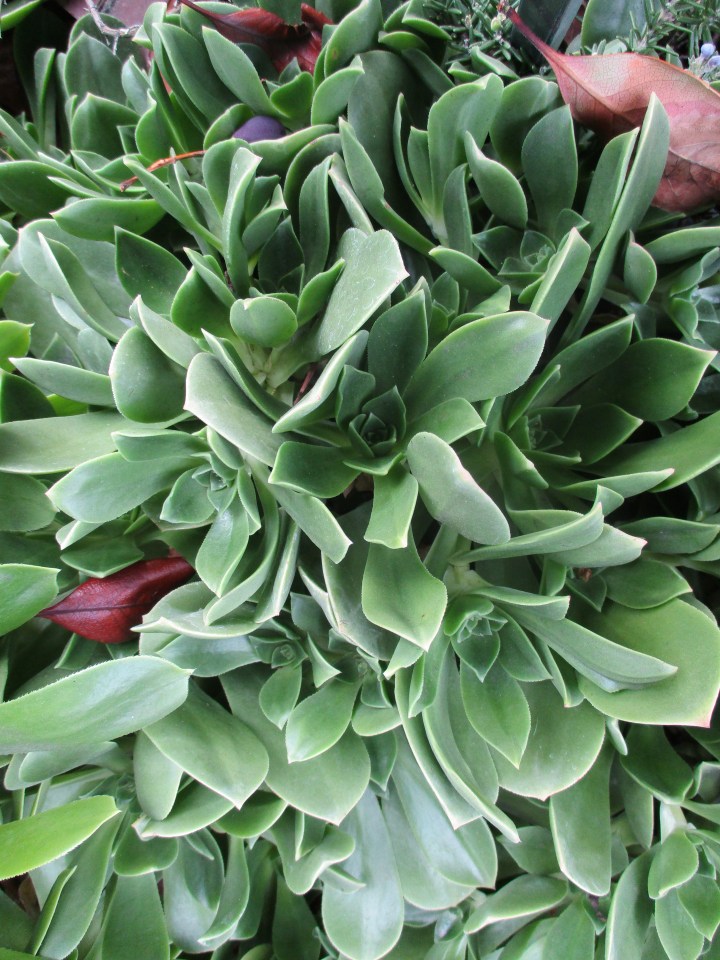
I prefer to grow flowers that are small and abundant rather than larger flowers that would be missed when they get taken. My bronze houseleek has been trying to grow as long as the green houseleeks, but gets broken off and taken as soon as it starts to look good. I figured that nasturtiums were too abundant to be missed if someone too a few. Yet, I noticed that so many were getting taken that the blank flower stalks were more evident than developing flowers. When I confronted someone who was taking them and putting them in a big plastic bag full of plucked nasturtium flowers, she told me that they are edible. So? I certainly do not mind sharing; but if anyone wants to eat THAT many of them, they should grow them in their own garden!
On another occasion, someone stopped to tell me that rosemary is a useful culinary herb, as if it were not something that a horticulturist would know about, and then yanked a huge chunk of it from the meticulously tailored rosemary that cascaded so nicely over the wall of the planter box before I could chase him away. Another chunk of rosemary was burned by the exhaust of a car that was left idling in the loading zone while a client of Mike’s Bikes was inside retrieving his bicycle from the repair shop. The drama just never ends.
But there is one oddity that I neither mind nor tamper with. It has not become a problem yet. On the north side of the planter box, adjacent to the backside of a park bench, pebbles and small stones have been gathering for a few months. Some disappear as new ones arrive, so that there are never too many at any one time. At first, I thought that they were just some of the detritus that someone flung aside after sweeping out their car while parked at the curb. Yet, there is no other trash or debris associated with the stones. They happen to be in the only spot that has been undefiled by discarded bicycle parts, glasses or barf. They seem to be placed quite deliberately in small groupings and patterns. They reminded me of those small stones that some people like to place in gravel Zen Gardens. I really do not know why they are there; but if someone is able to enjoy this little garden downtown in that way, than I probably should not interfere. The pebbles remain.
 Right next door to my downtown planter box, (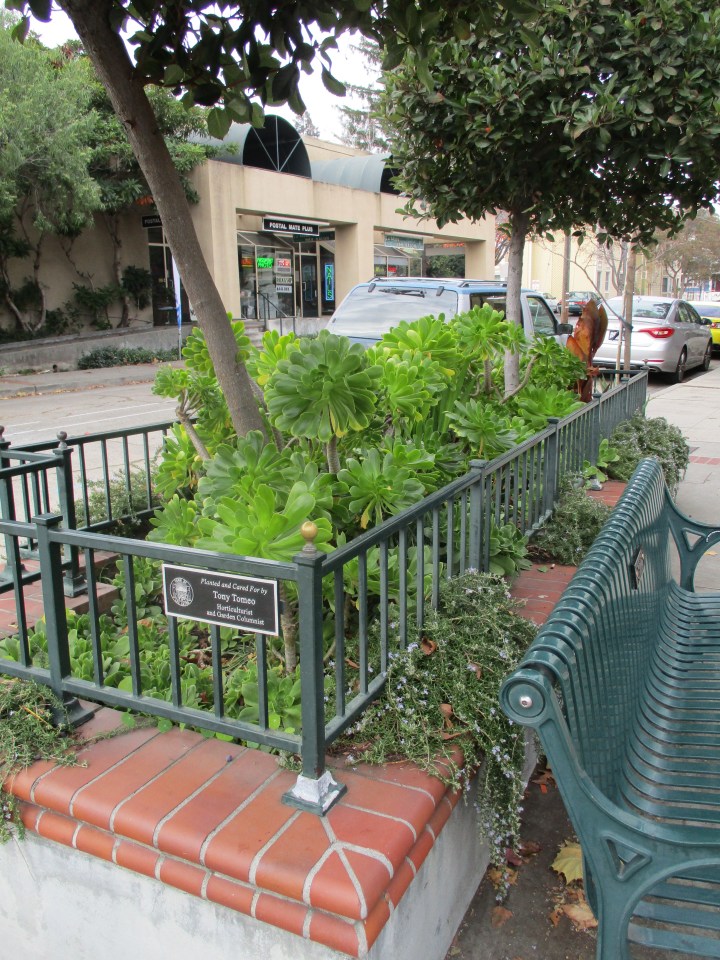



 Main Street and Santa Cruz Avenue are the two main streets of downtown Los Gatos. They are the main shopping district, and the part of town that everyone sees. As much as things have changed, a bit of the familiar remains. Gilley’s Coffee Shoppe is still next door to the (rebuilt) Los Gatos Cinema. The brick La Canada Building miraculously survived the Earthquake. The simple deco Park Vista Building across the street is just as elegant now as it was a century ago. There are still concerts in the Town Plaza in summertime, shaded by the Town Christmas Tree that gets lit up in December.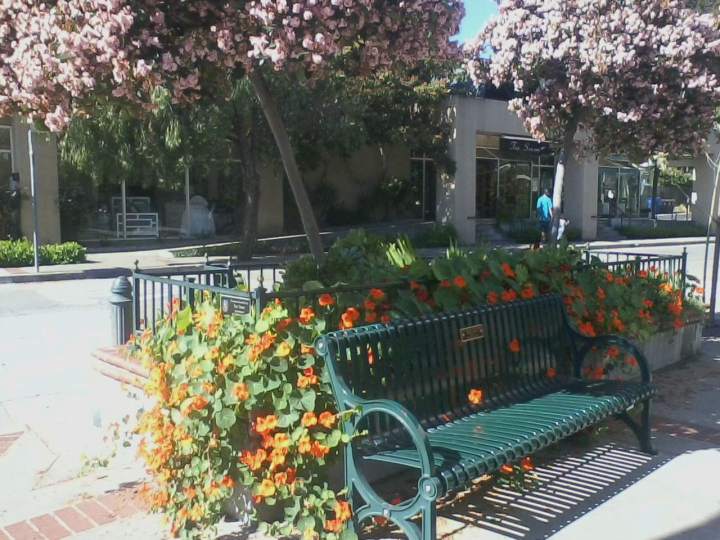
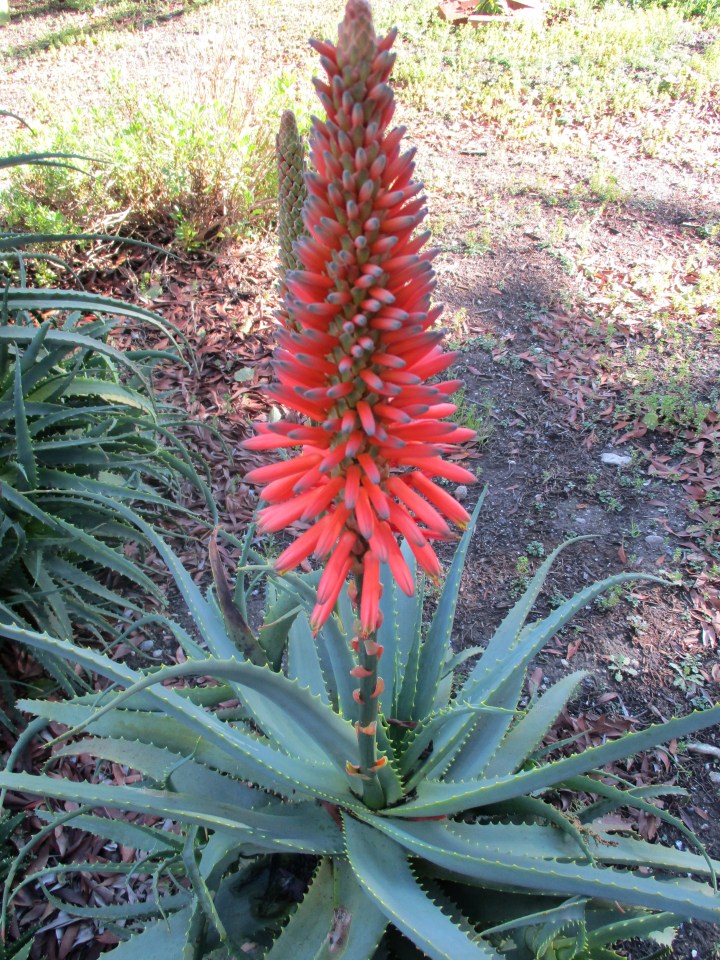 We really should be growing more of what grows well here. This is as relevant in other regions as it is in the Santa Clara Valley. Some regions have a lot more to choose from. There are always limitations too. Tropical plants do not survive the winters of New England. Apples and pears want more winter chill than they can get in San Diego.
