Six on Saturday: Self-Replication

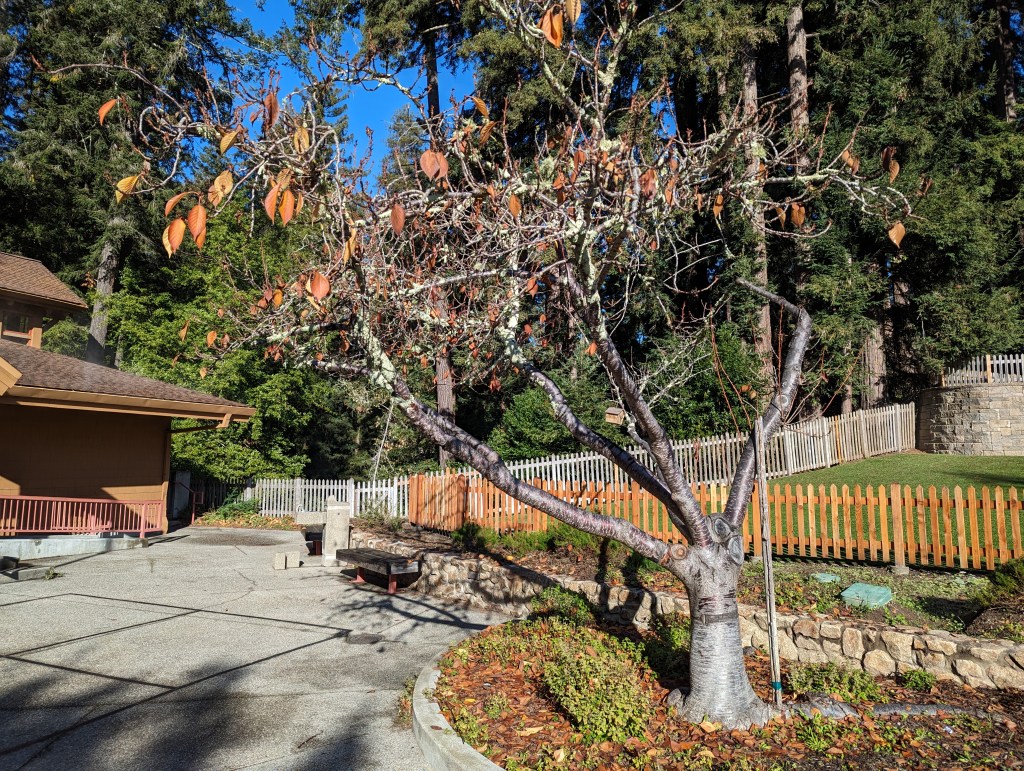
Kwanzan flowering cherry is spectacular as it blooms for early spring. Only one inhabits our landscapes, and of course, it is dormant and defoliated until next spring. I took these six pictures of it anyway, to demonstrate that it is deteriorating fast, but could be able to replace itself before it succumbs to decay completely. Unfortunately though, it will likely be removed before it is able to do so, so that we can install a purple leaf plum within this particular situation instead. I only assist with this self-replication process because of the very unlikely possibility that replacement with another different tree may never actually happen. It has been delayed for years.

1. This flowering cherry tree has been deteriorating for the past several years. Several big limbs have died, leaving its canopy disfigured and lopsided. Its right half is nearly gone.

2. Only shiners remain where some of the major limbs that died were removed from the trunk. If this tree were to survive any longer, these shiners would decay before they heal.

3. Incidentally, this tree is not grafted. Suckers from the roots are indistinguishable from growth of the canopy. Bark of exposed roots is indistinguishable from bark of the trunk.

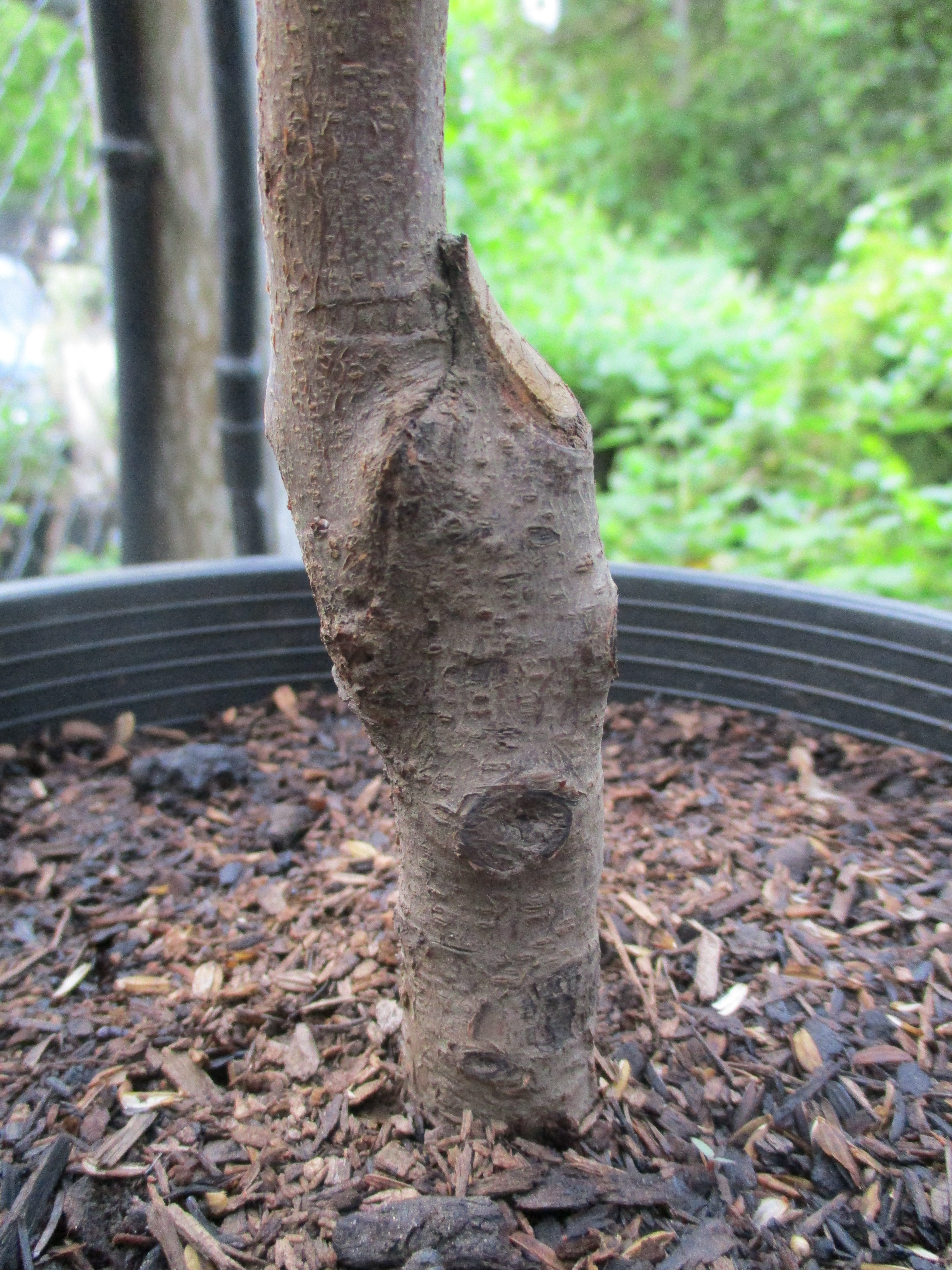
4. Therefore, this sucker is genetically identical to the original tree. The roots have been generating suckers for several years. All but this one were removed. Instead, it is bound.

5. The binding stake is nailed to one of the major limbs of the original canopy, as well as to a big root below. Damage to the limb is unimportant. It will be removed soon anyway.

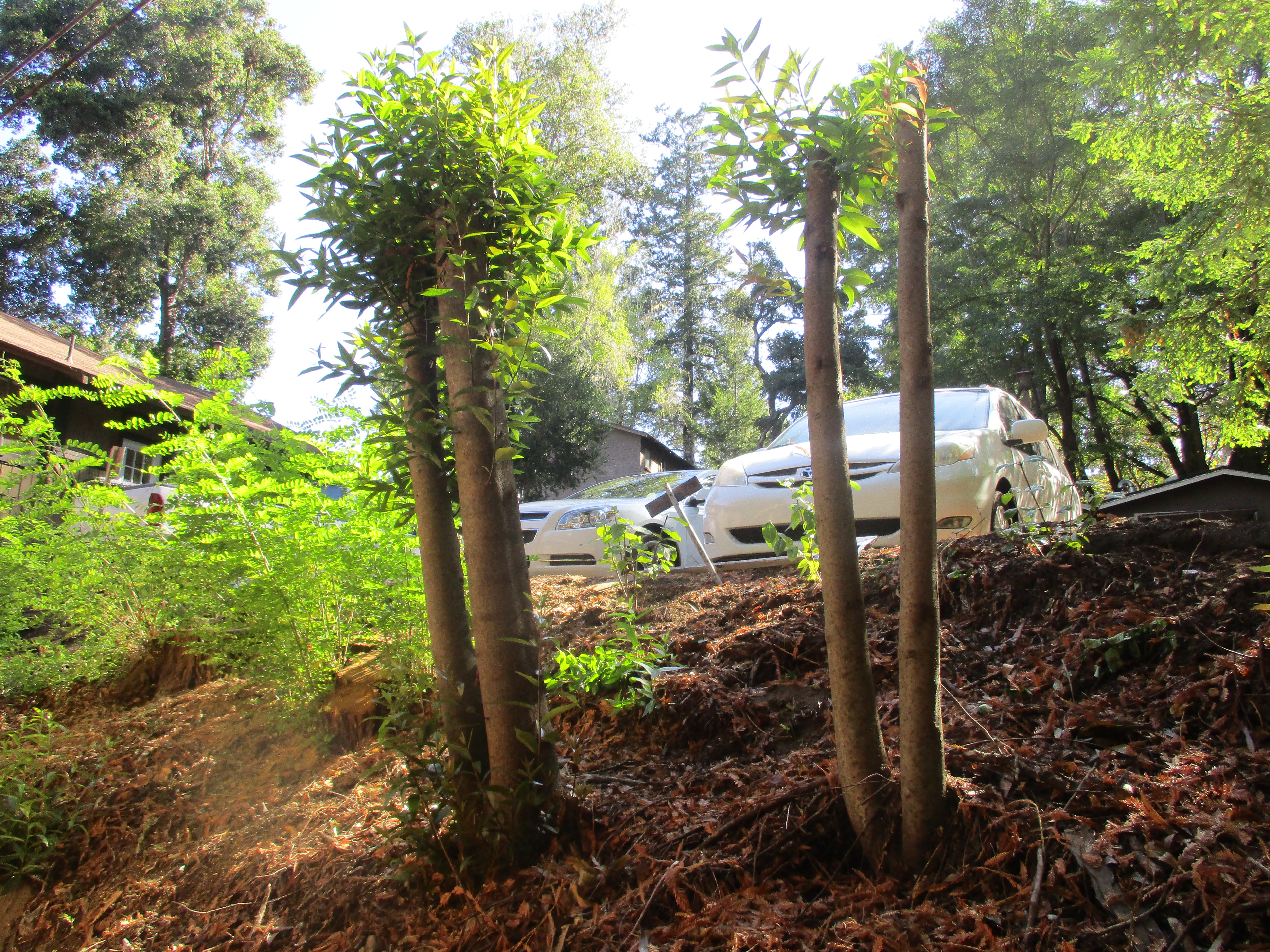
6. The bound sucker is now more than six feet tall. It could develop branches to begin to grow as a new tree next year. It could stay as a replacement after removal of the original.

This is the link for Six on Saturday, for anyone else who would like to participate: https://thepropagatorblog.wordpress.com/2017/09/18/six-on-saturday-a-participant-guide/

Tree Stumps May Put Up A Fight

Some stumps die immediately. Some do not.

Trees of all sorts are among the most important features of most gardens, and are also the most substantial. Yet, in the end, whether they get too big, too crowded, too hazardous or simply succumb to old age, they eventually need to be removed.

Getting rid of the brush (foliage and smaller limbs) of smaller trees is generally not much of a problem, especially where greenwaste can be left at the curb for recycling. Larger limbs and trunks can be cut and split into firewood. The brush and wood of trees that are so large that they need to be removed by professionals typically gets taken away be the same professionals. The most difficult parts to remove though, are the stumps.

Professional tree services typically offer the option of stump grinding. This works well for the most obtrusive stumps that are accessible. Other stumps get left either because they are inaccessible, or because of the expense of grinding.

Stumps that are within ground cover or shrubbery often get obscured by the surrounding vegetation, and are never seen again. Others are not so easy to hide. Many refuse to die for several years, and may even try to grow back as new trees.

Coastal redwoods (but not giant redwoods), poplars, willows, privets, sycamores and camphors are notoriously difficult to kill. Their stumps can continue to sprout for years. Shoots that emerge away from the stump can certainly be left to grow into new trees if they happen to be where they will not soon become problematic. (Shoots that emerge directly from cut stumps will likely lack structural integrity.)

To kill stubborn stumps, shoots must be removed as they appear. Eventually, the stumps and roots below the ground exhaust all resources and die. Of course this sounds simple, but may take years to kill redwood stumps. Leaving shoots to grow prolongs the process by allowing replenishment of resources. A stump from a camphor tree that I cut down in about 1988 but did not regularly remove the shoots from lingered for about twenty years before finally succumbing in about 2008!

Once stumps die, they rot faster if buried or at least covered with other plant material. Less stubborn stumps that are not likely to sprout again, like those of pines, cypresses, cedars, birches and (solitary trunked) palms, can be buried or concealed immediately. Stumps that are not cut low to the ground are not so easy to conceal, but should still rot faster if covered with ivy. I prefer to plant either freshly divided lily-of-the-Nile shoots or geranium cuttings around the bases of stumps, because they obscure the stumps and also promote rot as they get watered and disperse roots into the decaying wood. They can be removed, if desired, as the stumps deteriorate.

Horridculture – Watersprouts or Suckers?!

90501thumbDo we really know the differences between watersprouts and suckers? It seems simple enough. The definitions of each should be rather distinct.

When I grew citrus, I knew what sort of sucker that I had to contend with. Suckers were any unwanted stem and foliar growth from the understock below the graft union. In the picture of the trunk of the young plum tree above, the graft union is clearly visible between the scion to the upper left and the understock to the lower right. Suckers would be below such a graft union.

This sort of sucker is known as such because it sucks resources that should be directed to the more desirable but often weaker scion. A sucker that is more vigorous than its associated scion is likely to overwhelm and replace it if not removed. Scions are expected on freshly grafted plants, but should become less prevalent as they mature, and the scion dominates the understock.

Suckers might develop either on the short section of understock trunk between the graft union and the ground, or on the roots below the ground. They only need to be below the graft union.

Okay; that definition is simple enough. Here is another.

Watersprouts, as far as I am (still) concerned, are unusually vigorous and typically adventitious stem growth that can resemble suckers, but develops above a graft union. They should likely be removed, but might just be pruned back a bit if they happen to be where a new branch is desired. After all, they are genetically identical to the desired plant, whether it is grafted or not.

Because watersprouts grow above a graft union, they occur only among the branches and main trunks above the ground. They do not grow from the roots of understock below the ground.P90921+++

The picture above shows watersprouts on (VERY badly) pollarded bay trees.

Okay; that is another simple definition.

What about vigorous stems that grow from the roots of ungrafted trees? Can they be suckers if they are not sucking resources from a scion above a graft union? Can they be watersprouts if they are not growing from stems or trunks? It seems that the simple distinction between watersprout and sucker was the location relative to a graft union. What if there is no graft union?!

The vigorous black locust stems in the picture below are growing from the roots of ungrafted black locust trees (which, incidentally, were cut down last winter). Some might say that they are root suckers, which is a third and accurately descriptive designation for such vigorous stem growth. Otherwise, they could be either (or both) suckers or (and) watersprouts. Both work.

I know that many arborists refer to such root suckers from ungrafted trees as watersprouts, which is not at all inaccurate. I am also aware that many arborists refer to watersprouts like those on the bay trees above as suckers, . . . which is sort of inaccurate. I will not argue. I know what they mean.P90921+

Six on Saturday: Locust


John the Baptist did not really eat orthopteran insects out in the desert. The locust he ate were the beans of the carob tree, Ceratonia siliqua. They are actually quite nutritious. Supposedly, they are known as locust because they resemble the elongated abdomens of the insects with the same name. A few other related trees that also produce beans are collective known as such.

Robinia pseudoacacia happens to be known as black locust, even though there is nothing black about it, and the tiny and papery beans do not even remotely resemble insects. Supposedly, it arrived with Gold Rush prospectors who wanted something of their homes in Eastern North America. It naturalized aggressively, and is now an invasive exotic species in much of the West.

We tolerate a few at work. They are too pretty to cut down without a good excuse. However, one gave us a good excuse when it fell last winter. It was notably polite about it, by falling into a gap between two roofs that a cat could jump across. Damage was very minimal. Nonetheless, the tree and its destabilizing associates needed to be removed. They are gone but not forgotten.

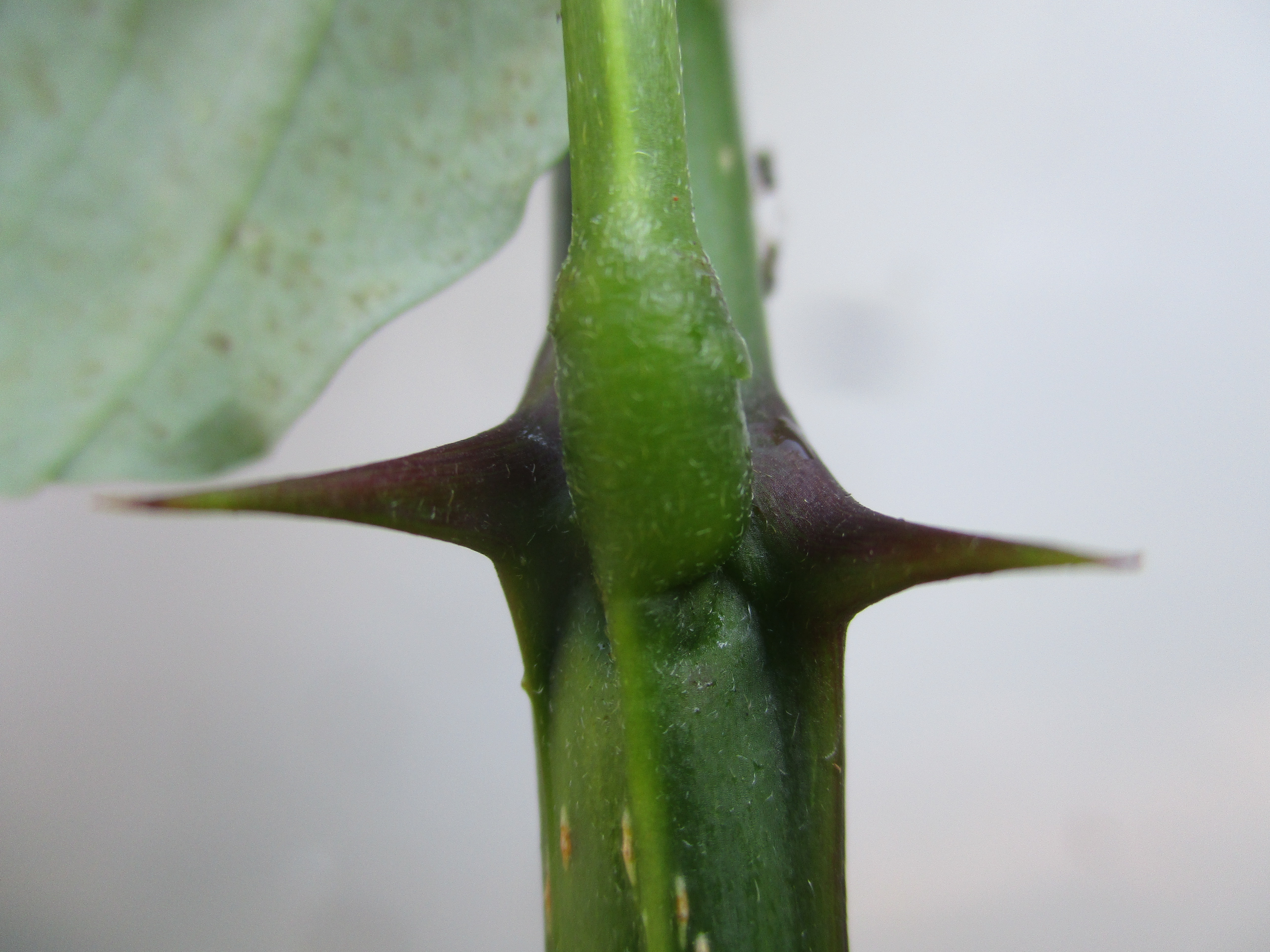
1. Thorns of black locust only look blurry in this picture. They are wickedly sharp! The sharpest are on the most vigorous stems, which is exactly what the freshly cut stumps here generate.P90921

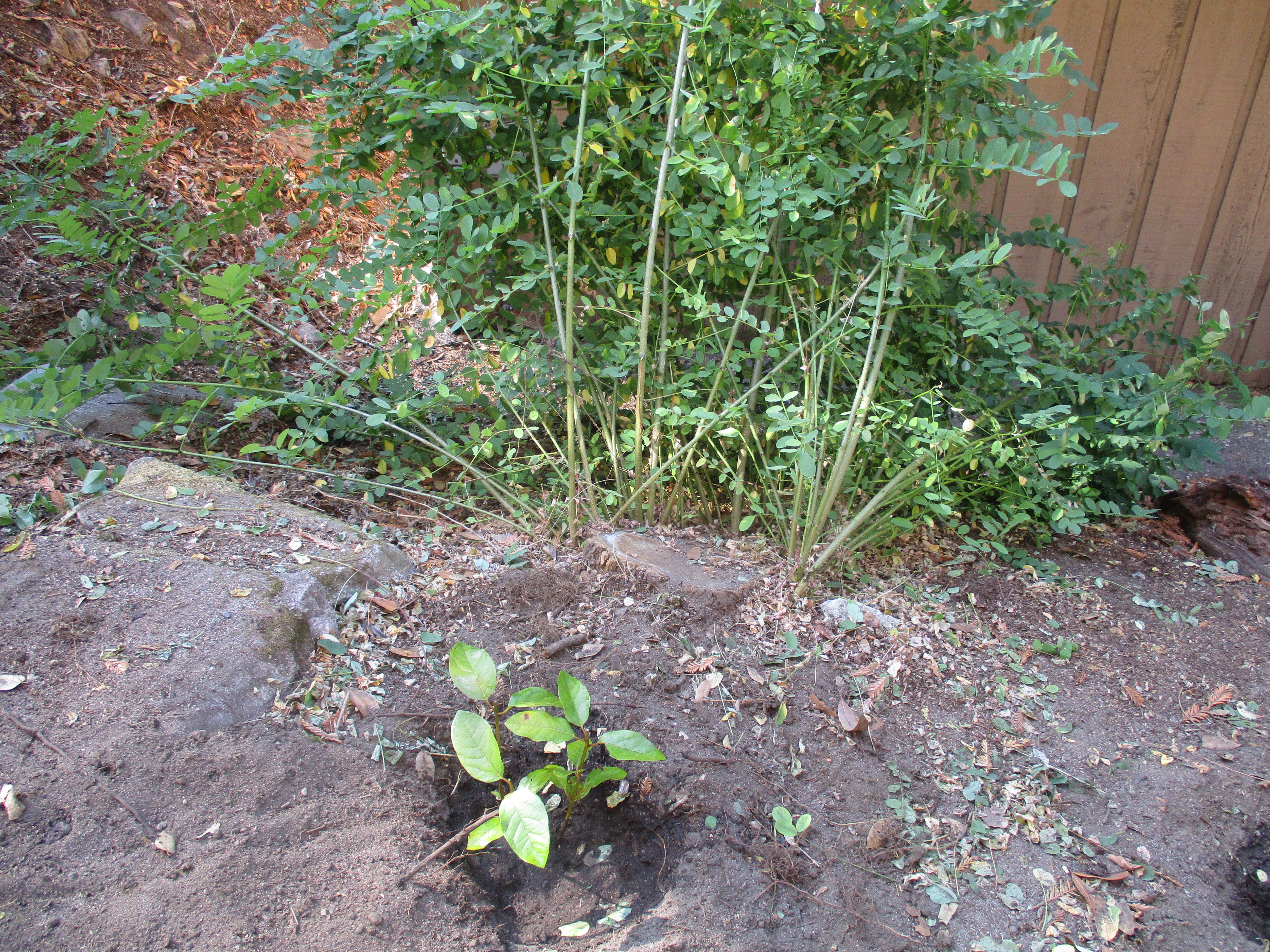
2. Thickets of suckers (or watersprouts) like these developed where black locust trees were cut down last winter. Most developed on freshly cut stumps. Many emerged from random roots.P90921+

3. More than half of the suckers from the formerly impenetrable thicket around the stump at the center of the picture were removed to relinquish space for the lauristinus in the foreground.P90921++

4. A few bay trees got cut down with the black locust trees. I wanted them coppiced, but was away when they instead got VERY badly pollarded. Oh, the shame! (I will coppice them later.)P90921+++

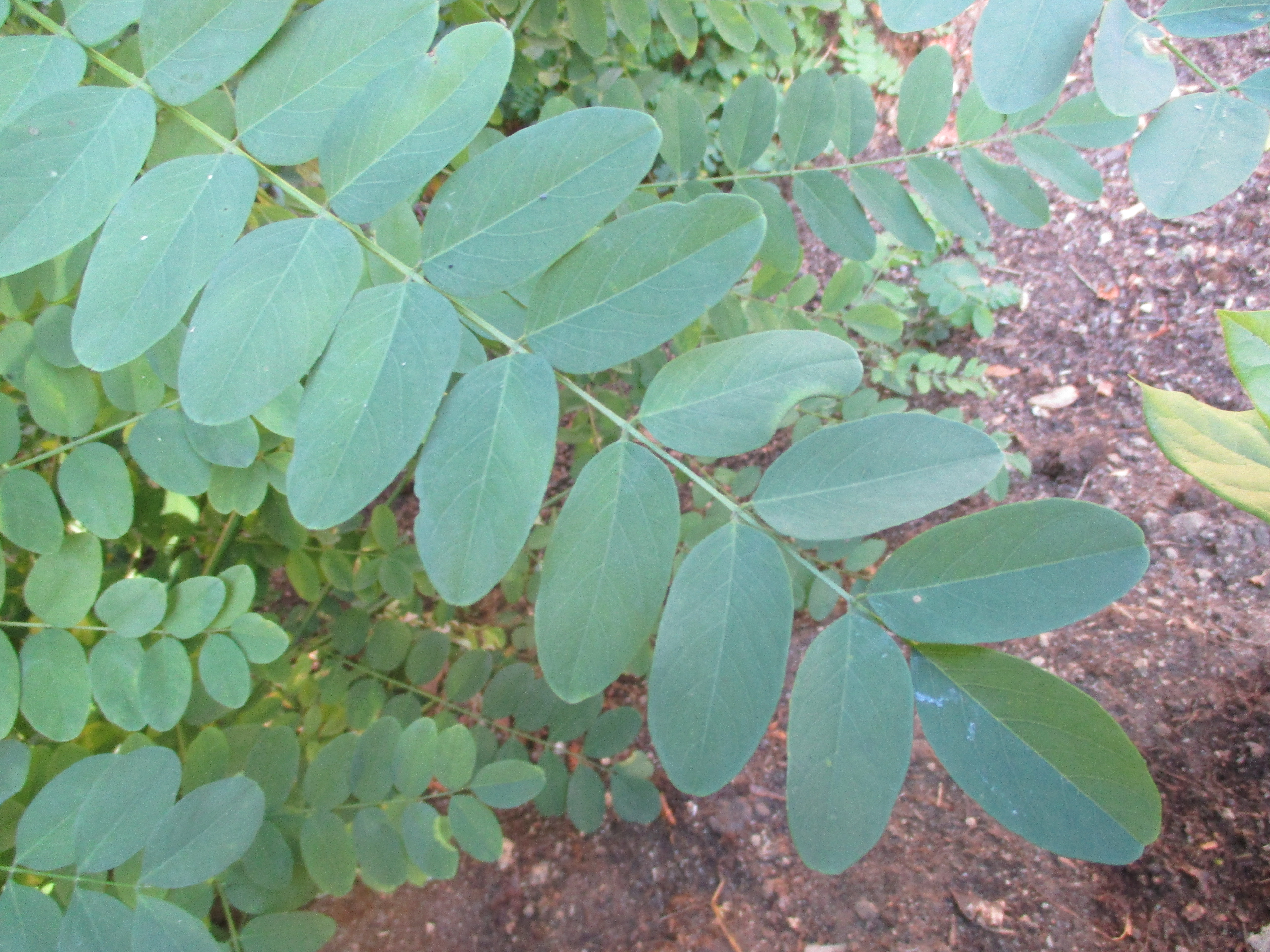
5. As nasty as black locust is, it has a few attributes. Spring bloom resembles that of white wisteria, and is almost as fragrant. This finely textured pinnately compound foliage is quite elegant.P90921++++

6. Their high and open canopies provide nice shade too. It is just enough for warm summer weather, but not too much to exclude turf grass and understory plants that tolerate partial shade.P90921+++++

This is the link for Six on Saturday, for anyone else who would like to participate:

https://thepropagatorblog.wordpress.com/2017/09/18/six-on-saturday-a-participant-guide/

Suckers For Street Trees

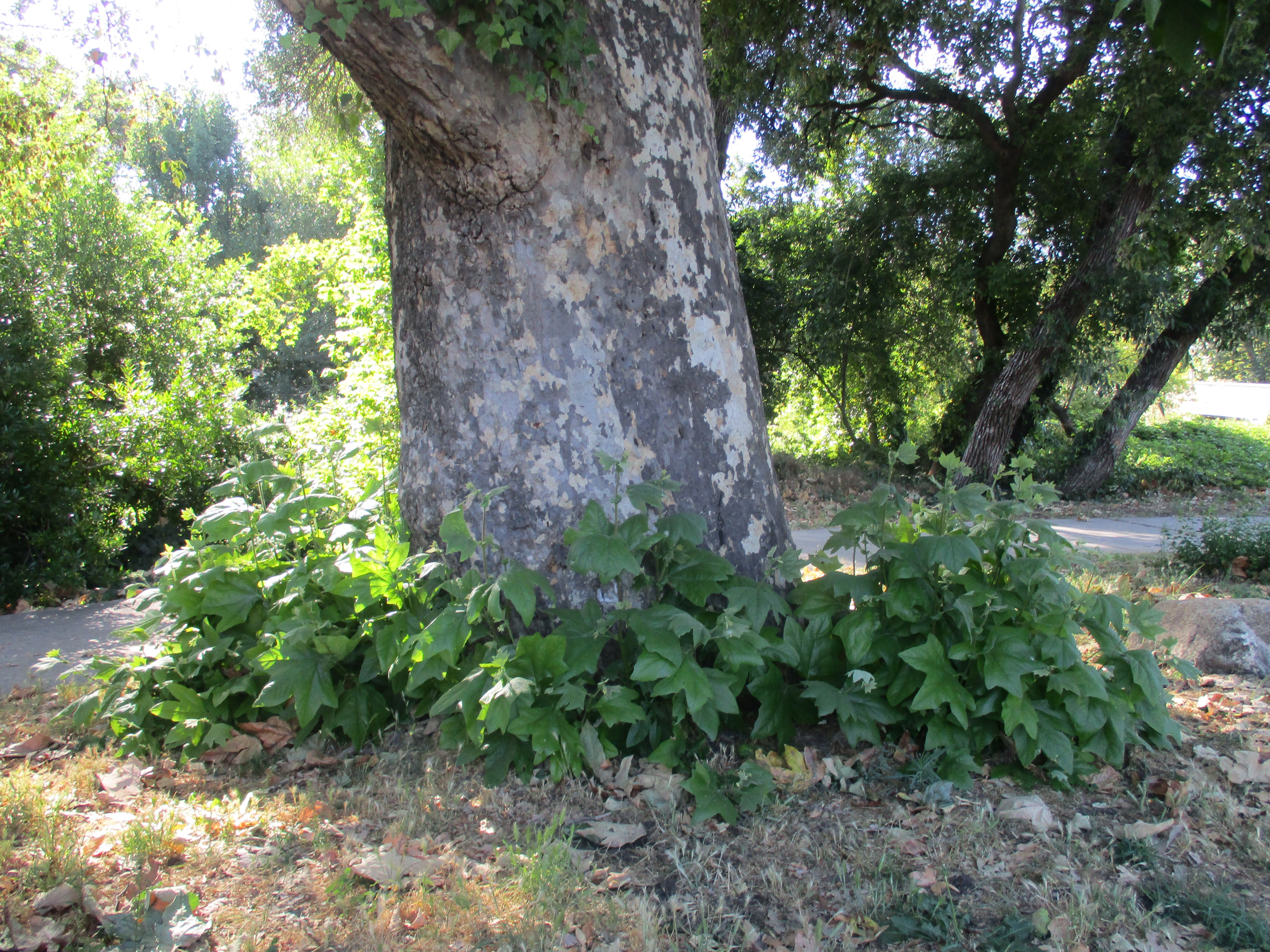
P90804This grand sycamore has likely been here since the third day of Genesis. A few of the top branches got broken off when Noah’s Ark floated over. When I was a little kid, it was on the edge of a vacant field where road debris was dumped, and older kids rode their dirt bikes. Now it is on the western edge of the parking lot of Felton Covered Bridge Park. I write about it sometimes.

California Sycamore‘, ‘Hanging Gardens Of Babylon‘, ‘Nature Is Messy‘ and ‘Tufts‘ are some of the articles that feature this exquisite specimen. The last three of these examples describe some of the difficulties of old age for sycamores. Something that I may not have mentioned in these article though, is that such mature sycamores eventually develop root suckers.

I use the term ‘suckers’ loosely. For those of us who grow grafted trees, ‘suckers’ are stems that develop from below the graft unions of grafted trees, even if above the roots. They are from the understock below, so are genetically different from the scions above. Unusually vigorous stems above graft unions or on ungrafted trees, including the roots, are known as ‘watersprouts’.

For all other intents and purposes, ‘suckers’ really are just vigorous stems that emerge from roots, which is what we have here. Because no one was here to graft this grand sycamore on the third day of Genesis, these ‘suckers’ are genetically identical to the main tree. Unfortunately, their appearance indicates that the tree is finally acknowledging that it is slowly deteriorating.

Many trees do it, especially old riparian trees. When they know that they will not be around much longer, but still have some time to do so, they divert resources into their own replacement. Suckers are expected to mature into new trees after the original is gone. They recycle the mature original root system until they eventually replace it with younger and more vigorous roots.

Arborists may try to interfere with this process by removing suckers and watersprouts, and diverting resources back into older stems. This is actually helpful for trees that are distressed, but not yet decaying. For trees as mature as this sycamore, removal of vigorous suckers and watersprouts is mostly cosmetic, because thickets of such rampant growth becomes unsightly.

As violent as it sounds, it is best to abscise suckers like these when they first appear, and any that appear afterward. That involves literally tearing them from their roots to remove some of the callus growth from which they emerged. Cutting them at the ground not only leaves the callus growth to develop into distended burls, but also stimulates more vigorous sucker growth!

Now that these suckers have been cut down repeatedly over the past several years, simple abscision is no longer possible. Callus grown has expanded and fused into broad subterranean burl growth. Removal of such extensive burl would severely distress and possibly contribute to the destabilization of the already distressed tree. Suckers can now only be cut down to the ground.

Several years ago, when the first of the suckers started to appear, they were much easier to abscise. The process was delayed until winter dormancy. The small defoliated suckers were then abscised along with much of their associated callus. It did not accomplish much for the massive tree, and only delayed the inevitable for a few years, but generated an interesting byproduct.

The bare suckers with their bit of callus were ideal for growing into copies of the same tree. Most were plugged back into the riparian area nearby, but later killed by necessary vegetation management. A few others were canned (potted), and grew into small sycamore trees that were planted, with other sycamores, into broad medians and parkstrips in Mid City Los Angeles.

It is a long story about how those few trees ended up in Los Angeles, and were added to the fifty or so Birthday Trees that we plant annually on January 18. Sadly, their identities were lost in the process. If the other sycamores are genetically identical clones of each other, it may eventually be possible to distinguish genetic variations of those that were once root suckers here.
Roses Can Not Be Neglected

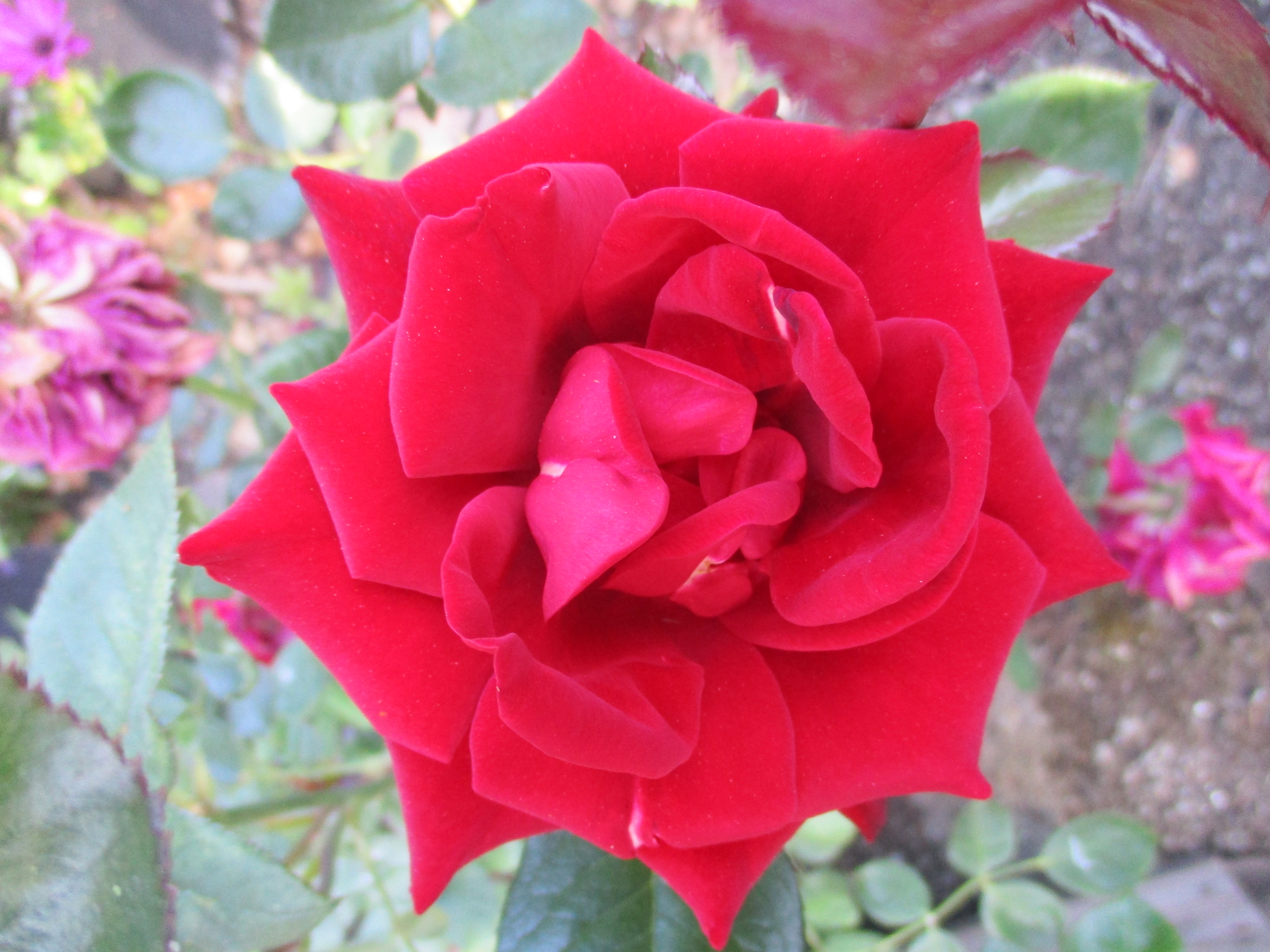
P80602+Roses are not for the meek. They are too demanding, too sensitive, too thorny, and without their flowers, they are not even very attractive. They have no business in a low-maintenance landscape, or in a landscape maintained by mow, blow and go gardeners. Those who want to grow rose plants for their flowers should be ready to give them what they want, and to prune them aggressively.

The most aggressive pruning gets done during winter dormancy. That process alone can be quite intimidating for those who are just getting acquainted with roses. After seeing them grow through the year, it seems counterproductive to prune big plants back to only a few short canes. Yet, by now, those canes should have produced much taller new canes that are already blooming profusely.

Now it is time to prune roses again, or will be time to do so soon. Deteriorating flowers need to be pruned away to promote continued bloom, a process known as ‘deadheading’. Otherwise, the fruiting structures that develop, known as ‘rose hips’, divert resources and inhibit bloom. Of course, blooms taken as cut flowers leave no hips, but they might leave stubs that may need grooming.

The popular technique of pruning back to the fifth leaf below a hip is not necessarily what roses want. It probably originated from the recommendation of pruning back to a low leaf with five leaflets because the buds associated with upper leaves with three or less leaflets are not as likely to develop into productive stems. However, pruning a bit too low is probably better than pruning too high.

When cutting roses to bring in, it is better to cut long stems, and then shorten them later if necessary. Each stem should be cut just above a leaf so that the bud in the leaf axil can develop into a new stem without much of a stub above it. The cut stem left behind on the plant should not be so long that it extends too far above the canes that were pruned over winter, or becomes crowded.

Crowded stems inhibit growth of vigorous blooming canes, and are more susceptible to rust, mildew and blackspot.P80602++

Citrus On The Sucker List

90501thumbA five pound kumquat is a problem! It means something went seriously wrong. Anyone who grew one would concur. They are huge, lumpy, and very insipid, with ridiculously thick pale yellow rind around a small handful of uselessly fibrous pulp. They are protected by dangerously sharp and rigid thorns that can get longer than three inches. Even their irregularly wavy foliage is unappealing.

In reality though, there is no such thing as a five pound kumquat. These huge but useless fruits, as well as the associated thorns and foliage, are those of ‘shaddock’, which is the most common ‘understock’ for almost all grafted dwarf citrus trees. It is what keeps such trees compact, so that they do not get as big as orchard trees. It was there all along, whether we were aware of it or not.

Most citrus trees are composed of two genetically different parts. The understock are the lower parts that develop roots that are unseen underground. The desirable upper parts that produce the familiar citrus fruits grow from ‘scions’ that are grafted onto the understock. Graft unions are just above grade, where the texture of the bark above is slightly different from that of the bark below.

‘Suckers’ are stems that grow from the understock below the graft unions. Because they are genetically identical to the understock rather than the scions, they produce the same fruit and exhibit the same physical characteristics as the understock would if it were growing wild. Suckers can overwhelm desirable scion growth, which is how kumquat trees can produce huge five pound fruits.

Other grafted trees and shrubs, particularly fruit trees, get suckers too. New suckers appear as new spring growth develops. They should be peeled off of the main trunks rather than pruned off. As brutal as this seems, it is more efficient than pruning. Soft young shoots should snap off quite readily. This technique removes more of the callus growth at the bases of the suckers, which could develop more suckers later. Big older suckers should be pruned off as closely and neatly as possible.