Warm Season Bedding Plants Begin

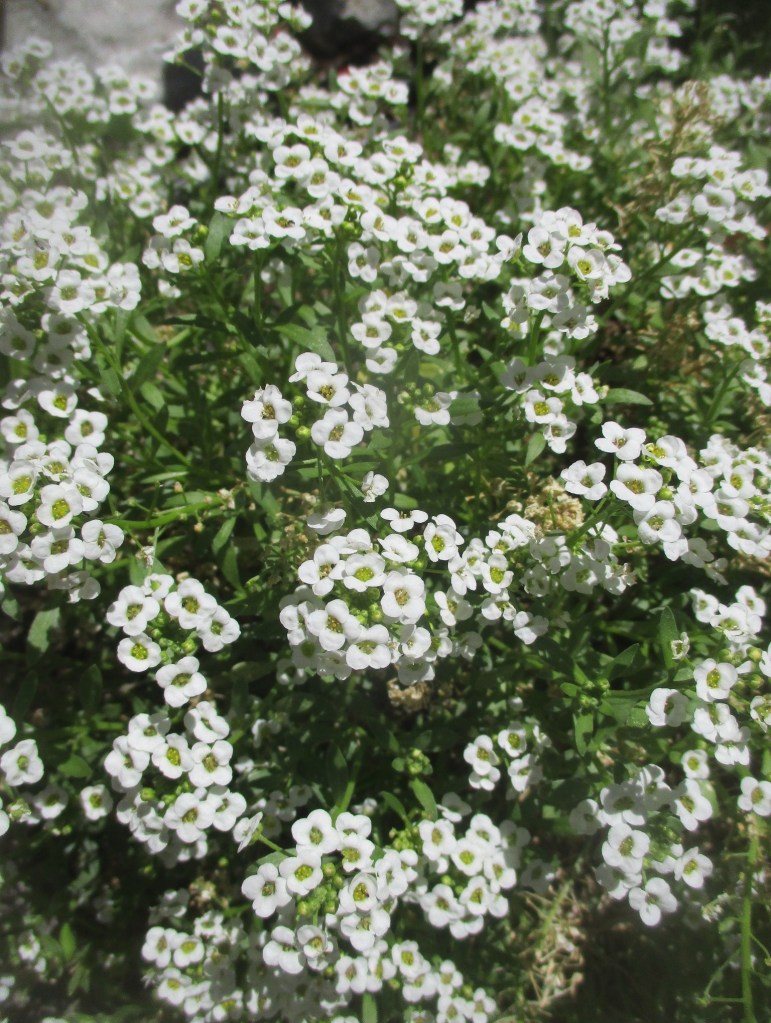
Alyssum grows very readily from seed.

Annual bedding plants are surprisingly more popular among those who enjoy gardening less. Those who procure the services of gardeners appreciate the rich colors and simple efficiency of annuals. Many who are more directly involved with their gardening consider them to be decadent. Nonetheless, warm season bedding plants will soon be in season.

Cool season bedding plants should perform well until the weather becomes too warm for them. There is therefore no rush to replace them yet. Besides, it is likely still a bit too cool for mature warm season bedding plants to be out in the garden. However, seed for warm season bedding plants takes time to grow. Some should start now to be ready for spring.

For example, petunia, impatien and zinnia are some of the most popular of warm season bedding plants. Almost all of them arrive at their respective gardens as somewhat mature plants within cell packs from nurseries. Presently, such plants may be vulnerable to frost. However, seed of these plants that begin now should start to grow after the threat of frost.

Not many of even the most avid of garden enthusiasts grow these popular warm season bedding plants from seed. Yet, a few do so. Some unusual or rare plant varieties are only available as seed. Many common wildflowers and ‘true to type’ annuals provide seed for subsequent generations. Such seed generally start in flats with shelter from frost indoors.

From flats, seedlings may graduate to cell packs or small pots prior to transitioning into a garden. Some should actually begin within cells rather than flats. Seedlings relocate into a garden when adequately mature, whether from flats, cells or pots. Seed for many warm season bedding plants perform best directly in the garden though, without transplanting.

Nasturtium seedlings do not grow well within the confinement of cells. Then, they remain somewhat pekid for a few days while they recover from transplanting into a garden. They grow so much more efficiently from seed sown directly into a garden. Marigold can grow about as well from seed directly in the garden as they can as seedlings that grew in flats.

Foxglove

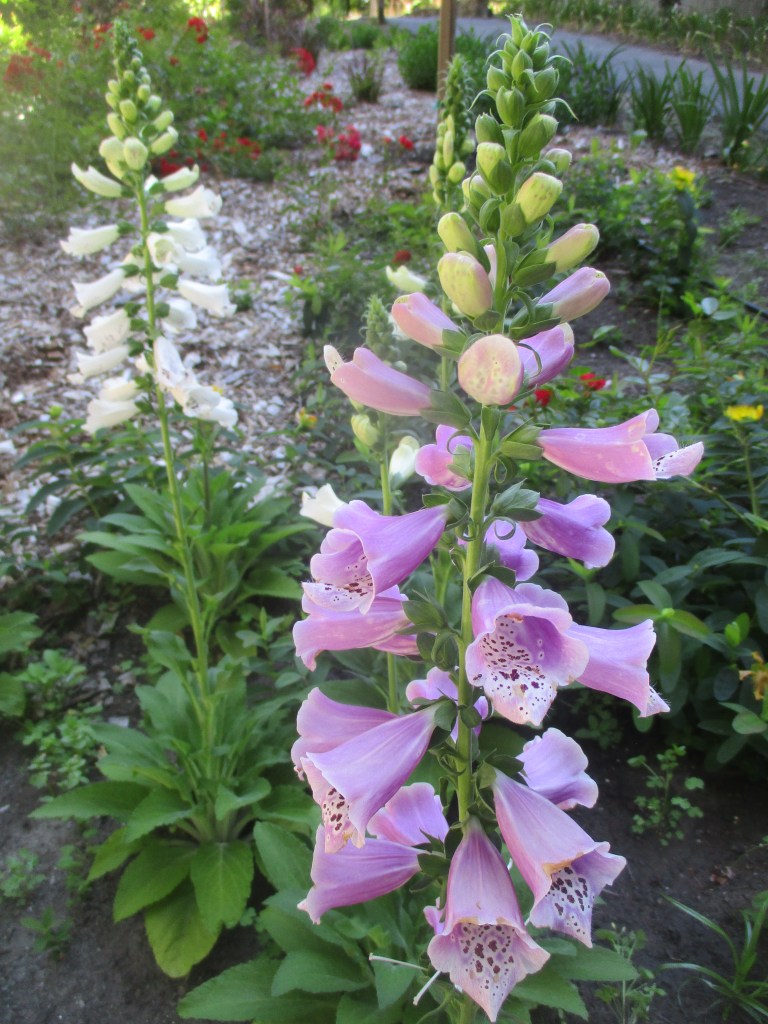
Foxglove is the source of digitalis.

It is no coincidence that its generic name seems more pharmaceutical than horticultural. After all, the cardiac medication digitalis is an extract of foxglove, Digitalis purpurea. The plant is unfortunately very toxic. Because it naturalizes in several regions, it can be more hazardous than standardized medications. It can migrate undetected into home gardens.

Otherwise, foxglove is a delightful warm season annual with a rustic or woodsy style. It is actually a biennial that generates basal foliar rosettes during its first season, and blooms during its second season. Although technically monocarpic (so should die after bloom), it can produce a few short pups to bloom later. Seedlings can appear in random situations.

Plants from nurseries grew during a previous season, so are ready to bloom immediately for early summer. Their seedlings may grow through later summer and autumn, so might bloom for the following summer. Floral stalks generally stand between three and six feet tall. The tubular and somewhat pendant flowers are mostly pinkish purple, pink or white. A few modern varieties bloom yellow or apricot.

Toadflax

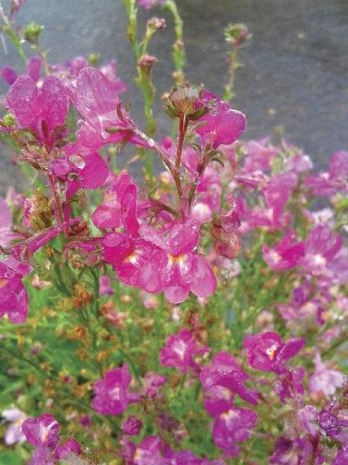
Hot pink looks cool with toadflax.

Toadflax really does look like baby snapdragon, which is its other common name. The tiny, half inch wide flowers are similarly bisymmetrical, and arranged in small trusses, although the diminutive leaves are distinctively narrow.

Common toadflax, Linaria maroccana, which is actually less common than the name implies, gets about one and a half to two feet tall and about half a foot wide. Two toned flowers bloom in summer in shades of pink, purplish pink, purple, blue, very pale yellow or red with yellow. ‘Northern Lights’ adds shades and bicolor combinations of yellow, orange and red to the mix. The more common ‘Fantasy Hybrids’ get only about half as tall and perhaps slightly wider, with earlier and slightly larger flowers in shades of yellow, blue, pink and bright pink, as well as white, mostly with slightly yellow throats.

Toadflax is a summer annual, but does not like to be too exposed to roasting heat and glare. If grown from seed, it should be sown as soon as possible after the last frost to get an early start.

Alyssum

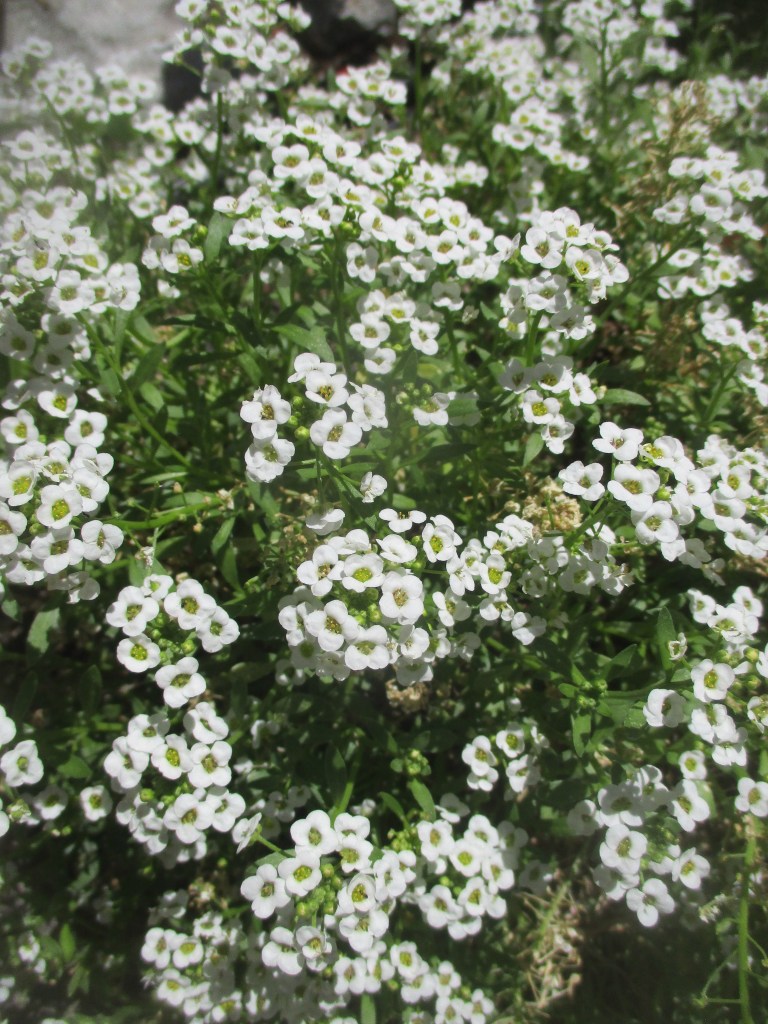
Alyssum can self sow quite freely.

Without becoming invasive, common alyssum, Lobularia maritima, can almost naturalize in favorable situations. It disperses seed profusely, so often appears where it is an asset to the garden. Since it is so docile, it subordinates to more vigorous plants that it mingles with. It does well on loosely set stone walls. If necessary, it is easy to remove or relocate. 

Common alyssum blooms with tiny but profuse white flowers. If they naturalize, varieties with pink or purple bloom eventually revert to white bloom after a few generations. Some varieties revert slower than others. Although popular as a warm season annual, alyssum can continue to bloom through next winter. Individual plants may survive for a few years.

Mature alyssum plants might get a bit higher than half a foot, but will get no higher than a foot. If they perform for more than a year, their progeny may begin to replace them before they get shabby. After removal, shabby plants, with a bit of shaking over bare spots, may share their last seed. Alyssum grows easily from seed, and is available in cell packs too.

Warm Season Annuals Are Hot

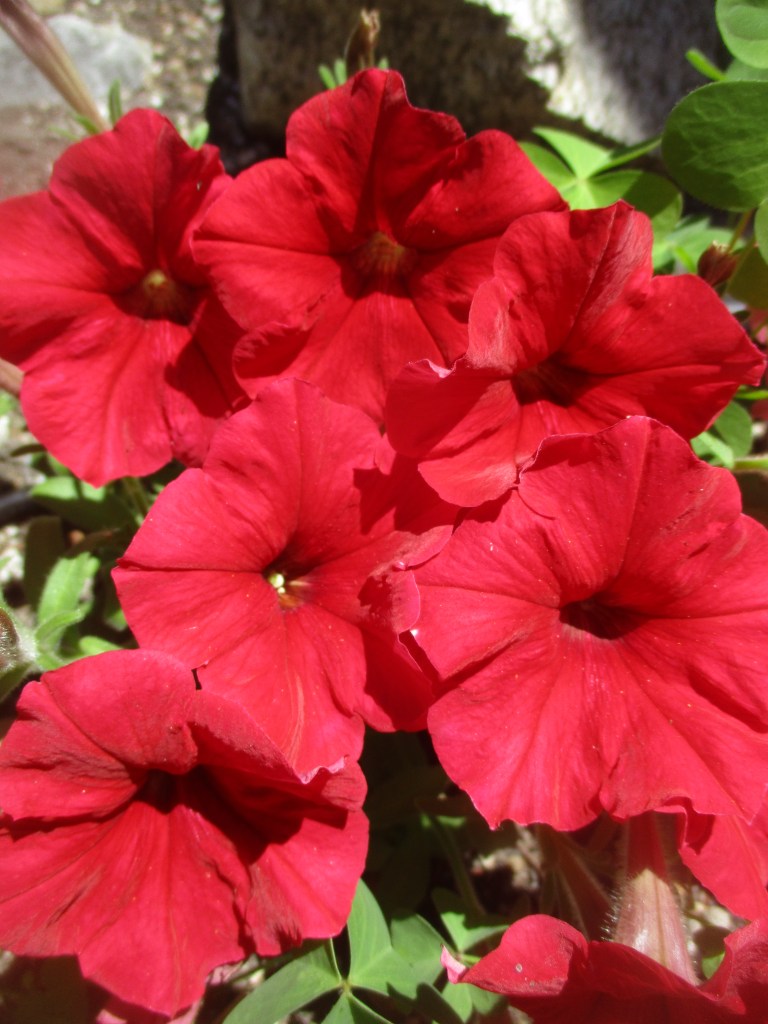
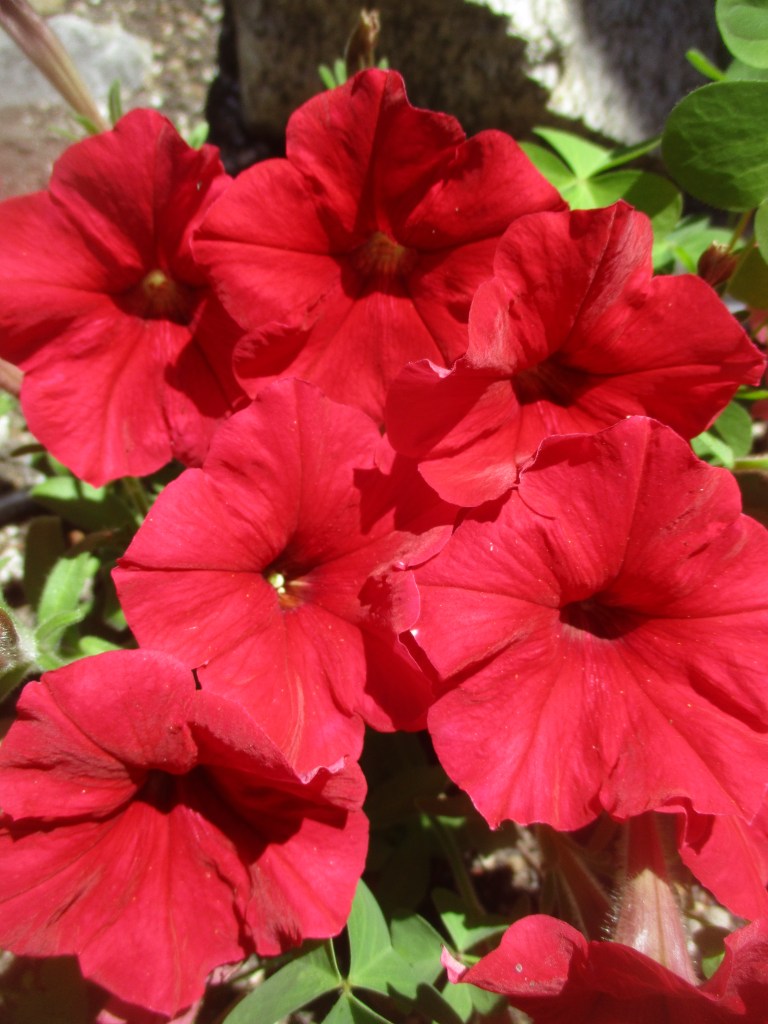
Petunia will enjoy warming spring weather.

Cool season annuals were cool just a few months ago. Now, it is getting to be about time to warm up to warm season annuals. They will become a hot commodity as winter yields to spring. Many begin to bloom with warming spring weather, and continue to bloom until autumn. Then, as the weather cools, they relinquish their space to cool season annuals.

Warm season annuals, or summer annuals (or warm season or summer bedding plants), are technically a bit early for a few regions. They should wait until after the last frost date, which might be later in the month for some climates. Even where frost is no threat, it may be too early to replace cool season annuals that continue to perform until spring weather. 

Warm season annuals only seem to be seasonable now because the weather has been so pleasantly mild and even warm. Some cool season annuals are already beginning to deteriorate, which facilitates their replacement. Warm season annuals might dislike cool nights and short days, but should appreciate the opportunity to disperse their roots early.

However, some degree of risk is associated with early planting of warm season annuals. Mild frost, although unlikely, is still possible in some climates, and could necessitate frost protection for vulnerable plants. Resumption of rainy and more typically wintry weather is more likely. Heavy rain can thrash fresh bloom. Sustained dampness can cause mildew.

Like warm season vegetable plants, warm season annuals can grow from seed or small plants from cell packs or little pots. Some prefer to grow directly from seed. Others prefer transplanting. Nasturtium, for example, prefer direct sowing. Petunia, which perform well after transplant as seedlings or small plants, are likely to languish if they grow from seed. 

Because seed take a bit of time to germinate, they can go into the garden slightly prior to the last frost date, and earlier than vulnerable seedlings. Similarly, they can start within a greenhouse early for later transplant. With proper scheduling, frost should no longer be a problem by the time seedlings emerge above the garden soil, or are ready for transplant. More variety is obtainable as seed.

Late Summer Merges Closer To Autumn

Late summer flowers are still blooming.

It always seems that by the time the garden gets as productive as it can, it is already time to get ready for the next season. Pretty soon, cool season annuals will be arriving in nurseries to replace warm season annuals that had been so colorful all summer. If seeds are to be collected from summer flowers for next year, this would be a good time to do it.

Seed for certain cool season vegetables like broccoli, cauliflower, cabbage and kale, can be sown in flats or cell packs now to have seedlings ready to put out into the garden as warm season vegetables finish in autumn. If there is space available in the garden, turnips, turnip greens and beets can be sown directly. Carrots should probably wait a few weeks or so to get sown directly.

Although corn of a single variety sown in a single phase tends to ripen at the same time, different varieties planted in different phases can extend the season significantly. Those that continue to produce until autumn are greedy for nutrients and water. Squash and tomatoes likewise appreciate a bit of fertilizer and regular watering, even as the weather starts to fluctuate this late in summer. However, fertilizer does not need to be applied in the last month of expected production.

Zucchini should be harvested when they get about six inches long, not only because they are best when immature, but also because the plants are more productive if regularly deprived of their fruit. If plants have the choice, they prefer to concentrate resources into fewer large fruit instead of more small fruit. The problem is that the larger fruit is tough and lacks flavor.

Hubbard, butternut, acorn and other winter squash get the opposite treatment. Each vine should produce only a few fruits. Those that produce smaller fruits can sustain more than those that produce larger fruits. Yet, excessive fruit exhausts resources, which compromises fruit quality. The fruit that will continue to grow and ripen through autumn should already be somewhat developed. The smallest of excessive fruit, or underdeveloped fruit should be removed.

Cockscomb

Plumose cockscomb blooms with pinata colors.

The flowers of the two different specie known as cockscomb do not seem to be as closely related as they are. Celosia cristata exhibits two or three inch wide, weirdly stunted and crested blooms that resemble the combs of roosters, although the most popular varieties are so densely furrowed that they look more like fuzzy little brains. Celosia plumosa, as the name implies, has plumose flowers that look more like three or four inch long pampas grass flowers than like anything associated with chickens. What they have in common is their very bright red, orange, yellow, pink or white blooms. Foliage can be bright green to rich bronze.

As short lived annuals, cockscombs blooms only for about two months from the middle of summer to autumn. As cut flowers, they can last a week or two. However, because those popularly grown as summer annuals are mostly less than a foot tall, the flower stems are rather short.

Summer Annuals Are Grateful For Deadheading

Blooming through summer is serious work.

So many of the pretty warm season annuals planted last spring are now at their best. Sweet alyssum, lobelia, verbena, moss rose and busy Lizzy never stop blooming, and only get more colorful as they grow through the season until they get replaced by cool season annuals in autumn. (It is unfortunate that busy Lizzy, which had been a standard warm season annual for so many years has become less available due to disease.) However, French marigold, petunia, floss flower, cosmos, statice, pincushion flower (scabbiosa) and zinnia need a bit of attention to perform as well that long.

These few warm season annuals can get tired of blooming if not ‘deadheaded’ (groomed of deteriorating flowers). Deadheading not only keeps plants looking a bit neater, but also prevents the diversion of resources needed for continued bloom into the generation of seed. As far as these blooming plants are concerned, seeding for the next generation is their priority anyway. As long as they are not allowed to set seed, they will continue to try, by producing more flowers to replace those that fade and get removed without setting seed.

Cosmos, statice and pincushion flower can continue to perform adequately without deadheading. The main advantage of deadheading these annuals is the removal of fading flowers. (There probably will not be much left for cosmos.) Many people actually prefer to leave fading cosmos flowers to disperse their seed for the following year.

Petunia is perhaps one of the more demanding of warm season annuals. It often needs to be clipped back in the middle of the season, right when it is expected to bloom the most. The best way to avoid serious pruning at one time it to keep plants snipped back lightly but continually as they grow, so that they can not develop the awkwardly long and weirdly jointed stems that eventually stop blooming. Short stems that stay close to the roots are the healthiest and most productive.

The various types of cockscomb are odd warm season annuals that become available halfway through summer, just in time to add color if some of the annuals planted earlier in spring are not performing adequately, or are finishing early. Of course, all of the other warm season annuals will still be available in nurseries until it is time for cool season annuals next autumn.

Petunia

Petunias are quintessential warm season annuals.

There are too many varieties of petunia to be familiar with nowadays. The species name is Petunia X hybrida because almost all are hybrids of two primary species, as well as a few others to complicate the situation. The color range of the bloom of these hybrids now lacks only a few colors. (GMO orange petunias are only beginning to become available.) 

Besides an impressively extensive color range, bloom can be spotted, speckled, striped, blotched, haloed or variegated by too many means to list. Flowers can be rather small or as wide as four inches. Some are surprisingly fragrant. Some have frilled double flowers. Stems of cascading types may sprawl wider than three feet while only a few inches high. 

Petunias are warm season annuals that perform from spring until frost. They can survive as perennials for a few years if cut low for winter. Cool season annuals can obscure and shelter them until they resume grown in spring. They prefer rich soil, systematic watering and sunny exposure. Although mostly sterile, some appreciate occasional deadheading. Trimming during summer may promote fluffier growth for lanky stems.

Trailing Lobelia

00603
Lobelia may bloom beyond next summer.

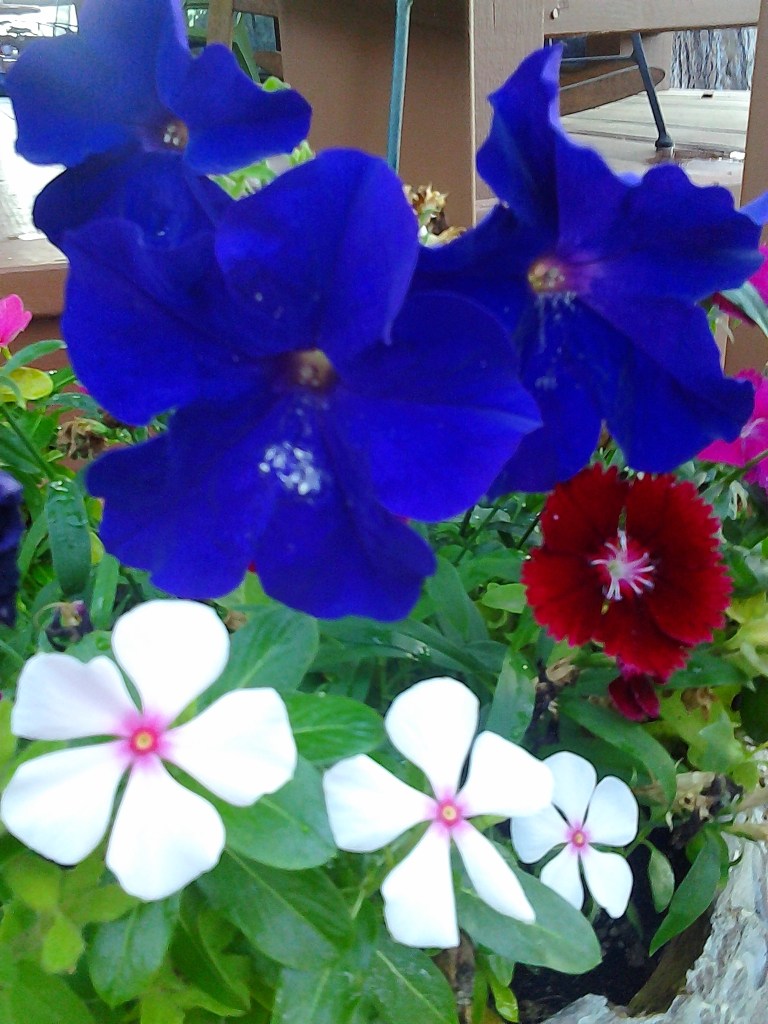
No other bedding plants exhibit such rich blue as trailing lobelia, Lobelia erinus. Cultivars with white, purplish pink, purple or sky blue bloom are still not quite as popular as the favorite cobalt blue bloom. Individual flowers are tiny but very profuse and uniform. Some have white centers. The narrow leaves are tiny as well, and finely textured. Some cultivars have dark purplish bronzed foliage.

Individual plants are only about three to six inches high and wide. Cultivars that are more rounded and densely foliated are excellent for edging. They are very popularly planted in single rows, and alternating with alyssum. Trailing types exhibit wispier growth that stays a bit lower and spreads a bit wider. They do not trail far, but cascades nicely from urns and hanging pots of mixed annuals.

Although grown as a warm season annual, trailing lobelia can survive as a short term perennial where winters are mild. Fresh new growth develops out of the centers of overwintered plants about now. If pressed gently into the soil just before they are replaced by new growth, scraggly outer stems can develop roots. They just might grow into new plants before the originals eventually die off.