Cardinal Flower

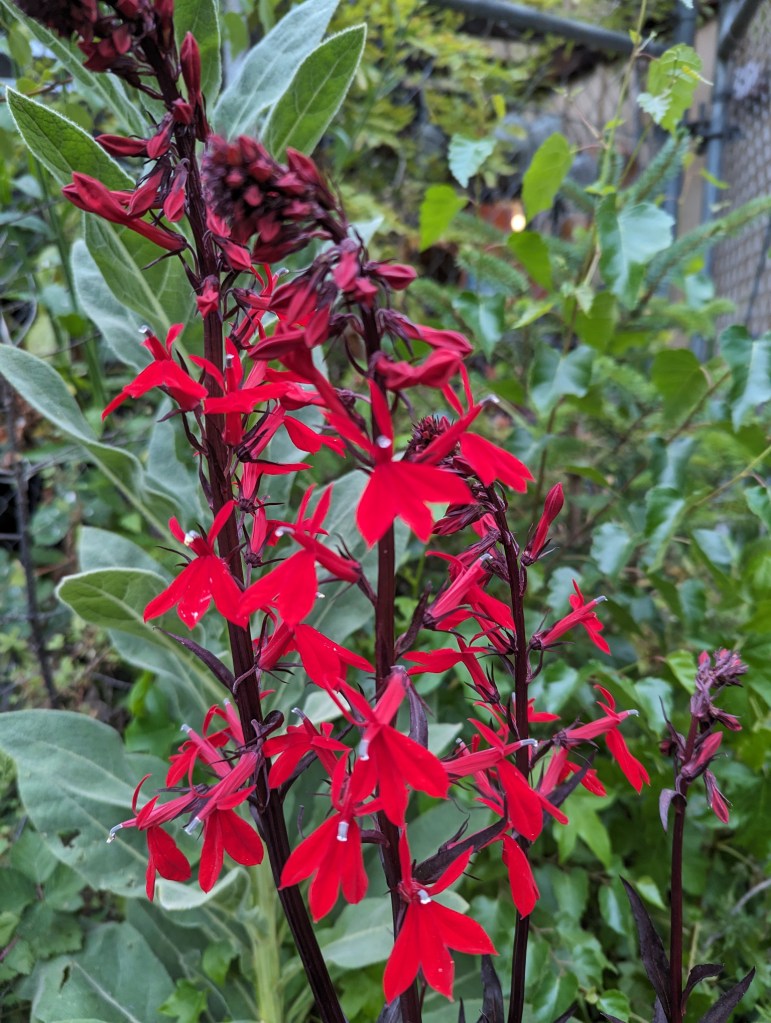
Cardinal flower is traditionally cardinal red.

This warm season annual is actually a biennial. Cardinal flower, Lobelia cardinalis, may stay relatively short for its first summer. It might bloom four feet high for its second or third summer. By then, pups are easy to divide as new plants to replace the old. Most cardinal flower plants from nurseries are rather mature. They might grow tall for their first summer.

Common cardinal flower has rich cardinal red bloom and bright green foliage. ‘Alba’ has white bloom. ‘Rosea’ has pink bloom. ‘Queen Victoria’ has familiar rich red bloom above deeply bronzed foliage. Individual flowers are only an inch and a half from top to bottom, but are numerous. Basal leaves can be almost six inches long. Upper leaves are shorter.

Cardinal flower enjoys richly organic soil with regular irrigation. It dislikes getting too dry. It appreciates a bit of partial shade as the weather gets warmest after noon. Seed is easy to collect. However, seed from fancy cultivars is not necessarily true to type. Subsequent generations eventually revert to familiar rich cardinal red bloom and bright green foliage.

Six on Saturday: Late for Summer

Summer was late this year. This is sounding redundant, so I will not mention last winter again. Nor will I mention last spring or early summer. Now that summer is about a third over, it seems as if it is merely beginning. Lily of the Nile, which never fails to bloom for Independence Day, began to bloom only a few days ago. Bloom is catching up though, or at least trying to. These summer flowers are doing well, and were actually doing well last week, when I was unable to post these pictures because of bad reception. Easter lily was done right after I got these pictures. The preponderance of red here is mere coincidence, but summery.

1. Lilium longiflorum, Easter lily was likely left behind after a wedding in the old Chapel. It lives in a garden across the road now. It is the only of these six that finished blooming.

2. Hydrangea macrophylla, hydrangea is pleasantly pink even without the fertilizer that maintains its pink color. Blue hydrangea faded to lavender without their pH adjustment.

3. Pelargonium hortorum, zonal geranium is quite a bit more prolific in bloom than the old fashioned sorts that I am accustomed to growing. The floral color is impressive also.

4. Gerbera jamesonii, Transvaal daisy is as bright and bold as 1984. However, I still fail to be impressed. It is certainly pretty, but looks like a squirting daisy that a clown wears.

5. Papaver rhoeas, poppy grew from seed that got sown prior to the last torrential storm of last winter. I thought that all the seed got washed away. This was a delightful surprise.

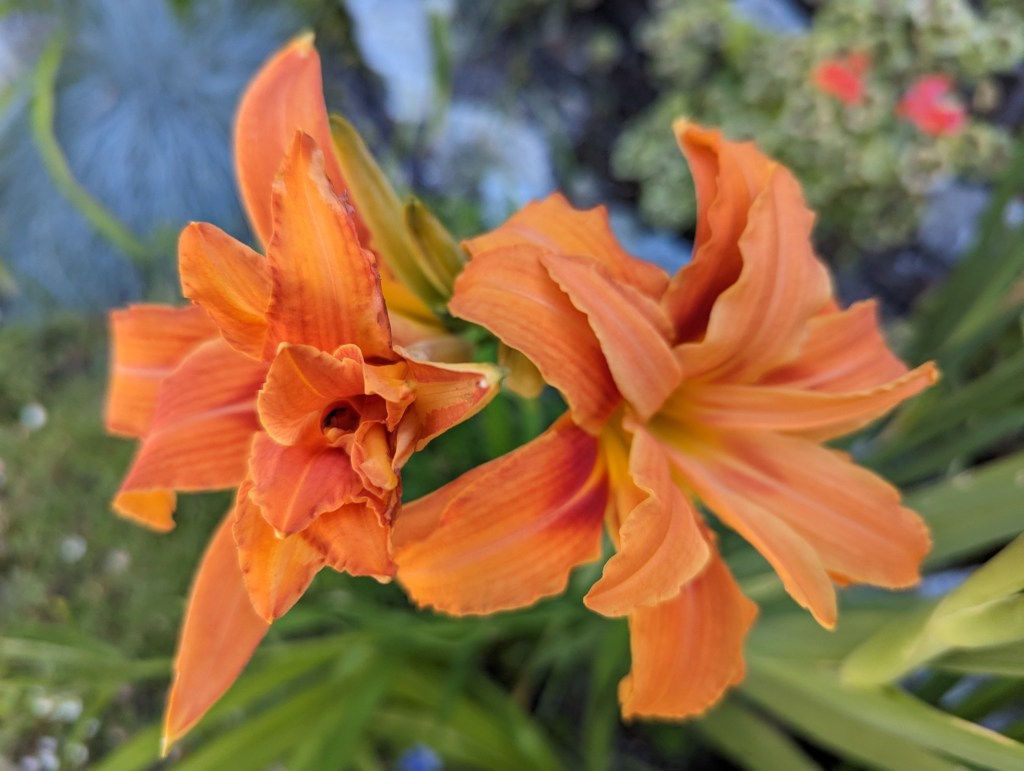
6. Hemerocallis fulva, daylily grows like a weed. We move it from one garden to another as it outgrows its space. This double orange cultivar may be ‘Kwanso’, but I do not know.

This is the link for Six on Saturday, for anyone else who would like to participate: https://thepropagatorblog.wordpress.com/2017/09/18/six-on-saturday-a-participant-guide/
Warmth Accelerates Garden Activity.

Spring was mild and started late. Summer if now getting started.

Just like the moon is always either waxing or waning, but is really only full or new for the brief moments in between, the seasons are always flowing from one to the next. Even though it is not yet half way through summer, plants in the garden are already planning for autumn. Summer has been mild, but still warm enough for most plants to do what they need to do by this time of year.

If weeds were not pulled when they should have been in early spring, they really should be pulled now. They have already started to sow their seed for the next generation that will grow at the end of next winter. The ground has dried and hardened since early spring, so pulling weeds will take a bit more effort. That is the punishment for procrastinating.

Weeds that are still somewhat fresh and green may not have dispersed all of their seed yet. If pulled soon enough, their next generation may not be so prolific. Those that have dried have likely dispersed their seed already. Their progeny will be back by next spring.

Pulling out the roots of annual grasses is not as important as getting the roots of perennials like thistles. Heck, they are annuals, so will die at the end of the season anyway. Getting their seed in the priority now. Some people are satisfied with simply pulling the seeded tops off of annual weeds, and leaving the lower portions to die out naturally.

Most fruit trees finish their production sometime during summer. Small fruit like cherries finished some time ago. Larger peaches, although related to cherries, may still be ripening into August. They should be picked as they ripen, not only to get the most use out of them, but also to avoid sharing with unwelcome rodents, birds and other annoying wildlife. The ground under fruit trees should be cleaned of any fallen fruit that might otherwise rot and perpetuate disease. Apples and pears ripen later and into autumn.

Warm season vegetables should be picked as they mature to promote continued production. Leaving extra zucchini on the plants inhibits production of new zucchini, while the old zucchini grow into tough and insipid baseball bats. Leaving extra tomatoes both inhibits new tomatoes and also makes a mess of rotting fruit.

Mild Weather Inhibits Summer Growth

Vegetative growth might be atypically slow.

The weather this year has been a cold hot mess! Both the worst frost since 1990 and the worst storms since 1982 occurred in one winter. Then, cold wintry weather lingered into spring to inhibit spring bloom. Now, cool and mild weather of spring lingers into summer to inhibit summer growth. This particular climate is innately mild, but this is a bit too mild.

Technically, the solstice on June 21 is the beginning of summer. Locally though, summer warmth typically begins about the middle of spring. It typically continues into the middle of autumn. Sometimes, it begins significantly sooner or continues significantly later. This is why the warm growing season here is so extensive. It is also why winter is rather brief.

Unseasonably mild weather obviously has a few distinct advantages. It is comfortable for those who are not so fond of summer warmth. It limits the need to increase irrigation that compensates for aridity and lack of rain. Bloom, although potentially late, stays fresher a bit longer with mild weather. A bit less spring bloom becomes a bit more summer bloom.

Unseasonably mild weather also has a few disadvantages though. Less gardening work is needed to manage desirable vegetation. However, more gardening work is needed to manage undesirable vegetation. Weeds generally need less warmth to grow, bloom and seed. Some desirable vegetation is still too complaissant to compete without assistance.

A few other pathogens likewise exploit this unseasonably mild weather. Slugs and snails hide from arid warmth. They must stay within cool and damp situations through midday. Mild weather allows them to stay out later, and emerge earlier. Their favorite vegetation still grows too slowly to recover from their damage. Tropical foliage is most susceptible.

Fungal disease is similarly more problematic with unseasonably mild weather. A primary difference is that fungal pathogens are about as inhibited as vegetation is. They gain an advantage only because soil stays continuously damp longer. Even without automated irrigation, cool soil dries slower than warm soil. Roots consume less moisture while cool. Roots that consume minimal moisture are generally more vulnerable.

Six on Saturday: Mostly Summer

Seasons here are rather mild. People from more interesting climates may not realize that there are any seasons here. Some may believe that it is almost always summer, with only a few days of some other season that is not summer. In reality, climates here experience the same four seasons that occur throughout the rest of North America. The seasons are merely less distinct here. That confuses some plants. Many plants that do not mind mild climates set their own schedules. Some simply have extensive bloom seasons. Of course, many flowers, such as petunias, are totally aware of winter, but know how to thoroughly exploit summer.

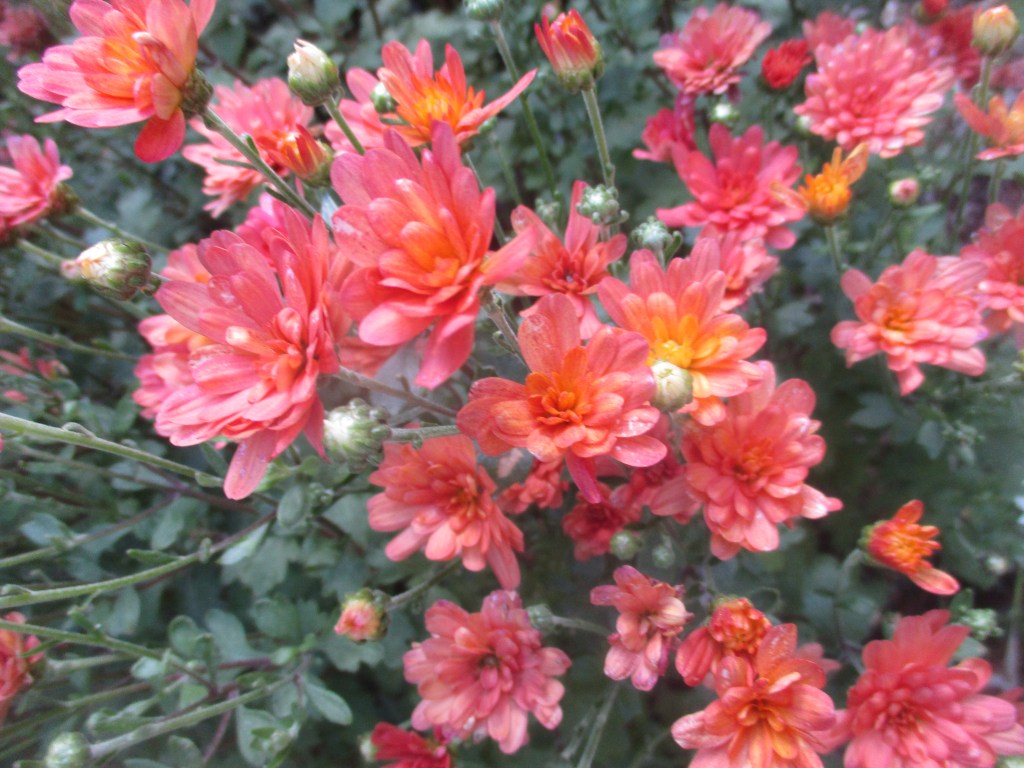
1. Chrysanthemum does not seem to be aware that it should bloom for autumn. Actually, it blooms whenever it wants to, and after this bloom phase, may also bloom for autumn.

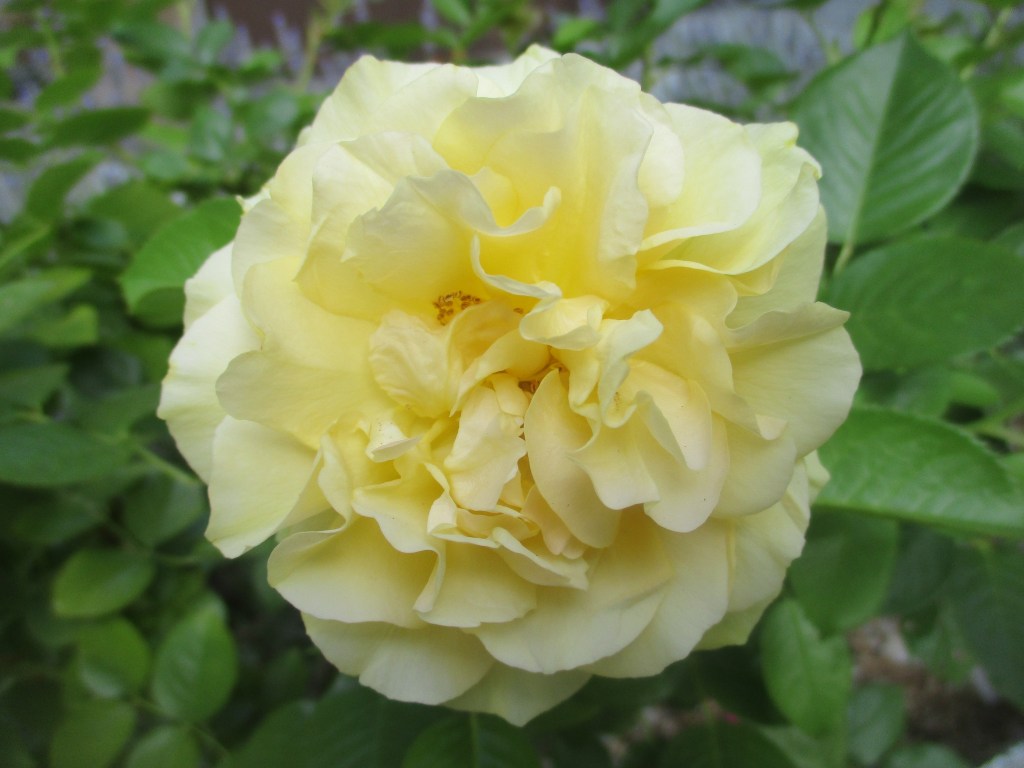
2. Roses should bloom from spring until autumn, but because of partial shade, generally finish with the best bloom by now. This year, their bloom continues as if it is still spring.

3. Lilies that grow from bulbs bloom only for spring, although many were still blooming recently. This one is a daylily. Like the chrysanthemum, it blooms whenever it wants to.

4. Petunia is a classic warm season annual for summer. This one is dressed up as Santa Claus for Christmas time though. Maybe it is actually dressed up like the flag of Austria.

5. This color is rad, even if I can not describe it. Is it purple? Is it burgundy? Perhaps it is irrelevant. I would not have selected it anyway. Such tasks require specialized expertise.

6. Ah, this is more my style. Even I can see that this is plain white. It is my favorite color, and is one of the two simplest. Only black is as simple; but it is very rare among flowers.

This is the link for Six on Saturday, for anyone else who would like to participate: https://thepropagatorblog.wordpress.com/2017/09/18/six-on-saturday-a-participant-guide/

Dog Days Of Summer Warmth

Every lawn has its dog days.

Summer began more than a week ago. Subsequently, the dog days of summer continue from the third of July to the eleventh of August. These forty dog days are the twenty days prior to and after the twenty-third of July. That is when the Sun aligns with Sirius, the Dog Star of the constellation of Canis Major, or ‘the Great Dog’. Dogs are actually uninvolved.

Nonetheless, dog days actually are a time for dogs to languish through much of the most unpleasantly warm weather of summer. Although local climates are generally mild, warm weather is not rare. It merely seems to be less oppressive than in other climates because of less humidity, and perhaps more of a breeze. Coastal influence is a major advantage.

Dogs drink more water during the dog days of summer because they lose moisture, with warmth, while panting. Vegetation also needs more than typical quantities of moisture to compensate for increasing evaporation from foliar surfaces. Aridity and any wind, both of which render warmth more comfortable for dogs and people, increase such evaporation.

Also, for most exotic (nonnative) vegetation, regular watering helps to sustain growth that warmth stimulates. Lily of the Nile can likely get enough moisture through the local rainy season to survive through the dry season. However, it is healthier and more appealing if occasionally watered to sustain its most vigorous growth during the dog days of summer.

Many plants are native to climates that supply rain in conjunction with warmth. They rely on moisture for normal growth. Various bananas, canna, angel’s trumpet and giant bird of Paradise grow very vigorously with sufficient moisture. Unfortunately though, insufficient moisture is very distressing to them. Drought tolerant species have a distinct advantage.

Turf, bedding plants and vegetable gardens need abundant water during the dog days of summer. Although some can survive with less than others, none are exempt. Most potted plants, especially those in hanging pots, are likewise dependent on systematic watering. Even if the weather is too warm to enjoy other gardening, watering can not be neglected.

Late Summer Bloom Until Frost

Some flowers bloom at odd times.

Seasonal changes keep gardening interesting. Like colors of a rainbow, seasons are not as distinct as their dates on a calendar imply. Each evolves into the next. Spring evolves into summer. Late summer is presently evolving into autumn. It happens like red evolves into orange on a rainbow. It is amazing that plants can monitor the changes so precisely.

Even if plants could monitor calendars, they would not. They are too busy monitoring the daily duration of sunlight. That is how they identify primary seasonal changes. Of course, they monitor the weather also. That is how they know more precisely when to react to the seasonal change. Plants are aware that it is now late summer, and they know what to do.

Most but not all plants bloom during spring or summer, so finish by late summer. By now, they prefer to prioritize seed production. Some continue to produce fruit to entice animals who eat it and disperse its seed within. However, some plants prefer to bloom late. Some bloom during autumn or winter. Some are so late that they are early during the next year.

Therefore, there is more to provide floral color through late summer and into autumn than cool season annuals and late blooming perennials. Butterfly bush, plumbago, bee balm, lion’s tail, Saint John’s wort and various salvia are now blooming for late summer. Some might continue into autumn. Oleander and euryops might bloom sporadically until winter.

Strangely, some flowers that bloom for late summer or autumn are from tropical climates. Because equatorial or tropical climates are not as cool during winter, or may lack winter, shortening days are not such a deterrent to bloom. However, many tropical plants bloom sporadically, rather than profusely within a particular season, and may be unpredictable.

Princess flower, mandevilla, hibiscus and angel’s trumpet may bloom at any time prior to winter chill, but may not. Those that do so may not repeat the process annually. Fuchsias are a bit more reliable for late bloom with flowers that are generally more interesting than colorful. Blue hibiscus looks more tropical than it is, with potential for late summer bloom.

Seasonal Changes Keep Gardening Interesting

Oleander continues to bloom into autumn.

Gardening is work. The extent of such work is proportionate to the techniques and scale of the gardening. Substantial gardens likely need substantial work. Fruit trees, roses and vegetables need more specialized work than lawns and wildflowers. Seasonal changes demand a strict schedule. It never ends. It is ironic that so many enjoy gardening to relax. 

In some climates, gardening is less work through the harshest of winter weather. No one wants to be outside in harsh weather anyway. That is no excuse here, where the garden remains active throughout the year. Perhaps that is a disadvantage of such mild climate. Furthermore, seasonal changes, regardless of how mild or slow, are reliably continuous.

Another month of summer remains. That may seem like enough time to stay on schedule for summer gardening, and maybe take some time to relax. However, it is already time to begin preparation for autumn gardening. Gardening should progress as efficiently as the seasons do. Seasonal planning facilitates this process. It will be autumn in only a month. 

Warm season annuals and bedding plants are still in season. Most will remain in season until cool weather in autumn or perhaps the first frost. Nonetheless, cool season annuals for autumn begin to grow from seed about now. If started early enough, they will be ready for planting into the garden at the proper time to replace their warm season counterparts.

The same applies to vegetables. Many warm season vegetables can produce until frost. A last phase of corn should still have time to mature. In the meantime, some cool season vegetables can begin to grow from seed. Broccoli, cabbage and larger types can start in cell packs or flats. For direct sowing, root vegetables may need to wait for garden space.

Some of the many plants that bloom through most of summer bloom less later in summer, even though the weather remains conducive to bloom. Some prefer to divert resources to seed production as the days get shorter. Old fashioned oleander with fragrant bloom can get shabby with seeds. Modern sterile types lack fragrance, but bloom until cool weather. It is a good time to collect seed from formerly seasonal flowers.

Weather Is All About Climate

00909thumb
Summer weather continue into autumn here.

Weather has no thermostat. There is no automation. It is naturally variable. Weather is constantly changing like, well . . . the weather. We take what we get when we get it. It is impossible to predict how this summer will end. Others in the Northern Hemisphere are already getting ready for autumn. It is likely to arrive bit later here than elsewhere. That is the nature of the Mediterranean climate.

Summers here are naturally long, dry, and somewhat warm. Rain is rare between spring and autumn. Almost all of the rain happens during the naturally mild winters. Springs and autumns both are naturally quite brief. Such weather may seem to be boring, but is excellent for gardening. It is why the summer growing season is so long. Unfortunately, it is also why the fire season lasts too long.

Indian summer is something of a misnomer here. This is not India. Nor is it Indiana. Besides, Indian summer in other regions of North America describes an unusual weather pattern, not the usual. It is unseasonably warm and dry weather after a first frost of autumn. Alternatively, it is unseasonably early warm and dry weather in spring. Locally, it is merely typical summery weather of autumn.

This weather pattern and climate were assets for agricultural commodities that grew here a long time ago. They are still assets for those who now live here, especially those who enjoy gardening. However, such weather necessitates certain accommodations. Irrigation for actively growing plants is important later into autumn than it is in other climates. Autumn planting happens later as well.

Nights continue to get longer and cooler though. It is not so obvious because gardening happens during the day. Warm season vegetables notice the difference, and slowly decelerate production. Some deciduous plants may slowly begin to discolor. Roses continue to bloom as they slowly begin to shed lower foliage. Eventually, they will get their last applications of fertilizer until next spring.

Warm season annuals may start to to look tired as fresher cool season annuals move in.

Summer Dormancy Is No Mystery

90821thumbCalifornia buckeye, Aesculus californica, is an enigma. How does it survive while defoliated for so much of the year? Not all are so mysterious. Those that live in sheltered or forested situations behave like normal deciduous trees, by defoliating in autumn, and refoliating in spring, after a brief winter dormancy. Those that are more exposed in warm and windy situations make us wonder.

After their brief winter dormancy, exposed California buckeye trees refoliate early in spring, as they should. Then, only a few month later, they defoliate through the warmest and most arid part of summer, which might be a few months long! As the weather cools and the rain starts, they refoliate briefly for autumn, only to defoliate in time for their winter dormancy. They are ‘twice deciduous’.

How do they photosynthesize enough to survive? It seems like they would consume more resources in this process that they could generate. They obviously know what they are doing, since they survive quite nicely in the wild. Furthermore, they are not the only species that can do this. Sycamores sometimes do it if the weather is just so, or if they get infested with anthracnose too severely.

Most deciduous plants defoliate only in winter because that is the worst time to try to photosynthesize. There is less sunlight available while the days are shorter, and the weather is cloudier. Frost, wind and snow would cause much more damage if deciduous plants retained their foliage. Defoliation is how they accommodate the weather. It is no different for plants that defoliate in summer.

Much of California is within chaparral or even desert climates. Native plants, as well as plants that are from similar climates, know how to live here. If they happen to be in a hot and dry situation, some may go dormant until the weather improves, even if they do not go dormant through the mild winters. This is why wild arums and some unwatered acanthus have died back to the ground, and why naked lady amaryllis will remain naked until the first rains in autumn.