Nix

Buick / Lincoln

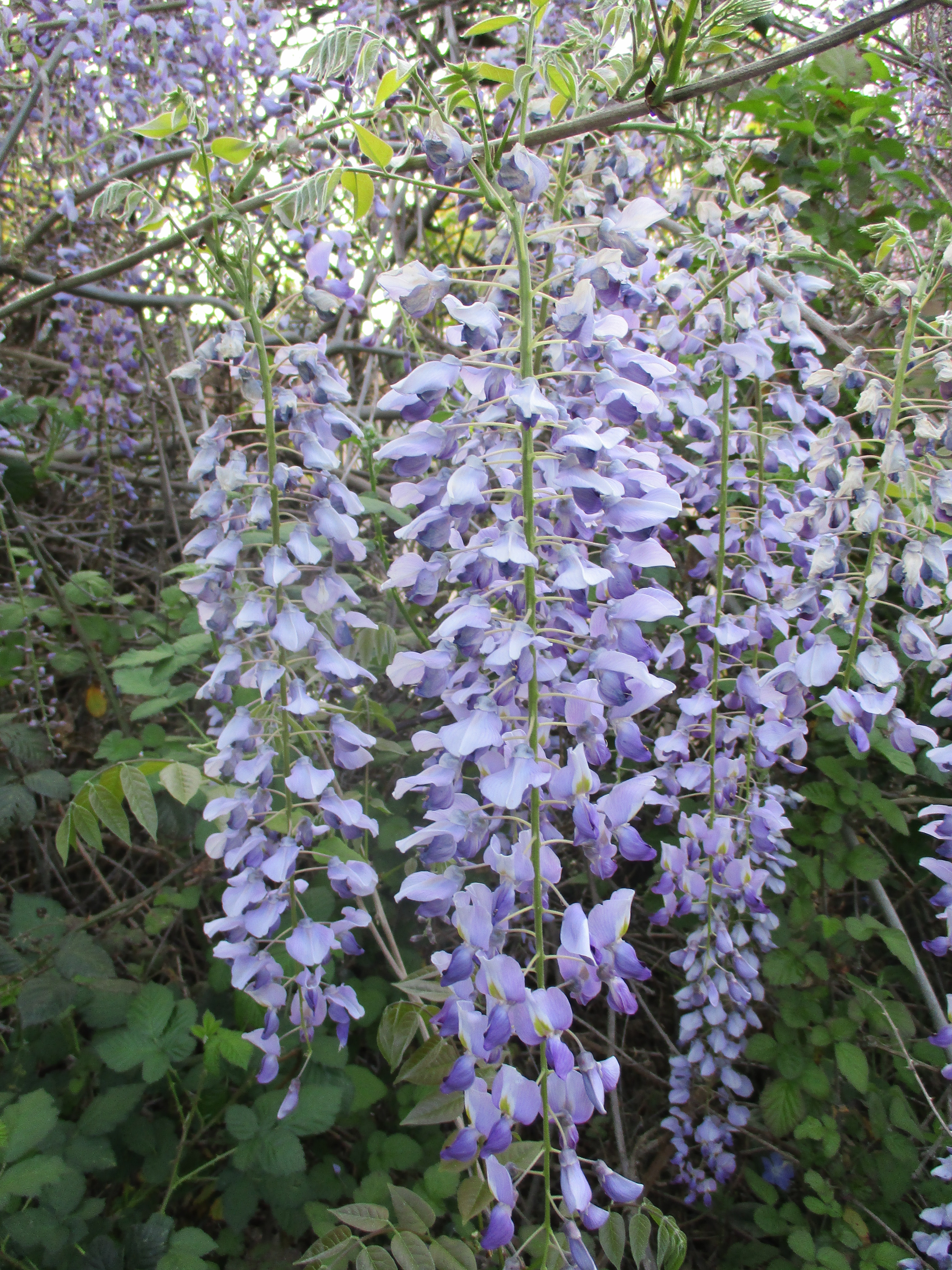
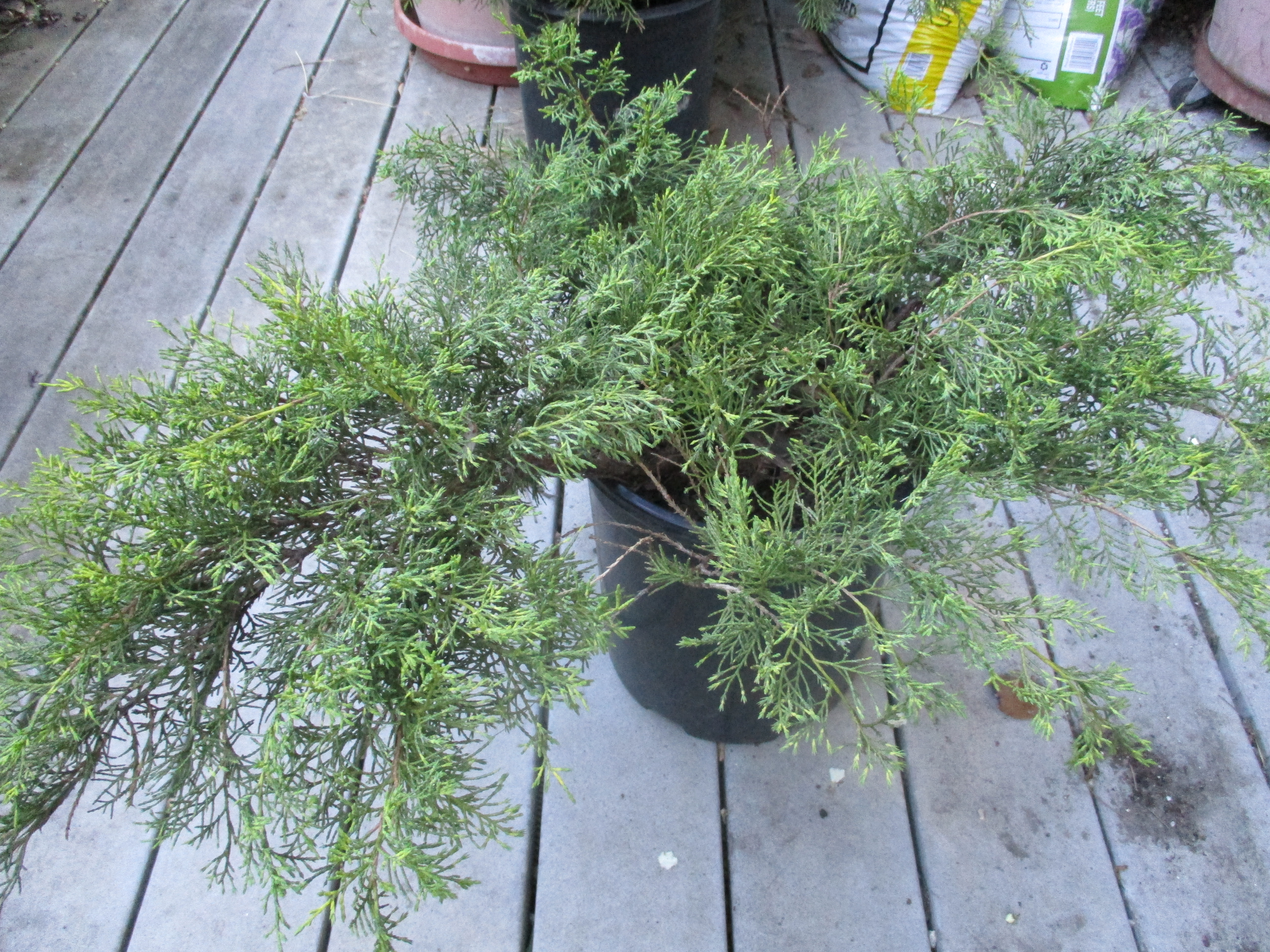
Carson, Rhody’s Roady, is a 1994 Roadmaster. Although Chevrolet Caprice, Oldsmobile Ninety-Eight and Cadillac Fleetwood are the same sorts of contemporary sedans, Buick Roadmaster is somehow designated as the last great American Sedan. All are very rare, likely because they were already so old fashioned when they were new. Finding Carson was no easy task. In the process, and to be a responsible consumer, I investigated other options, including Mercury Grand Marquis from about the same time. Ultimately, I really wanted a Buick, which is a bit more refined than a Chevrolet, but not quite as vain as a Cadillac. Although all options were very tempting, I have been completely pleased with Carson. A few weeks ago though, this 1992 Lincoln Town Car was acquired by the fleet at work. Because most of who work here are young people who lack appreciation for real sedans, particularly such totally awesome luxury sedans, this Town Car will be sold. Because such sedans are even more old fashioned than they were when they were new decades ago, it will not be sold for much. Goodness! It is extremely tempting. Town Car is the luxurious Lincoln version of the Mercury Grand Marquis. This particular Town Car is of the Cartier Edition, which would be a bit too froufrou for me if I could see what identifies it as such. I believe that his name is Nix, but I just refer to him as the Town Car to avoid getting too familiar or attached. His trunk is nearly as spacious as Carson’s, so can bring more plant material back from Southern California or the Pacific Northwest than a modern compact pickup, which was one of the justifications for investing in a sedan that I have no practical use for rather than a modern pickup.

No Bad Habit

Washingtonia robusta, Mexican fan palm

Technically, this one is different. I did not get it from a situation that it needed to be removed from at work, and then can it because I did not want it to be discarded. I did not grow it from seed or cutting that I ‘borrowed’ from a landscape somewhere else. I did not ‘borrow’ it from Brent’s gardens at the Jungalow. I did not find it for free on Craigslist.

I found it for free on the Marketplace of Facebook, which is NOT Craigslist or any other familiar source. Therefore, technically, it is not a bad habit.

It is a Mexican fan palm, Washingtonia robusta. It was too appealing to ignore. I noticed its post several days ago, but did not respond immediately. I thought that someone else would claim it if I ignored it long enough. No one claimed it; so it is here now. Actually though, I am very pleased with it.

It came from the Willow Glen neighborhood of San Jose, so is accustomed to excellent soil and climate. Its species is remarkably adaptable though. It will be as satisfied with the slightly cooler climate and sandier soil here. I will need to provide it with plenty of water while it disperses its new roots. It is only canned now because the situation that it will be installed into is not yet ready for it. A few deteriorating black locusts and box elders will need to be pruned or removed first.

As it recovers from transplant, the presently healthy leaves will likely desiccate and need to be pruned away. I will leave them until they do so because they may not, and they help to sustain new root growth and dispersion. The process is actually less stressful through the cool and rainy season of winter.

Stick in the Mud

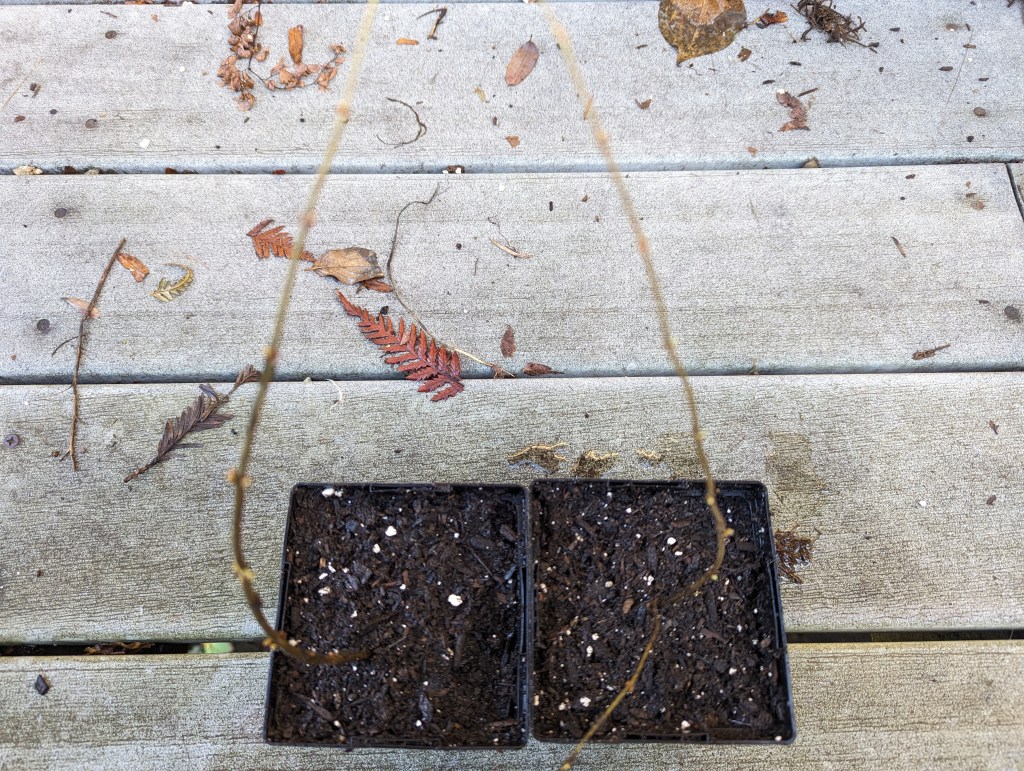
Correction: two sticks in potting medium

This is why I did not brag about my recently acquired snowberry within the context of my ‘Six on Saturday’ post this morning. They are not much to look at. Even if this illustration were more in focus, these bare twigs are indistinguishable from similar dormant twigs.

Nonetheless, I am pleased with their acquisition. I can not explain why, but I am pleased. The species, Symphoricarpos albus, is native, but not popular. I am beginning to realize why. Not only is it not much to look at in this particular condition, but it will unlikely ever become much to look at. It always looks scraggly, even while generating new foliage for spring. Its foliar color is unimpressively bland light green. Its twigs are very twiggy. Its dinky pale pink flowers are grungy and almost always infested with something or other. Its white berries, which is its primary attribute, are very scarce.

After so gleefully pulling this particular seedling from a landscape that it needed to be removed from, splitting it into two, and canning them as seen here, I realized that a rather large colony of snowberry inhabits another of the landscapes here. I could take as many rooted bits from it as I want without noticeably depleting it. For now, I am very satisfied with these. I have no plans for them, but will figure that out as they grow.

I suspect that snowberry can be more appealing in cultivation than in the wild. I intend to promote growth that is more vigorous than typical, which should enhance berry production. After this first winter, in which I dug and canned it, I will likely cut all of its growth to the ground annually during winter dormancy. I will not notice improvement this first year, but might after two years.

Six on Saturday: Best or Worst for Last

Indian summer is now doing what it does every few years or so. It was more than ninety degrees for a second day here yesterday, and was even warmer in the Santa Clara Valley. As typical, it happened after cooling weather already started to feel like autumn. It is not a good time to relocate vegetation, which I started to do while the weather was still cool. Also, I must briefly increase irrigation. Not all of these Six are relevant to the weather or any particular theme. Actually, half are irrelevant. The last is open to interpretation. It is not a good picture, but is likely the best.

1. Water from the spigot occasionally gets slightly colorful here. Water from the streams and creek is clearer. It is a consequence of hydrant flushing. It is harmless for irrigation.

2. Unidentified ferns needed to be removed from where an old fence was replaced. I can not simply discard them. I buried them elsewhere so that they can regenerate next year.

3. Unidentified spirea was also in the way. Of course, although I do not expect much of it to survive, I relocated it also. I typically cut this spirea back to the ground during winter.

4. Marah macrocarpa, wild cucumber develops huge tubers that can weigh more than I do. This one is merely about a foot and a half long, so is relatively small, but now what?!

5. Portulaca grandiflora, moss rose is not mine, is not here, and did not give me a good picture. Nevertheless, I feel obligated to share at least some summery floral color today.

6. Rhody did not cooperate for this picture either. I can not explain how he so efficiently hid behind only one yawn. As bad as this picture is, it just might be the best of these Six.

This is the link for Six on Saturday, for anyone else who would like to participate: https://thepropagatorblog.wordpress.com/2017/09/18/six-on-saturday-a-participant-guide/

Jungle Update

New foliage is already beginning to replace older foliage.

Strelitzia nicolai, giant bird of Paradise is growing! It is not much growth, but it is more than expected. The specimens were heeled in about a month ago to begin the slow process of recovery from division and relocation. Within the damp soil of their temporary situation, they should begin to develop rudimentary roots without actually dispersing them too remotely prior to another relocation to their more permanent landscape after the beginning of the rainy season of autumn. In other words, the roots should begin to grow, but not grow too much.

They can grow more when they get settled within their permanent situation. This is done in two separate processes because the specimens are easier to monitor and irrigate prior to rain within the confined space where they are heeled in. Besides, they would not be very appealing within their permanent landscapes until they begin to recover. Once they begin to recover, they should grow faster, so will not be too unappealing for too long, and even if they are, it will be through winter, when fewer people are here to notice.

Anyway, while they begin the process of recovery and development of rudimentary roots, foliar growth is expected to be minimal. It was expected to stagnate for at least a month or so, and then to slowly resume as the minimal foliage that was retained deteriorates. Like root growth, foliar growth should accelerate after final relocation.

Instead, foliar growth is already accelerating, perhaps as a response to removal of so much of the original foliage while foliage is necessary to sustain rudimentary root growth. Perhaps these specimens actually are as healthy and as vigorous as they seem to be. Although this fresh new foliar growth will be more vulnerable to frost through winter, it is nonetheless gratifyingly encouraging.

Junk In The Trunk

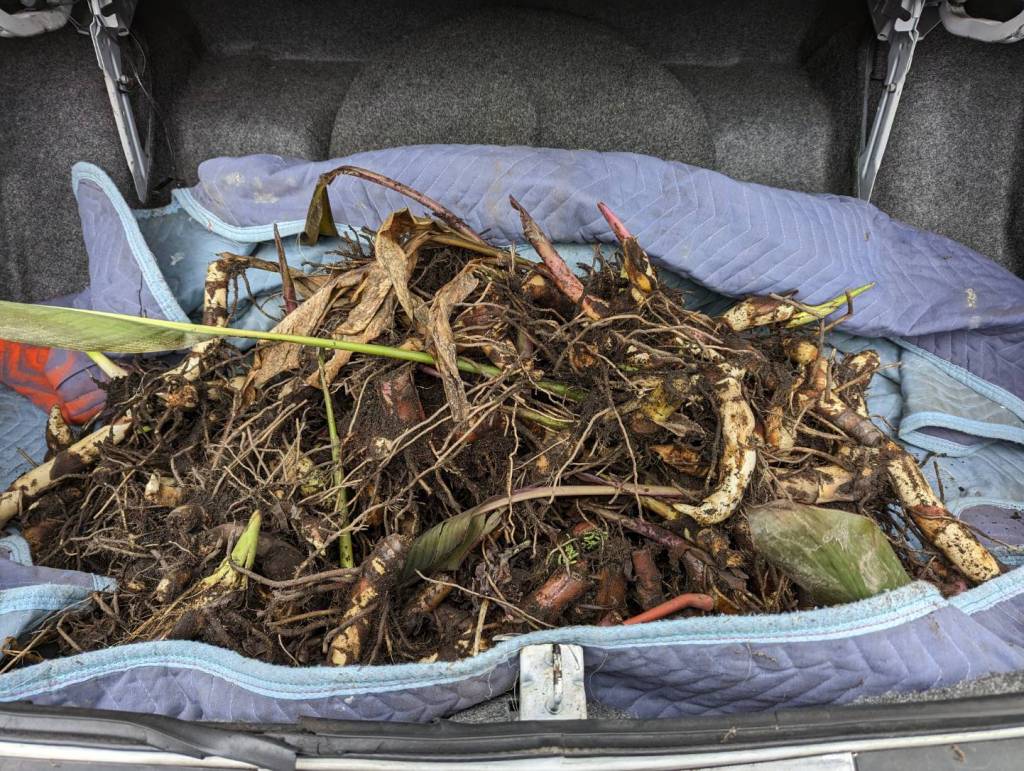
It is exactly what it looks like; more Canna rhizomes. I am very aware that there are already too many Canna here. I grew them. I do not care. I saw these in a neighbor’s garden, and asked for a few copies. She told me that I only needed to dig them myself, as if that might be a problem. As she pointed out those that were migrating a bit too close to her home, I dug many more than I should have. Since she was so generous to share so many, I felt obligated to remove all that were superfluous. Besides, to me, they are not junk. I am very pleased with them, even if they are a bit excessive.

There are two cultivars, and perhaps seed grown rhizomes of one of the two cultivars. The shorter sort are ‘Inferno’, which is the same as ‘Tropicanna’ and ‘Durban’. Some Canna cultivars seem to develop several synonyms. Its bright orange bloom stands tall above distinctively striped and bronzed foliage. It gets about six feet tall, so is only the shorter of the two cultivars because the other is so much taller. Although it is one of the more popular cultivars, I only recently acquired a single can of it from Brent last year. I am pleased to grow much more.

The other cultivar seems to be comparable to the unidentified cultivar at work that resembles and might actually be Canna musifolia. It has similar scrawny orange bloom on top of very tall canes that I must bend over for deadheading. Because I did not notice them until after frost, I do not know how bronzed the foliage is, or if it is bronzed at all. The neighbor who gave them to me says that they are ‘lightly’ bronzed. The newly emerging buds seem to be green without any bronze. I will be pleased with any color, but simple green would be awesome! Some of these may have grown from seed, so may be slightly different from the original.

There were enough rhizomes of ‘Inferno’ for a dozen #5 cans with about four rhizomes each. There were enough rhizomes of the taller sort that might be Canna musifolia for sixteen #5 cans with about three very plump rhizomes each. That was after sharing some with others at work, and leaving some for a neighbor of the neighbor who shared them with me. I intend to take some to the Pacific Northwest before the end of winter, but canned them all because I do not yet know when I will leave. I can always remove some from their cans, or just take them in their cans.

Since they fit into the trunk more easily than a previous batch of ‘Wyoming’ and a cultivar that resembles Canna flaccida that I obtained from another neighbor, they seemed to be less numerous. However, the previous batch included foliage. These rhizomes lacked foliage, and were actually a bit more numerous. Regardless, I am very pleased with them, and intend to enjoy growing them. As I closed the tailgate after unloading them, I could see that Rhody did not share my enthusiasm.

Deodar Cedar Migration – Update

P00105-1
Reassigned deodar cedars have adapted to their new landscape.

Reassignment is in season right now. The brief article about it that posted yesterday links to three other related articles. We have done quite a bit of it here, and intend to do a bit more for useful plants that happen to be in the wrong situations. It should be done before winter ends, to take advantage of both natural dormancy and cool winter rain that settles transplanted roots.

Most plants that get reassigned get dug from situations where they can not stay, and transplanted directly to where they will likely become assets to their respective landscapes. Those that do not get transplanted directly into other landscapes get canned and housed temporarily in the nursery. Some need to recover. Some must wait for landscapes that can accommodate them.

Some reassigned plants are feral descendants of exotic (non-native) species, that grew from self sown seed. Others were originally planted intentionally, but for one reason or a few, are no longer appropriate for their particular situations. Some are overgrown perennials that needed to be divided. On rare occasion, we encounter specimens of native species that get reassigned.

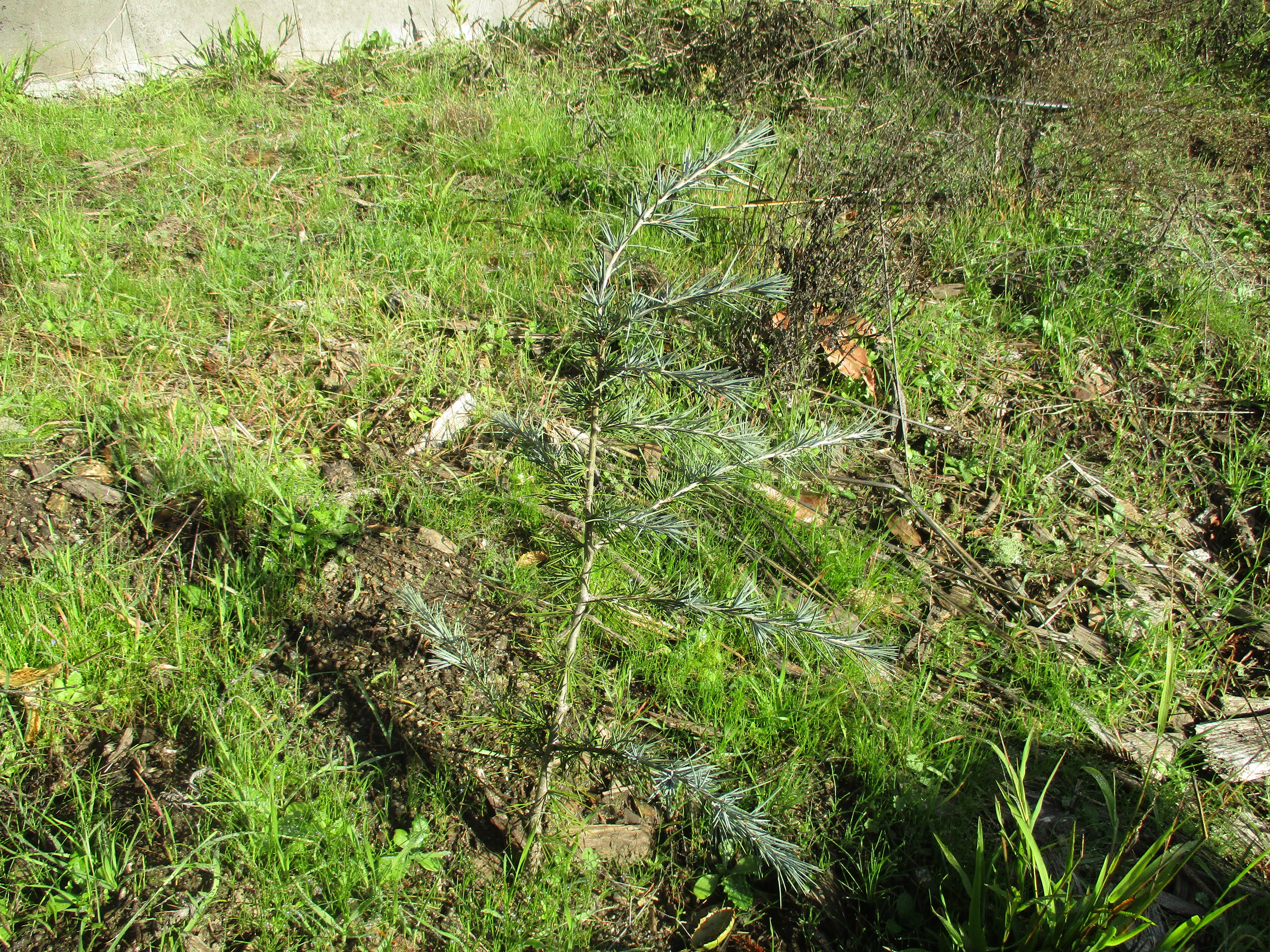
Deodar cedar that were reassigned slightly more than a year ago recovered from the process last spring and summer, so should grow this year as if nothing ever happened. Unfortunately, several were inadvertently killed when the roadside weeds and grasses that they grow amongst were cut down. In other areas, too many superfluous specimens survived, so must be culled.

Those that will be culled out need not go far. They can be plugged back to replace those that were mown down. The second process will be easier than the first. Superfluous specimens were reassigned because we expected nearly half to not survive the process. Except for those that were mown down, almost all survived. If not culled, they will get too crowded in just a few years.

There are plenty more where they came from. The four parent trees are prolific with their seedlings. We can not reassign all of them to other landscapes, and should not waste resources on canning specimens that will not likely be accommodated within any of our landscapes. I will likely can many of them, but not for here. They may become GREEN street trees in Los Angeles.

P00105-2
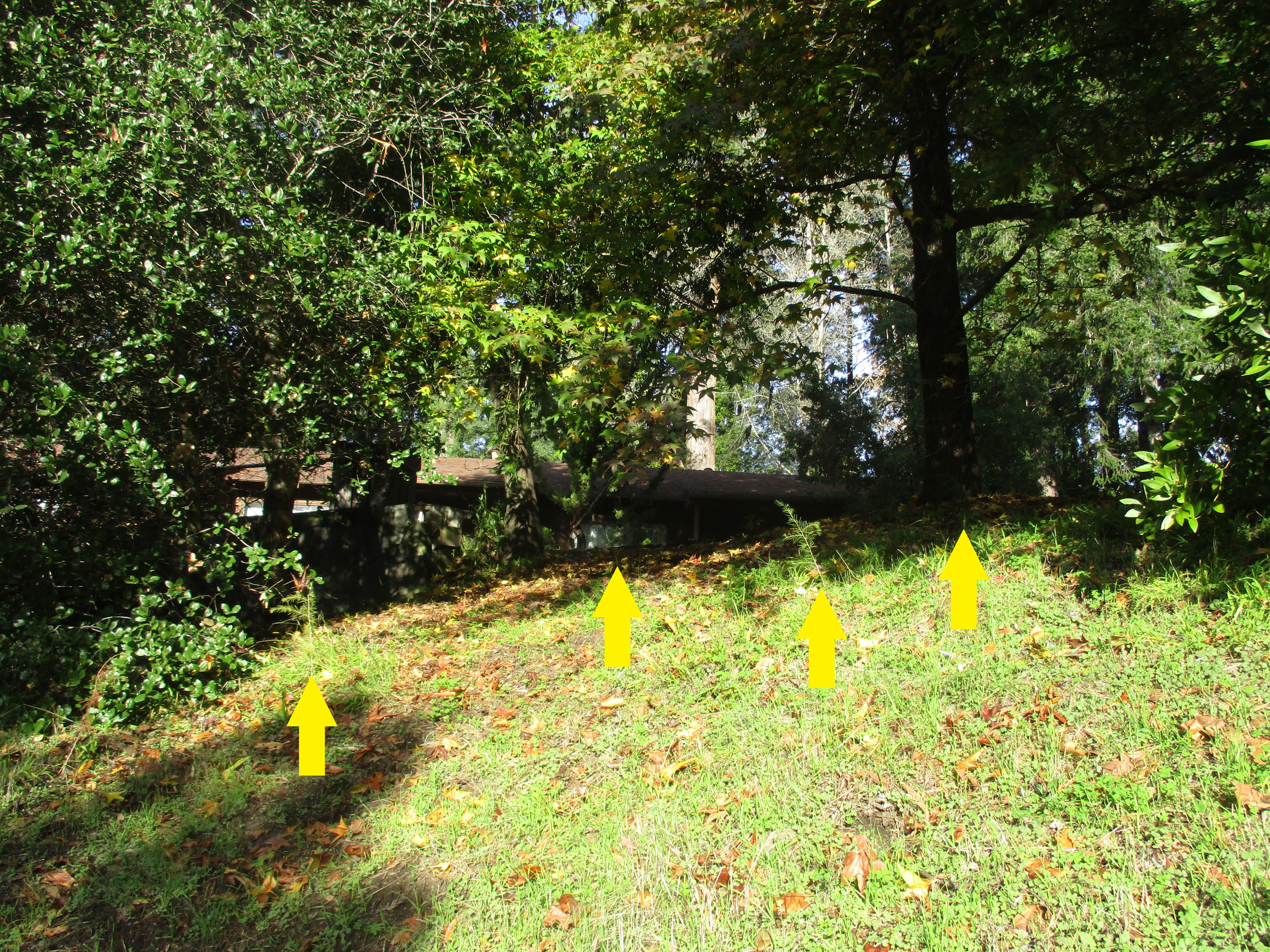
The four reassigned deodar cedars in this small space are not easy to see in this picture.

If it seems as if the reassigned deodar cedars are too close to surrounding trees, it is only because the surrounding trees will be subordinated and eventually removed as the deodar cedars grow big enough to replace them. One is a dangerously disfigured sweetgum with roots that are displacing pavement above. Two others are disfigured and deteriorating California bay trees.

Jumping Juniper!

P80519KOh, the stigma of juniper never gets old! No matter how many cool new cultivars get introduced, and how many specie get rediscovered, they are still though of as those nastily prickly ‘tams’ that were too common in the 1950s. Even some of us who really like junipers dislike tams, not only because they share their stigma with all other members of the genus, but also because they really are nasty and prickly, and not as useful as their overuse would suggest. Are they deep ground cover or shallow shrubbery? They might work for a few years, or maybe many years, but they eventually crash into each other or other plants and pile up into a dense thicket that can not be pruned without being deprived of all dignity.

In the neighborhood where I primarily work, we have a ‘do not plant’ list. Such lists typically cite specie that are notoriously invasive, such as pampas grass, blue gum eucalyptus, Acacia dealbata and English ivy. In regions where fire is a concern, specie that are notoriously combustible, such as cedar, cypress, rosemary and manzanita, are also cited. Almost all of the specie on our list are there for good reason. I mean, we can figure out why they are undesirable in the neighborhood. Then there is juniper. No specie are cited; just the entire genus. Juniper.

Perhaps the eastern red cedar, Juniperus virginiana, is too likely to become an invasive exotic here, so the entire species was condemned. Perhaps junipers in abundance are just too combustible. The ‘do not plant’ list provides no explanation.

There are a few mature junipers in the landscapes that were installed before the list was compiled. A hedge of such junipers was recently removed because it was in the construction zone of buildings being renovated. It was no loss really. They were quite disfigured after decades of reliable service. However, at one end of the hedge, there were two much younger junipers that were added relatively recently to replace one that had been removed to facilitate access to subterranean utilities. They might have been added after the ‘do not plant list’ was compiled. No one really remembers. The list was compiled a few years ago, but distributed only recently.

Before the landscape was demolished, we took a few plants that could be dug up, and canned them back at the nursery for use elsewhere in other landscaped areas. We could not just leave the two small junipers to die. We dug and canned them too. Now they are back in the nursery, with no hope of finding a home back in the landscape from which they came. They happen to be nice specimens, and are certainly NOT tams. No one remembers what species or cultivar they are. They happened to match the original hedge remarkably well, which is rather impressive considering how modern cultivars have replaced most older cultivars.

I happen to have three canned junipers already. They are North American natives. Two are eastern red cedar, Juniperus virginiana, with two very distinct personalities. The other is the Juniperus communis ‘Compressa’, which is a compact cultivar and the closest I could get to the common juniper. Apparently, the common juniper is not so common in the natural form. I already do not know what to do with these three, although the common juniper can stay canned indefinitely.

These other two displaced junipers will probably go into a landscape pretty soon, while they are not yet root-bound. They just can not go any place close to where they came from.
Autumn Really Was For Planting

70531thumbIt is easy to see why there are optimum times to prune, and just as easy to see when pruning should not be done. Generally, deciduous plants prefer to get pruned while dormant and bare. They should not be pruned when actively blooming or making new foliage. Roots are of course not so easy to see. Do we really know what they are doing, or what sort of mischief they are getting into?

Autumn is the best time for planting most plants. They are less active than they had been earlier in the year, and many are going dormant. Either way, they do not need much. Once in the ground, their roots are kept cool and moist by the weather. They get to sit there all winter, as they slowly begin to disperse their roots to get ready for the following spring. It all fits into their natural life cycle.

Shopping habits, however, do not. By autumn, many plants are neither as pretty nor as tempting as they were earlier in the year. By winter, the weather keeps many of us inside, and out of nurseries. Now that it is spring, it is difficult to resist all the pretty plants that are blooming so delightfully. We are tempted to buy them compulsively, even if we have no immediate plans for them.

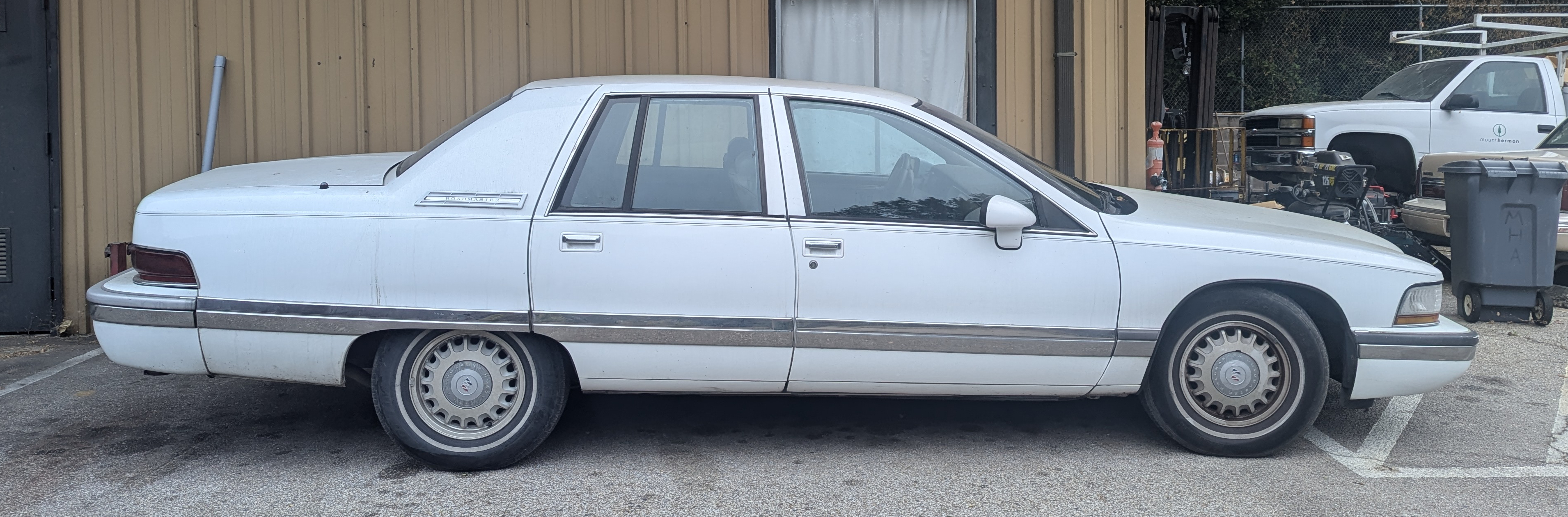
That is okay. We can make this work. Buying certain plants in bloom actually has certain advantages. It shows how and when particular plants bloom. This might be helpful when trying to decide between different cultivars of deciduous magnolias, flowering cherries, flowering crabapples or wisterias, for example. Besides, they will finish blooming quickly, and start to produce new foliage.

If planted before new foliage matures, new plants should be planted in cool weather, and maybe sprayed lightly with water after the roots get soaked in. This is best for drought tolerant plants like ceanothus, that want out of their cans (nursery pots) as soon as possible. If new plants stay in their cans long enough for foliage to mature, they must be watered carefully, but not kept saturated. The black vinyl cans should be shaded, since they get warm in sunlight.