
The trunk of a tree fern is really just tough compressed roots growing downward through dead organic material left behind by earlier growth. The foliage and terminal shoot high on top is just like any other fern that never leaves the ground. Because such a trunk is porous, it is ideal for epiphytic plants that, in the wild, mostly cling onto trees instead of growing on the shadier forest floor. Even though most epiphytic plants are able to cling to just about anything, many prefer tree fern trunks because they can actually root into them.
The shaggy trunks of Tasmanian tree fern, Dicksonia antarctica, take decades to grow tall enough for smaller plants to be visible below the lush foliage, but are plump enough to host a rowdy party of clinging epiphytes. Most get only about four or five feet tall, with the foliage standing a few feet higher, although some old specimens in Golden Gate Park are more than fifteen feet tall, and very old specimens in their native Tasmania can get nearly fifty feet tall.
The big lacy leaves spread about six feet wide, and can reach twice as wide in shadier spots. Shade also makes the foliage darker rich green. Like almost all ferns, Tasmanian tree fern like relatively rich soil and regular watering. Unlike other tree ferns though, it tolerates frost.
 Some of us might remember Delta maidenhair fern, Adiantum raddianum, as a houseplant that was popular for terrariums in the 1970s and into the 1980s. Although quite happy in terrariums, it eventually gets big enough to crowd other plants in such tight spaces. It prefers to be potted on a porch, or in a regularly watered and sheltered spot in the garden. It tolerates quite a bit of shade.
 Many of the most popular plants are expected to bloom to add color and fragrance to the garden. Many others are grown to produce fruit or vegetables. Some are appreciated for their foliar color in autumn. Big trees are grown for shade. Turf grasses are grown as lawn. Evergreen shrubbery makes hedges. It seems that all plants perform particular tasks in the gardens which they inhabit.
 It could be either an asset or a liability. With few exceptions, ferns do not want to be too exposed to direct sunlight or wind, especially during warm and dry weather. However, as long as they get just enough filtered light, they can be quite happy in sheltered spots that are a bit too shady for other plants. Most like to be watered regularly, and perhaps lightly fertilized in spring and summer.
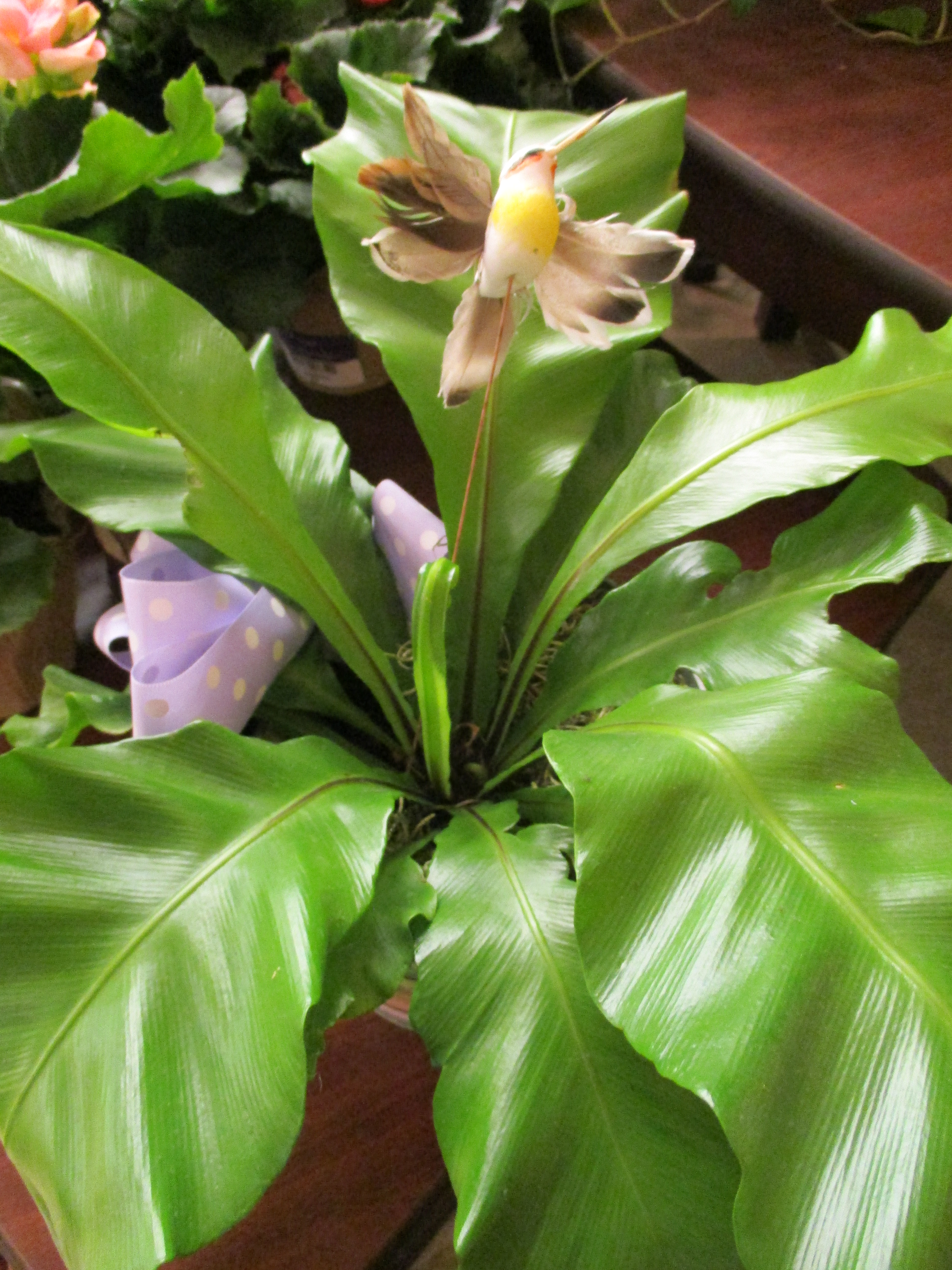 Ferns tends to be . . . well, ‘ferny’, with divided or intricately lobed foliage. Staghorn ferns and bird’s-nest ferns are the more familiar of the rare exceptions. Staghorn ferns have two types of simple undivided fronds, and both types lack rachi. Bird’s-nest ferns have weirdly simple fronds that, although equipped with prominent rachi, lack any distinctive division or lobes that make ferns ‘ferny’.
 The list of what ferns will not do is more noteworthy than the list of what they will do. They do not bloom with colorful or fragrant flowers. The do not produce fruit. Very few turn color in autumn, and their color is generally nothing to brag about. Most ferns will not maintain their appeal through drought, or if neglected too long. Nor will they tolerate heat and wind, especially in full sun exposure.
 Tony Tomeo