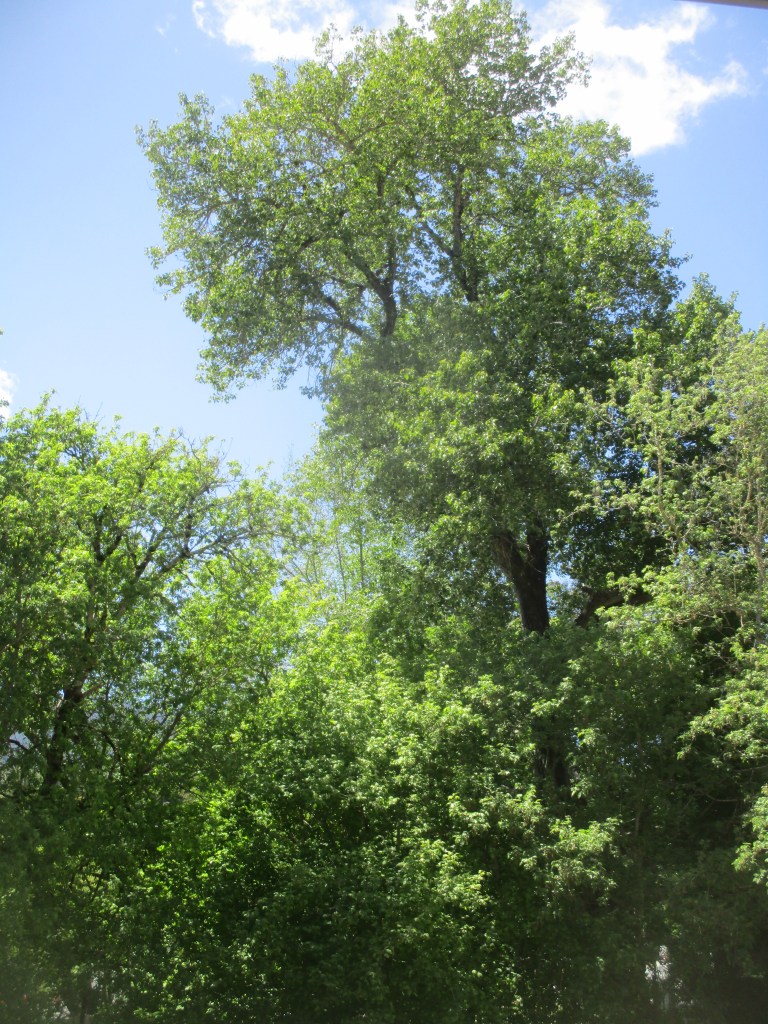
Blue gum earned a bad reputation for all species of the genus decades ago. It really is as massive, messy, combustible, unstable and structurally deficient as reputed. Some find its foliar aroma to be objectionable. Fortunately, it is not as invasive as formerly alleged. It is common only because it was planted so extensively a long time ago, and is somewhat naturalized in some regions.
Other eucalypti are more appropriate to landscape situations than blue gum, which is #6 below. #3 and many others are now classified as Corymbia, rather than Eucalyptus. Genus is omitted for these Six.
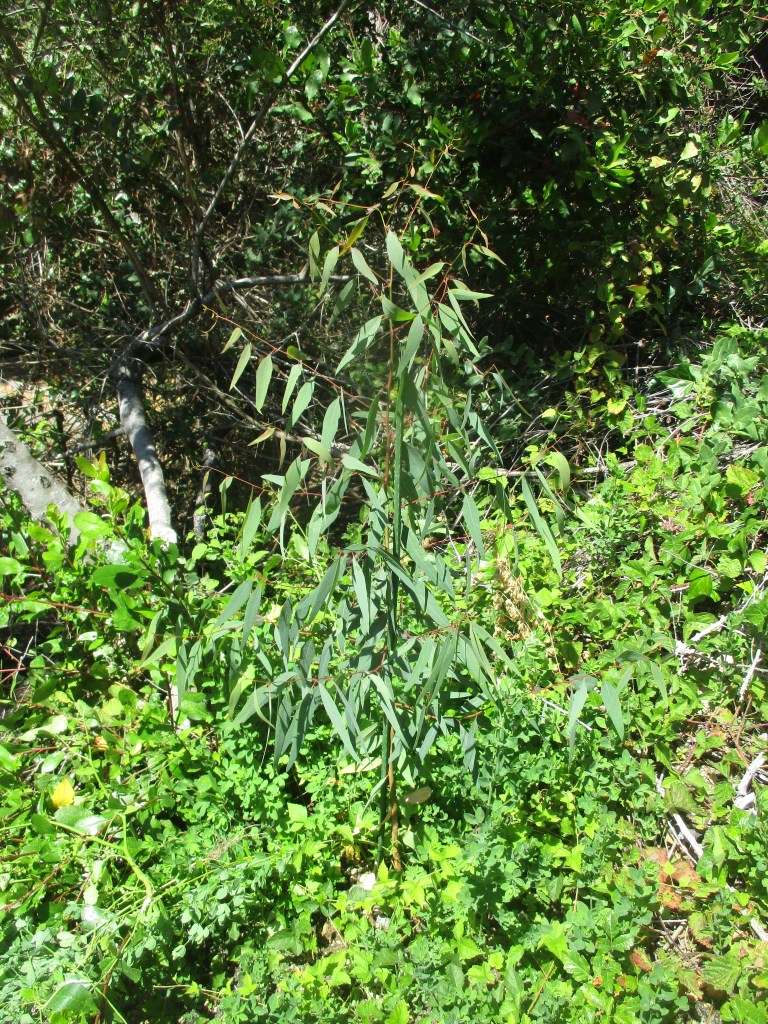
1. pulverulenta or cinerea is the only eucalyptus that was here when I arrived. I learned this species as ‘cinerea’. However, the correct designation seems to be ‘pulverulenta’. #2 should match.

2. cinerea or pulverulenta, as mentioned above, was supposed to match #1. It was labeled as cinerea. I thought that #1 is cinerea. I still do not know which is cinerea and which is pulverulenta.

3. sideroxylon is the first tree I planted in 2021. For such a dinky tree, it already has quite a history. I gave it to my colleague who appreciates the distinctively dark and coarsely textured bark.
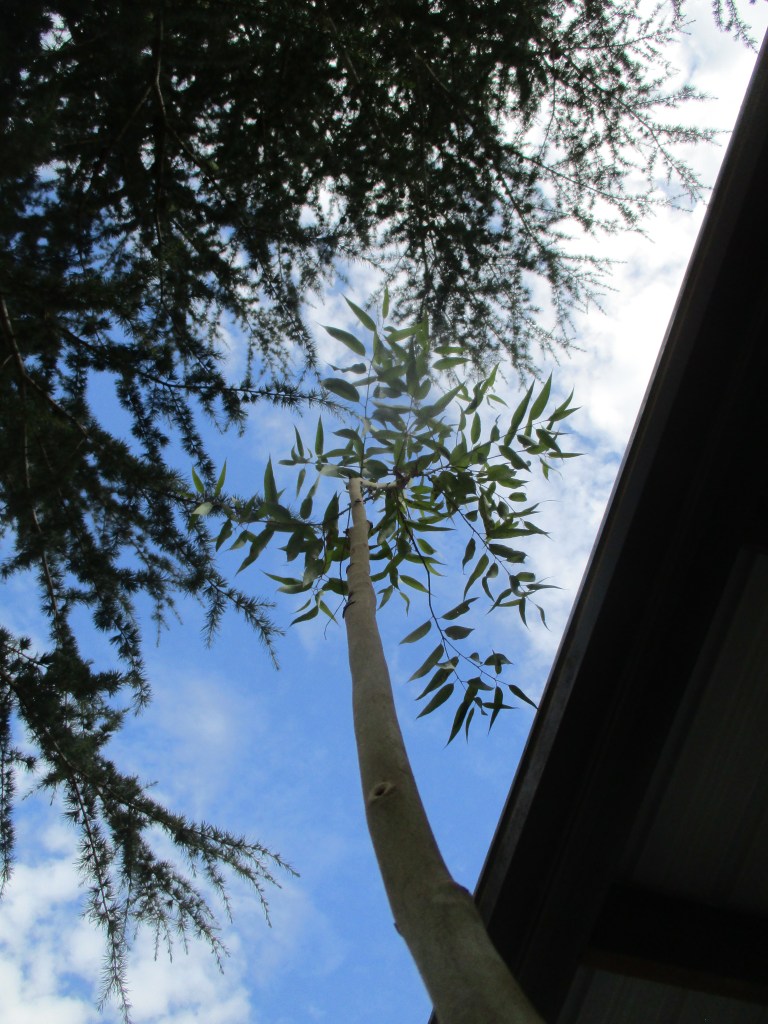
4. citriodora is as goofy as it looks. It is about fifteen feet tall, with just a few leaves at the very top. Its smooth white bark contrasts with that of #3, which it will be planted close to this winter.
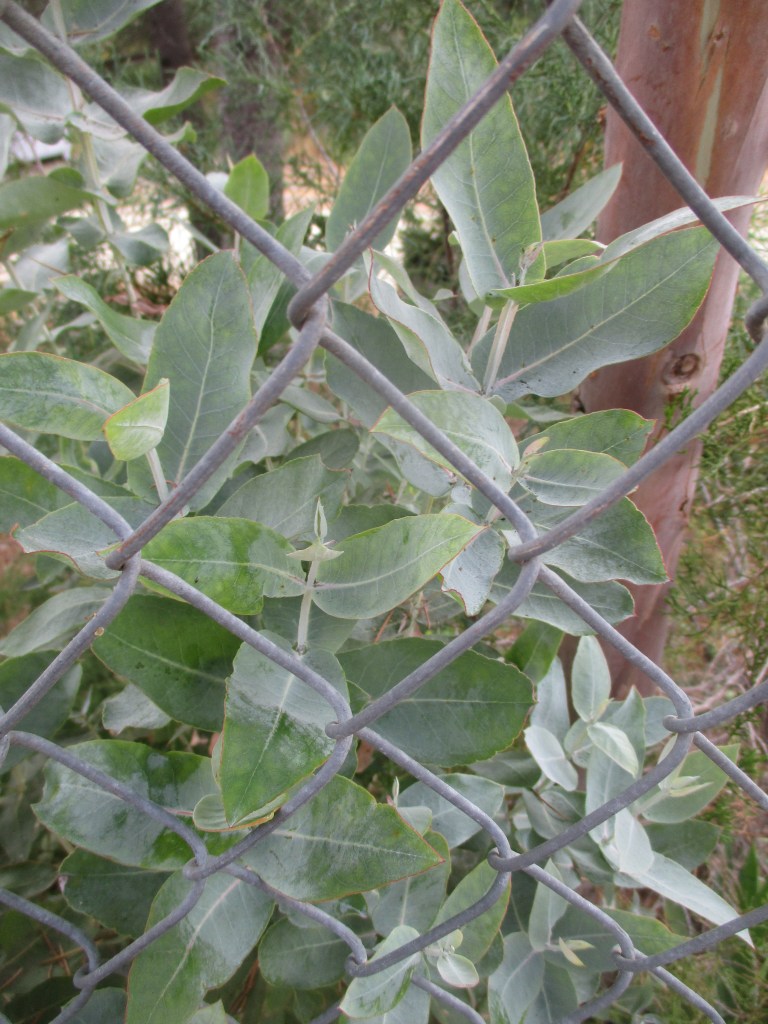
5. globulus ‘Compacta’ gets coppiced to produce aromatic juvenile foliage, but is less aromatic than the straight species, #6. It might be my least favorite eucalyptus, although I am fond of #6.
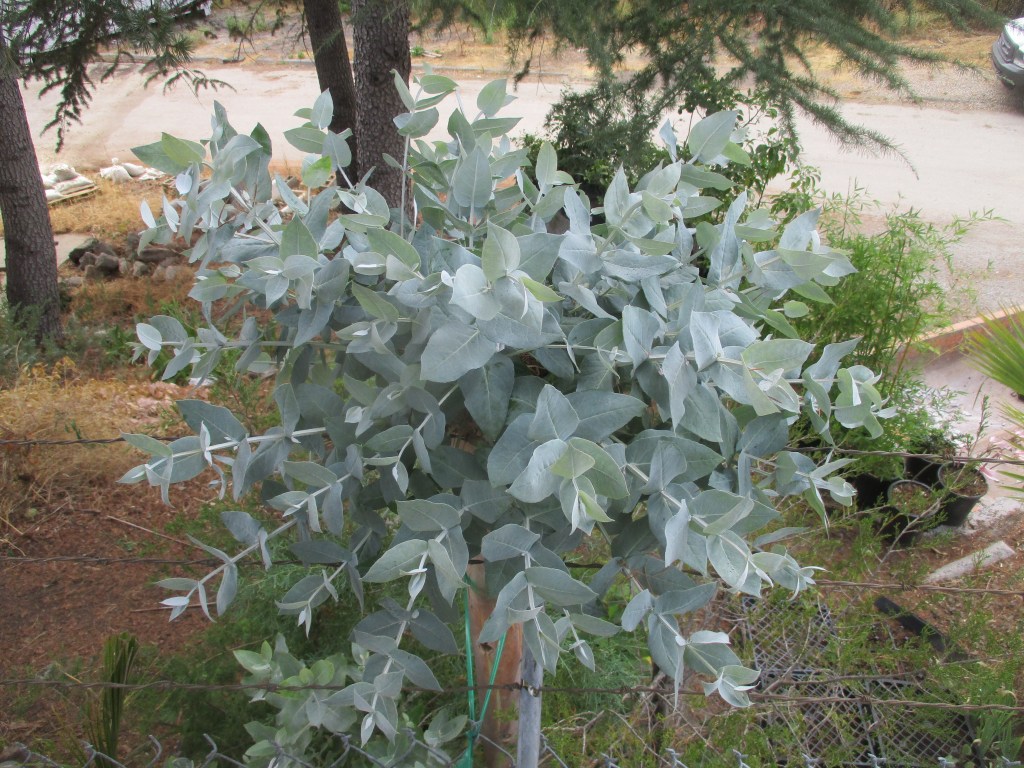
6. globulus gets pollarded to produce aromatic juvenile foliage, like #5, but on a trunk. It is the eucalyptus that gives all other eucalyptus a bad reputation. Nonetheless, I like its grand stature.
This is the link for Six on Saturday, for anyone else who would like to participate:
https://thepropagatorblog.wordpress.com/2017/09/18/six-on-saturday-a-participant-guide/





 Tony Tomeo