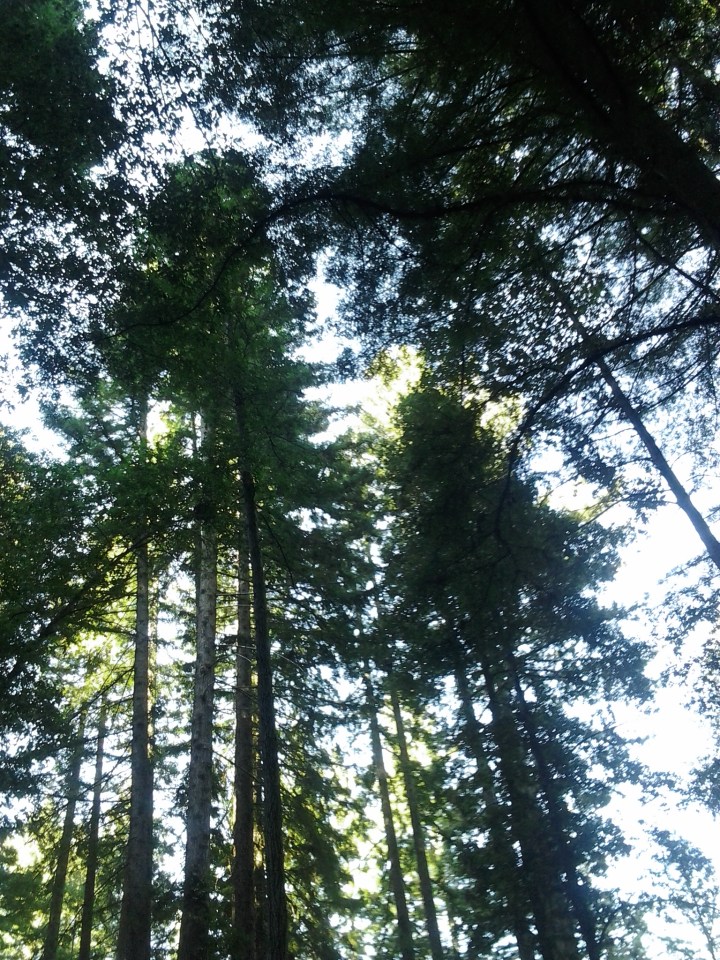
 As the deciduous trees that will soon be coloring for autumn defoliate for winter, the evergreen trees will become more prominent. Some evergreen trees will drop some of their foliage along with deciduous trees through autumn and winter. Many drop some of their old foliage as new foliage develops in spring, or later in summer. All are on distinct schedules, but are never completely bare.
That certainly does not mean that evergreen trees are not messy. To the contrary, some happen to be significantly messier than some deciduous trees are. They are only evergreen because they do not drop their old foliage until it is replaced by new foliage. Whether individual leaves last just slightly longer than a single year, or for several years, they eventually shed and fall to the ground.
In fact, evergreen trees may shed small but pestering volumes of foliage for a few months or even constantly throughout the year. Some deciduous trees defoliate so efficiently within a very limited time once the weather gets cool, that all of their fallen leaves will be raked away within only two or three weeks. Of course, some trees, both deciduous and evergreen, drop flowers or fruit or both.
Not only do most evergreen trees shed for a longer time than most deciduous trees do, but most shed foliage that is not so easy to rake away. Cypress shed minute and finely textured leaves that are impossible to rake from lawns, but toxic if they accumulate. Juniper and arborvitae are easier to accommodate only because the trees are smaller. Fir, spruce and cedar have bigger needles.
Broadleaf evergreen trees are very different from coniferous trees. Their leaves are considerably easier to rake. They are generally more substantial than those of deciduous trees though. Some may not decompose so readily in deep groundcover. Southern magnolia leaves are notably slow to compost. Instead of producing cones, some broadleaf trees drop acorns or other messy seed.
Nonetheless, where there are compatible with their landscapes, evergreen trees are as practical as deciduous trees are.
 Out in rural chaparral regions, where water is scarce, the big and bold California sycamore, Platanus racemosa, somehow seems to find the spots where groundwater is not too far below the surface of the soil. It is technically a riparian tree, that is just as comfortable competing with cottonwoods and willows along forested rivers and floodplains. It eventually get too big and messy for refined urban gardens, but is somewhat popular nonetheless.
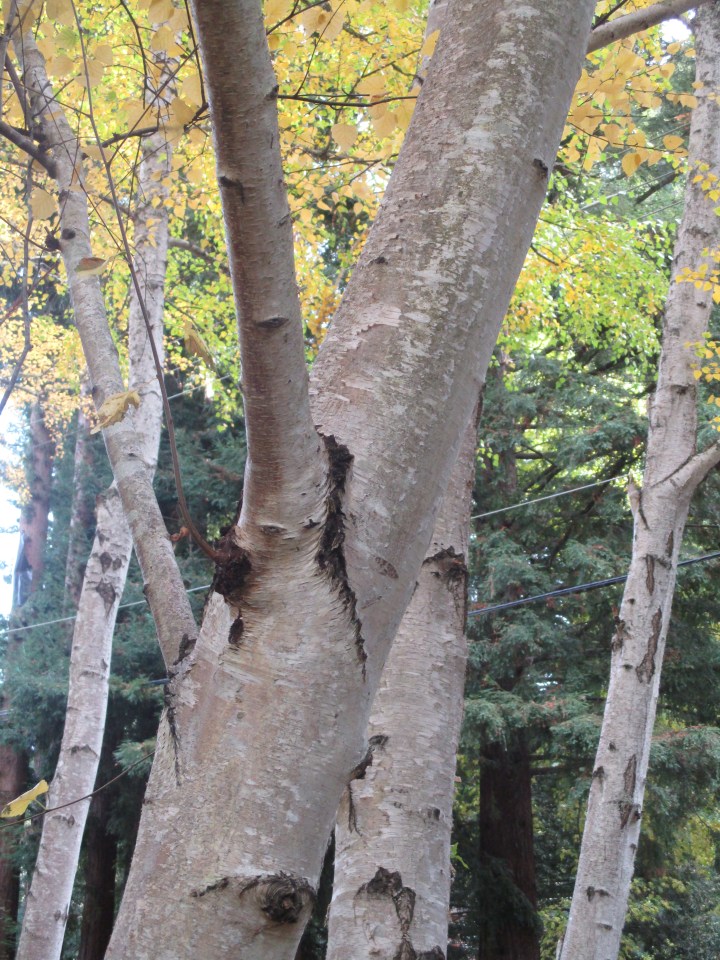 Like a flower girl scatters rose petals ahead of a wedding procession, European white birch, Betula pendula, tosses its small deltoid leaves soon after turning soft yellow with autumn chill. Color may not last long on the trees, but becomes a delightful mess for those who appreciate such assets. The primary allure though, is the slender strikingly white trunks, accented with black furrowing.
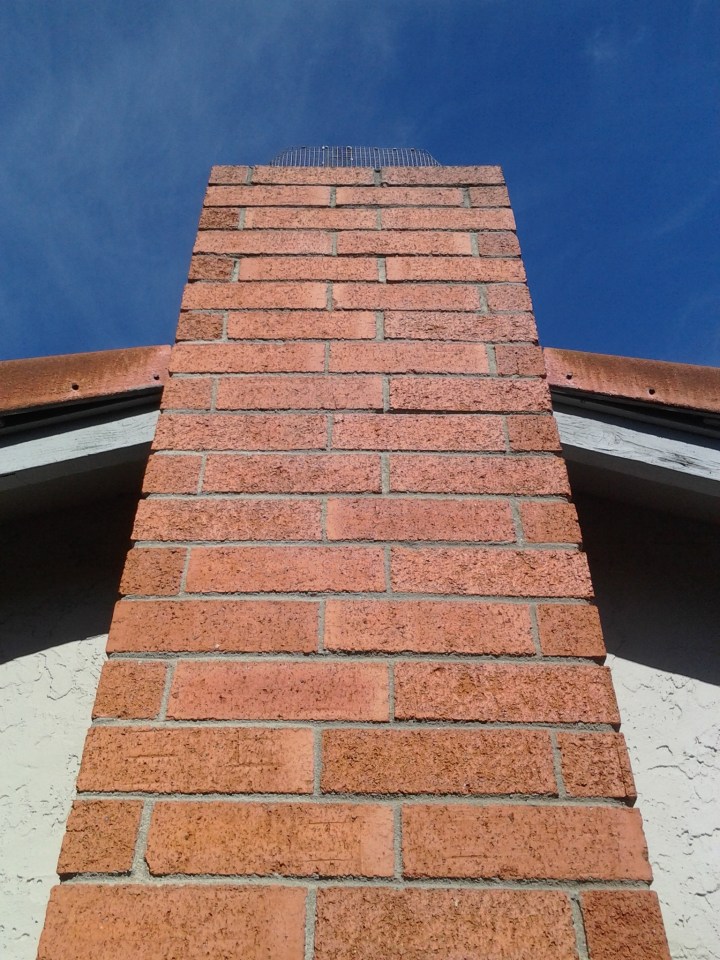 Fireplaces simply are not what they used to be. Building regulations in many municipalities do not allow for the construction of new fireplaces, except only for pellet stoves. Fireplaces that get damaged by earthquakes are commonly removed instead of repaired. Now that urban sprawl has replaced so many of the rural areas and defunct orchards, firewood is more expensive, even if purchased from a tree service. When a tree needs to be cut down, no one seems to have the time to cut and split the wood.
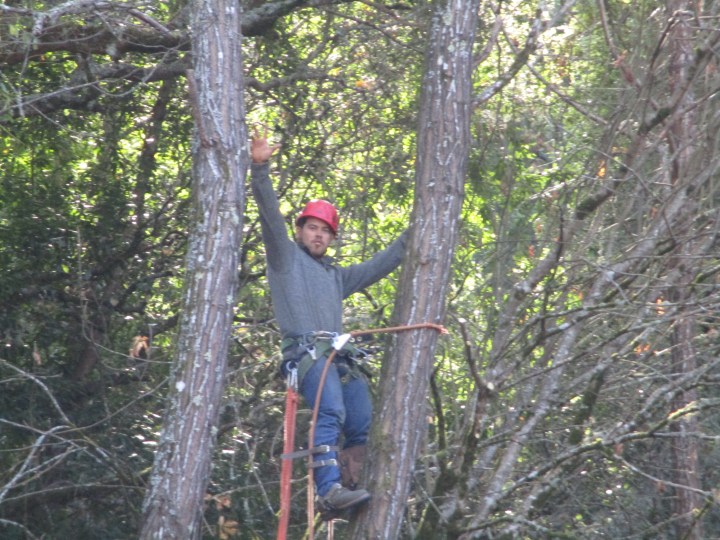
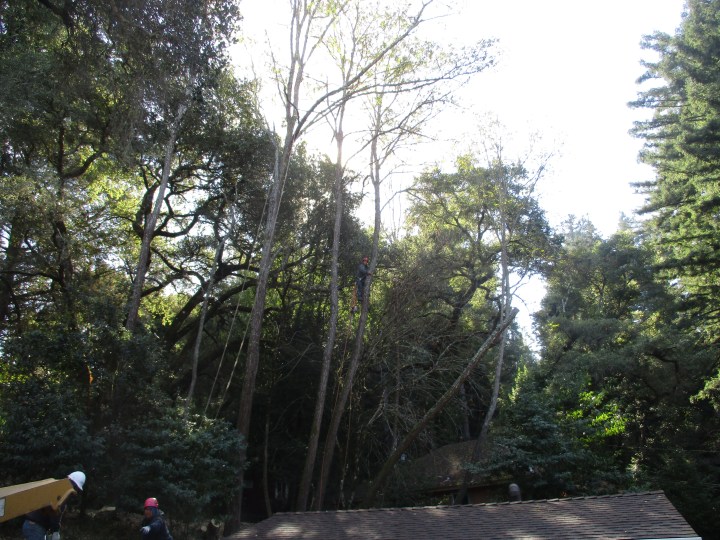
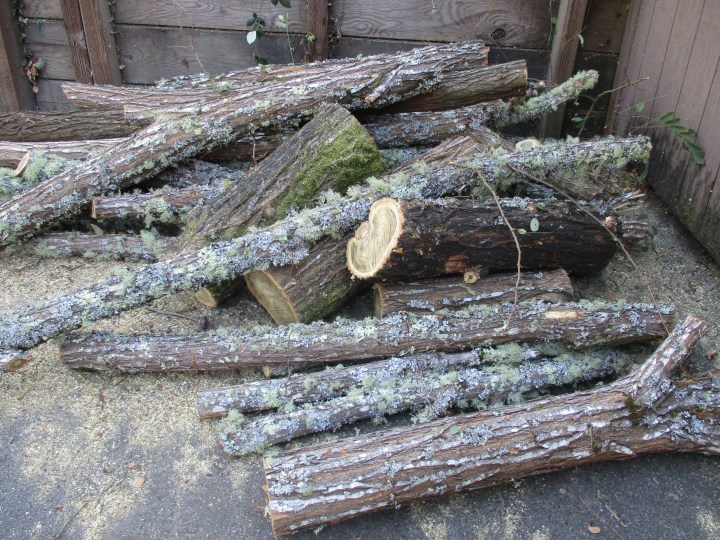
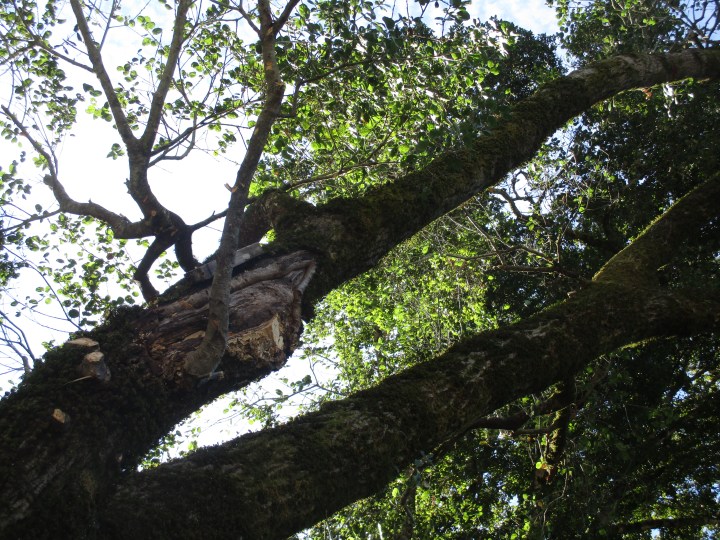

 It is almost never planted in home gardens, but the native red willow, Salix laevigata, has a sneaky way of getting where it wants to be. The minute seeds go wherever the wind blows them. Because it is a riparian tree, red willow prefers well watered spots. If not detected and pulled up in the first year, it can grow rather aggressively, and overwhelm more desirable plants, although the somewhat sparse canopy makes only moderate shade.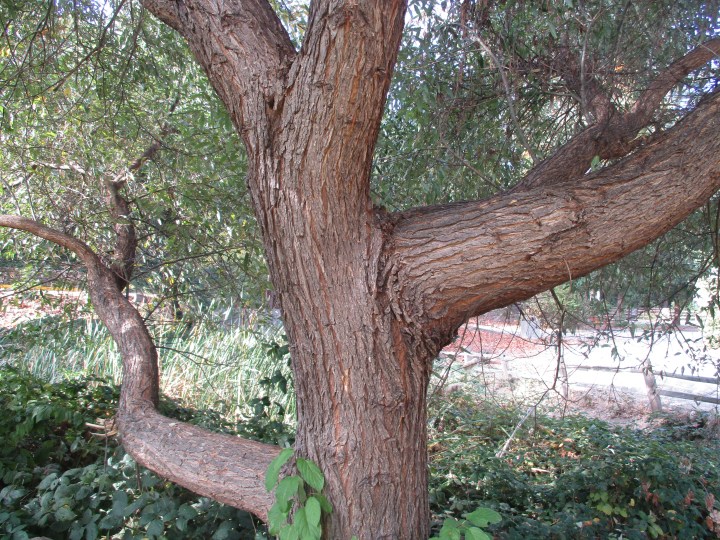
 The ‘X’ preceding its Latin name ‘X Cupressocyparis leylanii‘ designates Leyland cypress as a hybrid of two distinct genera, namely Monterey cypress and Nootka cypress. (Those who consider the parents to be two species of the same genus know Leyland cypress as Cupressus X leylandii.) The many cultivars combine desirable qualities of both parents, but also innate weaknesses.
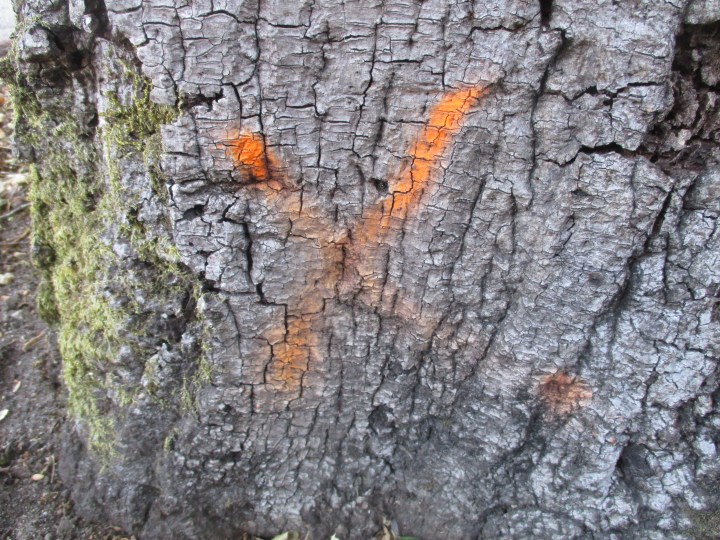 Horticulture is not all about growing things. If everyone was out planting trees, the World would eventually be overwhelmed with forest. It is sometimes necessary to cut trees down. There are several at work that we have been wanting to cut down for quite a while. Some are structurally deficient enough to eventually become hazardous, which is unacceptable in public spaces.
 As the colorful deciduous trees go bare, the evergreen trees get more attention. A weeping white spruce, Picea glauca ‘Pendula’, really stands out. It grows slowly to only about fifteen feet tall and maybe five feet wide, so does not need as much space as a typical spruce tree. What makes it so distinctive is the weirdly pendulous stems that hang limply from a strictly vertical trunk. It is hard to believe that it is only a different variety of the same species as the dwarf Alberta spruce, which is very short, dense and symmetrically conical, with stout little stems. The foliage of weeping white spruce is lighter green than that of most other spruces, but is not as blue as that of blue spruce. The short and stiff needles are rather prickly to handle.
 Tony Tomeo