 Spruce happen to very compatible with the landscape style here. They fit in nicely with surrounding redwoods, but are more proportionate to sunny spots of some of the refined landscapes. We intend to add a few into some of the landscapes as they get renovated. They will stay branched to the ground, like big dense shrubbery, with the personality of distinguished forest trees.
Several dwarf Alberta spruce, which is a very compact cultivar of white spruce, have been incorporated into landscapes that were renovated during the past few years. They really are dinky though, and stay smaller than most shrubbery. Some of the very compact cultivars of blue spruce that we would like to add next will eventually get significantly bigger, but do not grow fast.
A few spruce that grow more like tree rather than shrubbery would be really excellent. The taller blue spruce with more open branch structure are no longer available from local nurseries, but could be ordered. I particularly want to try any of the white, black, red, Engelmann or Sitka spruce that are endemic to North America, although I know some might not be happy here.
Sitka spruce just happened to become available. A colleague brought these eight seedlings back from the coast up near the Oregon border, and will probably get a few more. They are prolific there, and get pulled like many other weeds. At the rate they are growing, they could get planted into a landscape even before we get any blue spruce! I am already very pleased with them.
For a while, I grew each of the six North American spruce, but only in cans. Since these Sitka spruce arrived, I have been wanting to get the other five. White spruce is ‘sort of’ here. Blue spruce will arrive soon enough.
 One might surmise that a tree that is resilient enough to be the state tree of Texas is not too discriminating. If it can take the heat and humidity of the Lone Star State, it can make it anywhere! However, pecan, Carya illinoinensis, actually prefers heat and humidity, and is bored with the mild local climate. The nuts and the mess that comes with them are actually less abundant than they would be in the Gulf Coast States. The deciduous foliage is not quite so colorful in autumn.
 Roots hold up trees. That is part of their job. They grow along with the trees they support, and disperse as necessary to maintain stability. Trees grown within the confinement of cans (pots) or boxes, and then installed into a landscape, are typically staked temporarily until their roots adequately disperse and stabilize. Once unnecessary,
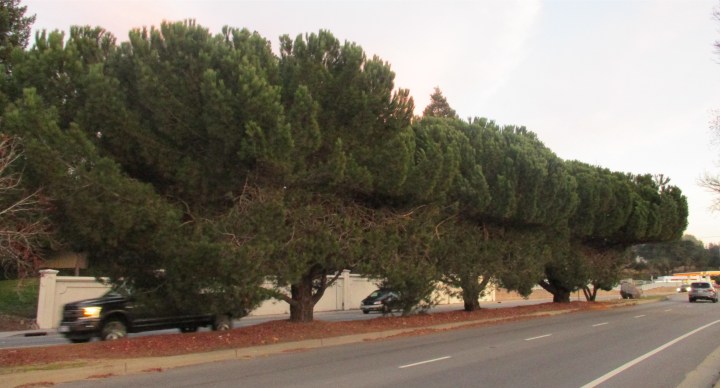 Even though it can get about fifty feet tall and wide, Italian stone pine, Pinus pinea, often gets planted as a small living Christmas tree into confined urban gardens. It gets so big so fast that it can get to be a serious problem, as well as expensive to remove, before anyone notices. It is really only proportionate to large public spaces such as parks or medians for big boulevards. The bulky trunks typically lean one way or another. The long limbs spread laterally to form an unusually broad and flat-topped canopy.
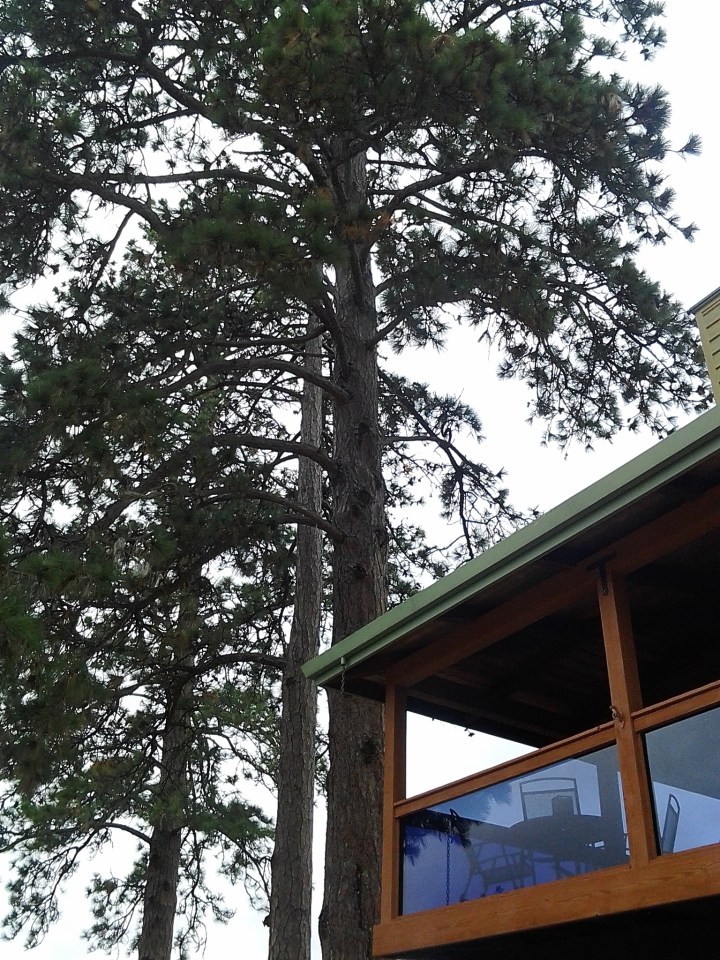 Christmas trees are like vegetables. Really, they are like big vegetables that do not get eaten. They are grown on farms, and then harvested and sent off to consumers. Although they smell like a forest, and they are descendents of trees that naturally grow in the wild somewhere, there is nothing natural about their cultivation. In fact, most are grown a very long way from where their kind are from. Therefore, bringing a cut Christmas tree into the home takes nothing from the wild, and does not interfere with nature any more than eating vegetables does.
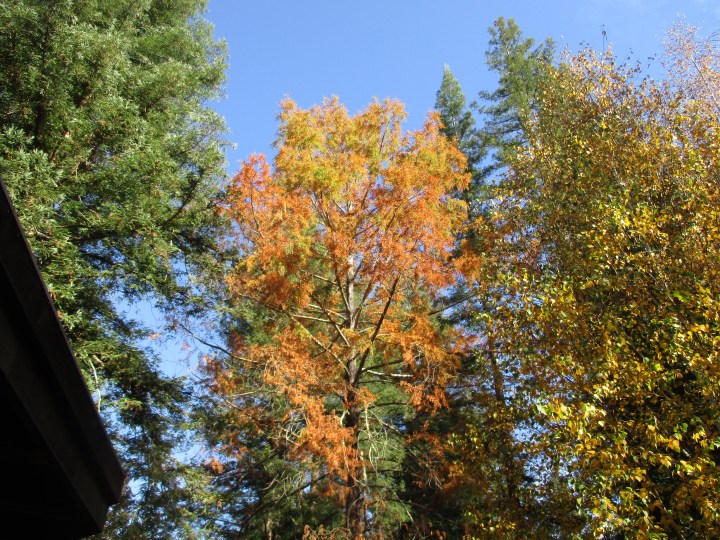 Well, that is certainly a contradiction of terms. One might say it is an oxymoron. Decades ago, it really was how we classified what we now know more simply as ‘deciduous conifers’. There are not many of them. Ginkgo is a gymnosperm like conifers are, but is not really a conifer. Otherwise, there are only five other types of deciduous conifers, which defoliate through winter.
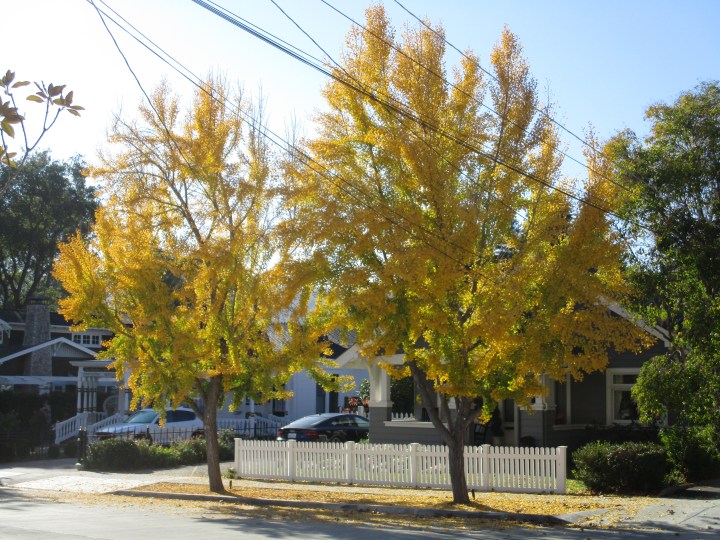 Much of my work involves street trees. They need more of my kind of attention than most other trees. They must conform to more restrictive limitations. They endure more abuse. They are the most prominent trees on urban properties. Because some are assets of their respective municipalities, they are more stringently protected by local ordinances than other trees are.




 Out in rural chaparral regions, where water is scarce, the big and bold California sycamore, Platanus racemosa, somehow seems to find the spots where groundwater is not too far below the surface of the soil. It is technically a riparian tree, that is just as comfortable competing with cottonwoods and willows along forested rivers and floodplains. It eventually get too big and messy for refined urban gardens, but is somewhat popular nonetheless.

