
Deciduous fruit trees have no business in a low maintenance landscape. They need as much specialized pruning while dormant in winter as roses need, and on a much larger scale. Neglected trees get disfigured by the weight of their own fruit. Disease proliferates in their thicket growth that develops without pruning. Overgrown trees produce most of their fruit where no one can easily reach it. Fruit that can not be harvested attracts rodents.
Of course, deciduous fruit trees are certainly worth growing if they get the specialized pruning that they need. Pruning concentrates resources so fewer but better fruits develop. Fruit bearing stems are better structured to support the weight of their fruit, and lower so that the fruit is easier to reach. Pruning also promotes more vigorous growth, which is less susceptible to disease and insects.
Now that it is February, and the weather has been unusually warm, deciduous fruit trees that have not yet been pruned will need to be pruned very soon. They will be sensitive to such major pruning once they start to bloom. The pruning is too specialized to explain here in just a few sentences. Fortunately, Sunset publishes an very detailed book about “Fruit Tree Pruning” that explains how to prune each of the different fruit trees. Pruning will be more extensive each year as trees grow, but also becomes more familiar.
Stone fruits like apricots, plums, prunes, nectarines and peaches (that have hard seeds known as stones), need the most severe pruning. Their fruit develops on stems that grew last year. These stems should get cut short enough to support the weight of the fruit expected to develop next year. The ‘four Ds’, which are dead, dying, damaged and diseased stems, should get pruned out as well. Cherries and almonds do not get pruned as much because their fruit is so lightweight; and out-of-reach almonds simply get shaken down anyway.
Apples and pears are pomme fruits that need similar pruning, but also produce on stunted ‘spur’ stems that should not be pruned away. Spurs may continue to be productive for many years. Figs, persimmons, pomegranates, mulberries and grapevines all need their own specialized styles of pruning.


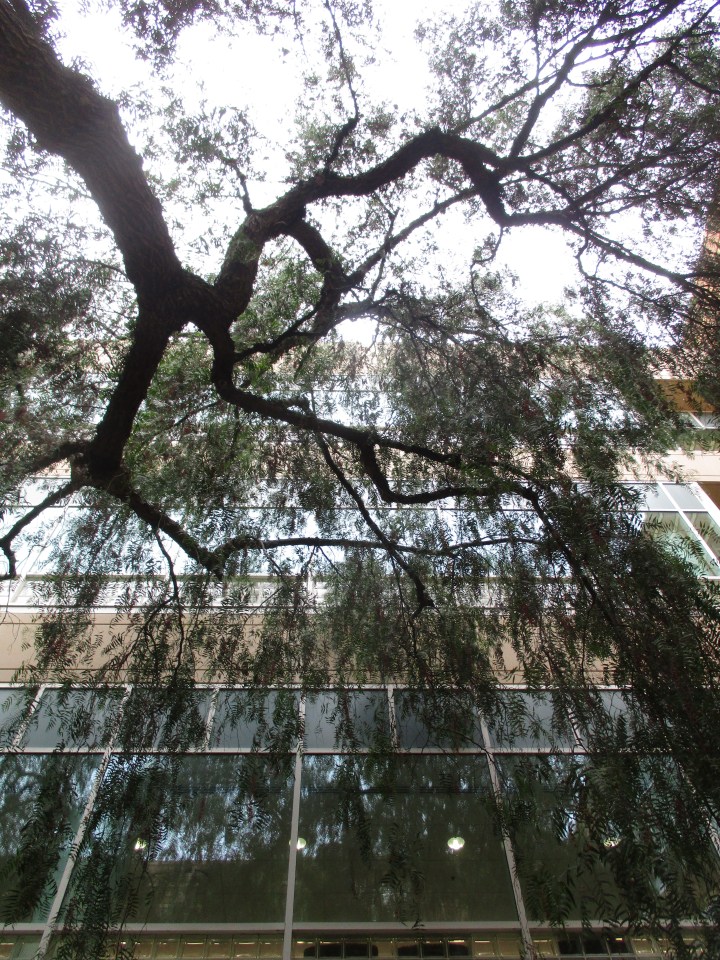 It has been naturalized in Southern California long enough to seem to be native. California pepper, Schinus molle, is actually endemic to Peru and adjacent arid regions of South America as far south as Central Argentina. Furthermore, although its small pink fruits with hard black seeds are sometimes used for culinary purposes, it is actually not related to black pepper, and is mildly toxic.
 Recycling plant material is practical and gratifying. We do quite a bit of it here. Back in September, I
 Climate is why the European larch, Larix decidua, is so rare here. It prefers cooler weather in both winter and summer, and more humidity. Foliage can roast if too exposed through summer. Small trees that are partly sheltered or partly shaded by larger trees have the best color and foliar density. Larch are innately reliant on somewhat regular watering, so are not drought tolerant. The mildly cool weather of autumn is enough to brown the formerly bluish foliage, which falls shortly afterward.
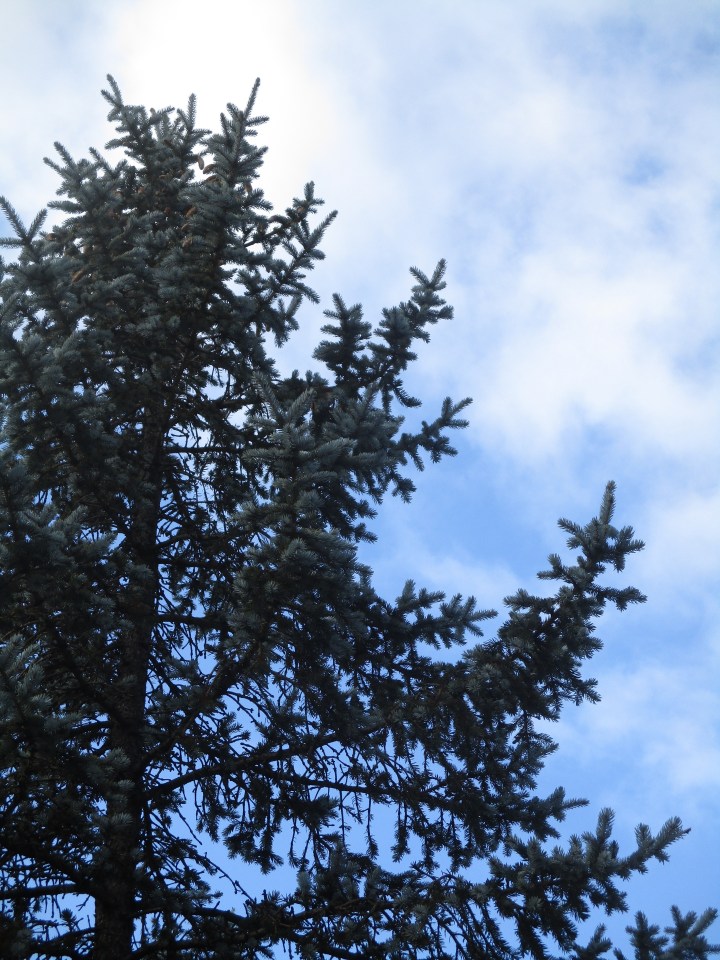 For a tree that is native to the upper elevations of the Rocky Mountains, blue spruce, Picea pungens, does surprisingly well here. It only wants to be watered a bit through summer to compensate for the lack of rain and humidity in chaparral climates. It does not seem to miss a more pronounced chill through winter. Disease and insect infestation are uncommonly noticeable or damaging.
