Pollarding And Coppicing Pruning Techniques

80221thumbJust about any other arborist will say that pollarding and coppicing are wrong. These techniques ruin trees so that they can never develop into their natural form. Although restorative pruning after pollarding or coppicing is possible, it is usually more trouble than it is worth. However, no one can deny that properly pollarded and coppiced trees can live much longer than they would naturally.

Pollarding and coppicing are extreme pruning. Coppicing is literally cutting a tree down to a stump just above the ground. Pollarding is almost as severe, but allows the main trunk and main limbs to remain. It does not end there of course. It must be repeated annually to maintain the coppiced stump or pollarded trunk and limbs. Secondary growth gets pruned off, back to the previous cuts.

After this process is repeated for a few years, coppiced stumps and pollarded limbs develop distended ‘knuckles’. Cutting back to but not below these knuckles facilitates compartmentalization (healing) of pruning wounds. Because the secondary growth is only a year old when cut annually, the wounds are relatively small, so they get grown over by new growth during the following season.

English style pollarding leaves one or two stubs of any desired length on each knuckle annually. These stubs are generally but not necessarily selected from stems that are aimed upward and outward. This technique elongates knuckles so that the trees are more gnarly and sculptural. Otherwise, all other stems must be pruned away cleanly. Stubs interfere with compartmentalization.

Pollarding and coppicing are done while trees are dormant in winter, and only to the few specie of trees that are conducive to it. These techniques were historically used to generate firewood, wiry willow stems for weaving baskets, straight fence stakes, or lush foliage for livestock and silkworms. Nowadays, they are done to keep big trees small, enhance the size and color of leaves, enhance the color of bark (on twiggy secondary growth), maintain juvenile foliage, or to prevent the bloom of allergenic flowers.

Agonis

70208Fans of the Brady Bunch might recognized agonis, Agonis flexuosa, from the front yard of the Brady Residence. That particular tree was rather dark olive green, and might have grown two or three feet annually to reach the upstairs eaves. Most of the popular modern cultivars are darker bronze or burgundy, and probably stay a bit shorter, but attain the same elegant and slender form.

The narrow evergreen leaves hang softly from limber stems, like the foliage of weeping willow. Anyone who has pruned agonis has likely noticed that the foliage is aromatic if disturbed. The tiny pinkish white flowers that bloom in spring or summer are not much to look at, but can be fragrant if there are enough of them. The fibrous and furrowed bark is quite distinguished for a small tree.

Agonis is not too demanding as long as it gets enough sunlight. It will lean away from shade. It prefers to be watered somewhat regularly through summer, although established plants can be quite happy if watered only a few times. Too much water rots their roots. If pruned to promote branching while young, and pruned for confinement as it matures, agonis can be a striking unshorn hedge.

RATS!

P80204

Remember the Beverly Hillbillies? That was a really lame sitcom; but it was somehow very popular at the time.

Each episode began with the stupid jingle that explains how and why the formerly impoverished but suddenly wealthy Clampetts left their home in Bugtussle and moved to Beverly . . . Hills that is.

As they drive their decrepit Oldsmobile down Bedford Drive just west of downtown, the palms flanking the roadway are prominently visible to the left and right. This strictly regimented collection of Canary Island date palms alternating with Mexican palms was not very big back then, in the early 1960s. By the 1980s, they were strikingly grand. Sadly, they are now deteriorating from old age. Many of the broad Canary Island date palms have succumbed to pink rot, so are now absent. Some of the Mexican fan palms are also lacking. It is saddening to see them now knowing how grand they were not too long ago. Although they are being replaced, they will never be as formal and uniform as they were as a monoculture (or biculture) that was planted all at the same time back in the late Victorian period. Even if it were possible to remove all of the trees and plant new ones at the same time, such conformity went out of style decades ago.

Arborists see these historic trees differently. They know that just one Canary Island date palm is likely infested with rats. Such a grand collection must be infested with a disturbingly large population of rats. Within a canopy of a Canary Island date palm rats, are safe from most predators, and get quite a bit to eat from the fruit produced by the female trees. (Most Canary Island date palms are female, with only a few taller and less billowy male trees for pollination.)

When a Canary Island date palm gets cut down from the base, it falls with a big SPLAT on the ground, followed by a blast of wind containing every Frisbee, baseball, tennis ball, kite and whatever got stuck in the tree over the previous few years. After a brief pause, but before the the baseballs stop rolling in the gutters, a herd of all surviving rats flees the scene. Most hide in the closest shrubbery they find. Some scurry up other nearby palms. It can really blow your image of the Canary Island date palm.

Sesame Street Was Wrong!

P71231It was probably one of the best television shows for children back then, and probably still is. Everyone of my generation in American remembers Sesame Street. We all identified with it, even if our neighborhood did not look like Sesame Street, or lacked the variety of neighbors. Sesame Street sometimes took us on television field trips to other neighborhoods. Some were more familiar. Those that were more foreign were presented within a compelling and inviting context that got us interested in how other children lived within their respective societies.

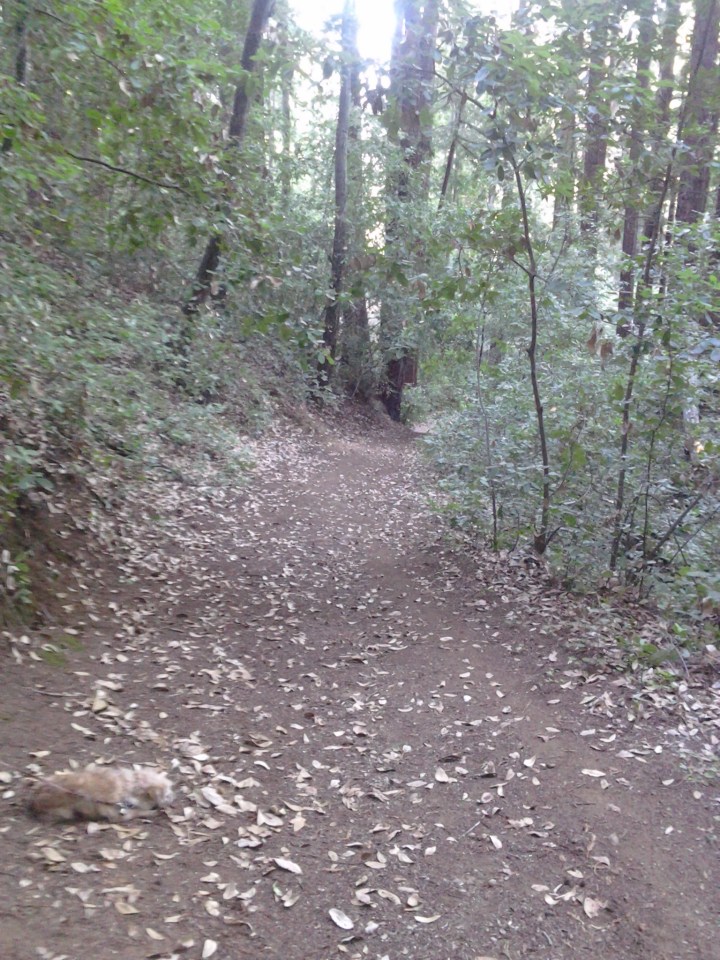
Some kids lived in big cities and rode on buses. Others lived in suburban areas with big gardens. Some lived on farms with hens and cows. There were even kids who lived near a forest surrounded by big tall evergreen trees. The trees were probably the firs, spruces and hemlocks of New Hampshire. I do not remember. I just knew I was fascinated with the trees.

I certainly did not need Sesame Street to show me how excellent my first silver maple was. It was my second tree, after my incense cedar. My mother thought of it as ‘her’ maple tree. Yeah, right. When it defoliated in autumn, I ‘raked’ the leaves by pairing them all up, and then pairing all the pairs into groups of four, and then pairing the groups of four into groups of eight, and so on, until there was only a single pile of leaves. When the tree was very small, it had only about sixty-four leaves, so this technique worked just fine. It was a bit more work by the second autumn. By the third autumn, I had learned how to use my little leaf rake.

During this time, I happened to learn something from Sesame Street that I had not previously known about maple trees. They make maple syrup! The kids who lived near the forest in New Hampshire went with their father out to where their maples were, to collect syrup. It was simple. The father gouged the bark, drilled a hole into the trunk, stuck a hooked device into the hole, and hung a bucket onto the hook to collect they syrup! I do not remember if that was the correct sequence of events; but how difficult could it be? The video was only a few minutes long, so I knew that it did not take long for the bucket to fill will with syrup that the kids poured over their pancakes at the end of the video.

What the video failed to explain adequately is that after the bucket was hung, it was left there overnight, and was retrieved the next day. To me, it looked like the kids got distracted and left, but then came right back a few seconds later. The video also failed to explain how involved the process of concentrating the sugar by boiling off the water from the sap. Again, to me, it looked like a pot of boiling sap was ready for pancakes a few seconds later. Like I said, the video was only a few minutes long.

Getting syrup from the maple tree was just too tempting. I took my little plastic beach pail and a small hatched for kindling and went out to get my own syrup. I smacked the trunk with the hatches and grabbed my pail to catch the sap that was supposed to come pouring out; but nothing happened. I smacked the tree again; but again, nothing happened. I gashed the trunk a few more times, in various spots around the trunk, but never got any syrup. Eventually, I got distracted with something else. I left my pail and the hatchet there next to the tree, believing that Sesame Street was wrong.P71231+

Brent is still an Idiot!


That is irrelevant here though. These are pictures of one of my ‘gardens’ in Brookdale, for comparison to pictures from the Jungalow. The pictures are no better than those of the Jungalow. ( https://tonytomeo.wordpress.com/2018/01/28/brent-is-an-idiot/ ) There is nothing to show anyway. It is just a forested vacant lot on Melwin Avenue. I have no pictures of the lower vacant lot on Logan Avenue where I grow my fig trees, berries, quince tree, rhubarb and a few other odds and ends. There is no landscape there either. It is just a vacant lot where I grow a few odd plants that I do not want to plant in riskier situations, where they might be in the way of other development or gardening. The fig trees can not produce good fruit in such cool shade, but will likely make plenty of cuttings for new trees elsewhere. Perhaps someday, I will have better pictures of a home garden, or at least pictures from the farm, rather than pictures from here or gardens of clients. What the pictures show quite well is the differences between Brent’s Jungalow and my unlandscaped ‘garden’.

IMG_20141004_153159

This is Melwin Avenue to the south and uphill. The ‘garden’ is out of view to the right.

IMG_20141004_153215

This is Melwin Avenue to the north and downhill. The ‘garden’ is out of view to the left. One of the big redwoods in the middle in the distance is on the corner of Logan Avenue, which is the corner of the other ‘garden’ The fuzzy tan person to the lower left is Bill.

IMG_20141004_153228

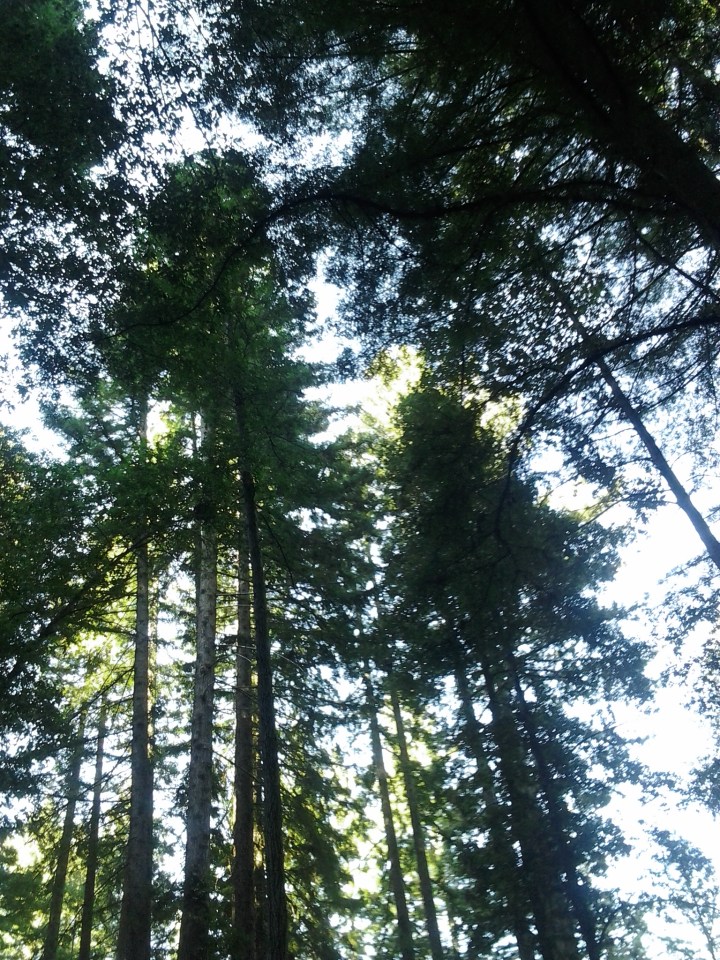
These tall coastal redwoods above are why the ‘garden’ is too dark to do much with.

IMG_20141004_153243

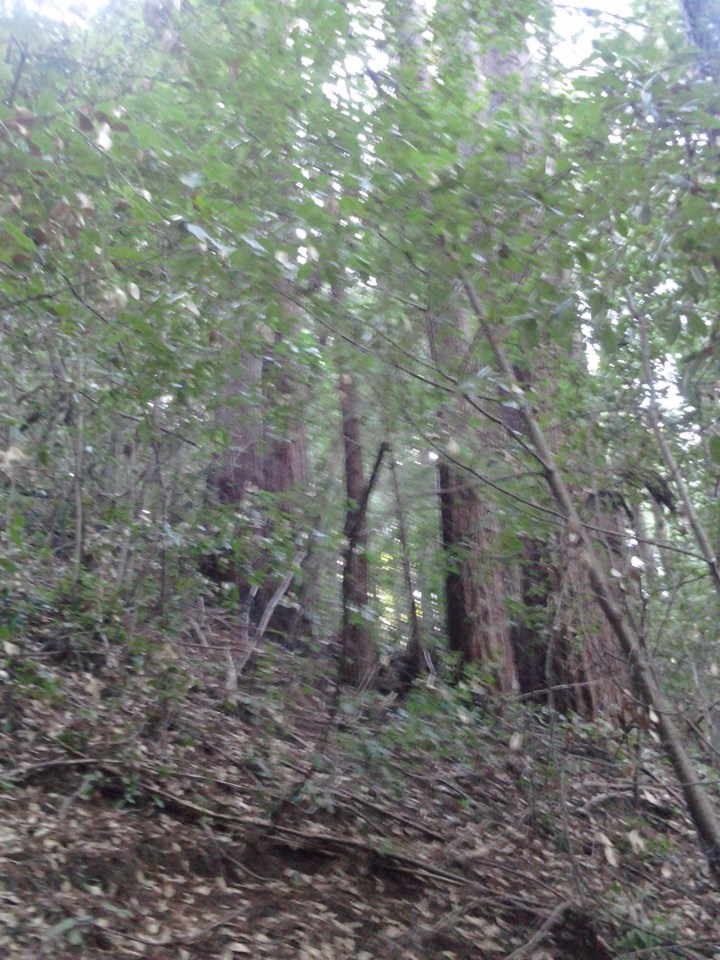
This is looking west and uphill into the ‘garden’ the circle of redwoods is bigger than it looks. Some of the larger trunks are about five feet wide. There is enough timber in them to build a house.

IMG_20141004_153304

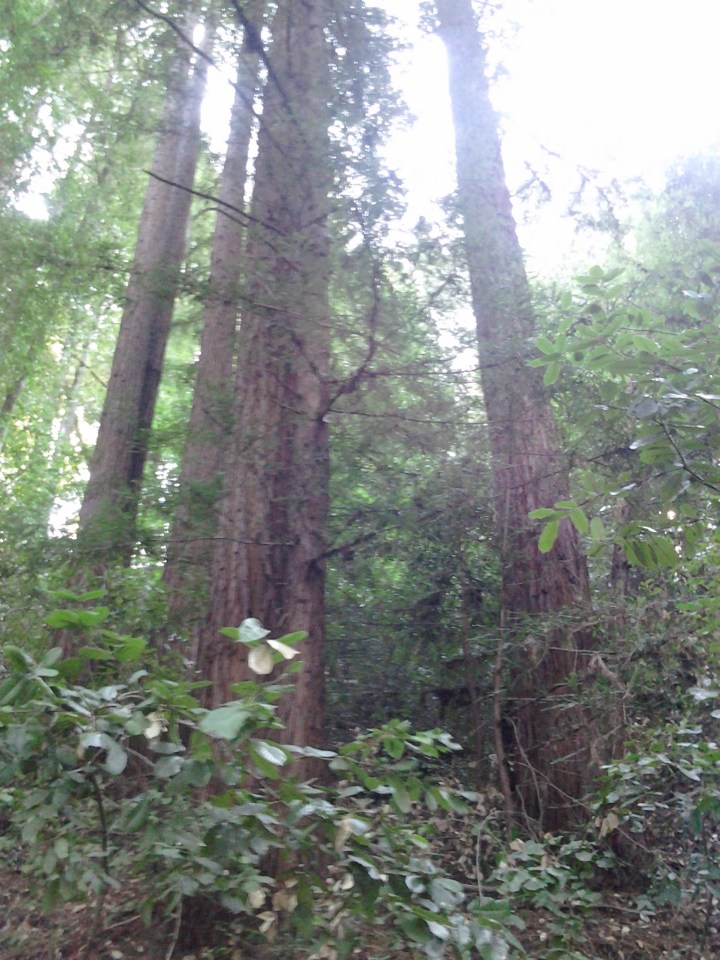
The redwoods on the left are next door. The single redwood on the right is just inside the ‘garden’. Not much sunlight gets through.

IMG_20141004_153323

These redwoods are across the street to the east. They too are bigger than they look here.

Besides showing how different my garden is from the Jungalow, these pictures should demonstrate why I do not show pictures of my own garden. There just is not much to show. My clients’ gardens are much more interesting.

Brent is still an idiot.

Six on Saturday: Town Tree and Town Flower for the Kitty City

P80124I just can not resist; although I do not intend to make a habit of this.
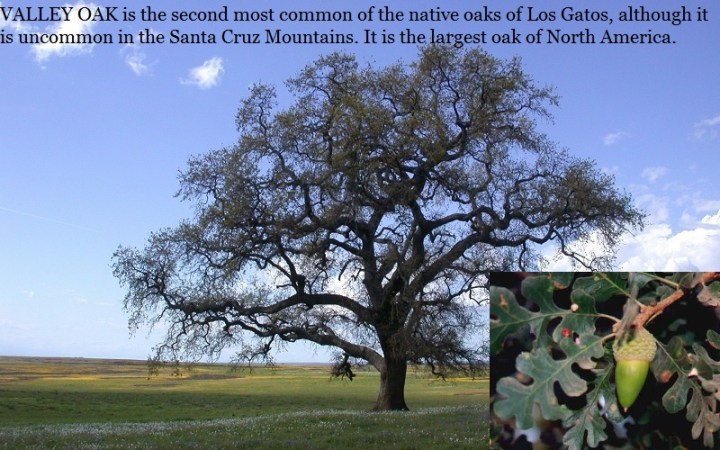
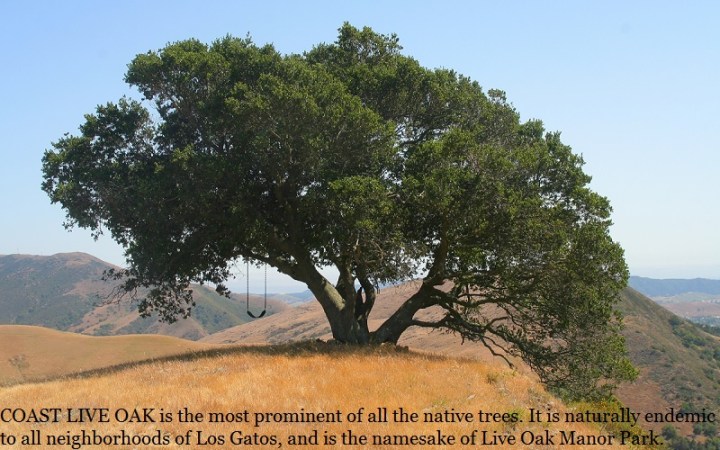
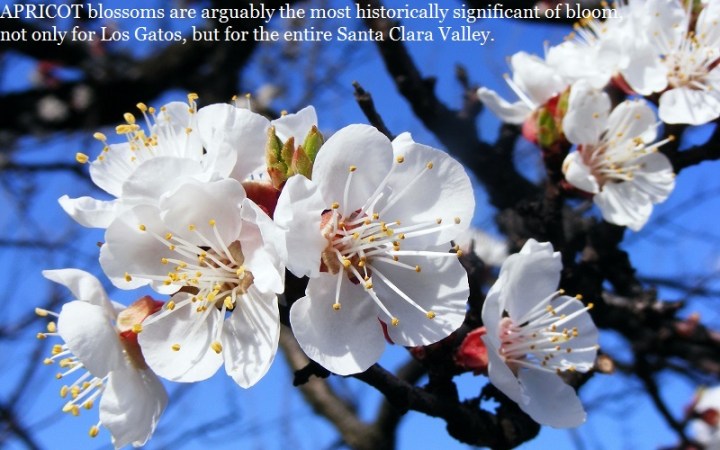
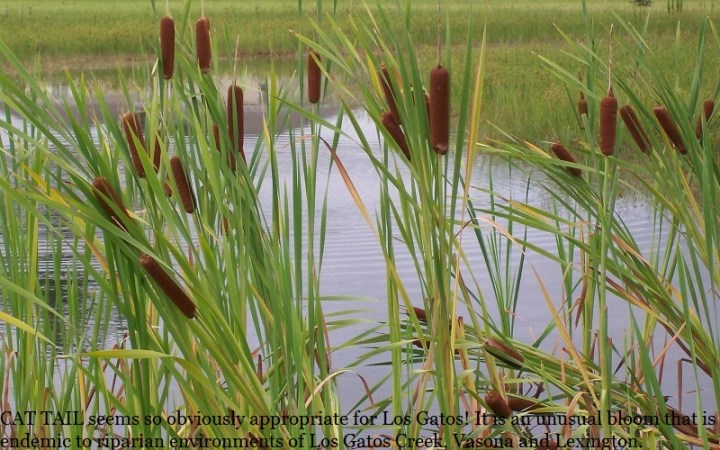
I know I am sending this late, and that it is already Sunday east of India. It is still before noon on Saturday here. These pictures are not mine, but were used as illustrations for the selection of a town tree and a town flower for Los Gatos. There were more, but these are my six favorites; four trees and three flowers. I know that sounds like seven instead of six, but that is only because apricot can be either the town tree ‘or’ the town flower. Selection is limited to specie that are either native, or of cultural significance. The three trees besides apricot are native here, where the Santa Cruz Mountains meet the Santa Clara Valley, and the Los Gatos Creek forms a small alluvial plain. Apricot trees, which bloom with apricot ‘flowers’ were the main orchard crop here longer than anyone can remember, until only a few decades ago. Arroyo lupine is native on the alluvial plain of the Los Gatos Creek; and cat tails are native to the marsh surrounding Los Gatos Creek.

1 – California sycamorePLATANUSRACEMOSA

2 – valley oakQUERCUSLOBATA

3 – coast live oakQUERCUSAGRIFOLIA

4 – apricotPRUNUSARMENIACA

5 – arroyo lupineLUPINUSSUCCULENTUS

6 – cat tailTYPHALATIFOLIA

Cat tail would be my favorite choice for the town flower because this is the town of the Cats. Apricot would be my second favorite flower, only because cat tail is so appropriate, and also because apricot is my favorite for the town tree (and we can not have it do double duty). coast live oak is my second favorite for the town tree because it is native to both the Santa Clara Valley ‘and’ the Santa Cruz Mountains.

This is the link for Six on Saturday, for anyone else who would like to participate:

https://thepropagatorblog.wordpress.com/2017/09/18/six-on-saturday-a-participant-guide/

Vasona

P80114Only a few bits and pieces of natural native vegetation can be found on the floor of the Santa Clara Valley. They are primarily in spots that were not useful for some sort of development. Almost all of the big coast live oaks and valley oaks that lived in the flat areas are gone. Riparian vegetation still survives on the banks of creeks, and in adjacent areas where it has not yet been cleared.
Vasona Lake Park is a Santa Clara County Park situated around the small Vasona Reservoir just north of town. Although much of the natural vegetation was cleared a very long time ago, and exotic vegetation was either added or naturalized, several big native trees remain, including several California sycamore trees.

Because these grand sycamores were more common here than anywhere else in our childhood world, and we did not know what they were, my younger brother knew them simply as ‘Vasona’ trees. They were tall and gnarly, with big holes in their bulky leaning trunks. The lowest branches were far too high for us to reach, so we cold not climb them. The leaves were not clean and smooth like maple leaves, so we did not mess with them too much.

Unlike most deciduous trees that drop their leaves within a limited time in autumn, California sycamores drop their leaves whenever they want to. Most leaves fall in autumn. Some linger into winter. If the summer is exceptionally dry or warm, many leaves fall very early. Anthracnose can make the first spring leaves fall almost as quickly as they develop.

Somewhere along the line, my younger brother learned that catching a falling leaf before it reaches the ground is lucky. Consequently, we often ran after leaves that we saw falling from high up in the sycamore treees, if they were falling slowly enough for us to get to where they were going before they did.

I ignore them now. I notice the patterns of defoliation just because I am an arborist, but that is about the extent of it. However, I happened to see this leaf falling slowly from near the top of a massive California sycamore, and just had to catch it; my lucky Vasona tree leaf.

Anti-‘Environmentalism’

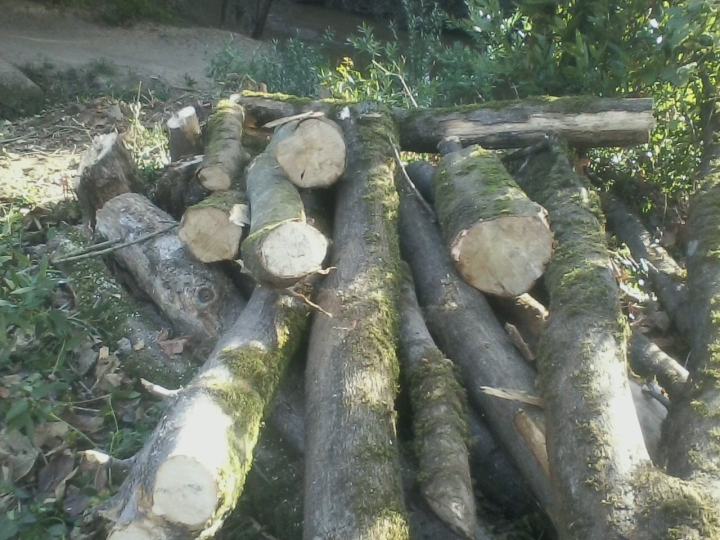
P80112++There will be no more updates after this last one for the dead box elders that had been leaning onto the historic Felton Covered Bridge. ( https://wordpress.com/read/blogs/135014809/posts/747 ) They are gone. A pile of logs and some debris are all that remain.

Because the area is a protected riparian zone, the remaining debris and logs may have been left there intentionally, as an important component to the ecosystem. Nearby dead trunks that will not reach the Bridge when they fall also remain, as well as many other larger dead box elders several yards upstream.

For now, the Felton Covered Bridge is reasonably safe from falling trees.

We can only hope it stays that way.

Environmentalism has a way of complicating things.

Environmentalism should be more concerned with prioritizing the natural ecosystem than preserving vegetation that is interfering with it. Much of the exotic (non-native) underbrush and even a few exotic trees should be eliminated to allow at least some of the displaced native vegetation to recover. Where necessary and appropriate, environmentalism must also make accommodations for safety within an innately hazardous natural setting that happens to be very accessible to the public. More of the dead box elders should be removed or at least cut down to reduce the risk of falling limbs to those visiting the adjacent Felton Covered Bridge Park.

Preservation of assets like the historic Felton Covered Bridge is also important. Trees that are likely to damage the bridge should not be salvaged merely because they are within the protected riparian zone. Because the Felton Covered Bridge is such a landmark for tourists, the view of the Bridge is an important asset as well. Vegetation that would obscure this view should therefore be managed, so that it does not eventually obscure the view as it regenerates within the area vacated by the now absent box elders. There is nothing unnatural about open spaces. Old photographs demonstrate how visible the Felton Covered Bridge had been in the past, and how the flood of 1982 eliminated much of the obscuring vegetation within the riparian zone in a very natural way.

In many situations, planting new trees to replace those that are now gone is actually more unnatural than natural. It certainly does not contribute to the efficiency of a natural ecosystem. The installation of new sycamores, coast lives oaks and bay trees adjacent to the nearby Graham Hill Road Bridge are superfluous to new tree seedlings that appeared naturally in the area vacated by fallen box elders. They were planted with soil amendment, fertilizer and a synthetic polymer gel to retain moisture, and then protected from deer with stakes and mesh cages. They require unnatural supplemental irrigation until they get established, and are so close to each other and other trees, that they will become an unnaturally crowded thicket as they mature. There is nothing natural about such installations!

Nor are such installations inexpensive! They require resources that could be more responsibly allocated to more practical projects.

Environmentalism is another one of those very important concepts that has been compromised by extremism.P80112+++04

Big Trees Really Need Arborists

41203thumbStormy winter weather always reminds some of us that our trees need some attention. Wind can break limbs. If the weather gets really nasty, trees can be destabilized by strong wind, particularly if the soil is moistened by rain. However, the truth is that arboriculture, which is the horticulture of trees, is important throughout the year. We just become more aware of it when weather threatens.

Not only is arboriculture important throughout the year, but it is also the most important aspect of horticulture in most gardens that are outfitted with trees. After all, trees are the most significant features of such landscapes. Their shade affects the homes and garden spaces around them. If they drop limbs or fall, they can cause significant damage. Many get far too big for us to maintain.

This is why we need arborists, the horticulturists who specialize in trees. Arborists can evaluate the health, stability and structural integrity of trees, and prescribe any necessary arboricultural procedures. In order to issue a permit to remove a tree, most municipalities require an inspection and report from an arborist who is certified by the International Society of Arboriculture, or ISA.

ISA Certified Arborists have passed an examination of their arboricultural expertise, and maintain their certification by continued involvement with ISA educational seminars, workshops and classes. The ISA is the standardizing resource for the promotion of the most important arboricultural technology, and maintains discriminating standards. ISA certification is quite a commitment.

www.isa-arbor.com, the website of the ISA, is an excellent resource for anyone in need of the services of a certified arborist. The registry of arborists can identify and find an arborist directly by name, or regionally by city or ZIP code. The site is also useful for information about proper arboriculture and trees, for those of us who maintain our own small trees, or want to select new trees.

Trusting the wrong professional to maintain trees can be very risky. Even gardeners who are proficient at mowing lawns and shearing hedges may not be adequately knowledgeable about proper arboriculture. Instead of correcting problems, improper pruning can disfigure trees and limbs, and actually compromise their structural integrity. Sadly, it is not uncommon for otherwise healthy, stable and well structured trees to be ruined by those hired to care for them.

GREEN

P71112

If my articles start to seem somewhat deficient, it is all Brent’s fault. Really. I will need to be spending more time with GREEN; Greening Residential Environments Empowering Neighborhoods. It is a much more important project than what I am doing because it involves planting more street trees and trees in public places in Los Angeles, maintaining trees of the urban forest, and enforcement of tree preservation ordinances within Los Angeles. Brent has been very active with GREEN since we were in school, and it has really make a big difference in the parts of Los Angeles that have benefited from it.

I will need to be writing for the website and other social media outlets for GREEN, and consulting with others doing the same. To make matters more confusing, I will be working on yet ANOTHER projects later in January as well, but I can explain that a bit later.

When I started my writing here, it was initially intended as an outlet for my weekly gardening column. After a while I started recycling articles from last year as well. The space in between is filled in with my ‘elaborations’, which are supposed to be related to horticulture, but are sometimes about other funny but unrelated topics.

I hope to continue in such a manner than no one notices that I am also working on other projects. In fact, I believe that the other projects might be interesting topics here, which means that the different projects may actually compliment each other. We will find out as we go along. I will post updates about GREEN, which will soon be known as something else. I am sorry that the Facebook Page for GREEN has been deleted while we develop a new one. Otherwise, I would post a link to it.