Both coastal and giant redwoods, are the most excellent trees. The giant redwoods are endemic to isolated colonies in the Sierra Nevada. The coastal redwoods are endemic to the coastal region from the Oregon Border to San Luis Obispo County, which happens to include this region.
Coastal redwoods are so awesome that even the dead stumps from trees harvested a century ago are awesome. Most of the stumps in this region have been charred by forest fires. Yet, even after a century, they are still quite solid. They decay very slowly, which is why their timber is such a popular and important building material. Because the stumps are so big and would be difficult to get rid of, not many of us even try.
1. Compared to some of the tacky garden art that some people pay significant money for, this old redwood stump is strikingly sculptural. It stands so proudly out on this knoll on the edge of a small creek just above where it flows into Bean Creek. It is difficult to see in this picture, but a landscaper tried to obscure this stump with potato vine. Only a bit of twiggy growth can be seen at the top of the stump. The rest of the vine is now overwhelming the adjacent dogwood above. The trunk of the dogwood is to the right. Coastal redwood forests are innately shady. The potato vine is not very happy there. Even if it were happy, and were able to obscure the stump, would it really be an improvement? 2. These two bigger stumps are just a short distance uphill and across the small creek. Old stumps are more often single, but surrounded by multiple trunks that emerged from the roots. Because almost all of the trees here had been harvested about a century ago, there are now many more secondary trunks per area than there would naturally be. It is not much of a problem yet, but these trunks will likely become more crowded as they mature.
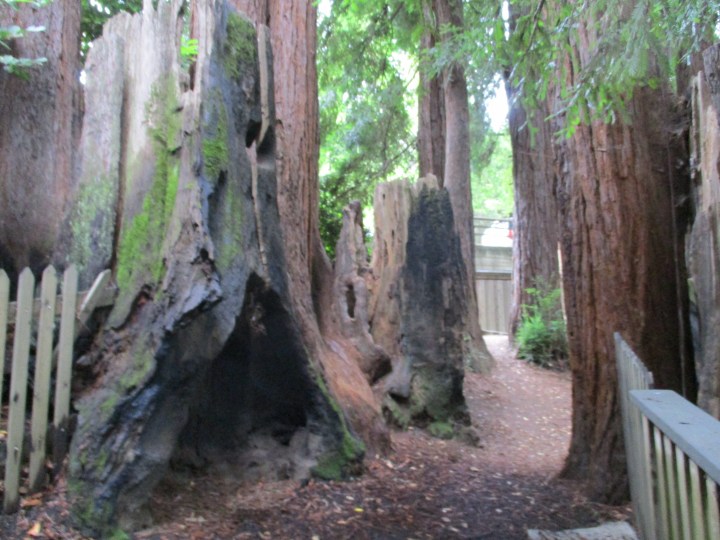 3. These are the same two stumps from the other side. This trunk coming up from within is likely from the same original root system. All trunks that develop from the same root system are genetically identical, so they look very similar from a distance. Some genetically identical groves can be quite broad, and include many trunks.
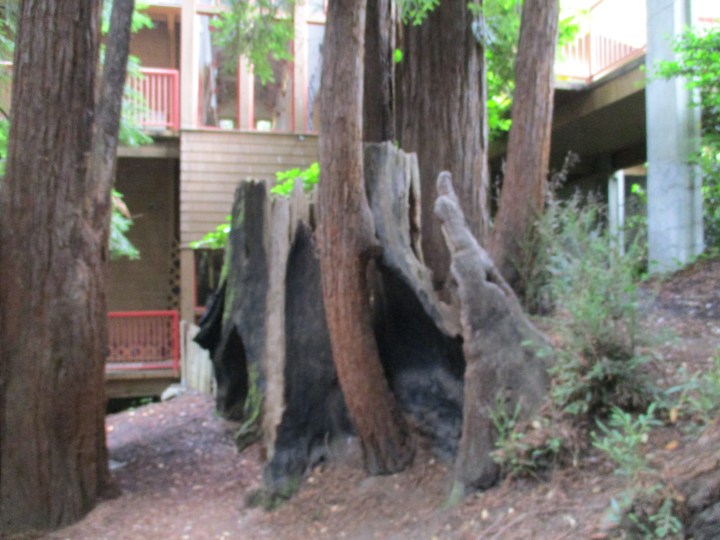 4. This small coastal redwood trunk is not happy about the fence that is nailed to it.
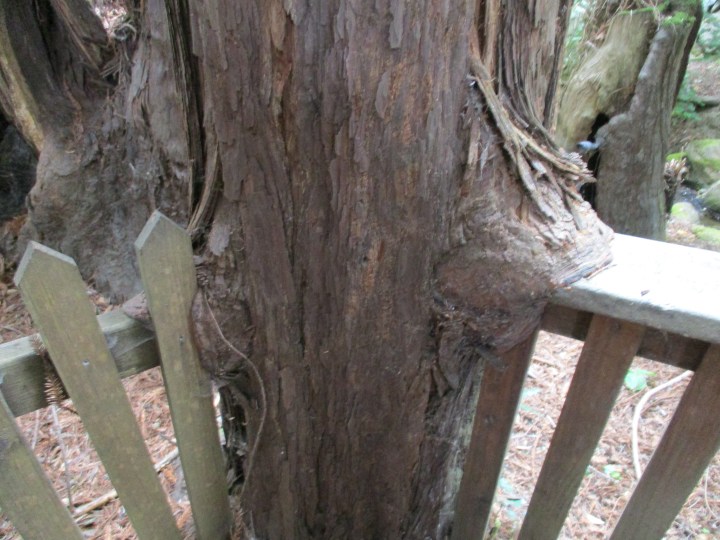 5. This is more what you expect coastal redwoods to look like. It is impossible to determine from this picture if these trunks are genetically identical secondary trees that emerged from the same root system, but their proximity to each other suggests that they likely are.
 6. This epiphyllum is the flower that I promised to those who expressed a concern than my Six on Saturday lacked adequate bloom. I shared a picture of this same epiphyllum earlier, but it has continued to bloom.
This is the link for Six on Saturday, for anyone else who would like to participate:
https://thepropagatorblog.wordpress.com/2017/09/18/six-on-saturday-a-participant-guide/
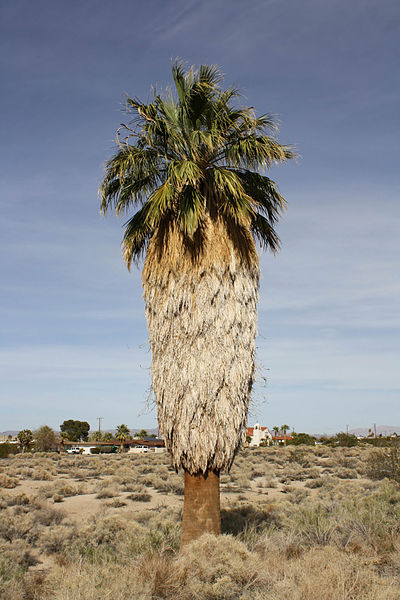


 (This was copied and modified from the Facebook page of Felton League.)
 (continued)
 It is as scary as it sounds. Well foliated limbs or entire trees really do fall spontaneously during the calmest of warm weather. It never fails to frighten anyone who witnesses it. Those who witness it always express the same difficulty with trying to explain it to those who did not witness it, as if they know that no one will believe them.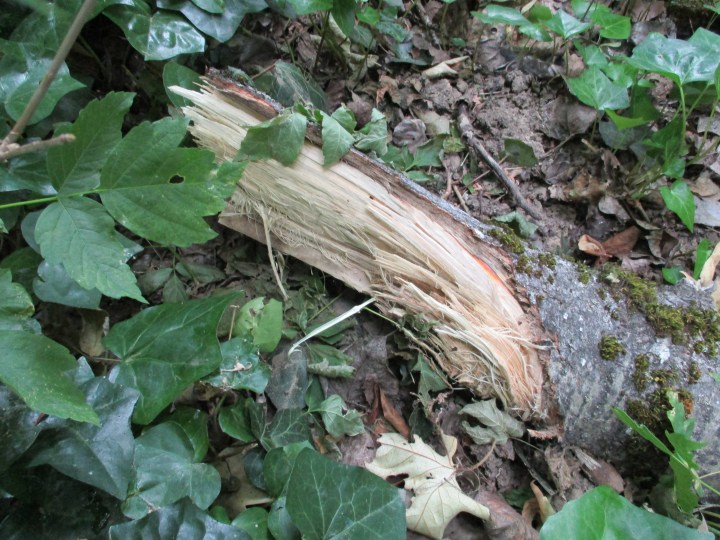

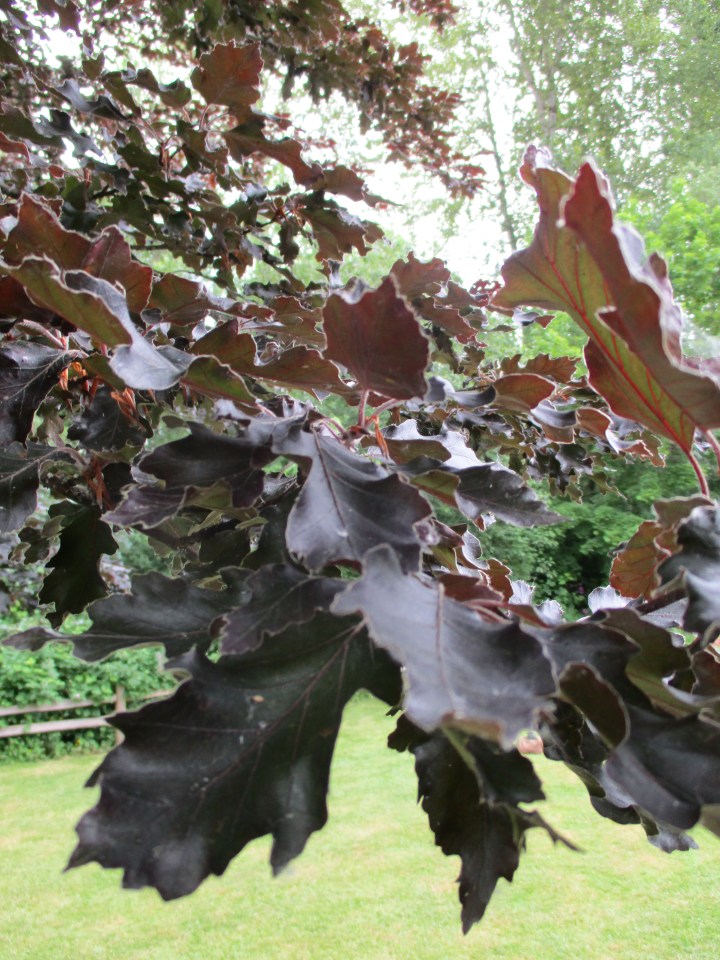 Compared to crape myrtle, sycamore (London plane) and many other more popular trees, the beech, Fagus sylvatica, is much less problematic, and really deserves more respect. Although it can eventually get almost as big as sycamore, it has remarkably complaisant roots. It is neatly deciduous, defoliating only in autumn, without noticeable floral mess. Disease and pests are rare.
 How can a professional ‘gardener’ leave such a stub on the little California black oak in Felton Covered Bridge Park. It is not as if it is high in the canopy of a large tree, and out of reach to an arborist. This one is right at eye level, exactly where someone getting out of a car parked in the adjacent parking space would run into it. The entire tree needs some major corrective pruning, which would include the removal of significant limbs and portions of the canopy, but that is only because of years of neglect, and is another story. Right now, we are focusing on the eye-level stub.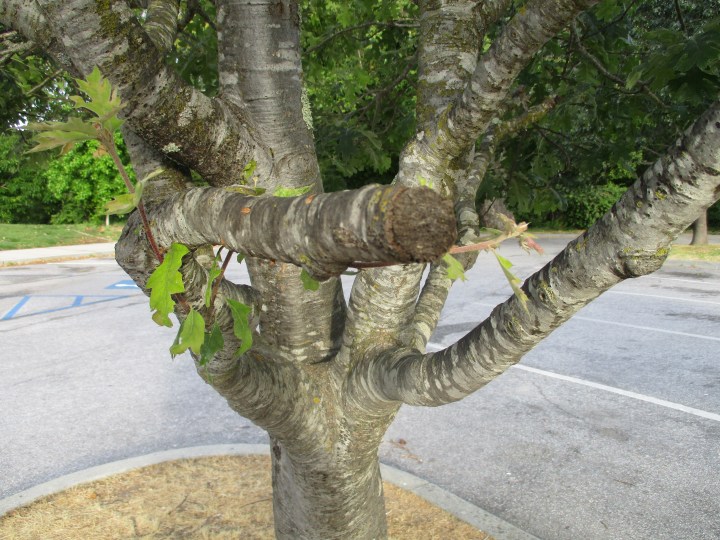



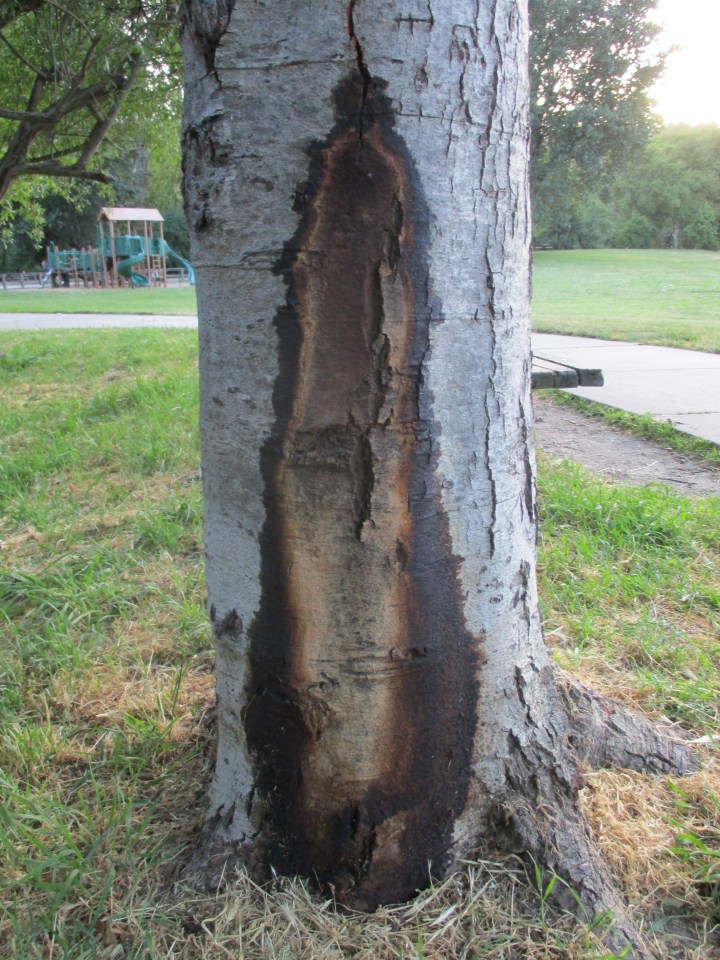 This unhappy native white alder, Alnus rhombifolia, had been deteriorating for quite a while. White alders do not last long even in the wild. A few nearby have already been removed. This one is next. They were nice and shady when the landscape was new. Nicely maturing sycamores and a bigleaf maple can take over for this one now.

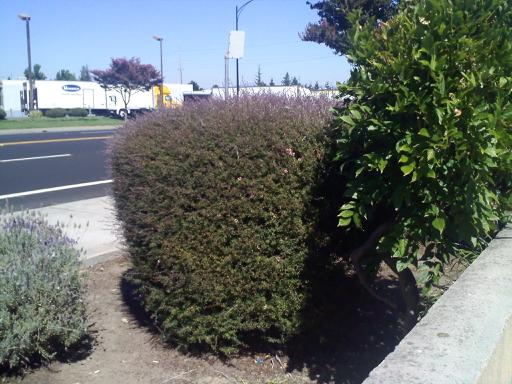
 Those of us with ‘maintenance gardeners’ are likely aware of how rare it is to find someone who knows how to maintain hedges properly. It seemed so simple years ago. Several identical plants could simply be planted in a row, and then somewhat regularly shorn for confinement to a prescribed space. They were not allowed to exceed a specific height or width for long between shearing.
