New Year & Old School

P80101Little kids were allowed to walk to school back in the early 1970s. The youngest had to walk with older siblings or neighbors who made them look both ways and hold hands to cross the streets, and stay back from the roadway. Once through the open gate into the schoolyard, younger kids could leave their slightly older chaperones to meet up with their friends and eventually go to their respective classrooms.

It is scary to think of how carefree we were back then.

The east side of our schoolyard was hedged with alternating Monterey pines and Monterey cypress, with a few random deodar cedars, redwoods and even a California pepper tree and a Canary Island date palm just inside the hedge. The random trees were somewhat mature, so were likely remnants of a landscape of a home that was on the site before the school was built there. The hedge was probably installed shortly after the school was built. It was that sort of shabby bad hedge that was common back in the mid 1950s. Nowadays, we know that neither the pines nor the cypress should have been shorn. The cypress could have made a nice hedge without the pines, but even back then, no one wanted to handle the sticky mess.

By 1972 and 1973, when the hedge was less than twenty years old, it was already beginning to assume a natural form. Only limbs that tried to grow through the fence on the outside, or too far into the schoolyard on the inside, got pruned back. No one was trying to keep it shorn. It was quite a thicket; perfect for a new kindergartener to hide out in.

Yes, I am speaking from experience. On my way to school one morning, I decided that I wanted to take a nap; so I weaseled my way in between the first cypress tree and the outer cyclone fence in order to do so. I somehow got past the cypress and found a nice soft spot on the thick layer of pine needles under the first pine, and promptly fell asleep.

Needless to say, my kindergarten teacher was very concerned when I did not get to school on time. Eventually, I woke up and emerged from my den to find the schoolyard empty. By the time I got to school all dusty and dirty and sticky with pine and cypress pitch, my teacher was really quite panicked. I did not understand why. I just wanted to take a nap.

Well, those first two trees in the hedge were the first Monterey cypress and Monterey pine I ever met. Sadly, through the 1980s and 1990s, almost all of the trees in the hedge succumbed to the variety of insect and disease pathogens that were so common in those two specie through that time. (New pathogens moved into the area and proliferated because these two host specie were so common at the time.) I can remember seeing that first cypress in the hedge dying like so many of the others in the hedge had died already.

While the trees were dying over the years, the school and adjacent neighborhoods were annexed into the city. The school was sold and rebuild at a private school. The schoolyard got a bigger fancy fence without gates. Students could only enter through a main entrance at the front of the school. A nice hedge row of redwoods was planted on the fence line where the pines and cypress had been. Then, a saran screen was affixed to the fence to obscure the view of the schoolyard and trees from the outside.

More recently, I had to go back to the old school to inspect a tree, and provide the arborist report needed to procure a removal permit from the city that the school is now annexed to.

Getting into the school was not nearly as easy as it was when I was in kindergarten. I had to go to the office, sign in with all my credentials and contact information, and wait for both a chaperone and a property manager to take me directly to the tree while also avoiding the pale protected children that now infest the old school. There were surveillance cameras everywhere, and security guards at the gates.

It is scary to think of how scared children are taught to be now.

Anyway, as you can guess, the tree that I was expected to condemn was that first Monterey pine that I had ever met, the second tree after the cypress in the original hedge.

There was a problem. I could find no problem with the tree. I mean, there was nothing wrong with it. It was healthy, stable and exhibited no symptoms associated with structural deficiency; which was weird considering what it had experienced through most of its life. When I asked the property manager what the problem was with the tree, he told me that it did not ‘fit in’ with the nice uniform row of redwoods. In other words, it did not conform. Oh. Ummmm. Well, that is no justification for removal of such a nice healthy Monterey pine that benefits the whole neighborhood. You can imagine how pleasurable it was to tell him that.

Now, I am the sort that believes that tree preservation ordinances are too restrictive. They actually prompt some people to cut trees down before they get big enough to be protected! Besides, such ordinances interfere with the rights of those who own property. There are certainly big and prominent trees that are worth protecting. This pine was not one of those. Yet, for once in my career, I was pleased that such an unimportant tree was protected by silly overprotective ordinances.

The property manager was annoyed that I could not do as he requested. There was no report condemning the tree. The tree service company that sent me out there for the inspection got no work out of the deal. Apparently, no other arborist would condemn the tree either.

Now that you are reading this, it is 2018, another New Year more than six decades after that nonconforming Monterey pine was planted where it still lives at the Old School.

(The gardening article that is regularly scheduled for Mondays is scheduled for tomorrow. The featured species that is regularly scheduled for Tuesdays is scheduled for Wednesday.)P80101+

Arboriculture: Deep Space Nine

P71231The “Poly” in Cal Poly is for “Polytechnic”, as in there are multiple schools within “California Polytechnic State University” at San Luis Obispo. There were seven school when I was there between 1985 and 1990. I was a student of the “School of Agriculture”. “Horticulture” was my “Major”, or major realm of study within this school. Within this major, I selected “Floriculture and Nursery Production” as my “Concentration” of study. That certainly is a lot of quotation marks.
While majoring in horticulture at Cal Poly, I studied with students whose concentrations of study were within “Landscaping” or “Floral Design”. Withing the School of Agriculture, we studied with students who majored in “Crop Science” or “Animal Science” and so on. Like horticulture, each of those other majors was divided into other concentrations.

Then there were all those students of the other six schools, which I will not even get into because I am wearing out the quotation mark key.

In the summer of 1988, while many of my colleagues were going to Australia, New Zealand or South Africa for their internships, I stayed right here in California, and took a job with a Lee’s Tree Surgeons in Saratoga. My colleagues thought that was a bad idea. Not only was that sort of internship for those in the landscaping concentration, but it was for the lowliest among them. They climbed trees and used chain saws and ropes and such. They were primitive. They were barbaric. They were not like us.

As it turned out, I was not like them. Fortunately, they did not mind. They took very good care of me, and trained me as best they could about arboriculture in the three months I was with them. They realized pretty quickly that I was not a good candidate for the job they gave me, but made accommodations for me. Although I was never proficient at climbing, and was not really good for much at all during that summer, I later went back to work for some of them, and eventually became a somewhat proficient groundsman; but that is another story for another time.

In my fourth year at Cal Poly, San Luis Obispo, after my internship with Lee’s Tree Surgeons, I relocated from my semi-rural home back into town, and lived in a big apartments with three roommates. We made a tradition of watching “Star Trek: the Next Generation” on television. One of the roommates, who is now a very respected professor at Cal Poly, made cornbread for the weekly event. Although I did not continue the tradition after we all graduated and went our separate ways, I did sometimes watch “Star Trek: Deep Space Nine” when it came out a few years later. I really need to stop with the quotation marks.

In Star Trek: Deep Space Nine, I liked the concept of so many different species living together in an society in which it was very necessary to make accommodations for those who are different. Everyone needed to respect everyone else. Some even learned to appreciate the differences. Even the bad guys had redeeming and very often likeable traits.

In my career, I am primarily a nurseryman. That means I grow things. Other horticultural professionals might compare my people to the Vulcans. They think that we are too uptight, efficient and plain to be much fun. Factory growers (who work for the big corporate growers) would be more like Romulans, and are therefore less dedicated to what is right and logical if it is to their disadvantage. Some of the better artistic landscape designers are likened to the Bajorans. Unscrupulous maintenance gardeners who will do what they must to make a buck are comparable to the Ferengi. Some of them work for the larger and imperialistic Cardassian landscape corporations.

Arborists are the most excellent of all; or perhaps the second most excellent after Vulcan nurseryman. They are like the Klingons; honorable, noble, independent, passionate and boisterous! I can understand why my colleagues think of them as barbaric and primitive, but I also believe that my colleagues should be more accommodating. When I consider what arborists must have though of me what I did my internship, I realize that it must not have been easy for them to accommodate me. Yet, they did, and in the most excellent way. They still respect that I have my own career in my own world, but to this day, thirty light years later, they are still pleased to invite me to their world.

Scofield Tree Update

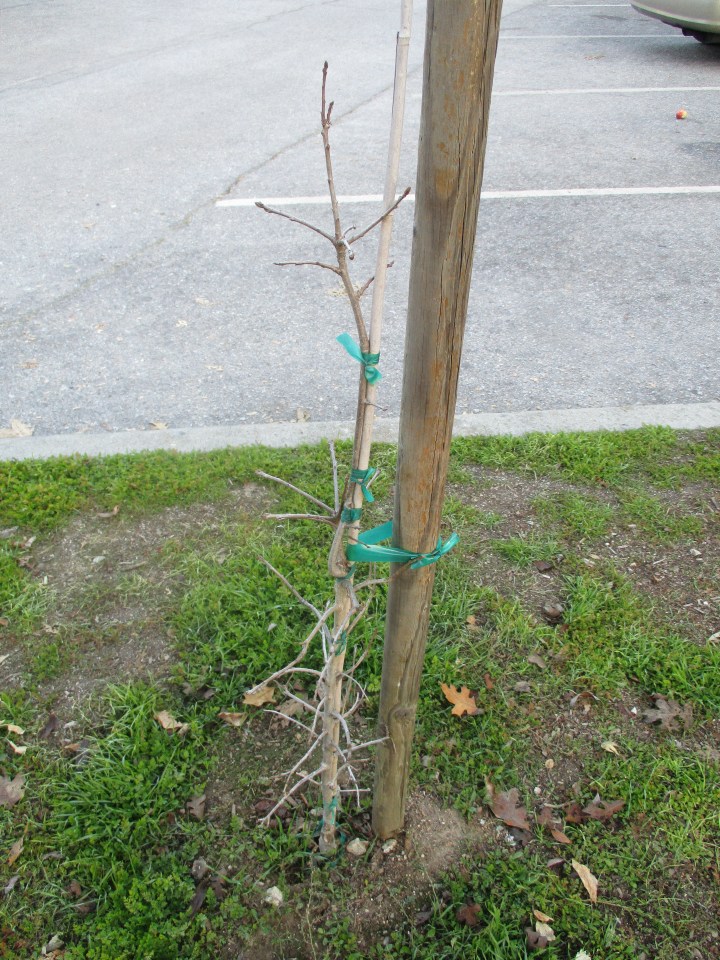
P71212+KThe sad little Scofield Tree in Felton Covered Bridge Park did not do much this year. (https://wordpress.com/read/blogs/135014809/posts/322 and https://tonytomeo.wordpress.com/2017/12/02/felton-covered-bridge/) In fact, it grew only about five inches taller, so is now only about four feet tall. The damage from the weed whacker really set it back. Growth was healthy on the side shoots, but that growth will need to be tucked back to promote apical dominance. The good news is that the vigor and health of the foliage of the sideshoots indicated that root dispersion was likely adequate to sustain healthier and normal vigorous growth next year.
Although the sideshoots will get tucked back to limit their competition with vertical growth of the main trunk, the stubble will remain to promote caliper growth of the trunk.

The trunk will be bound like a tree in a nursery; and the bound trunk will be staked for stability. Binding outside of a production nursery may not seem to be horticulturally correct, but is necessary for a straight trunk. The staking is done more to protect the tree in such a high traffic area than to support the tree. It would be better for the tree to do without binding and staking so that it can learn to support its own weight. Once the straight section of trunk is taller than about six feet, the bindings will be loosened, and eventually eliminated as the trunk lignifies into form.

A bit of fertilizer will be added to the soil around the tree before the last rains of winter. This might seem like cheating, bur for right now, the tree is too small to be safe in such a high traffic area. It will also be irrigated occasionally after the rain stops. It does not get much water, but will get enough to keep it vascularly active through the growing season. Too much water promotes shallower roots, which might damage the nearby concrete curbs and asphalt pavement. Valley oaks naturally disperse their roots very deeply, so the curbs and pavement should be quite safe for a century or so.

Dead Box Elder Update

P71223P71223+What is killing the box elders? (https://tonytomeo.wordpress.com/2017/10/04/what-is-killing-the-box-elders/) I still do not know. I know that does not sound like much of an update. All I can share is some pictures of secondary symptoms observed now that the affected trees are deteriorating.

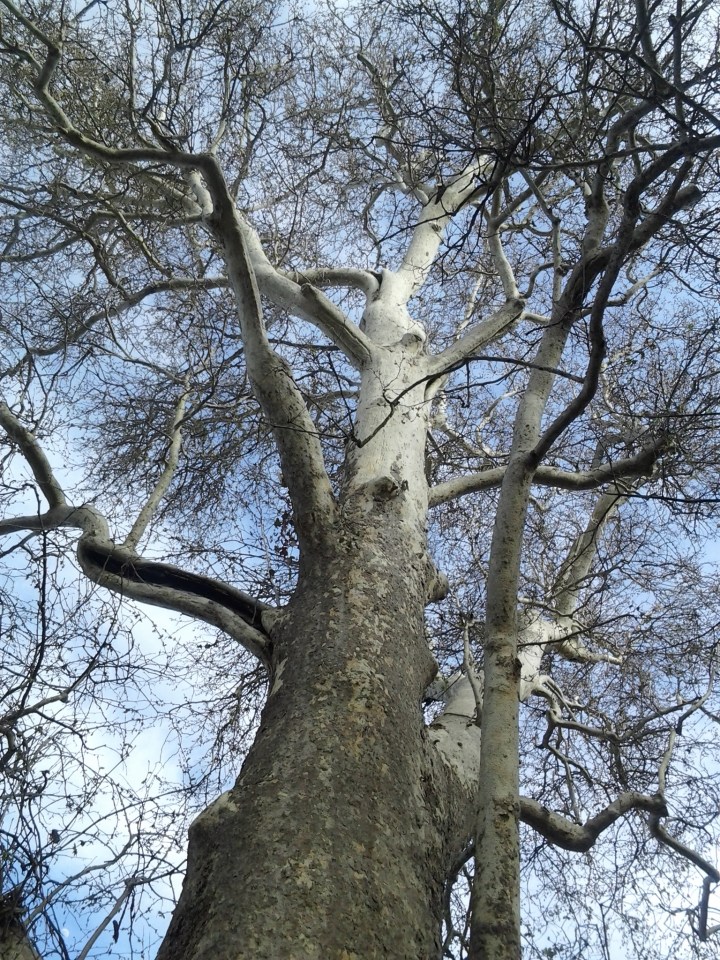
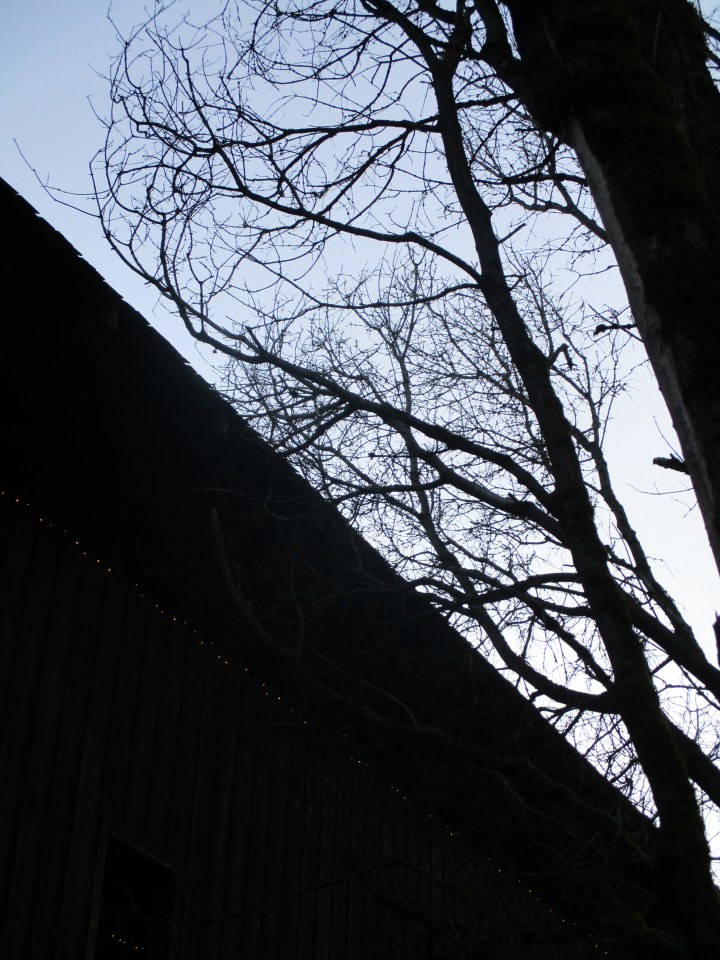
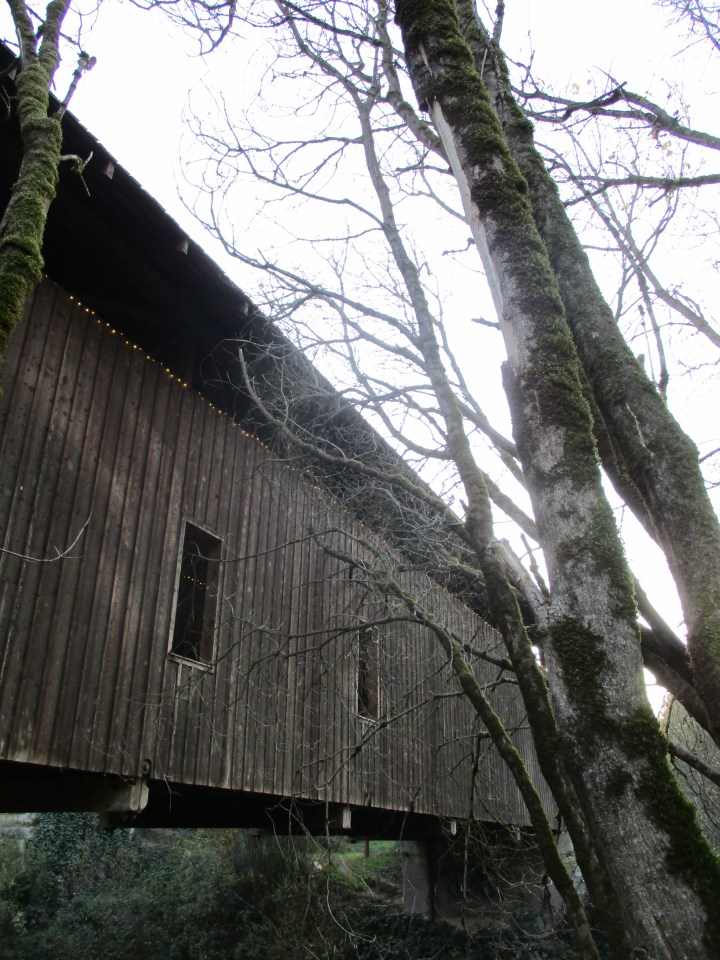
The two pictures above, although not relevant to any symptoms, are important to our Community because the historic Felton Covered Bridge just got a new roof! (https://tonytomeo.wordpress.com/2017/12/02/felton-covered-bridge/) Dead box elders that are already starting to destabilize and collapse are now leaning onto the edge of the new shingles! They really need to be removed before winter storms move them around, and they dislodge any shingles.

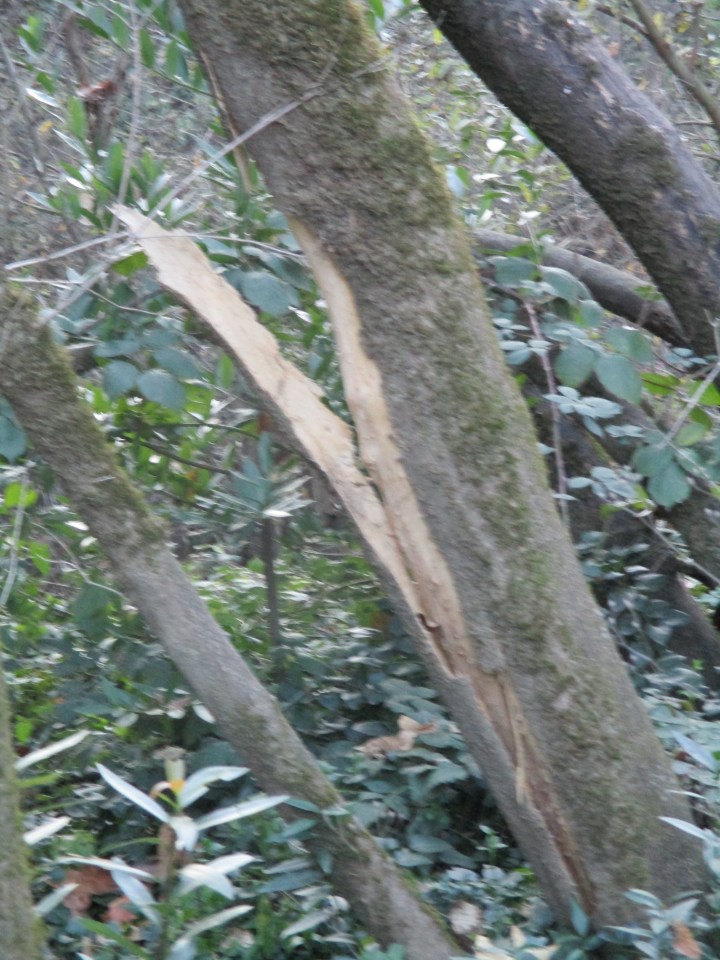
The first of the two pictures below show basidiocarps associated with fungal decay of the trunks and roots. This decay destabilized and compromised the structural integrity of the necrotic trees with remarkably efficiency. The trees died only last spring, and are already collapsing! The second of the two pictures below simply shows decaying bark peeling from a necrotic trunk.P71223++P71223+++

This all happened so suddenly. Like SODS (Sudden Oak Death Syndrome) it is likely to be misdiagnosed a few times before the primary pathogen is actually identified. Also like SODS, it may be ignored as an isolated situation affecting a few trees that are not very popular anyway. When SODS first started killing a few of the unpopular tanoaks, it did not seem like much of a problem. It did not get much attention until it started taking out majestic coast live oaks that had been healthy for centuries.

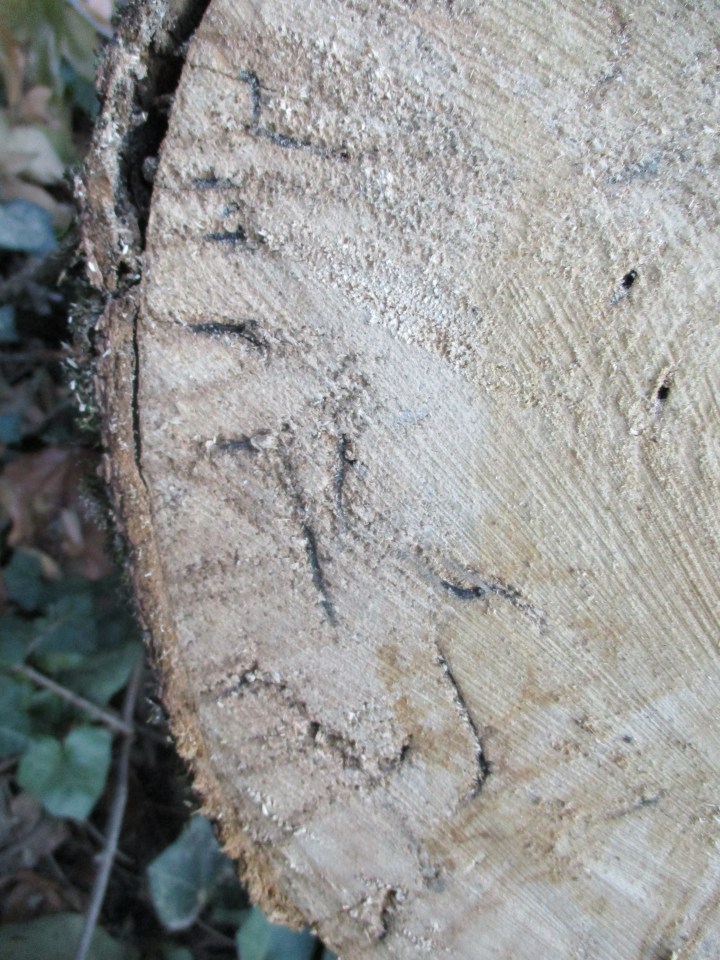
The two pictures below show a cross section of a necrotic trunk that needed to be cleared from a bridle trail. Galleries have been excavated by the larvae of unidentified boring insects. The second picture is merely a closeup of the first.P71223++++P71223+++++

Santa Ana Winds

P71221+They have been a part of life in Southern California longer than anyone can remember. The Santa Ana Winds have been blowing down from the high deserts to coastal plains long before people arrived in the region. They are arid and usually warm before they leave the Great Basin and Mojave Desert, and they get even warmer as they flow downhill through mountain passes. That is what makes them so dangerous during fire season. Wind alone accelerates wildfire. Warming arid wind desiccates fuel, making it more combustible before wildfire arrives.

Santa Ana Winds are so regular that they affect how tall trees grow within the regions of the mountain passes where Santa Ana Winds move the fastest. Tall Mexican fan palms that grew up straight where sheltered from wind near the ground innately lean with the prevailing wind as they grow up and become more exposed. Those closer to the narrow canyons lean the most. It is something that arborists recognize everywhere around the Los Angeles Basin. They can tell how strongly the Santa Ana Winds blow in any particular neighborhood by how Mexican fan palms lean.

Santa Ana Winds can be strong enough to break tree limbs, and blow trees down. In the past few days, they have been making quite a mess in the Los Angeles region; although not as much of a mess as they are making in conjunction with the Thomas Fire in Santa Barbara and Ventura Counties, which may already be the biggest wildfire in the modern history of California.

Overnight, Santa Ana Winds blew this California pepper tree onto a swimming pool in Los Angeles. Tree services, landscapers, gardeners and those who enjoy gardening will be busy cleaning up such problems for the next few days, as Santa Ana Winds continue.

Tree Monster

P71203Matthew McDermott got this picture, which was actually part of a video, of a tree burning from within during the devastating fires in Sonoma County last October 9. Many of us saw it in the news. It is actually not as uncommon as it would seem to be. Interior wood is more combustible, and sometimes already well aerated from decay, so can burn if exposed to fire through wounds or cavities, while the exterior of the same tree resists combustion. This is why there are so many big and healthy coastal redwoods with burned out hollow trunks. Of course, trees more commonly burn from the outside.
Once burned, charred wood is resistant to decay. Redwoods and cedars are resistant to decay anyway, so once charred and doubly resistant, they can stand for decades.

When my younger brother and I were little tykes, one such charred cedar lived at our maternal Grandparent’s summer house outside of Pioneer. That is, it ‘lived’ there before it got charred by a fire a very long time before the forest that was there in the early 1970s grew up around it. I never actually saw it living. It was VERY dead long before my time.

The problem was that my younger brother and I did not KNOW for certain that it was dead. It was a big charred trunk at the bottom of the clearing downhill from the house. We could see it from almost anywhere, except from inside or uphill of the house. It was ominous. It was creepy. It seemed to watch us. The rest of the pines, firs, cedars and everything else in the forest was so green and lush; but the big black carcass was always there.

We were not totally afraid though. Our Uncle Bill was there too. He was the greatest superhero in the entire universe! He was bigger and stronger than any man. He was tall enough to hang our swing in the big tall black oak tree. He had already protected us from the bats. (We did not know what bats were, but we knew they were scary.) He breathed smoke, and from a white and gold can with a picture of a waterfall and a horseshoe on it, he drank a magical potion that might have given him some of his superpowers. (My brother and I tried it, but it tasted icky.)

Uncle Bill had a chainsaw.

Uncle Bill started to cut the base of the big dead Tree Monster while everyone else watched from a distance. To us kids, it seemed to take a long time. Eventually, the Tree Monster wobbled a bit, and fell forward towards us, landing on the ground with a big dusty thud. The top broke off and slid a bit farther from the rest of the carcass, which only made the secondary death of the Tree Monster seem that much more violent. After a bit of a pause, my brother and I approached in disbelief. It was twice as dead as it was before! Uncle Bill had killed the dead Tree Monster!

We walked on top of the fallen carcass just to be certain, and found no signs of life. We inspected the low and wide dead stump and found only sawdust. When we looked back at where the Tree Monster had always been, we saw only lush green pine, fir and cedar foliage.

Through the following year, Uncle Bill cut and split the Tree Monster into firewood for my Grandmother to cook with. It kept us warm at night. Uncle Bill kept us safe.

Birthday

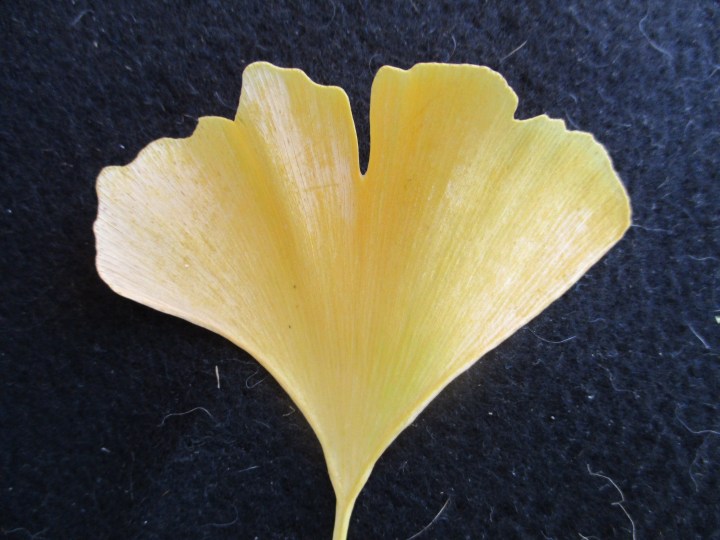
P71213This single yellow ginkgo leaf says a lot. It was found among the abundant cottonwood leaves on the broad walkway in Felton Covered Bridge Park (https://tonytomeo.wordpress.com/2017/12/02/felton-covered-bridge/). There are no ginkgo trees in the neighborhood that I am aware of. It must have come a long way to arrive here on the morning of December 13.
It really did not need to go through all the effort to get here. I need no help to remember the date. It is the birthday of a good friend who passed away last May.

Steven Michael Ralls is one of two friends I went to Oklahoma with late in 2012 (https://tonytomeo.wordpress.com/2017/11/19/oklahoma/). In the picture attached to my article about going to Oklahoma, there is a handsome gentleman to the left. That is me. The bronze guy in the middle was just standin’ on the corner in Winslow, Arizona. Steven is on the right. Gayle is on the sidewalk groping the bronze guy.

Steven did not know or care much about horticulture, but he knew ginkgo. It was his favorite tree; and it is the only tree that he remembered the botanical name for. There are a few gingko trees about Santa Cruz and elsewhere. He would sometimes point them out and exclaim, “Gingko biloba!”

I have not yet planted a ginkgo tree for Steven. At the spot under the Felton Covered Bridge where we scattered his ash, I planted a few canna seed that I brought back from Oklahoma, and some rooted cuttings of a pink brugmansia that I acquired during an outing with Steven to Santa Cruz. Neither grew enough to survive when the San Lorenzo River comes up this winter; so I will probably need to plant more.

Well, getting back to the single yellow ginkgo leaf. It says a lot. Today is December 13, the birthday of my good friend Steven.

Holy Guacamole!

P71202.jpgHorticulturists have a way of making all those long Latin names sound easy to pronounce. Lyanothamnus floribundus ‘Asplenifolius’ – Syzigium paniculatum – Metasequoia glyptostroboides. I do not know why proper pronunciation of their names is so important. They have no ears. They can not hear if we simply call them ‘Earl’. Even if they could hear, they would not respond.
Communication with other people is probably more important. Yet, we are so often unable to spell something as seemingly simple as the sound of a palm frond falling to the ground. Does it sound like “whoosh”, or “splat”, or some combination of both? What do the Santa Anna Winds sound like as they blow through a grove of Aleppo pines? What does a red flowering gum full of bees sound like?

Heck, Brent could not even tell me what an incident that he heard in his own backyard sounded like. As he came home from work and was getting out of the car in the driveway a few days ago, he heard in rapid succession, a loud ‘CRACK!’ followed immediately by a loud ‘WHOOSH!’ and a big ‘THUD!’ and ‘BANG!’. Well, I was sort of clear on all that, but it was the finale that was baffling him.

He said it sounded like someone dumping out a big bucked of tennis balls filled with something to make them heavy. I did not ask how he knew what that sounded like, or what the tennis balls were filled with, or why anyone would fill tennis balls with anything, or . . . He was obviously unsatisfied with that explanation, so said it sounded more like a whole bunch of billiard balls bouncing off of the bumpers all at the same time, without bumping into each other. Well, that is some pretty talented pool.

Okay, so it sounded like when you get into an elevator on the ninth floor of the Bank of America Tower, you know the big one downtown, and the bottom falls out of your big bag of ‘Eureka’ lemons somewhere between the fifth and fourth floors, and everyone is staring because it is noon thirty on Friday, and . . . well you know, . . . and then there was this . . . and . . . ain’t nobody got time for that!

Dude, just shut up! I get it.

Well, he went to the backyard to investigate. The source of the commotion was not immediately apparent from ground level. Everything seemed to be in order, maybe a bit sunnier, which might not have been noticed anywhere else after autumn . . . but this is Los Angeles. When Brent looked up to the deck on the flat roof of the office, it all became clear.

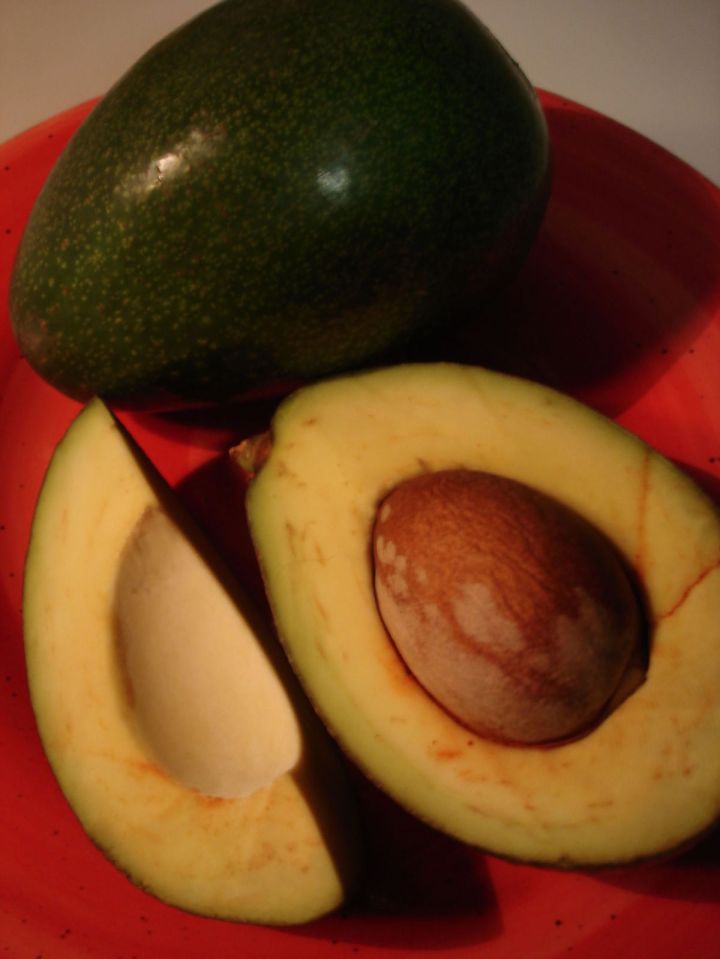
The big avocado tree in the neighbor’s garden dropped a big limb onto the deck. The last strange sound he heard was that of so many heavy avocados hitting the deck and scattering in every which direction, including down the wrought iron spiral stairs. All the patio furniture and cool potted plants up there got clobbered. Fortunately, there was no serious damage, and the avocado tree should be fine. Most of the fruit was in good condition. Only those that fell down the stairs were pulverized into lumpy guacamole.

Prune Maples and Birches Before Sugaring Season

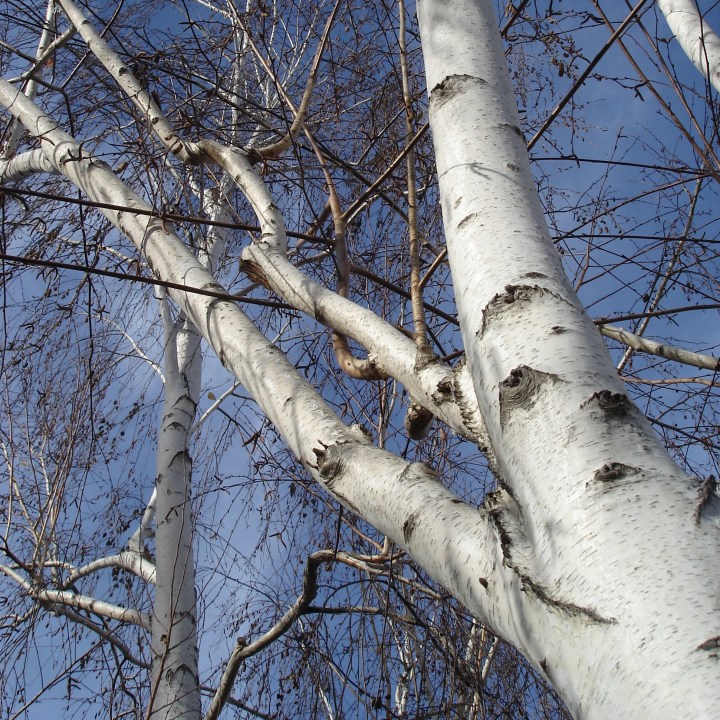
71206thumbMost of us Californians are probably wondering what that means. Sugaring season is more familiar to horticultural enthusiasts in New England, Canada, and more recently, in Alaska. It is the time of year that sugary sap get harvested from maples, and in Alaska, from birches. Maple sap gets refined into maple syrup and sugar. Birch sap makes birch syrup and sugar, a recent fad up north.

Why is this important here? Well, maples and birches know what time of year it is. Their sugaring season is relatively brief here; and they do not produce as much sap as they do in cold climates. Nonetheless, their sap will eventually start to flow later in winter, just when we expect it least. By the time we will be pruning dormant fruit trees and roses, it will be too late for maples and birches.

Therefore, maples and birches should either be pruned as soon as practical after defoliation, or after refoliation later next spring or early summer. They tend to defoliate before their sap gets too pressurized. However, if opting or the autumn pruning schedule, it is advisable to prune off one small stem first and then wait a few minutes to see if it bleeds. If it does, pruning should be delayed.

Bleeding may not be as harmful as it would seem to be for mature trees, especially since birches and many of the maples do not need much pruning of viable stems. If they get infested with sooty mold, a few small bleeding wounds on a big birch tree are more unsightly than unhealthy. However, several bleeding wounds can be somewhat distressful, especially for young Japanese maples.

If opting for the spring pruning schedule, maples and birches should be allowed to refoliate first. Their first leaves should be fully developed. This might be difficult for those of us who believe in pruning during dormancy, but it is better than causing sap to bleed when the trees need it most. Pruning can be done during summer too, but summer pruning should not be aggressive enough to suddenly expose formerly shaded bark to direct sunlight. Otherwise, bark can scald. So once again, timing is everything.

Green Roof

P71125Is this a bad idea for a green roof?

Is it a houseplant that got too big?

Is it a wheelchair accessible tree-house?

None of the above. It is just weird architecture, designed to preserve a rare Chilean wine palm. The tree was probably planted in the front garden of a Victorian home that was on this site before the site was redeveloped. Chilean wine palms were more popular back then; and this one seems to be about that age. Although it seems to be healthy now, the constriction in the trunk indicates that it had been stressed by the redevelopment, which undoubtedly covered much of the established root system. The time it took for the length of trunk above the constriction to grow coincides with the estimated age of the building below. The tree very likely had better access to rainwater before.

Because it is a palm, the trunk will not get any wider than it is. Because the trunk is so stout, it probably does not move much in the wind. However, the blue tarp around the trunk indicates that there is a problem with the roof leaking around the trunk. It is obviously difficult to get a good seal.

It is impossible to determine from this picture if the building is built on a slab or a simple foundation. A foundation would be a bit healthier for the tree. Perhaps it is more accurate to say that a foundation is less detrimental to the tree than a slab would be. It probably would be better for the building too, since a slab could have been displaced by new roots emerging from the base of the trunk.

Perhaps all this discussion is pointless. This weird but creative idea works. Although distressed and very likely embarrassed, the tree was preserved, and shades the building below.