 The ‘politically correct’ designation for them now is ‘flowering cherry’. We all know what it means, but it is not quite as accurate. After all, they all flower. Fruiting cherries can not make fruit without flowering first. The old fashioned designation as ‘fruitless cherry’ is more accurate, but not so appealing. Besides, after half a century, the work of these two deteriorating old fruitless cherry trees has not been in vain.
We are not certain what cultivar they are. I think of them as ‘Akebono’ because that is what I am familiar with. However, those who have been acquainted with them longer know them as ‘Yoshino’. The tree structure seems to be more similar to that of ‘Akebono’. The bloom seems to be more similar to that of ‘Yoshino’. My Mother happens to like ‘Akebono’, so if she ever asks, I know what to say. However, I would tell my Pa that they are ‘Yoshino’ because that happens to be the middle name of his newest son in law, who he gave my baby sister #5 away to. It does not really matter what their name is. They are some of the most important trees in the neighborhood.
You would think that with all the very old and very big redwoods here, that these puny and decrepit flowering cherry trees would not be all that important. Some of the redwoods are hundreds of feet tall and hundreds of years old. They will still be here for a very long time after the flowering cherries are gone. Flowering cherries can last for centuries where they are happiest and pampered in old gardens in Japan, but rarely last half a century here, even in the best of conditions.
However, everyone in the neighborhood knows these cherry trees. There are only a few people who can remember before the trees were planted in the late 1960s. They are spectacular in bloom, particularly with the dark green backdrop of the rest of the landscape and redwoods. The picture below shows a close up of the bloom about a month and a half ago. One can imagine the entire canopy of the trees covered with this bloom before new foliage appears. It was even more spectacular years ago, before the canopies started to deteriorate and die back. There is not much left of them now.
They really are as bad as they look in the picture above. The closer of the two trees is just a stump with that silly little stub on top to make it look even more disfigured. I could not cut off the stump because some of the minimal remaining viable stems originate there. It does not matter much. There is no way to repair these trees, or make them any prettier. Either of the trees could die at any moment. We are ready to plant at least one replacement, although we will likely only plant one. The objective is to restore the bloom that was there before, but we know that there is no replacement for the trees that those who are familiar with are so fond of.
I have worked with MANY trees through my career, including a few that are (or were) very cultural significant. I was very disgusted by the lack of respect for a group of historic redwoods that used to be outside the old City Hall in Sunnyvale before the mall was build around them, over the area that used to be downtown. I inspected the big old coast live oak at the Scott Residence in Scott’s Valley, where the founder of the town resided. Again, I was saddened by the lack of concern from people who live there now but know nothing of local history, and care even less. At the Winchester House, I witnessed idiotic mislabeling of the historic California fan palms flanking the driveway, as well as blatant lies about their history. Well, I could write another article about this rant. These not so fruitless flowering cherries do not fit into this category anyway.
It seems that everyone is aware that the flowering cherries will be gone soon, and they understand why. No one questions the need for removal. It is saddening anyway. Yet, it is also gratifying to know that these trees are appreciated and respected as much as they are. Those who know them appreciate all the work they put into making their lives a bit more colorful and happier. For half a century, these flowering cherries have been doing what they were planted to do. They had a very good and fruitful career.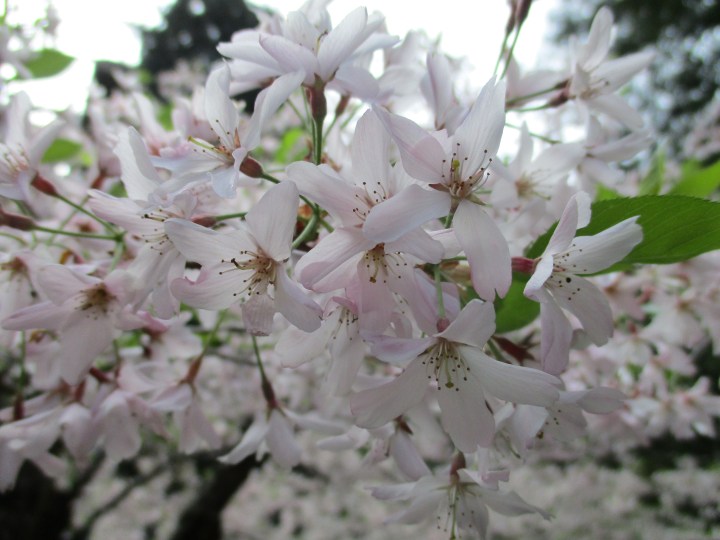
 Seriously, I am not making this up. ‘Drunk Stick’ is what the Spanish name of ‘palo borracho’ translates into. It is one of the few common names of the tree I know only as floss silk tree, Chorisia speciosa or Ceiba speciosa. Yes, it sounds crazy, but not as crazy as what the trunk and limbs looks like. One can speculate why it is known as ‘drunk stick’. I am not certain that I want to know.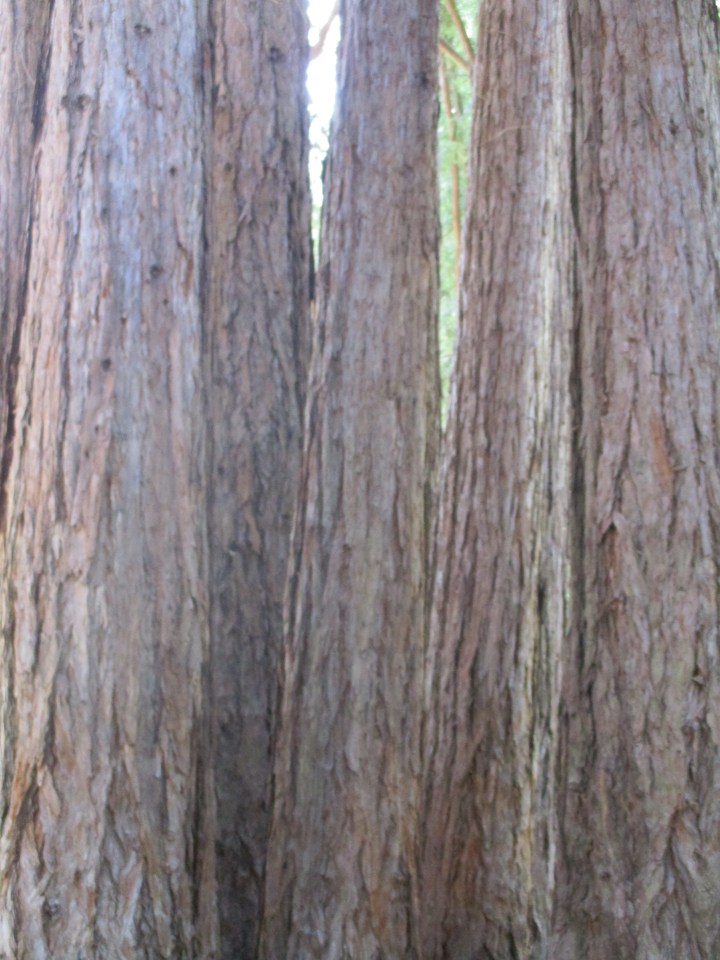


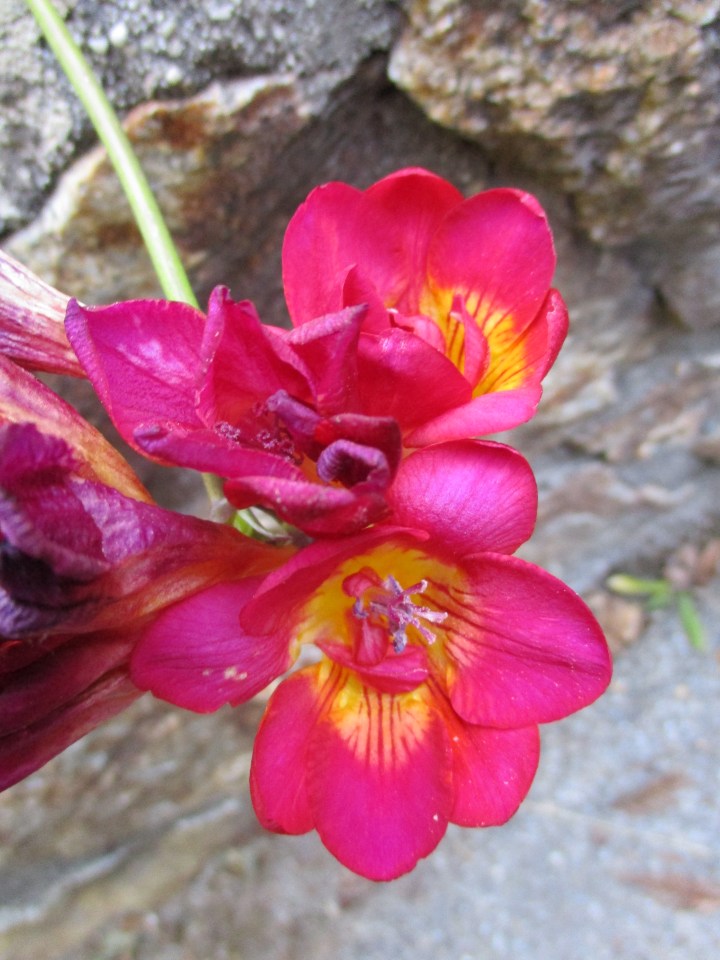 This is the link for Six on Saturday, for anyone else who would like to participate:
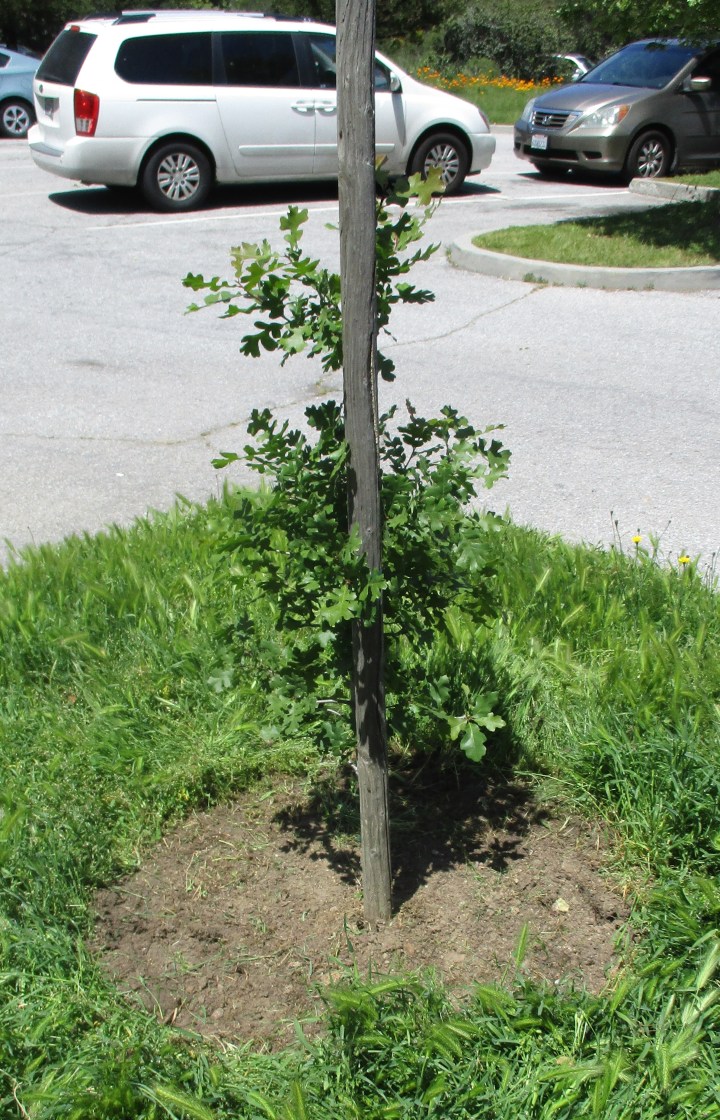 When I started writing this blog eight months ago, I reserved the right to occasionally write about topics that were irrelevant to horticulture and gardening. I designated the category of ‘elaborations’ for posts that were not from my weekly gardening column; but so far, I have tried to post articles within this category that were at least remotely relevant to horticulture, even if only to discuss a single tree, or merely a single ginkgo leaf that somehow appeared in Felton Covered Bridge Park.
 Steven Michael Ralls of Felton succumbed to complications associated with a variety of chronic medical conditions, and passed away in Aptos on May 2, 2017, at the age of 46. Steven was born on December 13, 1970 in Fort Leonard Wood, Missouri, and then spent most of his childhood in Norman, Oklahoma. He came with his family to Berkeley, California in 1987, and then lived in Hayward, before settling in Felton in 1999. His recent relocation to Aptos was considered to be only temporary, as he would have preferred to return home to Felton.
 That refers to the pattern of the veins in the leaves. Long before studying horticulture and botany at Cal Poly, my classmates and I learned a bit about horticulture within the contexts of studying ‘nature’. While in the sixth grade, we all went to camp for a week. One of the many projects we did during that time was collecting a few leaves to represent three different vein patterns, and mounting them under clear plastic on a cardboard plaque. The three different patters were, ‘pinnate’, ‘palmate’, and ‘parallel’. I do not remember if we all used the same leaves, but for my plaque, I got a blue gum eucalyptus leaf to represent pinnate veins. Palmate veins were represented by English ivy. Parallel veins were represented by English plantain.
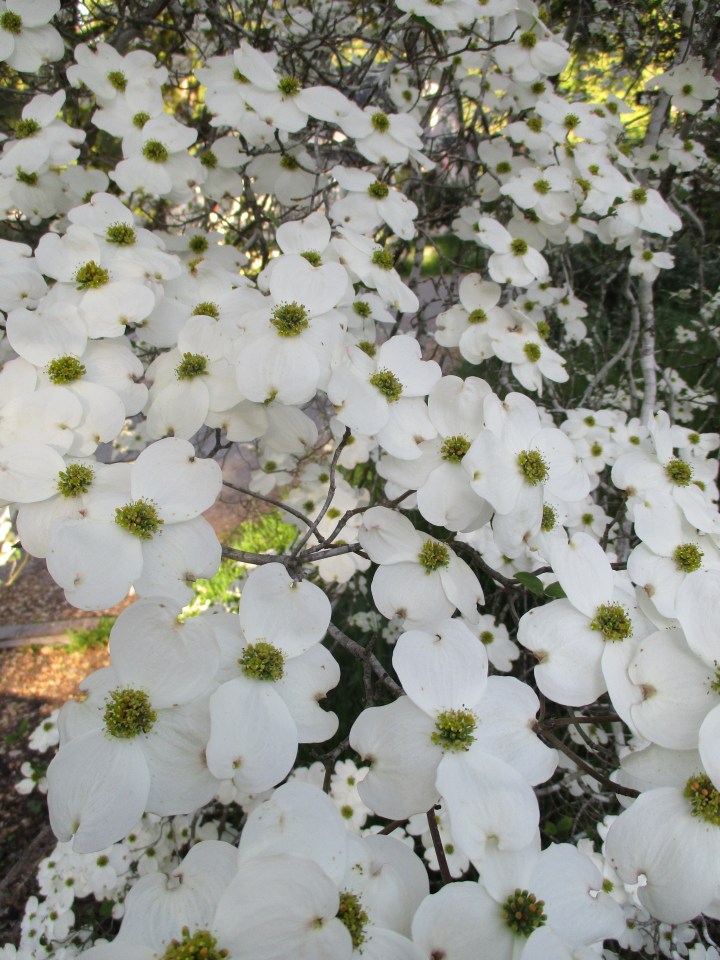 Flowering dogwood, Cornus florida, seems like it should be more popular here than it is. It blooms spectacularly in April. The foliage can color nicely in autumn. Mature trees are proportionate to medium sized or smaller suburban gardens. However, the limiting factor to their popularity in the local climate is that they are understory trees that prefer to be in the partial shade of larger trees.
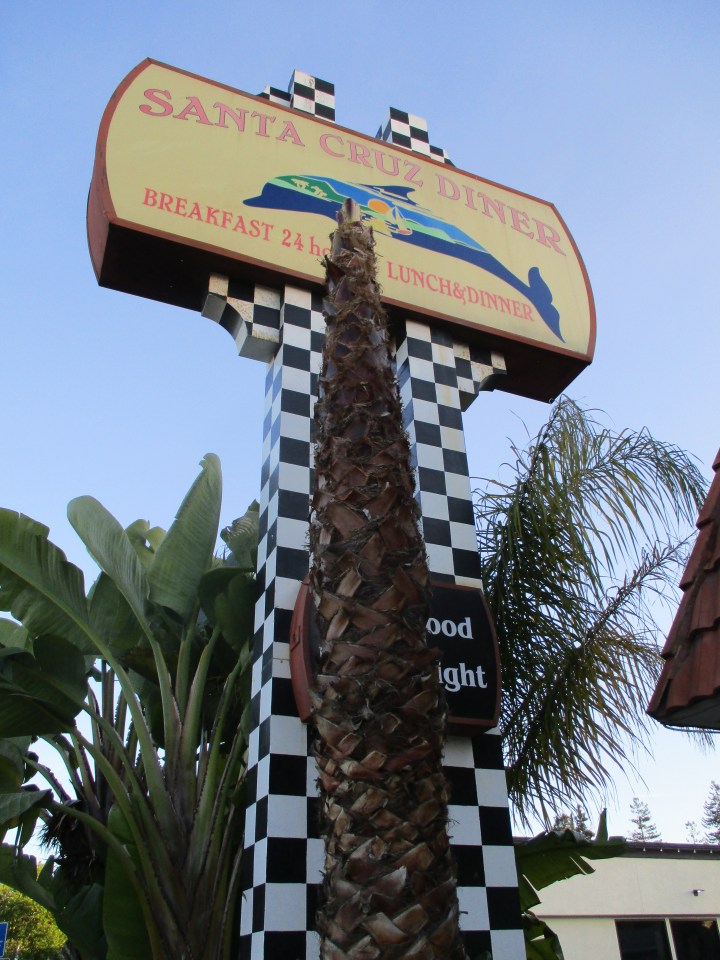 Speaking of which, this is not the right location!
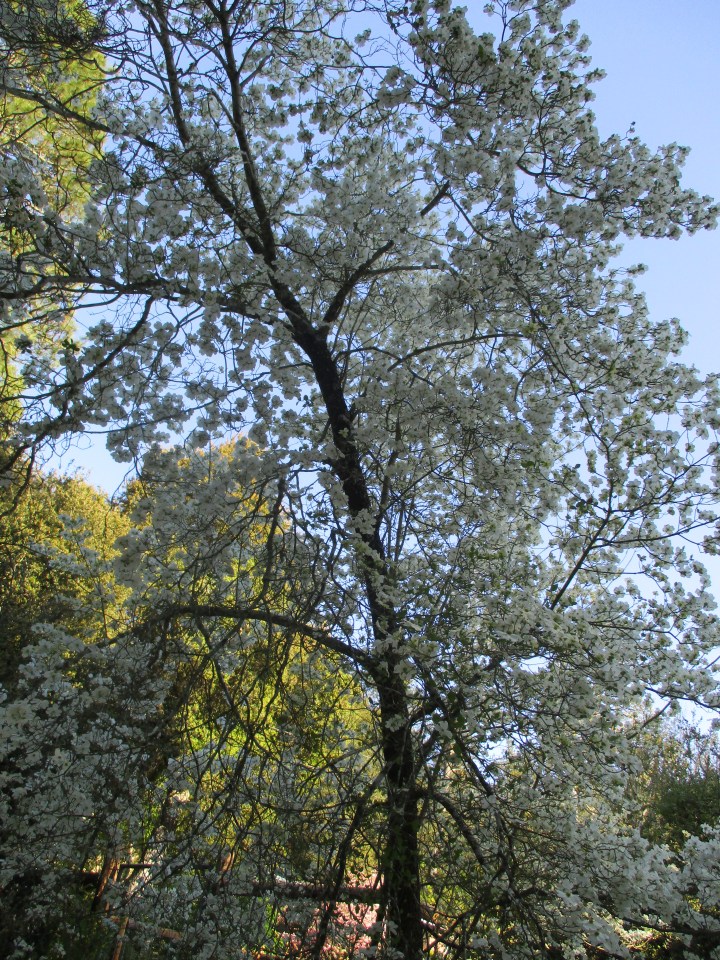 My weekly gardening column does not have much space for everything that should be said about the various topics and featured specie. I just try to fit the most basic of information into the space available, but usually would like to fit more in.
 We can keep this more brief than that long title.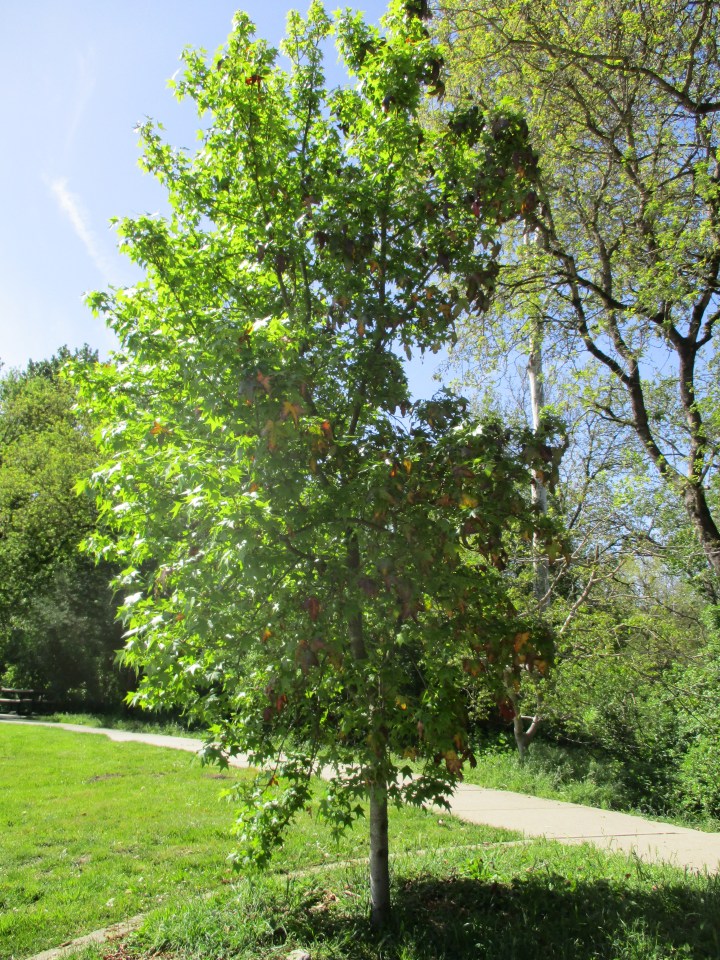
 The Great Basin bristlecone pine of the eastern Sierra Nevada can live more than five thousand years. The giant sequoia of the western Sierra Nevada can live more than three thousand years. The familiar coastal redwood from the Coastal Ranges can live more than two thousand years. Besides impressive longevity, one thing that they all have in common is that they all eventually die.
