 Fire is part of life here. It is a risk that those of us who live in the Santa Cruz Mountains must accept. We live in forests full of abundant vegetation fuel, where fire crews and equipment have limited access. The horrible Tubbs Fire that recently burned an urban neighborhood in Santa Rosa demonstrates how destructive, risky and unpredictable fires can be. That neighborhood was in town, outside of forests, where fire is not such a commonly accepted risk.
This morning, October 17, on the anniversary of the Loma Prieta Earthquake, our community woke to a fire of our own. The sunrise looked more like a colorful sunset, with orange and tan smoke everywhere. The ash that had fallen from the sky made it seem like there had been a cremation party last night. It is getting to look like Pompeii around here. The fire started last night as a house fire near Bear Creek Road outside of Boulder Creek, and moved into more than a hundred acres of forest. Crews from as far away as San Jose responded quickly, and seem to be containing it. The region was evacuated, and Bear Creek Road was temporarily closed. The fire is only 5% contained as I write this before noon. Fortunately, the humidity is up, and the temperature is down.
Fire is more than a part of life for us. It is part of nature. Although almost all fires here are caused by human activity now, fires had been burning forests and wildlands long before humans arrived. There certainly were not as many fires, but without anyone here to suppress them, they burned much larger areas for much more time. A fire started by lightning early in summer could burn for hundreds of miles until extinguished by a storm the following autumn. A single such fire could easily burn more area than all unnatural fires now burn each year. There were likely several such fires annually. That is why old photographs show that California was historically not as densely forested as it is now. Forests simply burned more regularly.
Many plant species know how to work with fire. A few, such as the giant redwood and coastal redwood, survive fire by being relatively noncombustible. They only burn if other vegetation around them gets extremely hot. Most of the pines do not mind burning because their cones open to disperse seed after getting cooked by fire. The seed germinate quickly the following winter to reforest the area that was just cleared by fire. If they are fortunate, they grow up and dominate the forest before other vegetation does, only to burn again a few decades later.
Then there are a few plants that take this technique a step further. Monterey pine is innately sloppy. By that, I mean that it holds much of its old dead limbs instead of shedding them. Lower limbs collect significant volumes of fallen needles, instead of letting the needles fall to the forest floor. Consequently, when a Monterey pine forest burns, it gets hot enough to incinerate competing vegetation and its seeds. Monterey pine cones do not burn completely. They insulate the seeds within just long enough to survive the quick and hot fire, and then open afterward to disperse seed. This is a significant advantage to the Monterey pine, even though they get incinerated too. Not much more than their own seed survives to dominate the forest.
California fan palms (and the related Mexican fan palms) collect long and very combustible beards of dead fronds. When they burn, they likewise incinerate everything below them. The single terminal buds of the palm trees remain safely insulated inside their thick trunks, and will regenerate later as if nothing every happened.
This tactic sounds violent, but it works for the trees that use it. However, enhanced combustibility is not such an asset in home gardens. That is why it is so important to either plant combustible plants at a distance from homes and buildings, or to maintain them so that they are not allowed to collect fuel.
If palms are allowed to wear their beards long enough to reach the ground, other combustible plants should not be allowed to get too overgrown around them. Alternatively, palms can be allowed to wear long beards if the lower portions are pruned up and away from other combustible plants.
Just like there are several plants that are not notably combustible, there are some that are notably combustible. Pines, cypresses, firs, spruces, cedars, junipers, acacias and eucalypti, although useful and appealing in the right situations, all happen to be notably combustible.
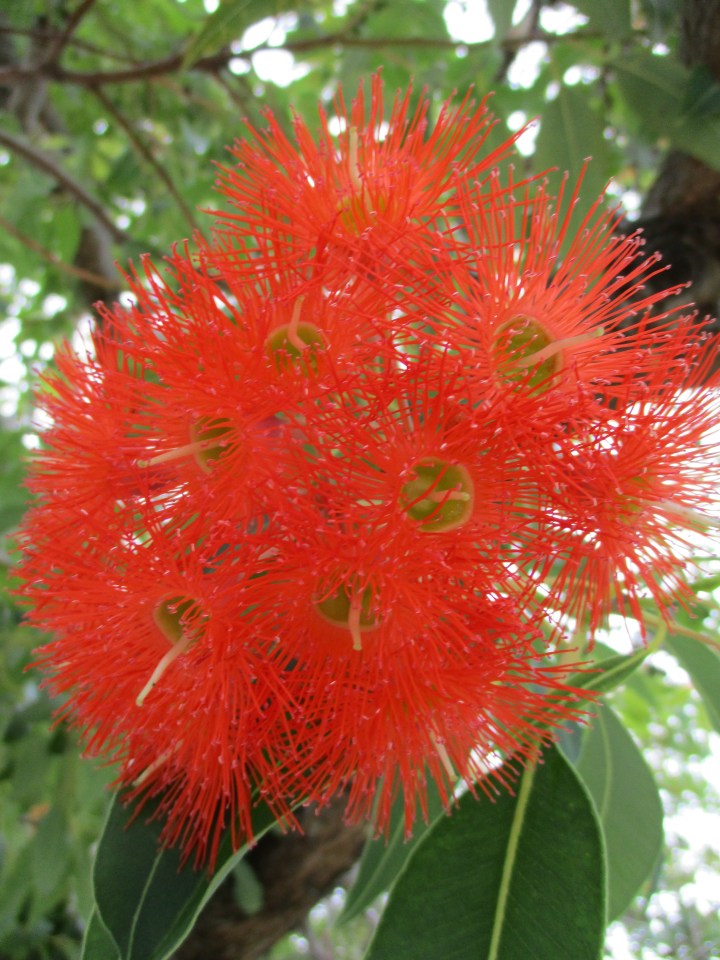 We all know about the bad reputation of eucalypti, especially the notorious blue gum. They are too big, too aggressive, too messy, too structurally deficient, and in groups, they are too combustible. However, there are several eucalypti that are not only appropriate for local home gardens, but because of their resiliency, drought tolerance and adaptability to the local environment, should be more popular than they are.
 One of the big four for mild climates, sweetgum, Liquidambar styraciflua, develops an excellent display of mixed yellow, orange and red, regardless of how quietly autumn tries to sneak in. Of the other three, Chinese pistache is more orange with less yellow, flowering pear is more ruddy, and gingko is only bright yellow. They all get very flashy color, but sweetgum just might be the flashiest.
 There are many reasons why fireplaces and their chimneys are not such a safety concern like they were decades ago. Only a few modern homes are even equipped with them. Installation of a new fireplace is outlawed in many municipalities, even if a fireplace gets damaged by an earthquake, and should be replaced. Urban sprawl has replaced almost all of the orchards and woods that once supplied affordable fuel.
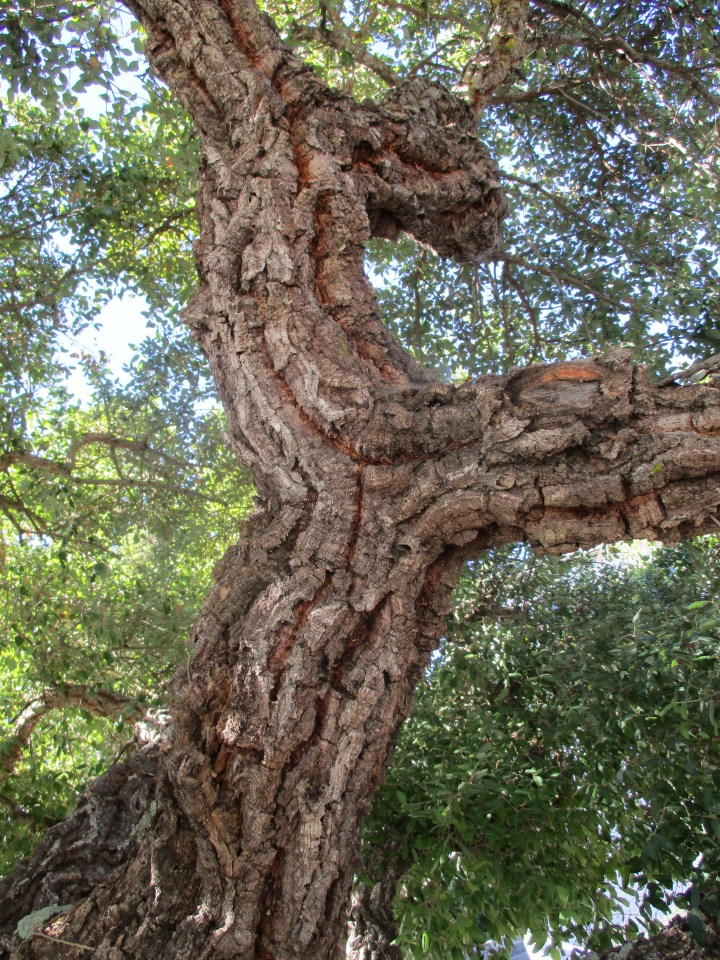 Like redwoods, the cork oak, Quercus suber, is a ‘pyrophyte’, which means that it survives forest fires that burn off competing vegetation. The trunks and main limbs are insulated with a very thick bark. Only the foliage and smaller stems burn off. After a fire, the upper limbs of cork oak regenerate new foliage while other less fortunate plants start over from their roots or seed at ground level.
 Bluegum is famously problematic. It is too big, too invasive, too messy, too structurally deficient, and as demonstrated in the Oakland fire, too combustible. Dwarf bluegum, Eucalyptus globulus ‘Compacta’, is a completely different animal that does not even look related. It gets only about fifty feet tall, with a dense and somewhat symmetrically rounded canopy. The mess and falling limbs do not affect such a large area.
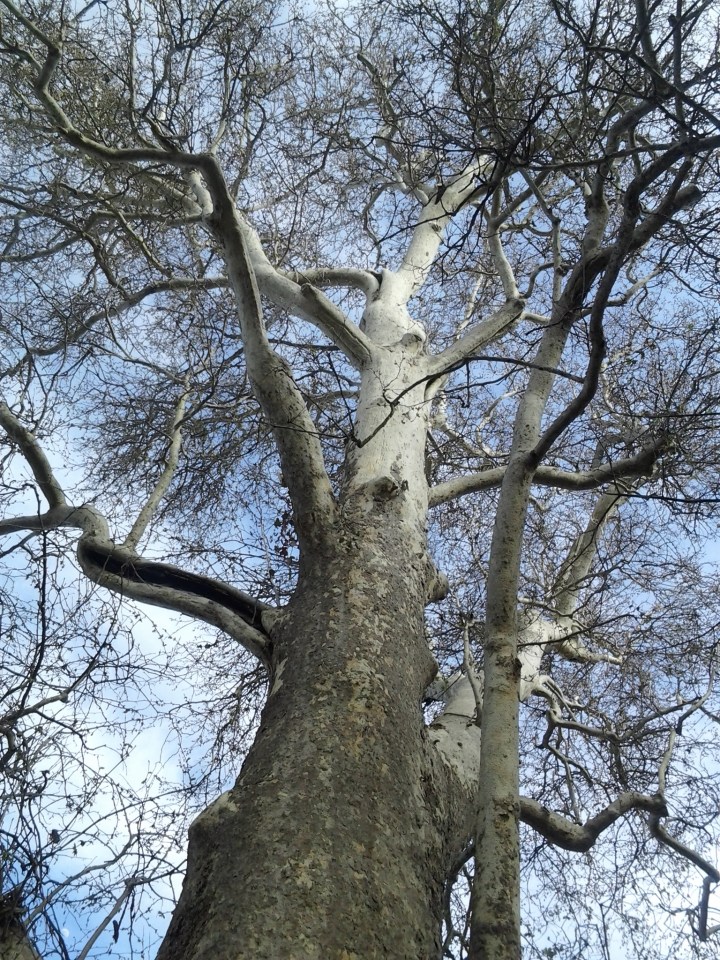 Before the storms of winter get here, it might be a good time to make arrangements to get some help for big trees that need it. Smaller trees that can be reached from the ground may not need anything that we can not do ourselves. It is the big trees that have grown beyond our reach that may need professional help if they have problems. They are unsafe for us DIY garden enthusiasts.
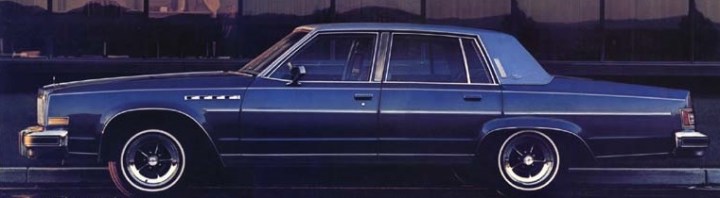 For my exquisite 1979 Electra, planned obsolescence did not work out so well. It was probably a grand Buick for that time, and one of the last with tail fins! It was elegant. It was big. It was steel. It was made to last ten years or 100,000 miles . . . and that was it. Seriously, as much as I enjoyed that car, it did not want go to much farther than it was designed to go. It limped along for almost 20,000 miles more, but was not happy about it, and was really tired and worn out by the time it went to Buick Heaven.
 Tony Tomeo