 A new lawn is getting installed at work. Yes, installed. It will not be grown like lawns were decades ago. It will be unrolled and fastened into place, not like sod, but more like carpet. It will be synthetic artificial turf. After considerable deliberation, it was determined to be the most practical option for the particular application. The real turf that was there before succumbed to excessive traffic above and very sandy soil below.
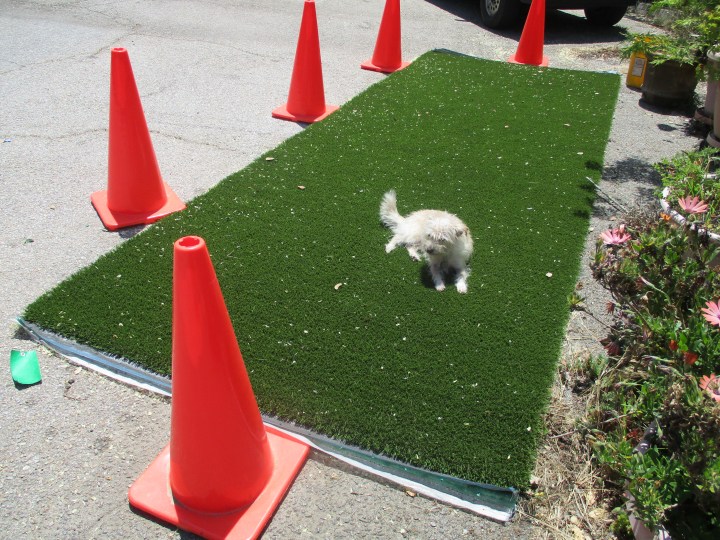
The contractor who will be installing this lawn sent a sample piece of it prior to the final installation. We actually do not know why we got a sample, since we already know what the particular artificial turf is like. There was some concern that it would get too warm in sunlight, but it arrived with no explanation. It was unrolled onto the asphalt driveway at our maintenance shops, and surrounded with cones to protect it from getting driven on.
Rhody wasted no time in trying it out. Obviously, he found it to be quite satisfactory. He rolls around on it and tried to dig into it like it is real grass. With all the fallen locust flowers and cottonwood fuzz, it even looks like a real lawn in need of raking. I certainly hope that it does not expect to be watered and mowed as well.
You might think that all horticulturists would automatically dislike artificial turf. Yet, I am not the only one who prefers it to real turf grass in some situations. You see, real turf takes so much effort that those of us who enjoy horticulture would rather put into other more interesting and productive chores. After all, lawn is the most demanding feature of most landscapes, but is also the most monotonous and boring. Many of the best get no use.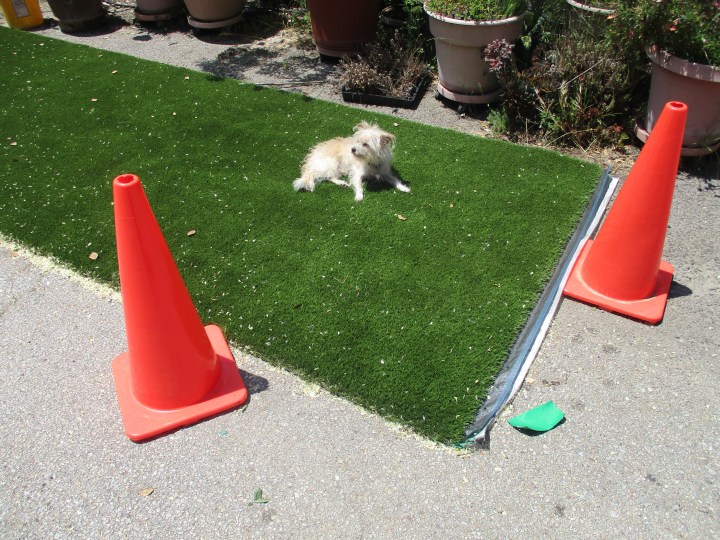
By the way, this article was intended for yesterday. The article that should have posted today got posted yesterday instead. I am sorry for the glitch of chronology.
 Turf grasses are the ultimate in groundcover. They are very durable, and useful for covering large areas in a very user friendly manner. The toughest varieties are used for athletic fields because they withstand the wear and tear. In home gardens, all sorts of varieties are grown as lawns. Like other groundcovers, lawns limit erosion, and are cleaner than bare summer dust and winter mud.
 Halston was quite the rage when I was a little tyke.
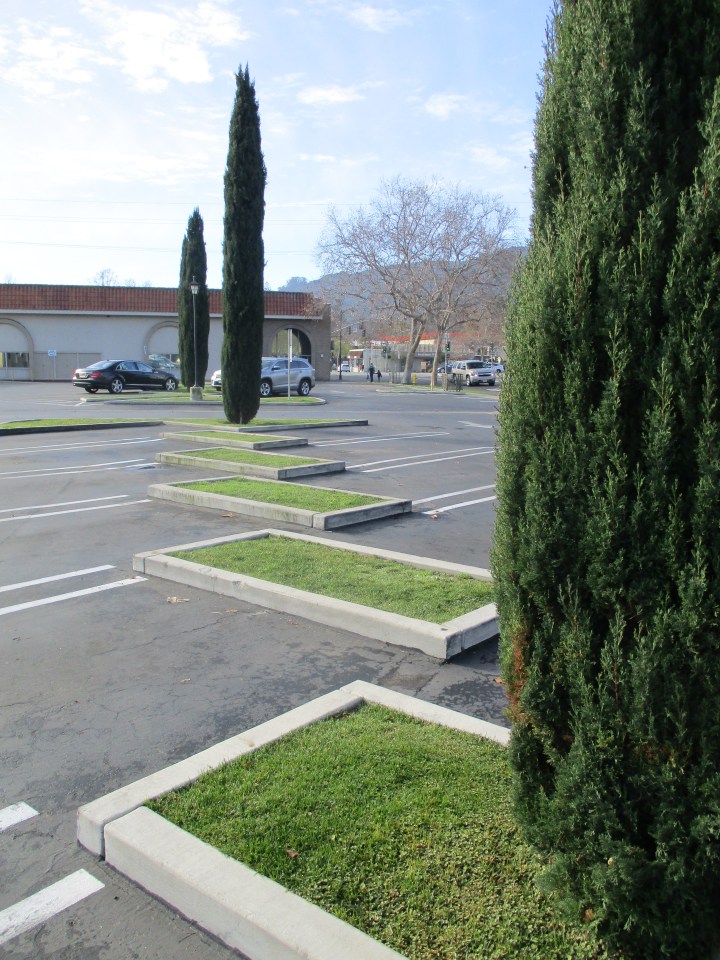 Perhaps I should elaborate on the ‘litter boxes’ in the ‘Six on Saturday’ post earlier this morning. As I already mentioned, they are in the same parking lot as the Leo and Leona sculptures. They were formerly inhabited by Italian cypress trees that would now be like those nearby if they had survived.
 Tony Tomeo