 Flowers were originally colorful only to attract pollinators. Breeding has improved the color and quality of many garden varieties of flowers, to make them more appealing to the people who grow them. Some have been bred so extensively that they are sterile, which defeats the original function of flowers. Now their function is merely to look good in the garden. Improvements are relative.
Foliage is green because it is photosynthetic. Chlorophyll, which is necessary for photosynthesis, happens to be green. Yellow, red, blue, purple, bronze, gray and variegated foliage might not be as efficient at photosynthesis as green foliage, but can be appealing in home gardens. Many plants with colored foliage are inferior to their greener counterparts, but are somehow more popular.
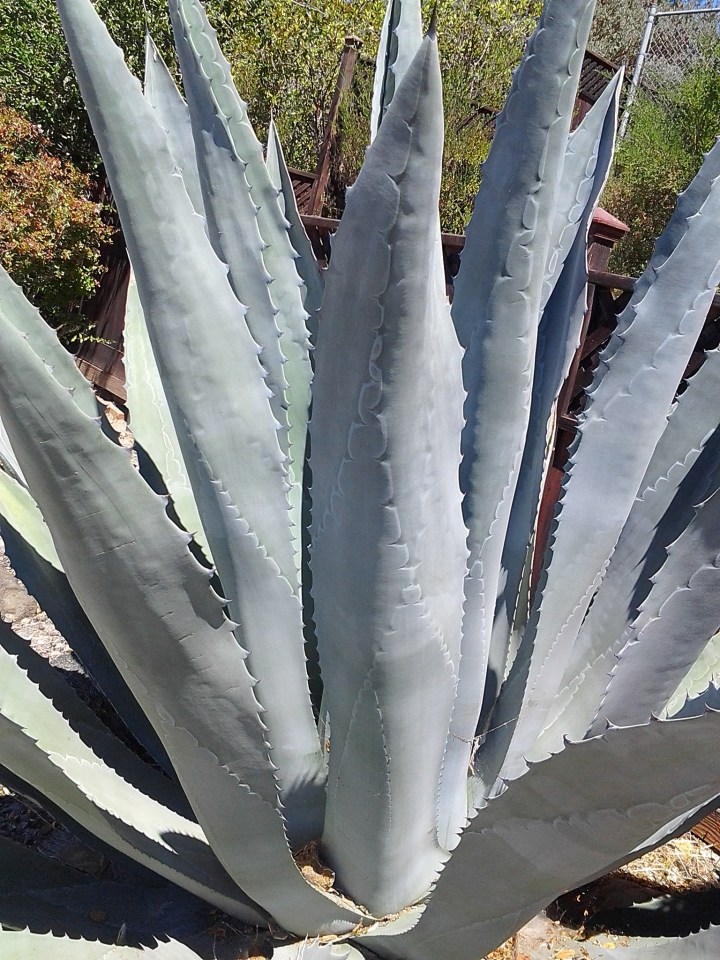
Gray and blue foliage absorbs less sunlight, which can be an advantage in harsh environments. Blue hesper palm and the various blue agaves are from arid deserts. Colorado blue spruce is from high elevations of the Rocky Mountains. Arizona cypress, silver mountain gum, artemesia, lambs’ ears, lavenders, dusty millers and blue junipers all provide distinctively gray or blue foliage.
Golden arborvitaes and junipers can be strikingly gold as new foliage develops in spring, even if the color does not last long. Most plants with gold foliage fade to yellowish green through summer. Golden honeylocusts do not fade as much, so are still mostly yellow by the time they defoliate in winter. Purplish or reddish foliage of purple leaf plum and red Japanese maple holds color better.
Euonymous, English holly, osmanthus, silverberry, hosta and various pittosporums can be variegated with white or yellow. Ivy, and hydrangea can be variegated with white. New Zealand flax and mirror plant can be variegated with gold or bronze, . . . or red or pink. Any unvariegated mutant growth (known as ‘sports’) that appears on variegated plants should be pruned away. Because it has more chlorophyl, it grows more vigorously, so can overwhelm and replace the more desirable variegated foliage.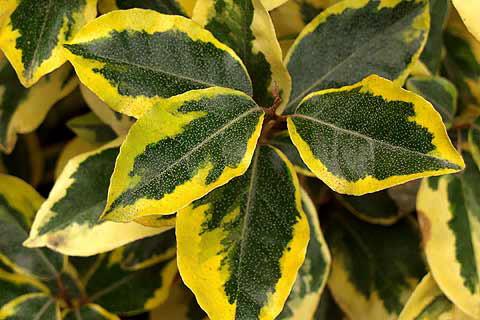
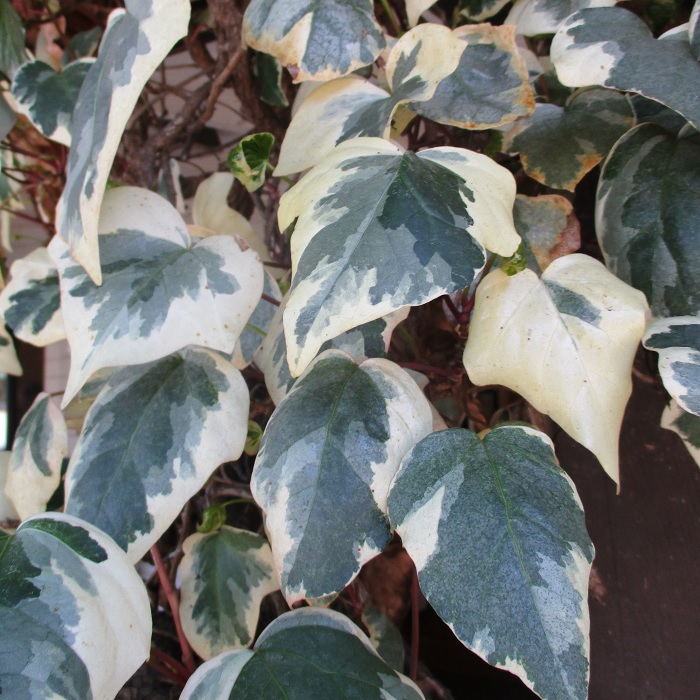 This is one of those plants that many of us have strong feelings about. Many of us who remember it from when it was more popular in the 1970s might consider Algerian ivy, Hedera canariensis, to be an aggressively invasive weed. Those of us who are less familiar with it might appreciate it as a vigorous and resilient groundcover that gets dense enough to exclude most other weeds.
 When the weather warms up a bit between frosty weather and winter storms, the rich fragrance of winter blooming daphne, Daphne odora, is at its best. The domed trusses of tiny pale pink flowers are not much wider than a quarter, so are easy to overlook while investigating the source of the fragrance. ‘Aureomarginata’, the standard cultivar, has glossy evergreen leaves with narrow pale yellow margins. Mature plants are only one or two feet high. All parts of the plant are incidentally toxic.
