
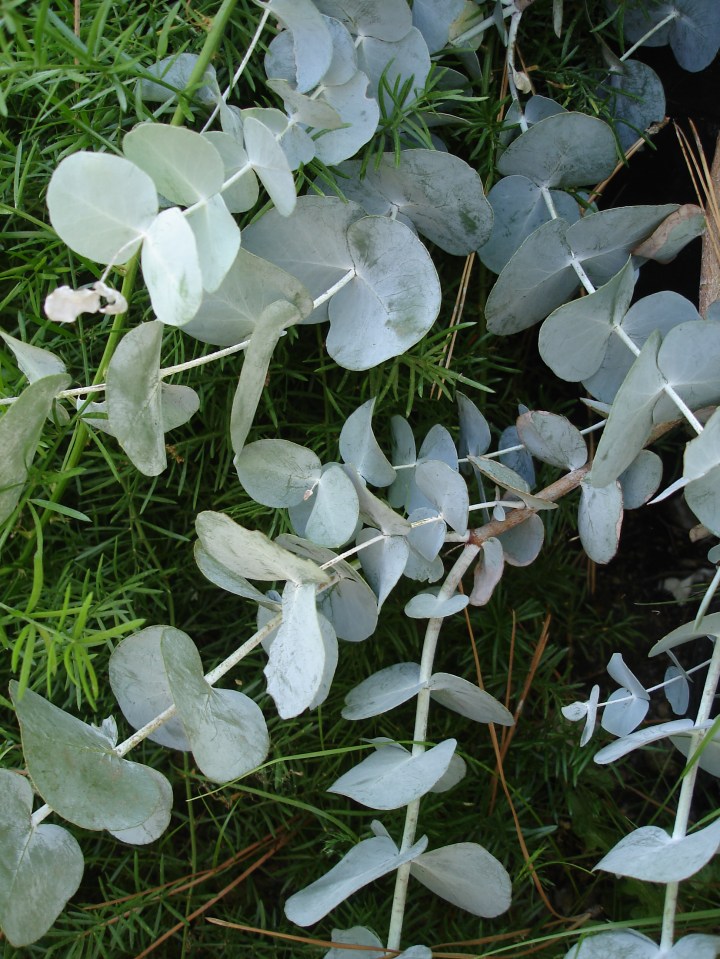
Up at high elevations and out in deserts, where sunlight is most intense, plants can actually get more exposure than they need. The bluish or grayish glaucous foliage of the Colorado blue spruce from the Rocky Mountains, and the century plant from the Sonoran Desert, is actually designed to reflect a bit of sunlight so that the foliage does not scald.
Plants from foggy coastal areas, and understory plants that naturally live below the canopies of larger trees, do the opposite. They are deep green to absorb as much sunlight as possible. This is why Monterey pine and Monterey cypress are the same shade of dark green; and why most ferns are such dark green. Only tree ferns that stand above lower plants are naturally light green.
This can make it difficult to brighten a dark spot in the garden, since most lightly colored foliage wants an abundance of sunlight. White or lightly colored flowers would theoretically work nicely, but generally are neither permanent nor abundant where shaded. Golden foliage, like that of golden elderberries, golden arborvitaes and golden junipers, is greener in the shade.
Variegated foliage is different. Even if the green parts of the foliage are greener where well exposed than where shaded, the variegated parts are always variegated. Some plants are variegated with white. A few are variegated with yellow. Those that tolerate shade can brighten shaded spots nicely, or at least add a bit of contrast to dark green.
Even if the big pastel flowers of variegated angel’s trumpets and variegated hydrangeas do not stand out as well as they would against deeper green foliage, the foliage provides its own contrast. A concern with hydrangeas, as well as variegated dogwoods, is that they are deciduous, so lack foliage through winter.
Variegated Pittosporum tobira and variegated euonymus have smaller evergreen leaves. Variegated ivies are nice ground covers. On a smaller scale, so is dead nettle. Euonymus, pittosporums and ivies will sometimes need to have more vigorous unvariegated stems pruned out before they overwhelm and replace variegated growth.

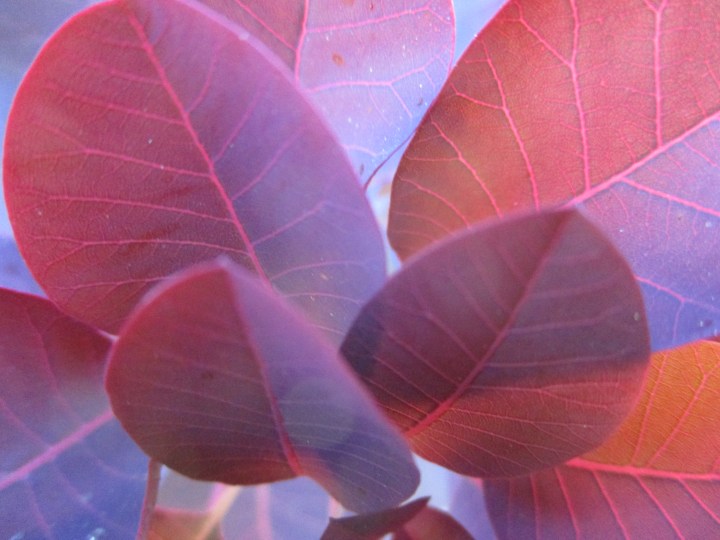 Autumn foliar color is not the concern yet. It develops later as deciduous plants defoliate for winter. Purplish, reddish, yellowish, bluish or gray foliar color that can be seen now is provided by plants that are colorful while actively growing. Almost all of this sort of foliage is most colorful when it is young and fresh, early in spring. Then, through summer, some of the best foliar color fades.
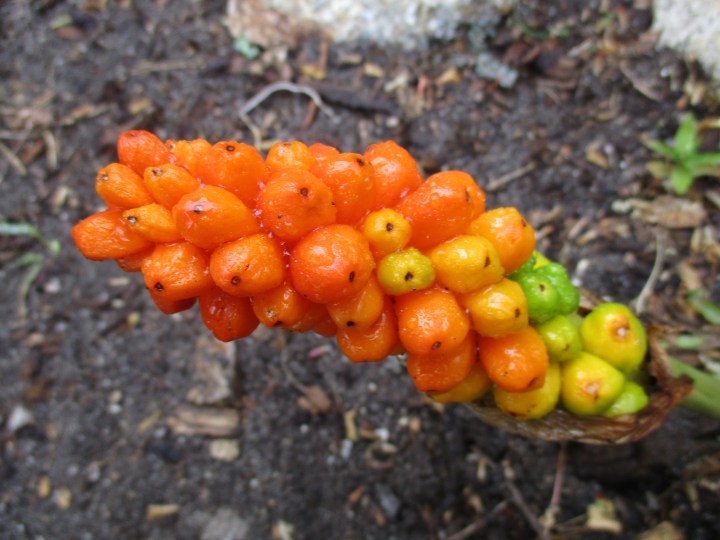 Just a short distance from the
  The best and brightest color in the garden is obviously still provided by flowers. Autumn color can be spectacular, but only amongst relatively few deciduous trees, shrubs and vines that turn color reliably in mild climates, and only if the weather is conducive to coloration. The next best option for color beyond green is the sort of colored foliage that does not wait for autumn to materialize.
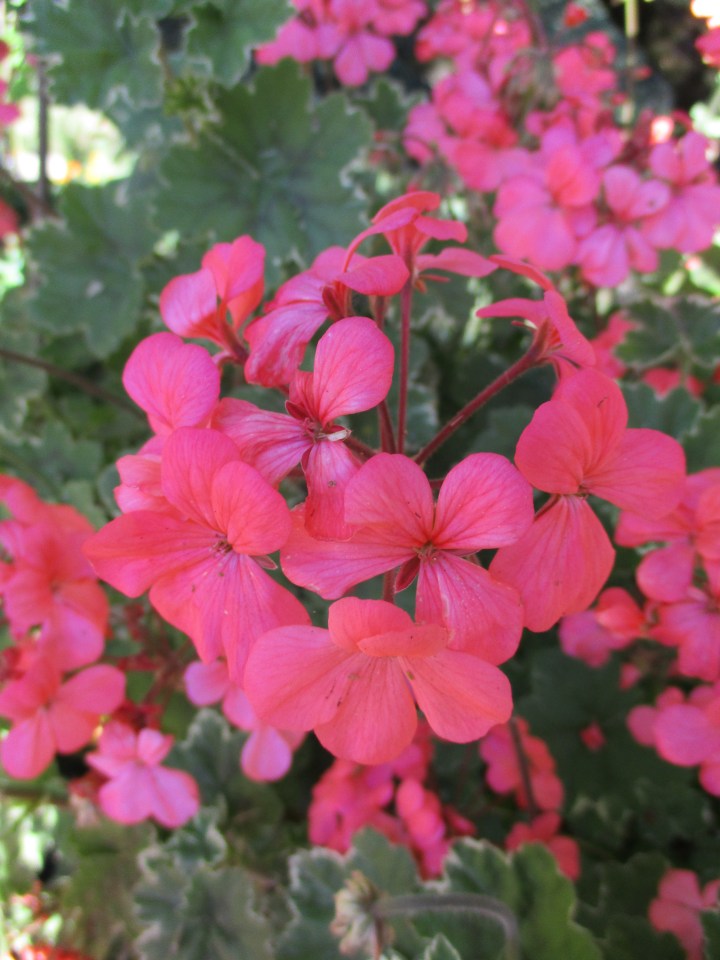 New and improved is not always better. Modern garden varieties of zonal geranium, Pelargonium X hortorum, with bigger, fuller and more profuse blooms, are more colorful than the relatively weedy classic varieties, but they are considerably more demanding. In fact, because they are so unhappy through winter, they are often grown as warm season annuals instead of as perennials.
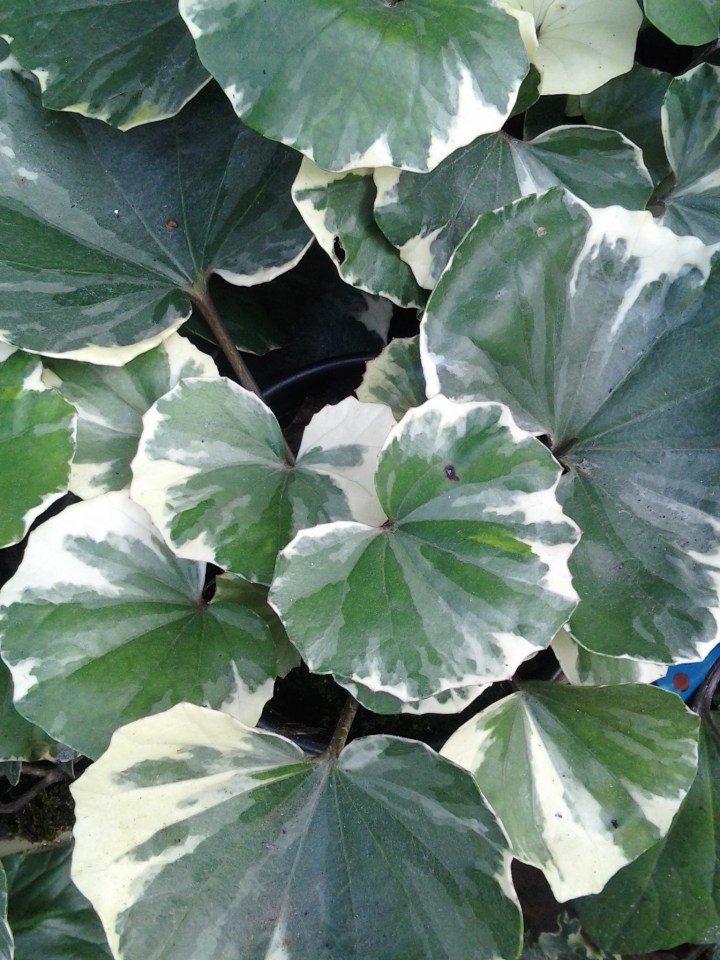 As an understory species that naturally grows under forest trees in its native environment in Japan, leopard plant, Farfugium japonicum, can be quite happy in parts of the garden that are too shady for other plants. If it does not get too warm or dry, it can tolerate full sun. It likes rich soil and frequent watering. Fertilizer should be applied moderately, since too much can cause foliar burn.
 There is no shortage of color for the garden here in our mild climates. If we want to, we can grow various flowers to bloom at various times throughout the year. If that is not enough, we can grow plenty of colorful foliage too. Evergreen sorts can stay fresh and resilient to minor frost all winter. A few deciduous plants and warm season perennials with colorful foliage will refoliate in spring.
 Mutants are the source of many of our favorite cultivars of otherwise simpler specie. Many cultivars of plants with compact, pendulous or fastigiate (strictly vertical) growth, or variegated, bronzed, golden or otherwise abnormally colored foliage, were derived from ‘sports’, which are mutant stems that appear on otherwise normal plants. Thornless blackberries were sports of thorny cultivars. Fruitless mulberry is a sport of white mulberry. There is no shortage of mutants.
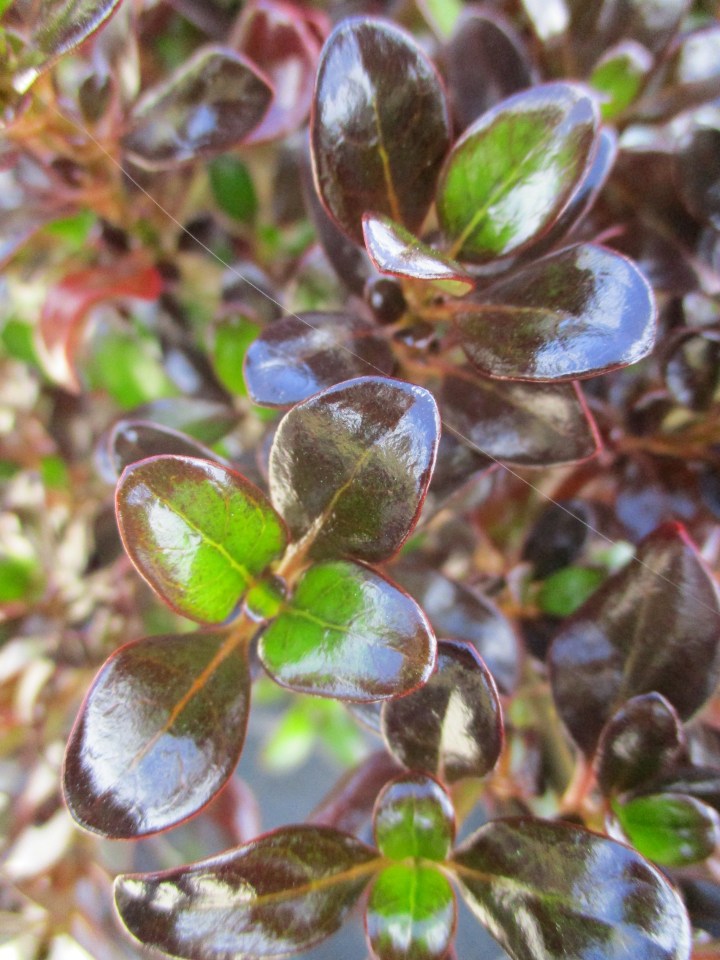 As the old fashioned larger mirror plant, Coprosma repens, fell out of favor through the 1990s, several more colorful varieties of a more compact species of mirror plant, Coprosma X kirkii, became popular. (The ‘X’ in the name indicates that it is actually a hybrid of two specie.) Without getting much more than two feet deep, it spreads out laterally like dense evergreen groundcover.
 Tony Tomeo