Many popular salad greens are somewhat discriminating about the seasons here. Some dislike even a minor chill during winter. Several more dislike arid warmth during summer. Frisee is a sub variety of curly endive, Cichorium endivia var. crispum, that dislikes both. It prefers weather from late summer through autumn, and from late winter through spring.
Frisee is related to chicory, which includes radicchio, puntarelle and Belgian endive. It is less closely related to dandelion. Because it is relatively unfamiliar locally, some know it as chicory or curly endive. It is typically a component of fresh green salads. Alternatively, it sautees nicely, or mixes with other cooked greens. Frisee is apparently quite versatile.
Frisee may be unavailable as seedlings in cell packs from nurseries. Because individual plants are small, it is most practical to grow them from seed anyway. Seed germinates in about a week. Seedlings mature in about a month and a half. Mature frisee is only a foot wide. It requires full sun exposure with frequent watering. Phasing prolongs productivity.
Warm season vegetables will be productive until autumn. Several will produce until frost. Those that grew slowly during mild weather through last spring are performing well now. Summer does not end until later in September. Summery weather may not end until a bit later. Several climates never get frost. Yet, cool season vegetables are now seasonable.
This does not require productive warm season vegetables to relinquish their space. Most should stay until they finish. It only means that it is likely too late to grow any more warm season vegetables. Also, it is time to start growing any cool season vegetables that grow from seed. Transitioning between seasons begins prior to the actual change of seasons.
It is most efficient to sow seed for most vegetables directly into the garden. However, It is more practical to plug seedlings of some big vegetables somewhat later. Because only a few cabbages are adequate, there is no need to sow many of their seed. Instead, two six packs of seedlings may be sufficient. They are not very much more expensive than seed.
This applies to broccoli, cauliflower and many other large cool season vegetables. Their plugs or seedlings are available from nurseries while seasonable. Alternatively, they are easy to grow in cell packs or flats, from seed, in a home garden. This technique is useful for quantities that are expensive in cell packs. Also, more varieties are available as seed.
Of course, it is not much more effort to sow their seed directly into a garden. The problem with doing so is that warm season vegetables are not yet done. Sowing seed below and between them is an option, but interferes with later cultivation. Any relinquished space is necessary for smaller cool season vegetables. These really should grow only from seed.
Baby lettuces and small greens must be too numerous for plugging. Therefore, they must grow from seed. Peas are both too numerous and too sensitive to transplant for plugging. Transplanting damages cool season vegetables that are roots. Therefore, it is necessary to sow seed for beet, carrot, radish, turnip, and parsnip directly. Some can wait a bit later. Most cool season vegetables comply with phasing.
Pecan is the State Tree of Texas. Bluebonnet is the State Flower of Texas. Less natively, jalapeno pepper, Capsicum annuum, is the State Pepper of Texas. It is naturalized there from Central and South America. Jalapeno pepper is merely one of countless varieties of the species though. Furthermore, it comprises several and various culinary subvarieties.
Jalapeno pepper typically grows as a warm season annual vegetable. It has potential to be perennial. Overwintering is likely more work than annual replacement though. Mature plants can grow almost three feet tall. They may produce nearly two dozen fruits through summer. They crave sunny and warm exposure, rather rich soil, and consistent watering.
Mature fruits, or jalapeno chile peppers, are firm and crisp. They should be between two and four inches long, and as wide as an inch and a half. Their smooth and glossy skin is deep green, but can ripen to red, orange or rarely yellow. Red fruit is preferable for some culinary application. Jalapeno pepper may be the most familiar of the ‘hot’ chile peppers.
Squash eventually depletes particular soil nutrients.
Maya Angelou likely enjoyed gardening. She said, “In diversity there is beauty and there is strength”. That is how the healthiest of ecosystems, including home gardens, function. Vegetable gardens are generally diverse. However, each group of a particular vegetable is rather homogenous. Crop rotation can compensate with diversity through the seasons.
Crop rotation is growing different vegetables in particular places from season to season. It is the same as growing particular vegetables in different places from season to season. Distinctly consumptive vegetable plants should relocate each season. Less consumptive sorts may perform adequately in the same place for years. Diversity makes it interesting.
Each type of vegetable plant consumes particular nutrients from the soil. Eventually, they can deplete their soil of these particular nutrients. Crop rotation allows them to utilize the nutrients they need from undepleted soil instead. Meanwhile, other vegetable plants can grow in the vacated soil. These different types of plants utilize different types of nutrients.
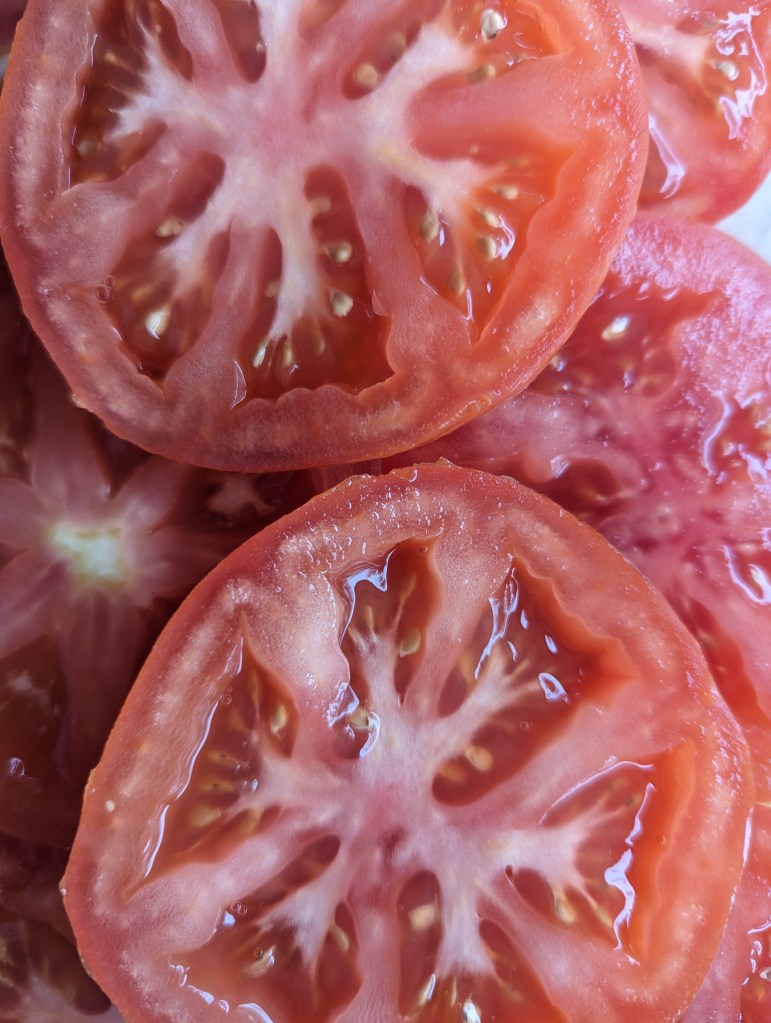
For example, tomato plants notoriously deplete the soil of particular nutrients. Corn does the same. However, each depletes different nutrients. Therefore, corn can be satisfied in soil vacated by tomato plants. Likewise, tomato plants can be satisfied in soil vacated by corn. Furthermore, each promotes the restoration of the soil nutrients needed by the next.
Crop rotation also disrupts proliferation of several pathogens that infest vegetable plants. Dormant spores of bean rust disease overwinter in the soil beneath infested bean plants. They efficiently infest any receptive bean plants to occupy the soil during the next spring. However, they can not infest plants that are not related to beans, such as pepper or okra.
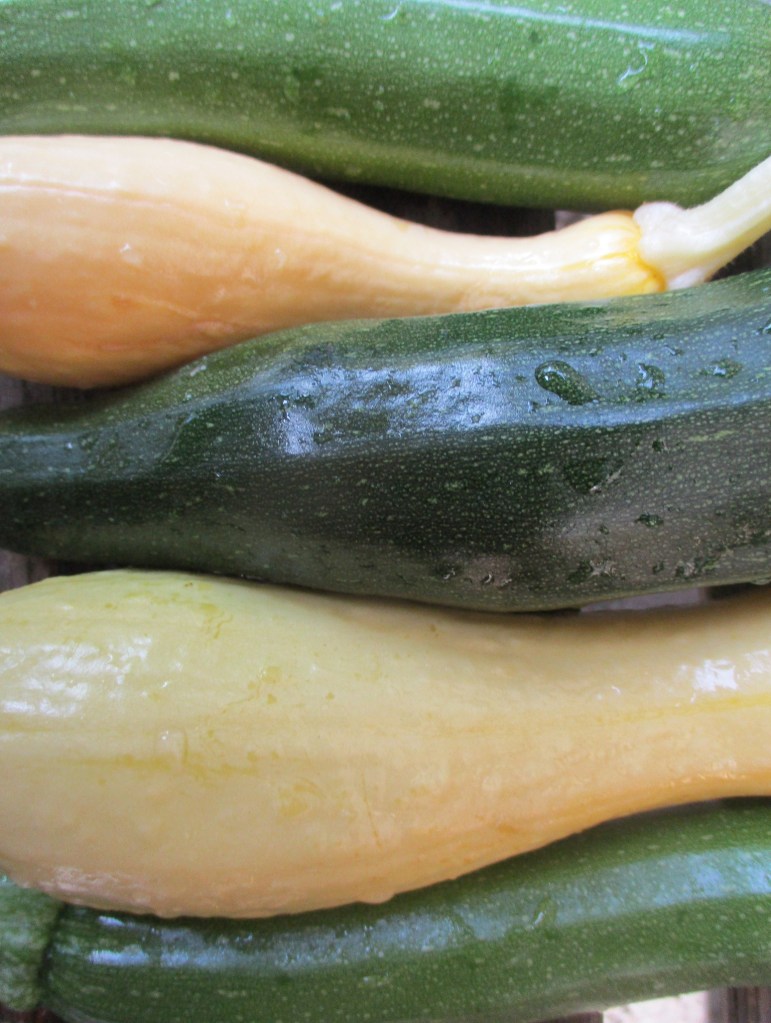
Summer vegetables should be situated accordingly as they return to vegetable gardens. Tomato, pepper and eggplants are related, so should not grow where any grew last year. The same applies to bean and pea. Squash and cucumber are related also, but are less consumptive. They may perform adequately within the same soil for more than one year. Several summer and winter vegetables are related.
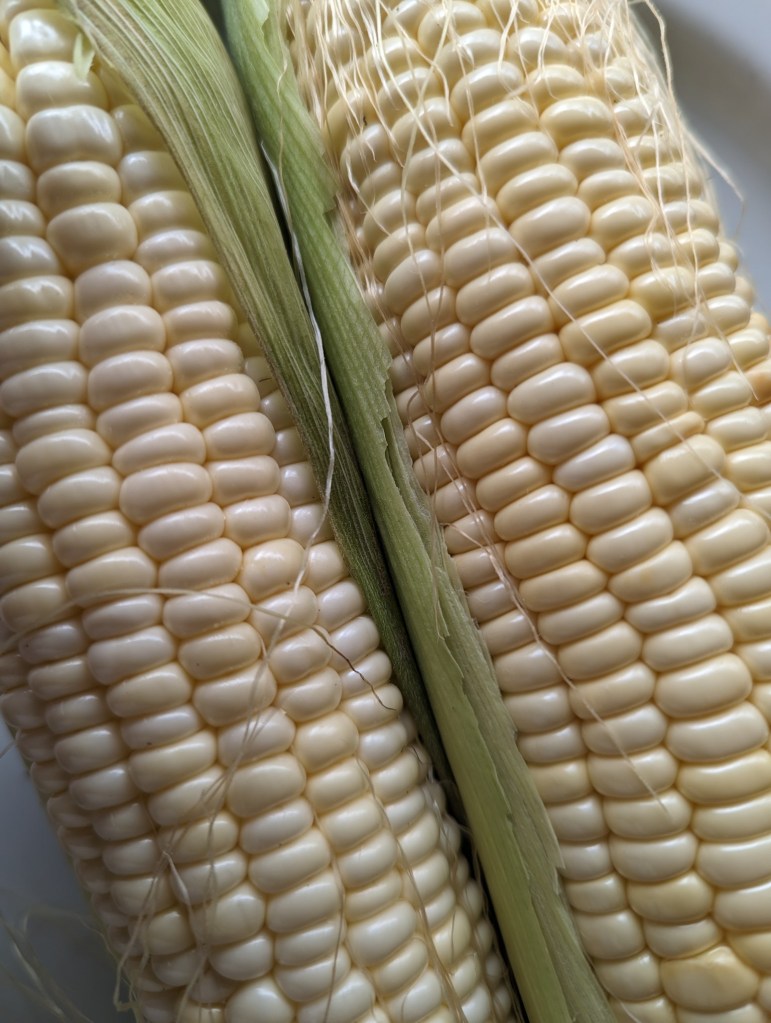
Almost all corn that grows in home gardens is sweet corn (Zea mays convar. saccharata var. rugosa). It is among the most popular of the warm season vegetable plants. Popcorn remains uncommon for home gardening. Other types of corn are mostly grains and other agricultural commodities that are rare within home gardens. Some corn becomes biofuel.
Corn stalks can grow as high as twelve feet! Most popular varieties grow only about half as high. Each stalk should produce one or perhaps two ears of corn. Each ear produces many kernels of corn in very neat formation on a central cob, all within a tight foliar husk. Male blooms protrude from the tops of stalks like antennae. Foliage is coarse but grassy. Stalks resemble giant reed, except smaller.
Of the various warm season vegetable plants, corn is one of the more consumptive sorts. It occupies significant area. It requires methodical and generous irrigation. Also, it craves rich soil, but depletes nutrients. Corn grows best from seed sown directly into the garden. Squared orientation, rather than typical rows, improves pollination and ear development.
Warm season vegetables, or summer vegetables, can occupy a garden systematically. A few lingering cool season vegetables may continue production for a while. Warm season vegetable plants can replace them as they finish. Several warm season vegetable plants should start as early as possible. Others grow in a few later phases through their season.
For example, indeterminate tomato plants are productive throughout their entire season. They can start as soon as convenient. However, determinate tomato plants produce only for two weeks or so. After their initial phase of a single plant or a few, subsequent phases can start about every two weeks. Each phase continues production after its predecessor.
Bush bean and several varieties of eggplant and pepper also produce for brief seasons. Okra and cucumber might produce for most of summer. Secondary phases may increase their production as well though. Of all warm season vegetable plants, corn benefits most from phasing. Each phase tends to mature so uniformly that it finishes within a few days.
Pole bean, squash, some cucumber and Indeterminate tomatoes need no phasing. Such warm season vegetable plants perform from spring planting until frost. Winter squash are warm season vegetable plants, but their fruit finishes for autumn. Indeterminate tomatoes are less profuse than determinate types. Cumulatively though, they are more productive.
It will soon be time to sow seed for corn, beans, root vegetables and most greens directly into garden soil. Seedlings for these warm season vegetable plants are not conducive to transplant. Besides, too many are needed. Cucumber and squash grow either from seed or small nursery seedlings. Only a few plants are needed, and they transplant efficiently.
For the same reasons, tomato, pepper and eggplant can grow from seedlings rather than seed. Moreover, since they are so vulnerable as they germinate and begin to grow, seed is less practical than seedlings. Varieties that are unavailable at nurseries can grow from seed in flats inside or in a greenhouse. Ideally, they should have started early enough for transplant into a garden during appropriate weather.
Surplus fruits and vegetables can be canned for later.
It seems to me that the reason that so many of the kids I grew up with do not like apricots is that they were so common when we were younger. Because there were still several abandoned orchards, and most of us had at least one apricot tree in our backyards, we ate apricots in every form imaginable; fresh, dried, in pies, in cobblers, as jams, as apricot nectar (juice) and of course, canned. By the time we grew up and moved on, we were done with apricots.
Apricots happen to be one of the many ‘high-acid’ fruits that are remarkably easy to preserve by canning, which is how and why they are available as jams and canned apricots at any time of the year. In fact, almost all of the fruits that were so commonly grown in the vast orchards of the Santa Clara Valley, like prunes, plums, cherries, nectarines, peaches, apples and pears, are also high-acid fruits that are relatively easy to can in various forms. ‘Low-acid’ vegetables, like broccoli, corn, pumpkin (squash), spinach and beets, as well as meat and poultry, were not so commonly canned only because they take considerably more work to can with the use of a pressure cooker (in order to achieve higher temperatures).
Because home canning can potentially be dangerous if done improperly, it is best to learn something about it first. This is why the Guadalupe River Park Conservancy has arranged for UC Master Preserver Susan Algert to conduct the workshop ‘Safe Methods for Food Preservation and Canning’. Participants will learn the importance of canning to kill toxic pathogens, and why high-acid produce gets canned in a hot water bath while low-acid foods need to be canned in a pressure cooker. Canning is an alternative to freezing for preserving overly abundant produce from the garden.
(Outdated information regarding classes has been omitted from this recycled article.)
Radishes grow nicely while the weather is still cool, but will eventually bolt and bloom as weather eventually warms through spring.
Suburban landscapes must seem like an incredible waste of space to those of us who enjoy growing vegetables. The climate and soil of the Santa Clara Valley are just as excellent for vegetables now as they as they were for the vast fruit and nut orchards that were here earlier. Not only are summers just warm enough for warm season vegetables without being too unpleasantly hot, but winters are so mild that cool season vegetables can be productive from autumn until spring.
While cool season vegetables are still productive, a few types that grow quickly can still be sown. Radishes, carrots and even small beets still have time to grow before the weather gets too warm. Peas sown now will get an early start for spring. If leafy lettuces are being exhausted, more can be sown to replace them. Only large vegetable plants, like broccoli, cauliflower and cabbage, need to wait until autumn so that they have a whole cool season to grow through.
It is still a bit early to sow seeds for warm season vegetables directly into the garden. However, seed for some vegetables can be sown in greenhouses or cold frames, to produce seedlings for the garden later. Although beans, corn, most squash and other fast growing vegetables should be sown directly into the garden during warm spring weather, tomatoes, peppers and eggplants prefer to get an early start as seedlings.
(Outdated information regarding gardening classes has been omitted from this recycled article.)
Jack o’ lanterns and pumpkins will soon meet their gory demise now that Halloween is over.
Pumpkins are both the biggest of the common fruits, and also the most wasted. So many of us bring at least one into our homes for Halloween, only to discard them afterward. Not many of us actually bake or make pies from ‘used’ pumpkins. However, those of us who like to can or freeze fruit and vegetables can really take advantage of this tradition by politely collecting jack o’ lanterns from neighbors, or getting unsold pumpkins from markets for very minimal expense. (Pumpkins are ‘low acid’ fruits that need to be canned with a pressure cooker.)
The somewhat small brownish ‘sugar pie’ pumpkins that are sold for pies are of course the best, with the richest flavor and meatiest shells. The common bright orange pumpkins used for jack o’ lanterns are not as meaty and lack flavor, but are certainly worth the price if they are free. White pumpkins can be just plain bland; but with enough sugar and spices, can make decent pie. The deeply furrowed green or gray pumpkins might likewise taste better than they look, but who knows? I certainly have not tried one yet.
Because the jack o’ lantern pumpkins have such thin shells, my neighbor and I prefer to cut them into pieces and steam them before peeling them. It is a messy job, which is why she has me do the peeling part of it. Before steaming, she cuts out any parts with candle wax (on the bottom) or soot (on the top). Once peeled, the pulp is ready to be pureed, and then frozen, canned or baked directly into pies.
Those of us who do not indulge in freezing, canning or baking of ‘recycled’ pumpkins can either give our pumpkins to neighbors who do, or must otherwise dispose of them. On the compost pile, pumpkins should be chopped up and spread out so that they do not mold and rot as much as they would if left intact. Chopping them with a shovel should be adequate. By now, there should be plenty of fresh leaves on the compost pile to spread pumpkin parts out over.
If fireplaces or wood stoves have been used already, the resulting ash can be spread out with chopped pumpkin, to inhibit mold in compost piles. Ash also deters snails. Just be certain that only dead ash gets scattered, without any embers, and that it gets spread thinly enough so that it does not become a mucky mess that actually inhibits composting.
Just as warm season annual flowers that bloomed through spring and summer get removed to relinquish their space to cool season annuals, summer vegetable plants need to vacate the garden for cool season vegetables. Fortunately, removing vegetable plants is not as unpleasant as removing the pretty flowers might have been, because most have finished producing whatever it is that they were grown to produce.
Besides, cool season vegetables are even cooler than warm season vegetables, since some have distinctive foliage that is appealing beyond the vegetable garden, in borders, pots and mixed plantings, out in the landscape. Swiss chard is a striking foliar plant, whether it gets eaten or not. The outer leaves can get eaten without compromising the appeal of the inner leaves that continue to grow and fluff outward to replace them. Arugula, kale, mache, loose lettuce (non heading) and collard, mustard and turnip greens do the same.
This ability to function in more places in the landscape is a definite advantage since cool season vegetables are not quite as productive as warm season vegetables are. They would certainly like to be as productive, but grow slower through cool weather.
Most cool season vegetables should be sown into the garden as seed. Root vegetables, like beet, carrot and radish, might be available as seedlings in cell packs, but do not recover very well from transplanting. Besides, seedlings of such plants in cell packs are either too abundant and crowded, or to sparse to produce much. Leek, loose leaf lettuce and most of the greens likewise grow best if sown as seed in rows instead of planted in tight clumps as they are grown in cell packs.
Only greens that are grown as individual big plants, like chard, kale and collard green, can be as productive from cell pack seedlings as from seed. However, each cell pack produces only six plants, maybe with some extras. A package of seed costs about the same, but contains more seed than most gardens can accommodate.
Actually, the only cool season vegetables that might be more practical to grow from cell pack seedlings than from seed are broccoli, cauliflower, cabbage and Brussels sprout. These vegetables grow as even larger plants, so minimal quantities, like one or two or perhaps three cell packs, are sufficient.
Like so many of the warm season vegetables, many cool season vegetables should be planted in phases every two to four weeks to prolong harvest. By the time the first phase finishes, the next phase will be ready. The frequency of phases depends on the growth rate and duration of production of the particular plants. For example, chard has a long duration of production, so does not need many phases.