 What happened with the tomatoes?! In past years, they were inhibited by mild summer weather. This year, they had plenty of warmth, but did not seem to perform much better. Perhaps they wanted more humidity. Now that those that started slowly are starting to produce better, they do not have much time left before warm summer weather gets cooler towards autumn.
Eventually, cool season vegetables will move into the garden. Seed for the earliest beets and chard may have already been sown directly into the garden. Subsequent phases of beet seed can be sown every three weeks or so until about a month prior to the return of warm season vegetables at the end of winter. Each subsequent phase should begin to produce at about the time that the previous phase gets depleted.
Unlike beet roots that get pulled up completely when harvested, chard produces foliage for quite a while, so is often planted only once. A second phase added sometime in winter may prolong production into late spring. However, by the time the first phase actually finishes, there will be plenty of warm season greens to grow. Because only a few chard plants are enough, they do not need to be grown from directly sown seed, but can alternatively be grown from cell-pack seedlings purchased from a nursery.
Cell-pack seedlings are actually often more practical than seed is for broccoli, cauliflower, cabbage and some heading lettuces. Seedlings get growing faster, so are less likely to get eaten by pests as they germinate. A cell-pack of seedlings does not cost much more than an envelop of seed, but contains about as many plants as one garden needs.
Carrots, radishes, peas, spinach and leafy lettuces should be grown from directly sown seed because so many individual plants of each variety are needed for adequate production. Besides, carrots and radishes are roots that get disfigured if initially confined to cell-packs; and peas have very sensitive roots that do not like to be transplanted. Seed for leafy lettuces grown for ‘baby greens’ can be sown densely because leaves get plucked through the season, without getting very large.
There are three options for growing onions. Seed is practical, but takes a while, and can be the riskiest option for large bulbing onions. Onion sets are tiny onions that grew from seed last year, and only need to be grown another year for plump mature bulbs. They will grow as green onions if planted deeply and harvested early. Crowded cell-pack seedlings grow into tight clumps of disfigured onions, but can be separated and grown into well formed individual onions.
 The weather here is excellent for growing all sorts of fruits and vegetables, but is not exactly ideal for bell peppers. Cool nights between warm days are comfortable for us, but limit production of even the healthiest and most robust of plants. Although they like warm nights, the fruit can be sensitive to hot days, and can even get scalded. Bell pepper plants like rich soil and regular watering.
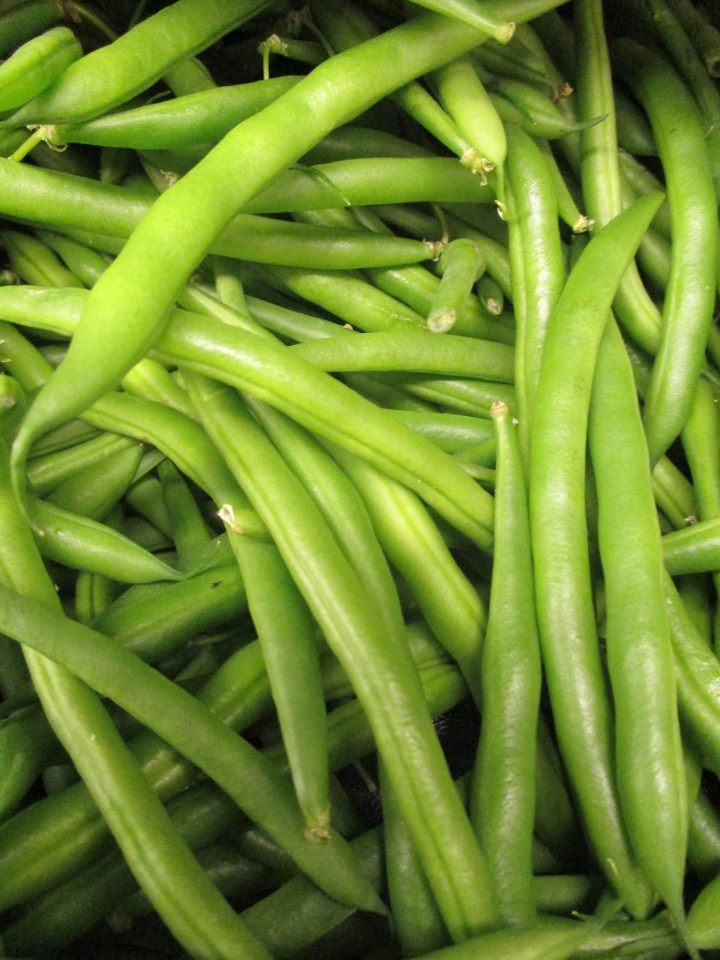 ’Zucchini’ is Italian for ‘little squash.’ They certainly can grow to become big squash, but by then, they do not taste so good. They are best before they get to about six inches long. As they mature, they get bitter and tough, and the seedy pulp within develop an unappealing texture. Maturing zucchini also waste resources that would otherwise go to the development of more younger zucchini.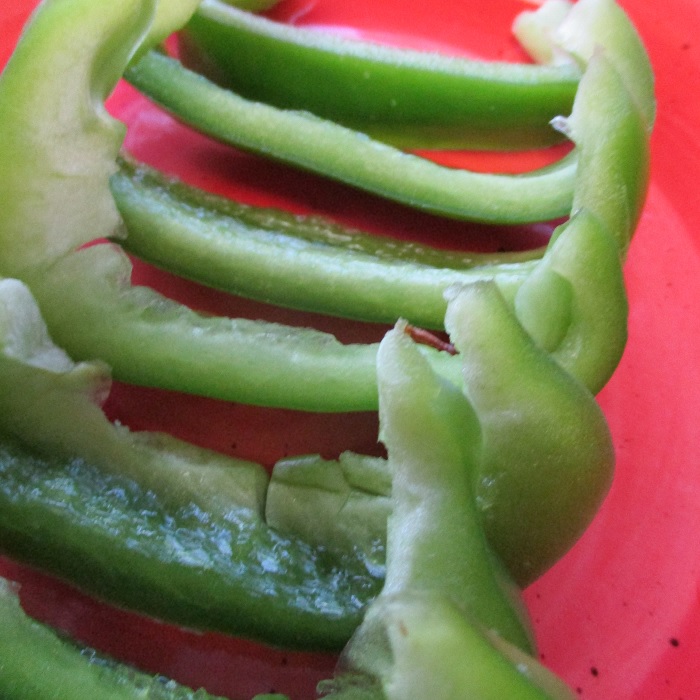
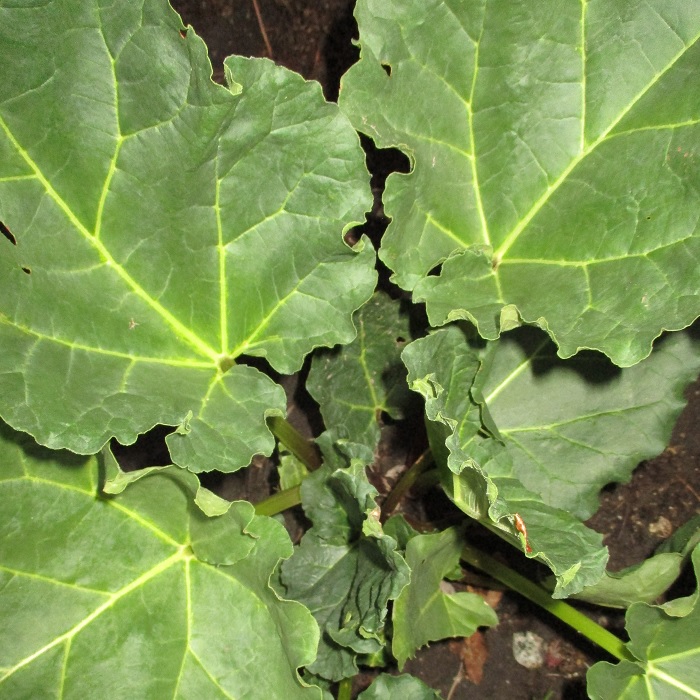 It is not easy to get a pretty picture of rhubarb, Rheum rhabarbarum. The big and sometimes flabby leaves are only impressive to those who know about the succulent petioles (leaf stalks) below. The petioles do not look like much either, until they are cooked into pies or garnet colored preserves. Shabby stalks of tiny flowers rarely bloom, and should get cut out to favor more foliar growth.
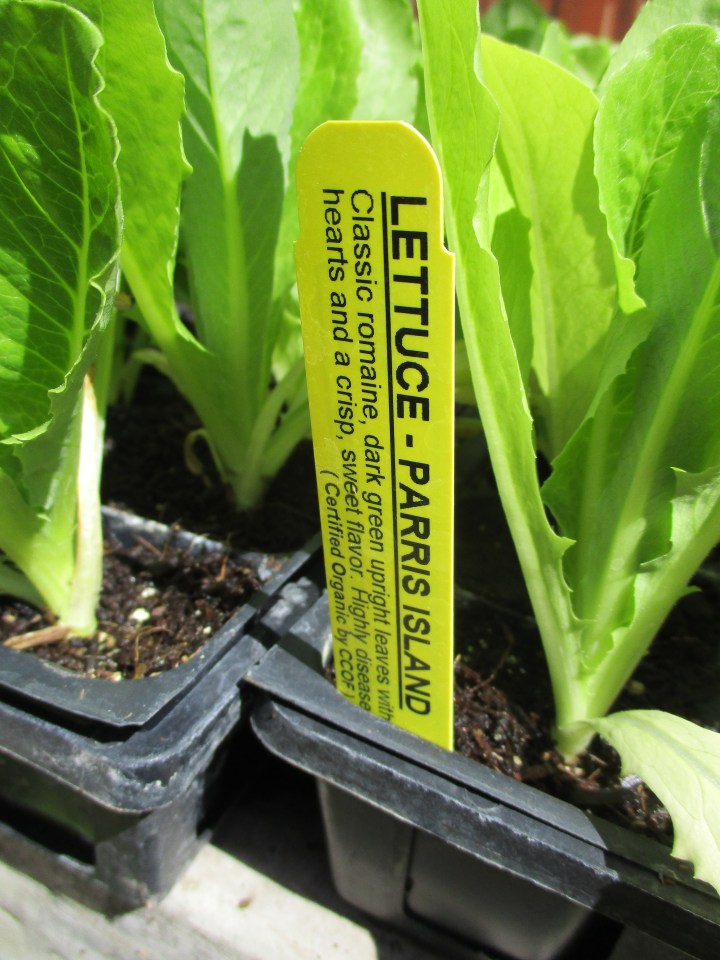 Right smack in the middle of the warm part of summer, it is already time to be getting ready for autumn gardening. This involves more than just ordering our autumn planted spring bulbs while the selection is still optimal. Most of us purchase bulbs from what is available in nurseries when they are in season anyway. Seed that gets sown in the next few weeks is a more immediate concern.
 This is why I do not bother growing greens in the garden just yet. Wild radish grows here wild; and there is way too much of it. Most but not all of it gets mown in meadows or cut down with weed whackers on the edges of roadways. There is no need to cut down that which is out of the way. Besides, we could not cut it all even if we wanted to. There is wild turnip and mustard too. All are prolifically naturalized and invasive exotic species.
 Actually, it is a fruit. It contains seeds. Tomato, Solanum lycopersicum, is one of the most popular vegetables in American gardens. Most are red. Some are yellow or orange. A few weird varieties are pink, green, dark purple, brownish or creamy white. The largest tomatoes can get more than four inches wide. Tiny clustered ‘grape’ tomatoes are less than a quarter inch wide. There are literally thousands of varieties!
 Compared to replacing cool season annuals with warm season annuals, the replacement of cool season or ‘winter’ vegetables with warm season or ‘summer’ vegetables is not quite as traumatic. Most of the cabbage, broccoli and cauliflower plants finish in time to make room for new vegetable plants anyway. Unlike flowering annuals, they make it obvious that they are done for the season.
 A south or west facing fence is a perfect place to grow pole beans. Twine can be strung in a zig-zag pattern between single rows of partly protruding nails along the top and bottom. The spacing of the nails should match that of the pole bean plants. Bean seed sown at the base of the fence germinate and grow quickly. Vines are happy to cling to the string and climb to the top of the fence.
