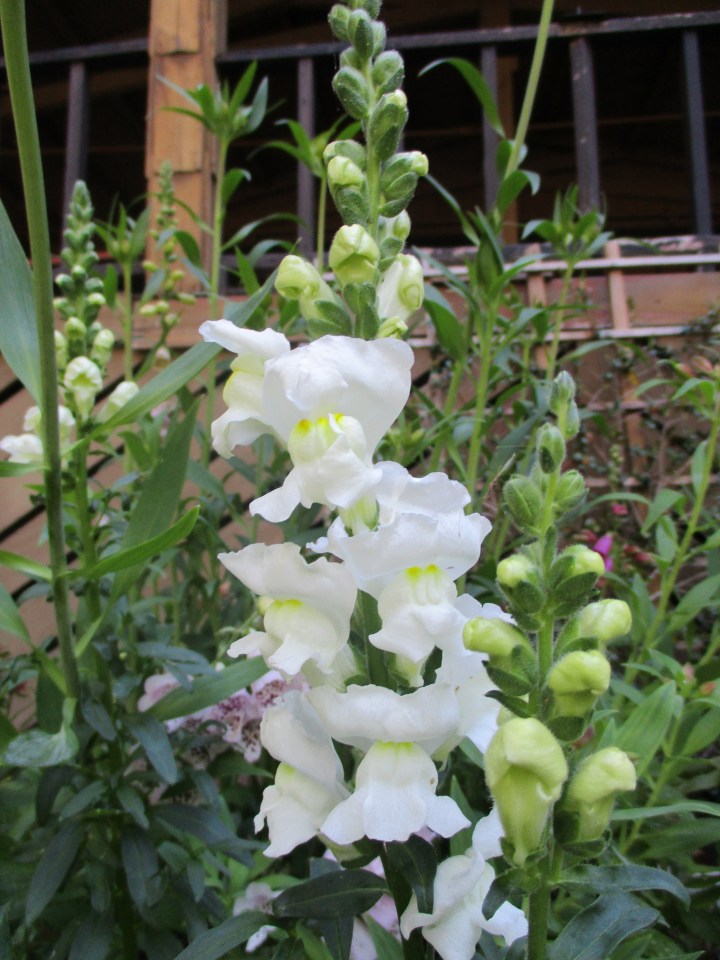
 They are short term annuals in spring or autumn. Where winters are cold, they may last from spring through autumn. Where summers are hot, they may last from autumn through spring. So what are snapdragon, Antirrhinum majus, here? They can be either or both, depending on where and when they get planted. For most of us, they are a cool season annuals that finish before summer.
Although they prefer to be in full sun, the warmth of such exposure is what limits their practicality through summer. They bloom a bit less in partial shade, but are more likely to last through summer if kept cool, particularly in an innately cool microclimate. Like many annuals, they want rich soil, and regular watering. Because they are susceptible to rust and mildew, foliage should be kept dry.
Snapdragon blooms in white and many cheery hues of yellow, orange, red and pink. Some of the older varieties, particularly those developed for the cut flower industry, can get very tall, and might almost reach low eaves! Modern garden varieties are shorter and fluffier. The biggest are less than four feet tall, and less than a foot and a half wide. Deteriorating flowers should be pruned away.
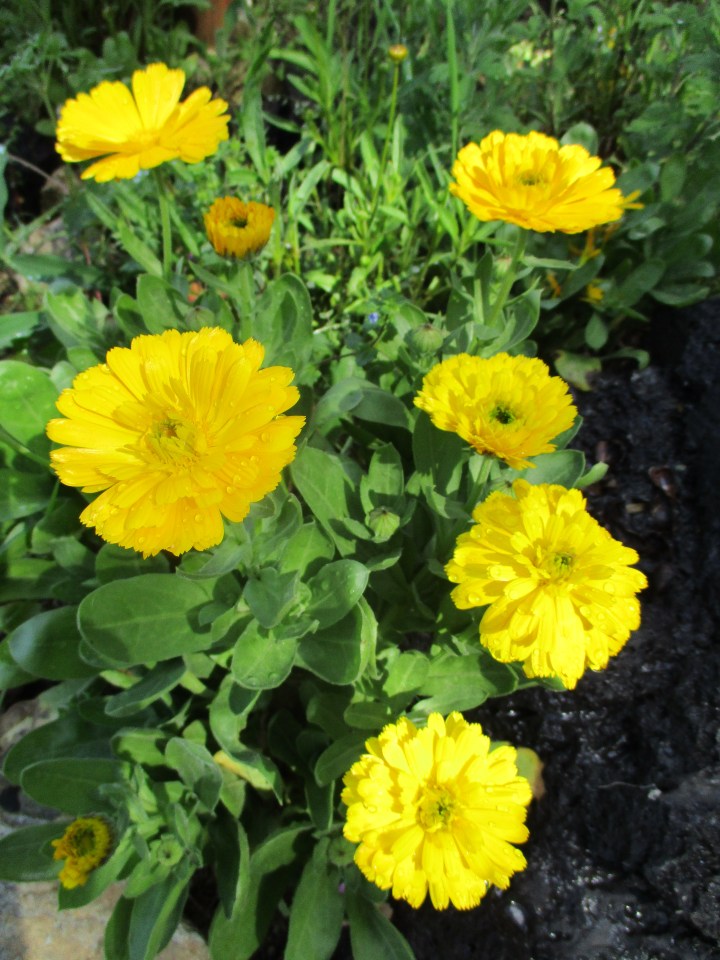 Just before the weather gets warm enough for real marigolds, and after the weather starts to get too cool and rainy for them, pot marigold, Calendula officinalis, is at its best. It can bloom at any time of year, depending on when it gets planted, but prefers cool and humid spring and autumn weather. It is not so keen on frost in winter, or the arid warmth of summer that real marigolds enjoy.
 It looks like sweet alyssum, but is not even close. The tiny white flowers and finely textured foliage work almost as well for similar uses in the landscape. In fact, the plants are most often grown as short term warm season annuals. However, candytuft, Iberis sempervirens, is really a perennial that can be cut back in autumn, regenerate through winter, and bloom for spring and early summer.
