Six on Saturday: Excuses

It had not rained so much here since 1982. Consequences of such excessive rain were the priorities at work. I neglected to procure pictures of horticultural topics while the first of the problems associated with the weather began to develop two weeks ago. I was unable to transmit new pictures last week because of disruption of telephone service. Now that I am able to share new pictures, I find that a few are redundant to some that I posted two weeks ago, and none are any more horticulturally oriented than a few unidentifiable logs and an unseen redwood tree. Well, at least they demonstrate why I was too busy to share horticultural pictures on Six on Saturday.

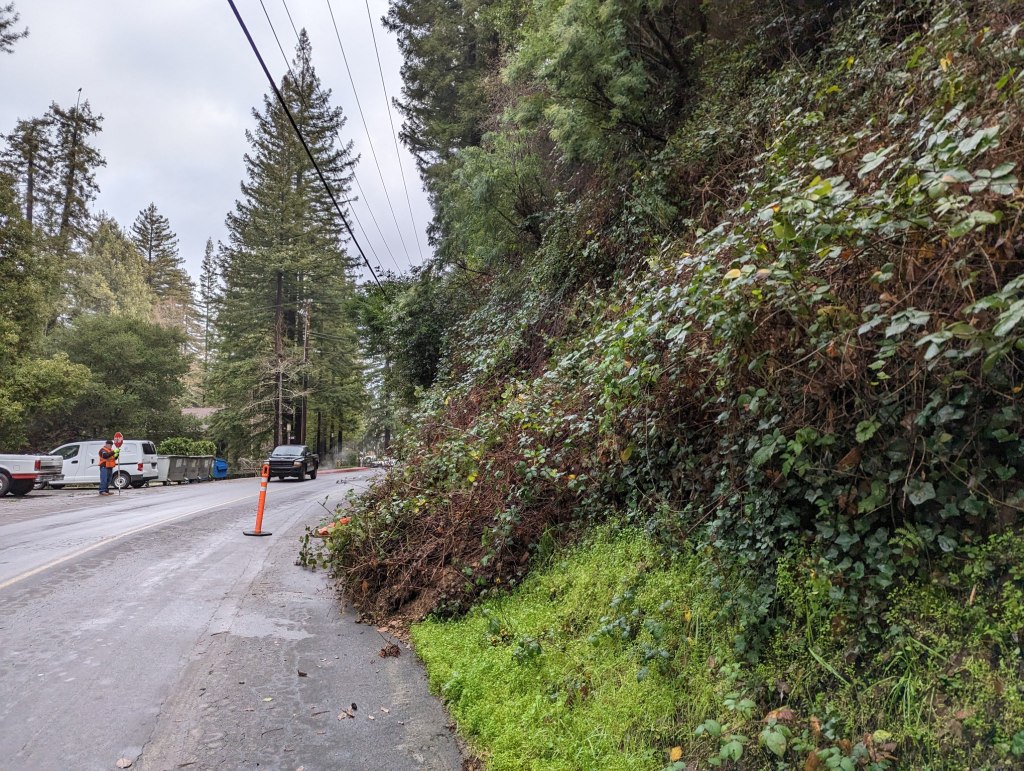
1. Mudslides blocked a few portions of the main road into town at various times. None of them stayed for long, but they took turns. Shortly after one got cleared, another one slid.

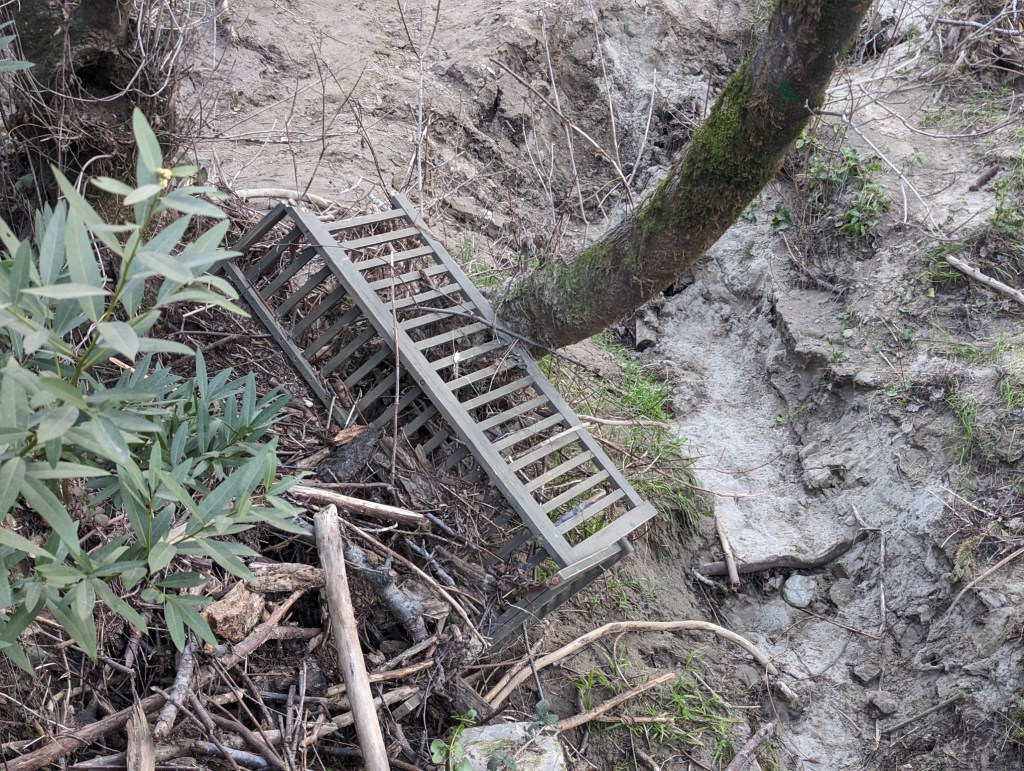
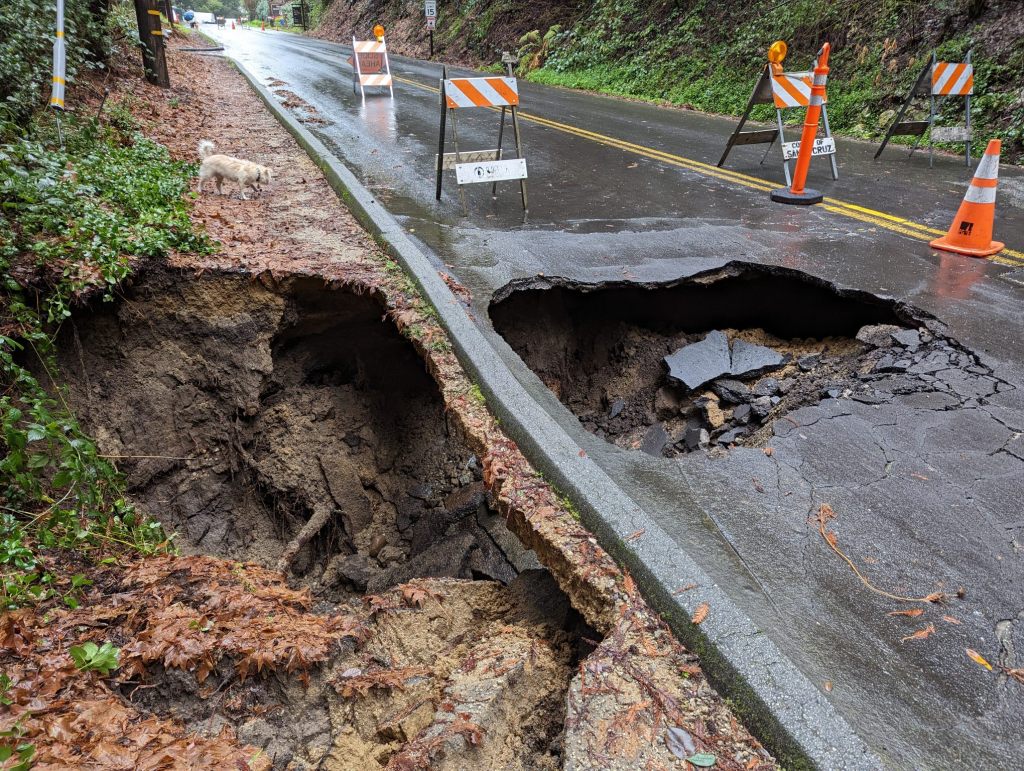
2. Sinkholes were mudslides from below rather than from above, and ruined portions of roads that were not under mud. I nearly dropped the camera here to hastily grab Rhody.

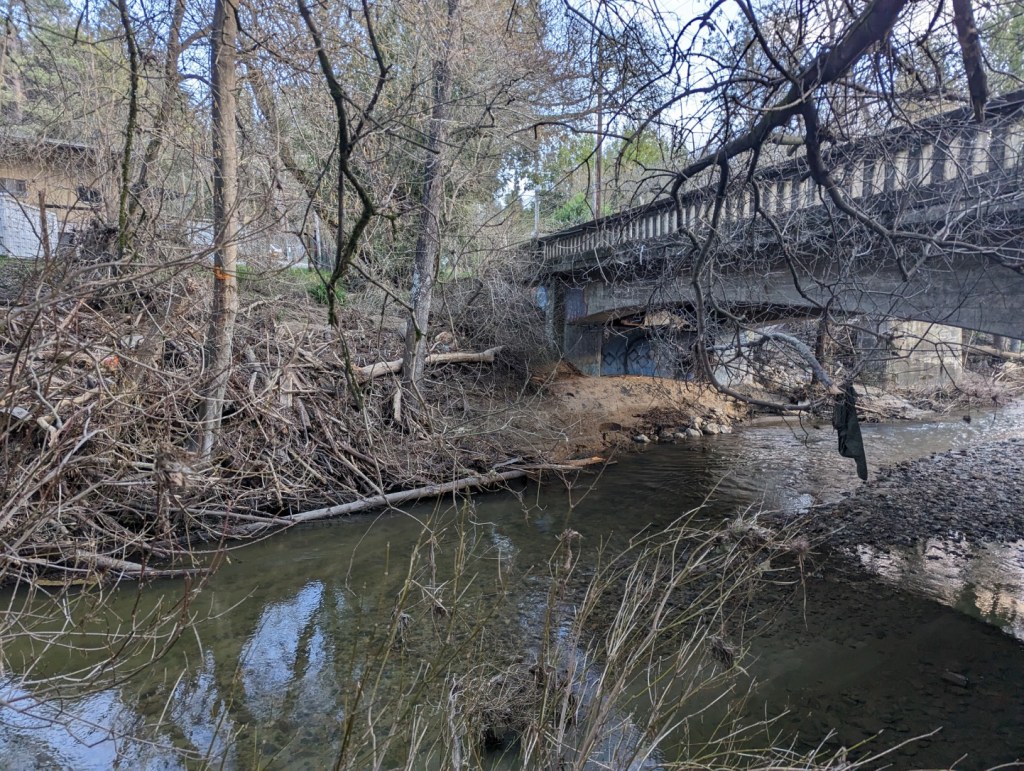
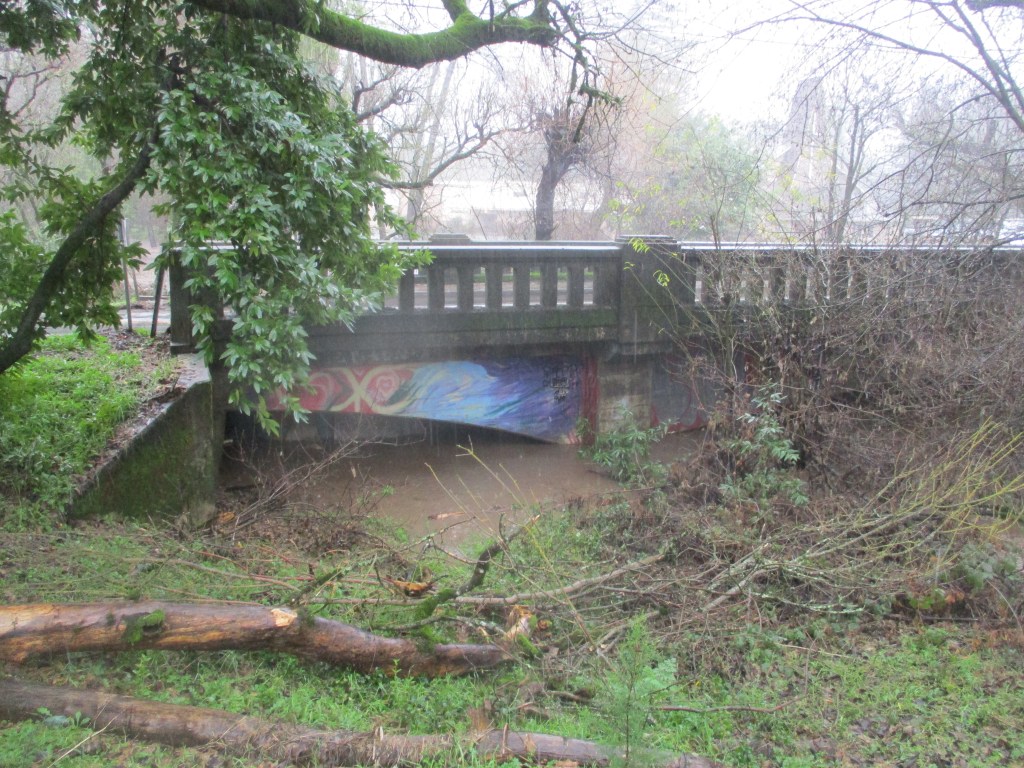
3. Floods got deeper than since 1982, and took trees that were big enough to leave twigs two thirds of the way up the right and upstream side of the pillars nearest to the middle.

4. Logjams collected some of those trees that would otherwise be on beaches near Santa Cruz by now. Ironically, that is a municipal water pumping station across Zayante creek.

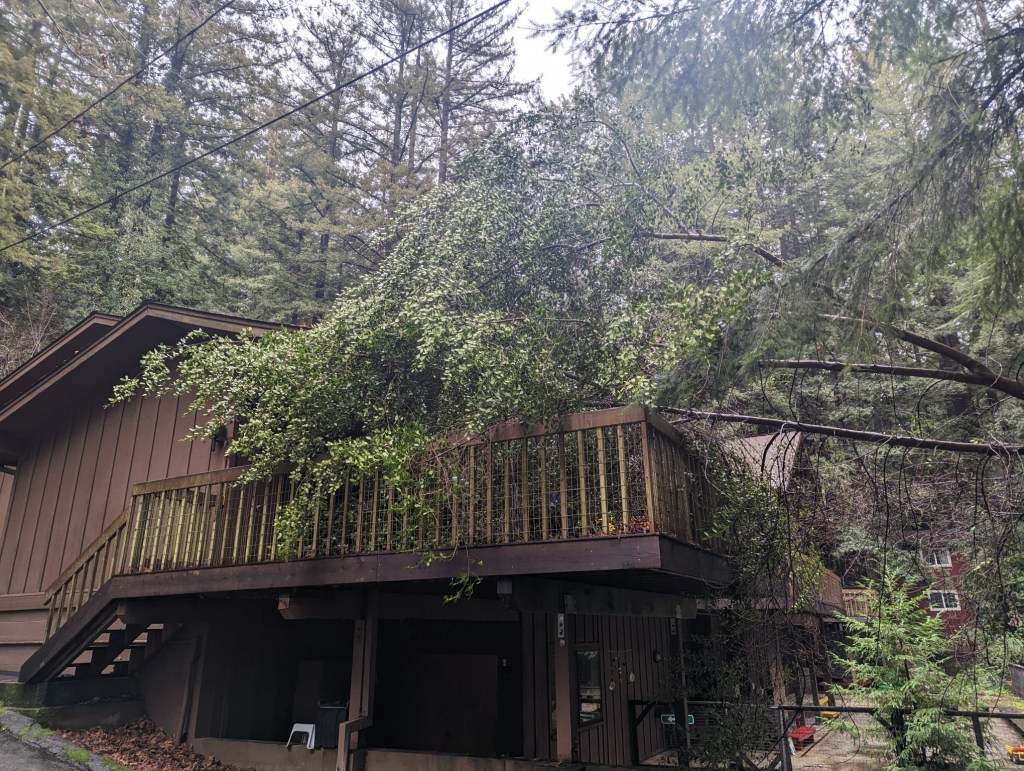
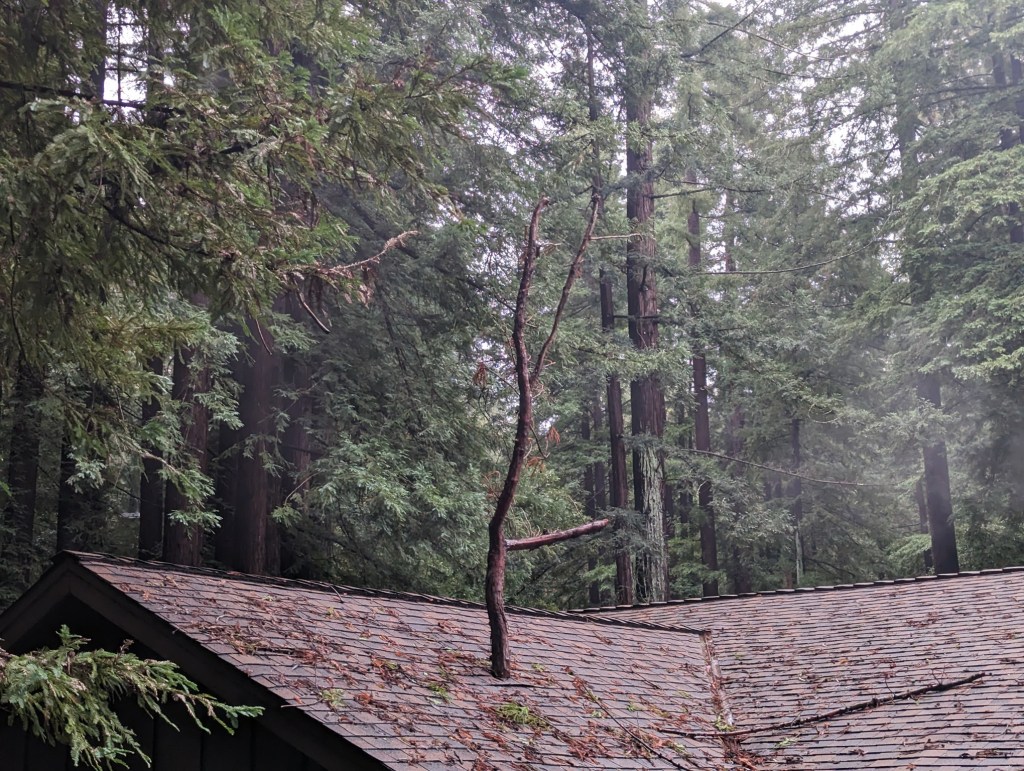
5. Fallen trees are particularly dangerous within forests of the tallest trees in the World. This one took out about twenty feet of the trail. I will share two more pictures of it later.

6. Rhody was exhausted from exemplary service to his similarly exhausted crew through many days of the rainiest weather here since 1982. He is enjoying sunnier weather now.

This is the link for Six on Saturday, for anyone else who would like to participate: https://thepropagatorblog.wordpress.com/2017/09/18/six-on-saturday-a-participant-guide/
Six on Saturday: 2022 Ends II

2022 ended with what might have been the worst series of storms since 1982. More rain is in the forecast, so the situation has potential to get worse. As I was composing my ‘Six on Saturday’ for last week, Zayante Creek behind the shop buildings at work was coming up higher than it has been in many years. An adjacent neighborhood was evacuated later in the day. Evacuated neighbors parked their vehicles in a big parking lot across Zayante Creek, and partied in the rain until 2023! By then, they could go home on muddy roads. It was a unique way to celebrate the New Year. Picture #1 was yesterday. #2 and #3 were Wednesday. #4, #5 and #6 were last Saturday, 2022.

1. Mudslides caused a few road closures and other damage elsewhere in the region. This was the worst for us. It was mitigated yesterday. Vegetation did not control this erosion.

2. Fallen trees were another major problem elsewhere in the region. A big coast live oak squashed a car nearby. This Italian buckthorn was the worst for us. It damaged nothing.

3. Widowmakers are terrifyingly dangerous during windy weather. All too many free fall silently for more than a hundred feet from the exteriors of canopies of coastal redwoods.

4. David Fritiof Lindberg Memorial Tree is barely visible to the right of the center of the lower edge of this picture. It is immobile, but has never been this close to Zayante Creek.

5. Steven Michael Ralls Memorial Tree resides in the same Memorial Grove as the David Fritiof Lindberg Memorial Tree, so is also now closer to Zayante Creek than it should be.

6. Conference Drive Bridge over Zayante Creek is a short distance north and upstream of the Memorial Grove. At the time, most vegetation was obscured from view under water.

This is the link for Six on Saturday, for anyone else who would like to participate: https://thepropagatorblog.wordpress.com/2017/09/18/six-on-saturday-a-participant-guide/

Horridculture – Horrid Weather

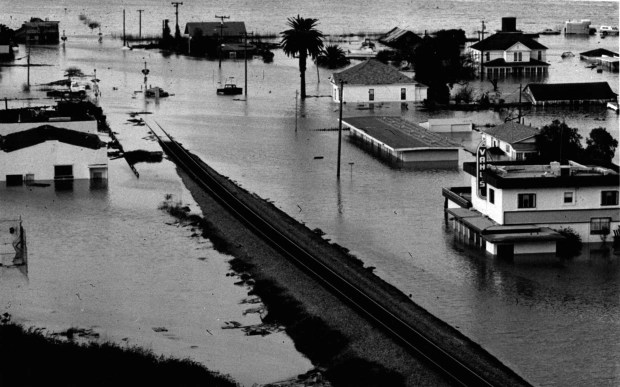
Alviso in 1983

This is no horticultural gripe, as is traditional here on Wednesday. Actually, it is not much of a gripe at all. It is merely a brief description of the unpleasantries of the current situation here.

Rain is predicted to resume prior to two this morning, and continue almost until tomorrow evening. It is expected to be remarkably voluminous. Strong wind that begins about eleven is expected to continue for a bit more than a day, until about two tomorrow. The ground is already saturated from the major storm on New Year’s Eve, and minor rain afterward. Rain may pause only for Friday, but may then resume for the foreseeable forecast.

This weather could be the worst since the winter of 1982 and 1983. If so, the results would be worse now than they were then. So many more people live here and nearby now. Flooding, mudslides and everything that stormy weather causes will affect many more people than ever before.

The area across the road from here is to be completely evacuated in the morning because of expected flooding. It already flooded on New Year’s Day. A parking lot nearby is already full of cars from that neighborhood.

The burn scar from the CZU Fire two years ago has not yet recovered, so is unusually susceptible to erosion and mudslides.

This sort of weather may be no more than what is normal in ‘average’ climates. It is just more than we are accustomed to in the mild climate here. As I schedule this to post at midnight in about a quarter of an hour, the weather is still pleasant, without indication of what is predicted.

I should get some sleep now. The crew and I will likely be very busy in the morning, and exhausted, cold and wet by noon.

Defoliation And Dormancy Are Justifiable

Wind blows freely past defoliated stems.

Defoliation and dormancy begin early for quite a few species within desert and chaparral climates. California buckeye can defoliate during the driest summer weather, refoliate for autumn, and then defoliate again for winter. They do what they must to avoid desiccation within their arid climate. Many more species do what they must to survive through winter.

That is why so many plant species are deciduous while they are dormant through winter. They shed their foliage when it is more likely to be a liability than an asset. Like summer dormant plants, they respond to inevitable and potentially detrimental weather. Moreover, they respond to seasonal changes of sunlight as well. Plant species are very perceptive.

With few exceptions, deciduous plants are nonconiferous or broadleaf species. More are endemic to regions to the north and south of tropical regions than within tropical regions. They know that sunlight is less intense and daylength is shorter while the sun is at a low angle during winter. Their defoliation coincides with the least usefulness for their foliage.

Most deciduous plant species are also aware of the sort of weather that they are likely to encounter during winter. Cold and stormy weather with wind and rain or perhaps snow is probably familiar to them. They know that foliage is not only vulnerable to damage, but is also burdensome to associated stems. In colder climates, it can accumulate heavy snow.

Foliage is the source of almost all wind resistance within foliar canopies that suspend it. Such wind resistance causes wind to dislodge limbs or blow vegetation over, particularly while soil is moist from rain. Defoliation eliminates much of such risk prior to the windiest and therefore riskiest storms of winter. Bare stems are more aerodynamic than foliage is.

Defoliation seems to happen at the best time, immediately prior to wintry weather. It even increases warming sunlight exposure during the darkest and coolest season of the year. However, defoliation is also messy while the weather is unpleasant for those who go out to rake it away. Without prompt raking, it clogs drainage of rain while it is most important.

Rain Initiates The Rainy Season

Weather generally conforms to the seasons.

Seasons here may seem to be less extreme than they are within other climates. Summer warmth is rarely too hot, and when it is, it does not continue for too long. Winter chill may be insufficient for some plants that rely on it to sustain their winter dormancy. Autumn and spring are as notable for the first and last seasonal rain as for colorful foliage and bloom.

This is actually very relevant within local chaparral climates. Rain and lack of rain define seasons here as much as extremes of temperature. Where the traditional four seasons of winter, spring, summer and autumn merge so softly, the rainy season and the dry season generally do not. Rain begins abruptly in autumn, and ends almost as abruptly in spring.

Consequently, home gardens can get inhospitably dry without adequate irrigation during more than half of the year. Then, they may require no irrigation for almost half of the year. Warm weather that coincides with the dry season enhances aridness. Cool weather that coincides with the rainy season enhances dampness. Mild climates can get extreme too.

Recent rain ended both the dry season and the fire season, and began the rainy season. For many plants, irrigation will be unnecessary until the dry season resumes next spring. Plants that continue to require irrigation will require much less, and only as their soil gets dry during prolonged lapses of rain. Therefore, automated irrigation requires adjustment.

Potted plants, bedding plants and young plants with minimal root dispersion will be more likely to want watering during warm lapses of rain. Substantial foundation plants beneath eaves generally extend roots beyond sheltered soil, but some do not. Also, potted plants under eaves of porches are unable to reach rain moistened soil with their confined roots.

While diminishing the need for irrigation, rain can be messy. It is, of course, wet. It makes soil muddy. Runoff can cause erosion. Stormy weather, which typically involves both rain and wind, dislodges copious foliar debris. Such debris accumulates while no one wants to go outside during stormy weather to rake it. Inconvenient timing seems to be a pattern. Yet, rain is undeniably gratifying.

Six on Saturday: Before Winter

Autumn is the season for planting. For portions of the landscapes that lack irrigation, we must wait until the beginning of the rainy season. By the time the rainy season ends next spring, new plants should be outfitted with irrigation, or sufficiently established to need none. Now that the weather got rainy, as well as windy and messy, planting is facilitated by a sale at one of our suppliers. We normally do not purchase much, but the prices were too good to ignore. I did not get enough pictures, so added random pictures, such as the shabby bearded iris foliage. The important details of #5 are difficult to distinguish.

1. Scout at least tried to cooperate for a picture, which is more than Rhody does. He just does not know how to cooperate. He was too wiggly to get a picture that was not blurred.

2. Cedrus atlantica ‘Glauca Pendula’, weeping blue Atlas cedar is an oddly limber trophy tree that my colleague here had wanted for a while, but could not justify procurement of.

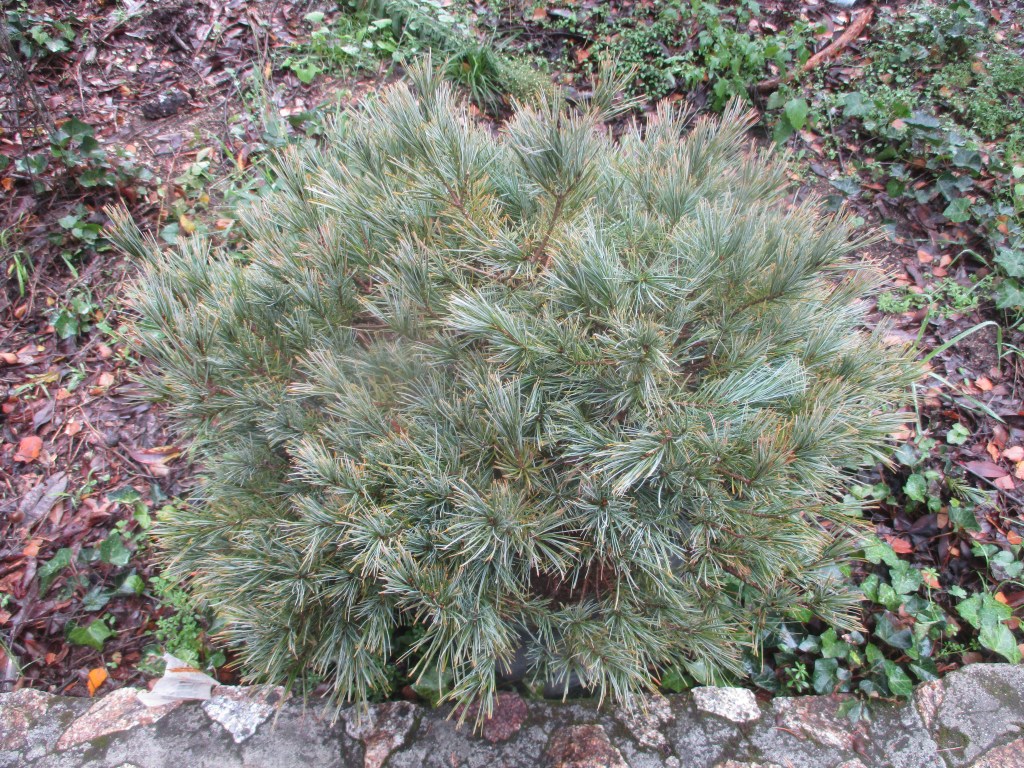
3. Pinus strobus ‘Nana’, dwarf Eastern white pine was not planned, but like the weeping blue Atlas cedar, was unusually affordable. There are eight in a row. Mugo pine are next.

4. Iris X germanica, bearded iris start growing prior to shedding old foliage of last year, so now look shabby. This is the pallid white and potentially feral iris in the new iris bed.

5. Wind is messy! Those two diagonal trunks just above and to the right of the middle of this picture were not diagonal earlier. Those headlights to the lower left are on a bridge.

6. Rain is messy also! This is a spillway of a drainage pond at work. While the sycamores and other deciduous trees continue to defoliate, it can get partially clogged and flooded.

This is the link for Six on Saturday, for anyone else who would like to participate: https://thepropagatorblog.wordpress.com/2017/09/18/six-on-saturday-a-participant-guide/

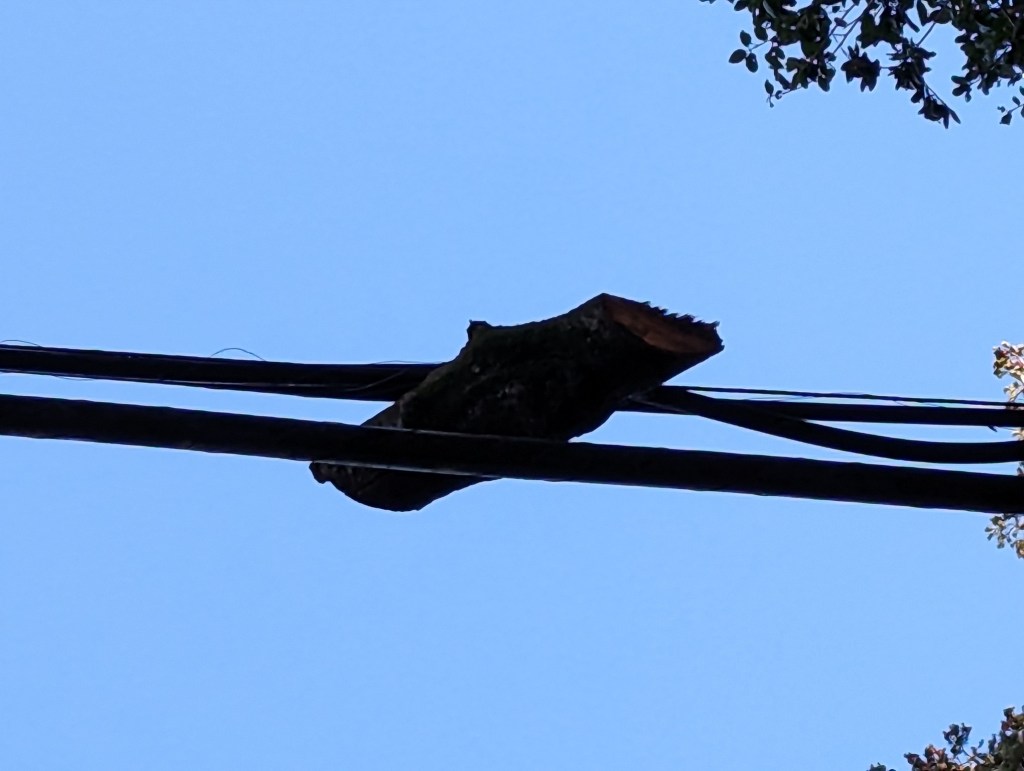
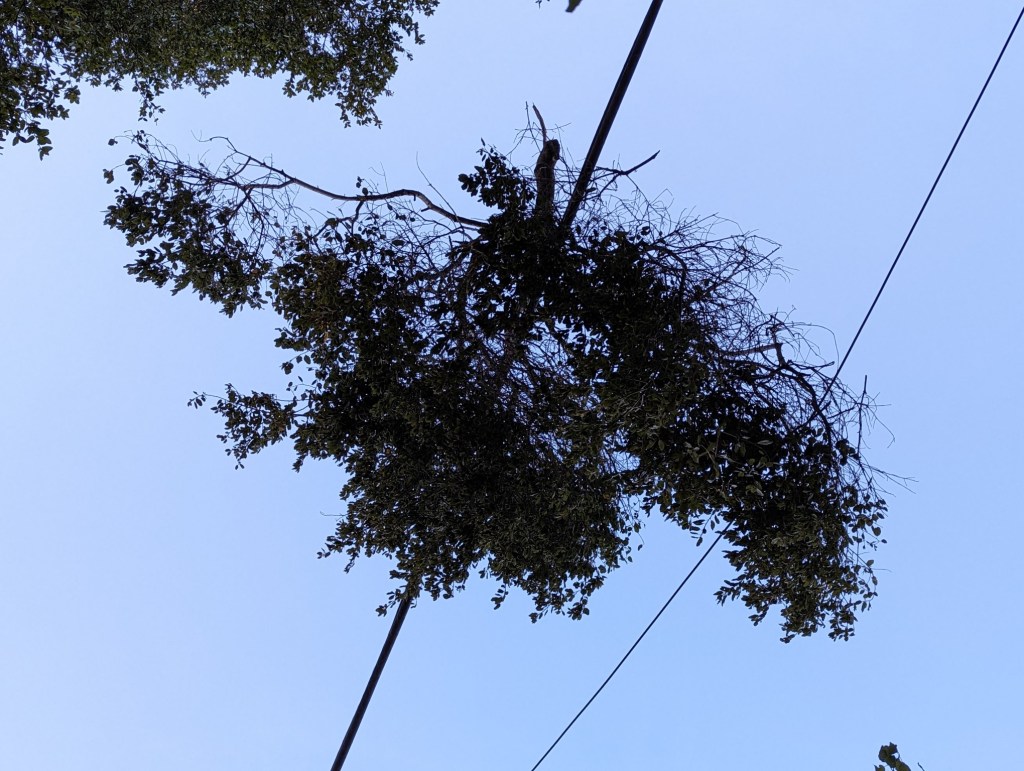
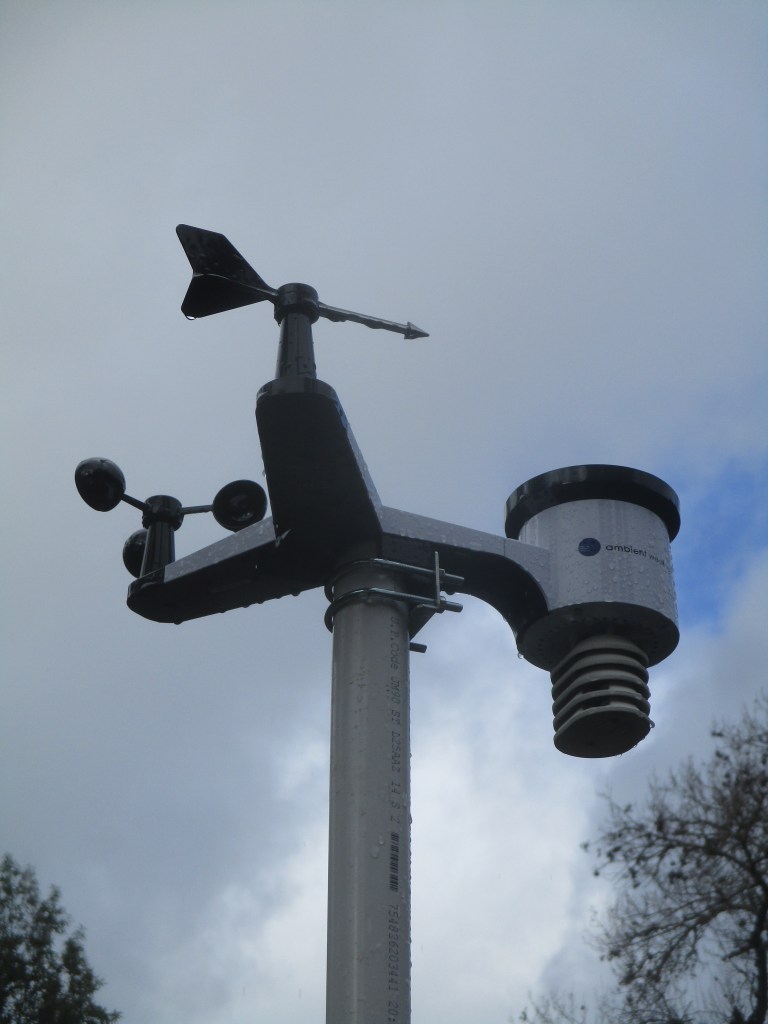
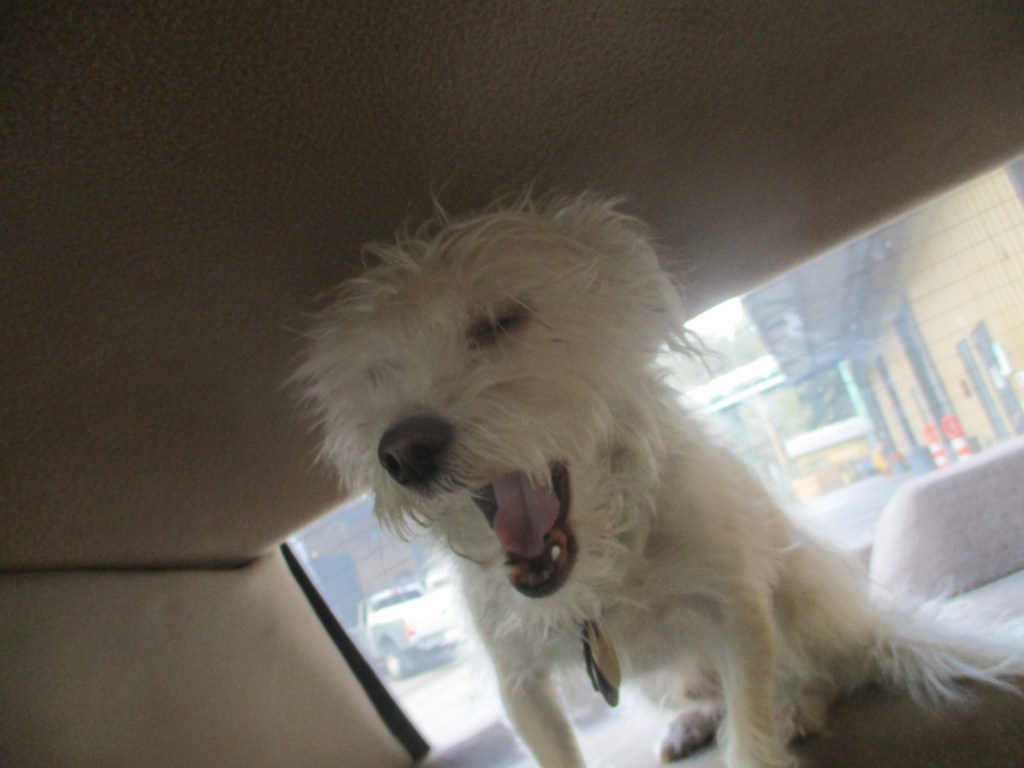
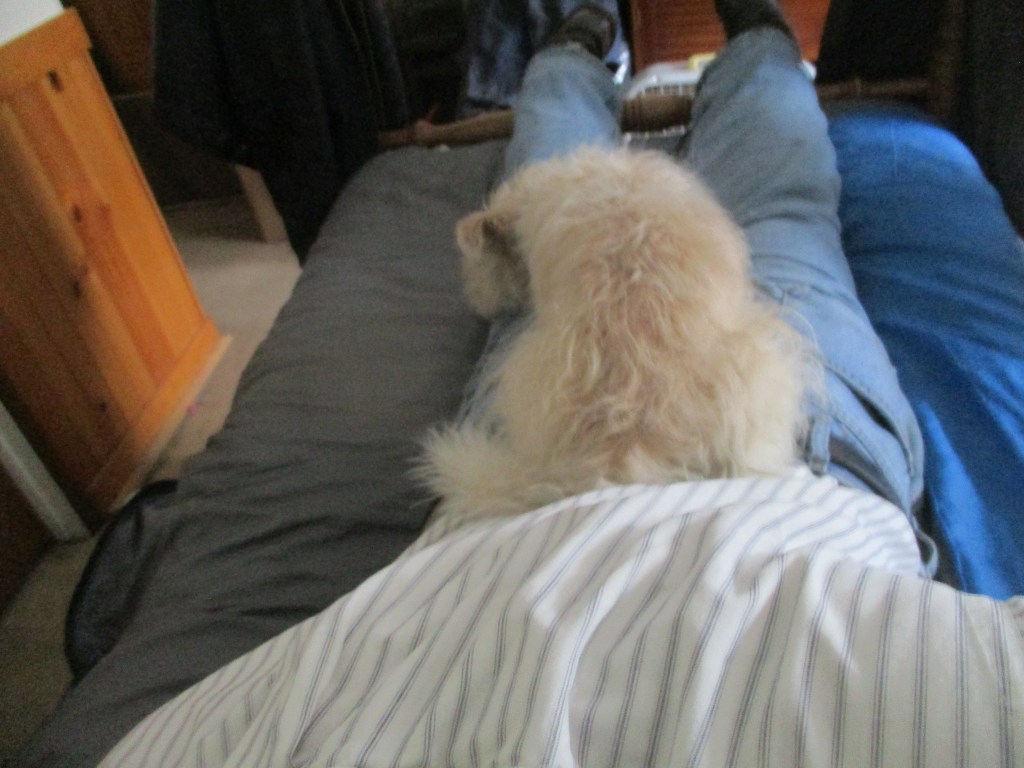
These four pictures below are not affiliated with the Six on Saturday above, but at the request of one of his most enthusiastic fans, were added to compensate for the lack of a picture of Rhody, the star of my blog. I had assumed that he was being uncooperative with my attempts to get a good picture, but he reminded me of what his fans really want to see. Can you guess what the last picture shows?

Frost Damage Makes Its Appearance

Frost damage of canna looks shabby.

Exotic plants are not native. They are from someplace else. Yet, most plants within most home gardens are exotic. Most are capable of tolerating the more extreme climates from which they originated. Some tropical or subtropical plants actually prefer milder climates. After the recent cool weather, some vulnerable plants exhibit symptoms of frost damage.

Vulnerability is relative though. Honeybush and elderberry can be mostly evergreen with minimal chill, or deciduous with more pronounced chill. Both tolerate more chill than they can experience here. What may seem to be frost damage of specimens that are normally evergreen could be a normal deciduous response to slightly abnormally cooler weather.

Frost damage is also relative. Partial defoliation of Mexican lime might happen annually after minor frost, so may not be alarming. However, such seemingly minor damage could involve stems or entire trees. Luxuriant canna foliage that so instantly becomes unsightly after minor frost can be more alarming. However, dormant rhizomes are safe until spring.

The simplest means to avoid frost damage is to not grow plants that are susceptible to it. Obviously, that is quite limiting. Besides, plants that were not susceptible last winter may be susceptible this winter or sometime in the future. Weather is annually variable. Some susceptible plants can grow in pots that are portable enough to relocate to winter shelter.

Small but immobile plants that are vulnerable to frost damage may appreciate temporary shelter during frosty weather. Any sort of sheeting or cardboard suspended by any sort of stakes and strings should be adequate. Ideally, the sheeting should not touch the foliage below. Incandescent Christmas lights under such sheeting radiate a slight bit of warmth. Frost occurs only at nighttime locally.

Frost protection can be unsightly, but it is less unsightly than frost damage. Fortunately, it is temporary during frost. If not too unsightly, most frost damage should remain until after the last frost date. It insulates other vulnerable vegetation within. Furthermore, premature grooming or pruning stimulates new growth that is more vulnerable to subsequent frosts.

Dog Days Of Summer Warmth

Every lawn has its dog days.

Summer began more than a week ago. Subsequently, the dog days of summer continue from the third of July to the eleventh of August. These forty dog days are the twenty days prior to and after the twenty-third of July. That is when the Sun aligns with Sirius, the Dog Star of the constellation of Canis Major, or ‘the Great Dog’. Dogs are actually uninvolved.

Nonetheless, dog days actually are a time for dogs to languish through much of the most unpleasantly warm weather of summer. Although local climates are generally mild, warm weather is not rare. It merely seems to be less oppressive than in other climates because of less humidity, and perhaps more of a breeze. Coastal influence is a major advantage.

Dogs drink more water during the dog days of summer because they lose moisture, with warmth, while panting. Vegetation also needs more than typical quantities of moisture to compensate for increasing evaporation from foliar surfaces. Aridity and any wind, both of which render warmth more comfortable for dogs and people, increase such evaporation.

Also, for most exotic (nonnative) vegetation, regular watering helps to sustain growth that warmth stimulates. Lily of the Nile can likely get enough moisture through the local rainy season to survive through the dry season. However, it is healthier and more appealing if occasionally watered to sustain its most vigorous growth during the dog days of summer.

Many plants are native to climates that supply rain in conjunction with warmth. They rely on moisture for normal growth. Various bananas, canna, angel’s trumpet and giant bird of Paradise grow very vigorously with sufficient moisture. Unfortunately though, insufficient moisture is very distressing to them. Drought tolerant species have a distinct advantage.

Turf, bedding plants and vegetable gardens need abundant water during the dog days of summer. Although some can survive with less than others, none are exempt. Most potted plants, especially those in hanging pots, are likewise dependent on systematic watering. Even if the weather is too warm to enjoy other gardening, watering can not be neglected.

Arid Climates Can Be Challenging

Some plants shrivel in arid warmth.

‘Mediterranean’ translates as an adjective that describes being at the middle of the Earth. Those who inhabited that region many centuries ago considered the Mediterranean Sea to be central to their World. That was long ago and far away. Nonetheless, climates here and now are somehow Mediterranean. Maybe semi arid climates of Italy are Californian.

Mediterranean climates are temperately warm with dry weather through summer. Rain is almost exclusive to a rainy season between autumn and spring. Although rain can briefly get abundant during the rainy season, the average annual rainfall is modest. Humidity is minimal for much of the time. Arid warmth is more comfortable than rarely humid warmth.

Desert climates accumulate less than ten inches of rain annually. Local climates receive more than fifteen inches of rain annually. They are therefore not sufficiently arid to qualify as desert climates. Technically, they are only semi arid chaparral climates. This climactic designation is perhaps more appropriate than the regional designation of Mediterranean.

Native plants and plants that are native to other chaparral climates are naturally pleased with the local climate. However, some initiate at least partial dormancy to survive through the long and arid summers. They may bloom early, but then partially defoliate for several months. Some delay dormancy if watered. A few dislike watering. It is unnatural for them.

Most plants in home gardens are not native to chaparral climates. They require watering to compensate for aridity during summer. Minimal humidity accelerates evaporation from foliar surfaces, which increases the demand for moisture. In conjunction with warmth and wind, aridity can desiccate foliage. Like people and pets, plants must maintain hydration.

Humid warmth that is less comfortable for people and pets is more comfortable for plants than arid warmth is. Humidity inhibits evaporation from foliar surfaces so plants consume less moisture. Incidentally, most pathogens, such as fungal diseases, bacterial diseases and most insects, also prefer warm humidity. People and pets seem to be in the minority.

Frosted Foliage Is Ugly Foliage

Frosted foliage can be removed now.

Weather is variable everywhere. Climates and seasons are imprecisely regulating. They merely define predictable ranges of the elements of weather, such as temperature, wind, humidity, precipitation and cloudiness. As unusual as weather sometimes seems to be, it generally conforms. Winter weather is mild here, but sometimes leave vegetation frosted. 

Frost was sneaky this winter, by occurring during nights between pleasantly warm days. All elements of the weather were within ranges that are normal for local climate, but their chronology was deceptive. Frost seemed unlikely after such springlike daytime weather. Some foliage was frosted only because protection from frost seemed to be unnecessary.

Frost is now unlikely for most local climates so late in the season. Only climates that are at significant elevation or significantly inland might still experience frost. Coastal and low elevation climates are generally past their last frost dates. Some climates experience no frost at all. Except for within the coolest situations, no more vegetation should be frosted.

Therefore, it is generally safe to prune and groom away unsightly frosted vegetation. It is no longer helpful to insulate undamaged vegetation below. Any new growth that pruning of this nature may stimulate or expose should be safe from frost. Within climates that lack frost, vegetation that gets shabby from chill might also appreciate pruning and grooming.

Pruning and grooming of frosted vegetation can be challenging. Many frosted plants are already actively growing in response to warmer weather. Their new growth mingles with their damaged growth that must be removed. Efficient separation of the two requires a bit of effort and persistence. Fresh and tender new growth is innately vulnerable to damage. 

For example, small new shoots of angel’s trumpet break away very easily if bulky frosted stems fall onto or through them in the process of removal. New shoots of several types of canna emerge from the soil among old shoots while it is too early to cut the old shoots to the ground. Grooming is easier where it can happen earlier, or for cannas that grow later.