 This is the opposite of the ‘right plant in the right place’. It is something that horticultural professionals should neither promote nor tolerate when feral plants appear in landscapes that they are getting payed to maintain. This example looks like it is more relevant to the topic of ‘Fat Hedges’ from https://tonytomeo.wordpress.com/2018/06/06/horridculture-fat-hedges/ , but there is more to this feral pyracantha than that. Yes, it is shorn too frequently to bloom or produce colorful berries. Yes, it looks like an upside-down and halfway buried Christmas tree. Yes, it contributes nothing to the landscape. What is worst of all is that it does not even belong there. It was certainly not planted there on the edge of the curb. There are others nearby, but they happened to appear in spots where they could have actually been assets to the landscape if they had not also been shorn into this weird upside-down and halfway buried Christmas tree shape.
Pulling or at least cutting weeds is generally one of the responsibilities of maintenance ‘gardeners’. It might be acceptable or even preferred to leave a few feral plants if they happen to appear where they might be useful. Those that appear where they would be a problem must be removed. It really would not have been much work to pull this particular pyracantha if it had been done when it first appeared. Even if it had not been pulled right away, and gotten cut down by a weed whacker long enough to develop strongly attached roots, it could have been dug out while young with only a bit of effort.
Okay, so that is in the past now, just like all the other days, weeks, months and years that this feral pyracantha was not removed. Okay, so if for some reason known only the maintenance ‘gardener’ who likely charges significant fees for the maintenance of this landscape, this specimen is to be salvaged, should it not have been pruned back away from the curb? Of course! Although it is right on the curb, much of the growth could have been directed back away from the curb and over the bare embankment. That area is not used for anything anyway. The emptiness of the embankment is certainly no asset to the landscape. Empty pavement is an asset here.
A chain is only as strong as the weakest link. A driveway is only as wide as the narrowest part. All this asphalt pavement and concrete curb is expensive. It was probably worth it to get a nice wide driveway. However, the usable area is not as wide now as it was originally. The feral pyracantha that looks like an upside-down and halfway buried Christmas tree extends nearly four feet into it. That means that the usable space of the expensive driveway is nearly four feet narrower in that spot than it should be. Just think of all the expense that could have been saved if the driveway had been constructed four feet narrower than it had been!

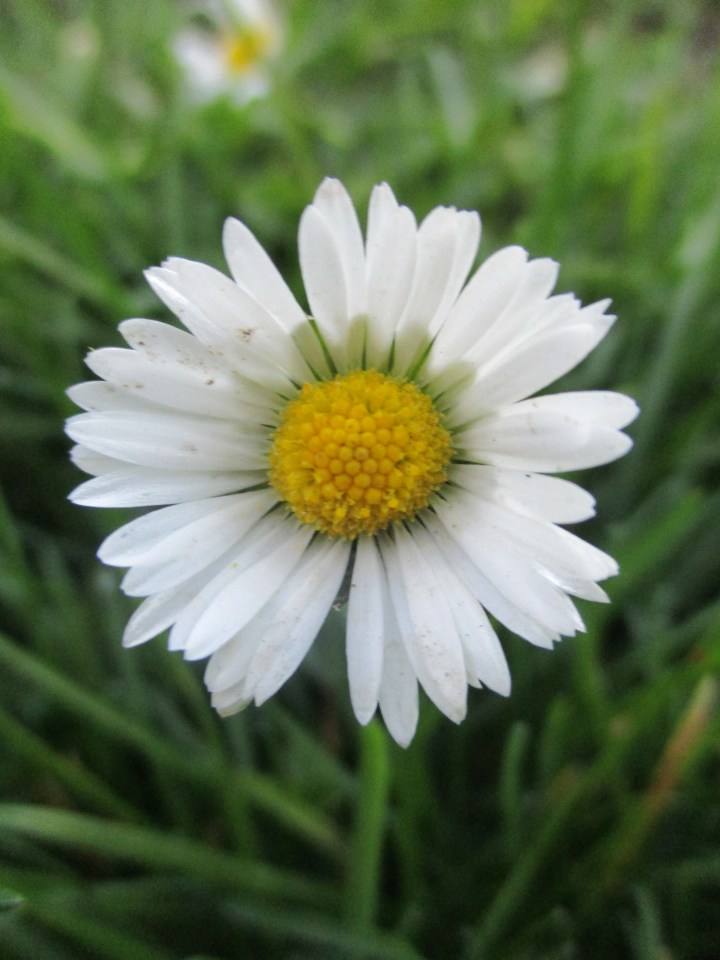
 Once it gets into a lawn, English daisy, Bellis perennis, can be very difficult to get rid of without leaving bald spots. The thin but tough rhizomes creep along the ground, producing rounded leaves that get no longer than two inches. Mowers barely scratch the surface. English daisy seems to prefer partly shaded areas to drier sunny spots. Although invasive, it can be pretty in informal lawns.
 What an unappealing name! That is probably why so many of us know it simply as ‘wild onion’ or ‘allium’. Few of us bother to get sufficiently acquainted with it to know it by the species name of Allium triquetrum, which is actually not much more appealing than ‘onion weed’. It is not really wild, but has naturalized as an invasive exotic, or in other words, ‘weed’. At least it is a pretty weed.
 Weeds always seem to have unfair advantages. While we pamper so many of our desirable plants to get them to grow and perform, weeds proliferate without help. They survive harsh conditions, inferior soil and some of the techniques we try to kill them with. They do not need much, if any water. They broadcast inordinate volumes of seed. They grow fast enough to overwhelm other plants.
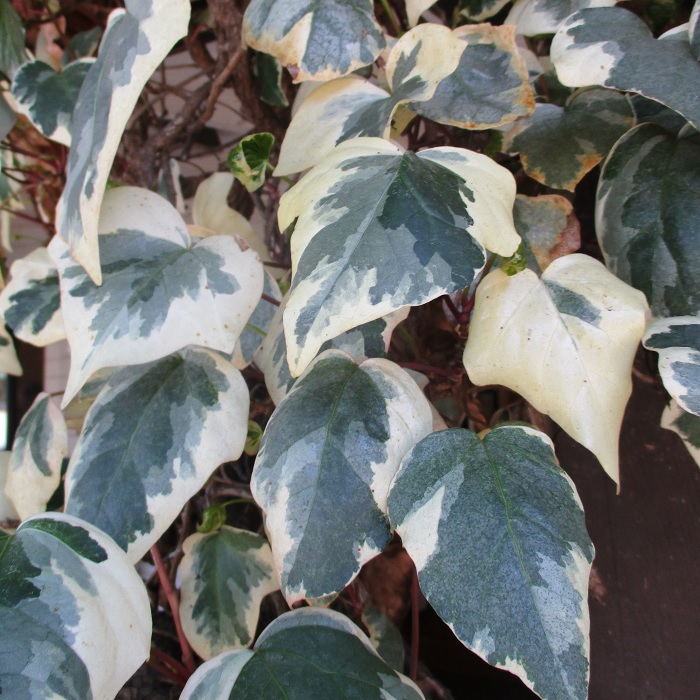 This is one of those plants that many of us have strong feelings about. Many of us who remember it from when it was more popular in the 1970s might consider Algerian ivy, Hedera canariensis, to be an aggressively invasive weed. Those of us who are less familiar with it might appreciate it as a vigorous and resilient groundcover that gets dense enough to exclude most other weeds.
 They are weeds for a reason. They grow like . . . well, weeds! By definition, they are unwanted. Yet, they typically proliferate and grow faster than desirable plants. They aggressively compete for space, sunlight and resources. Many weeds start to grow through winter, and get established while other seedlings are just beginning to germinate, or other plants are just waking from dormancy.


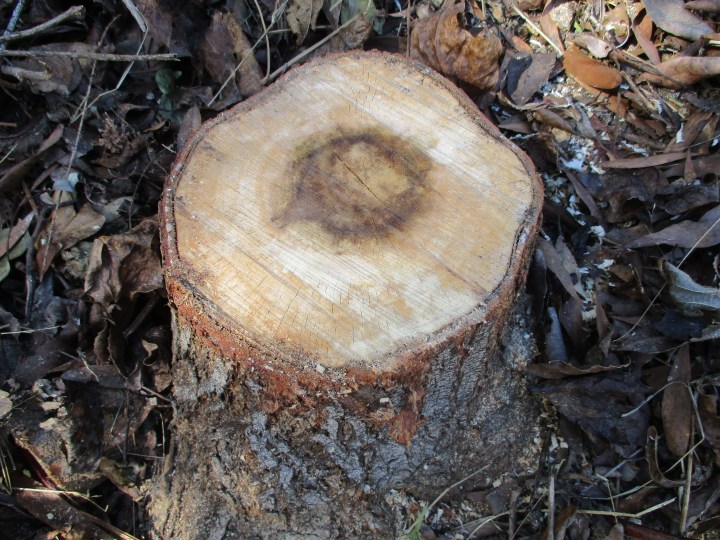
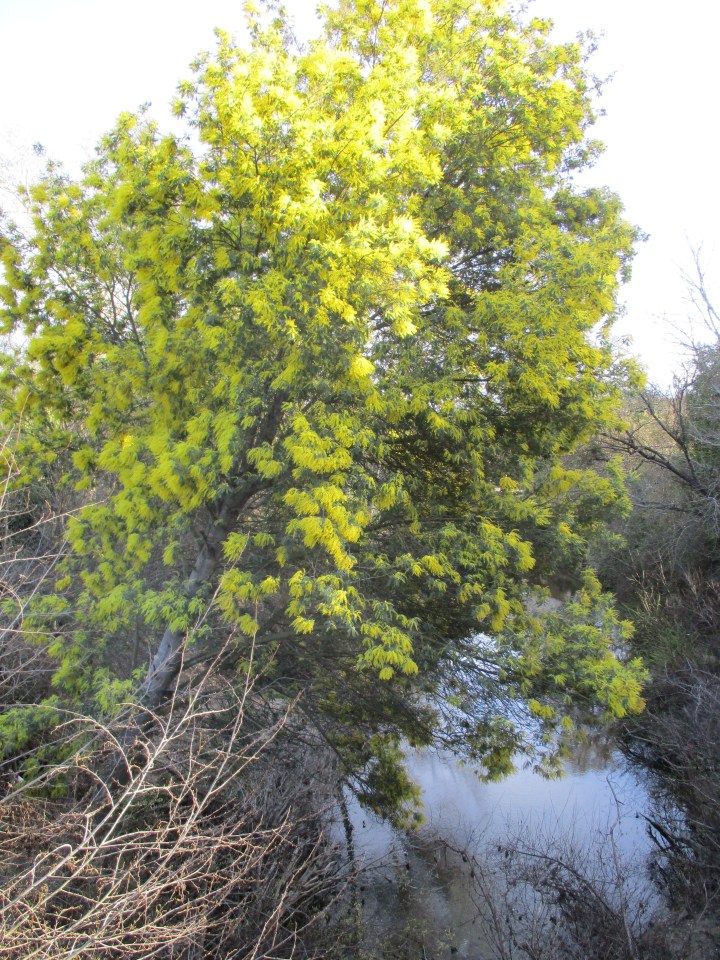 Every invasive exotic (non-native) species has a story of how it got here.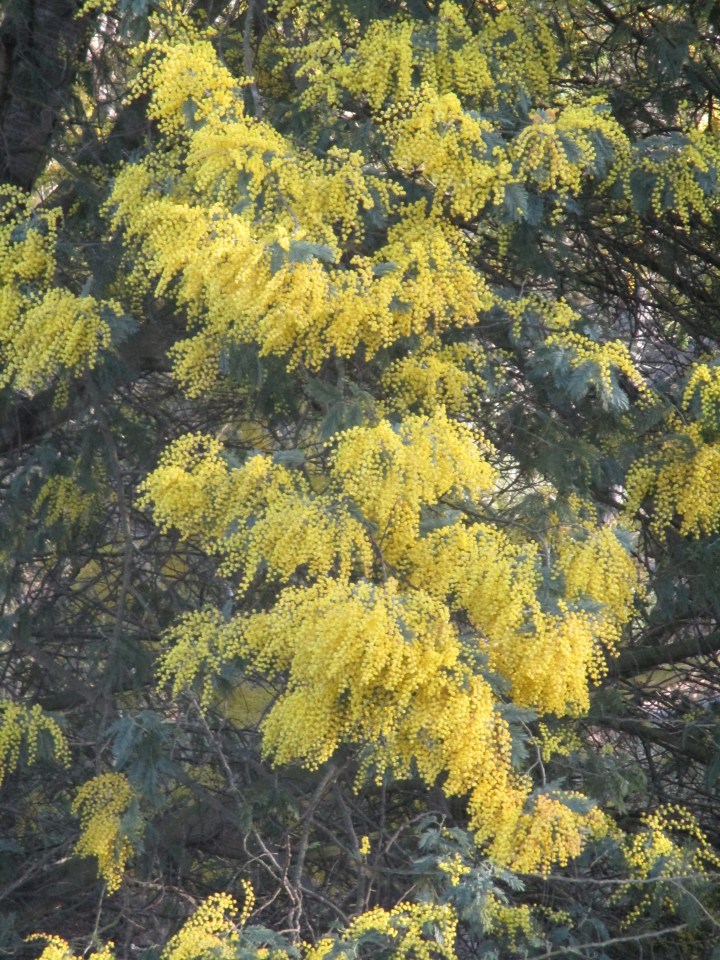



 Tony Tomeo