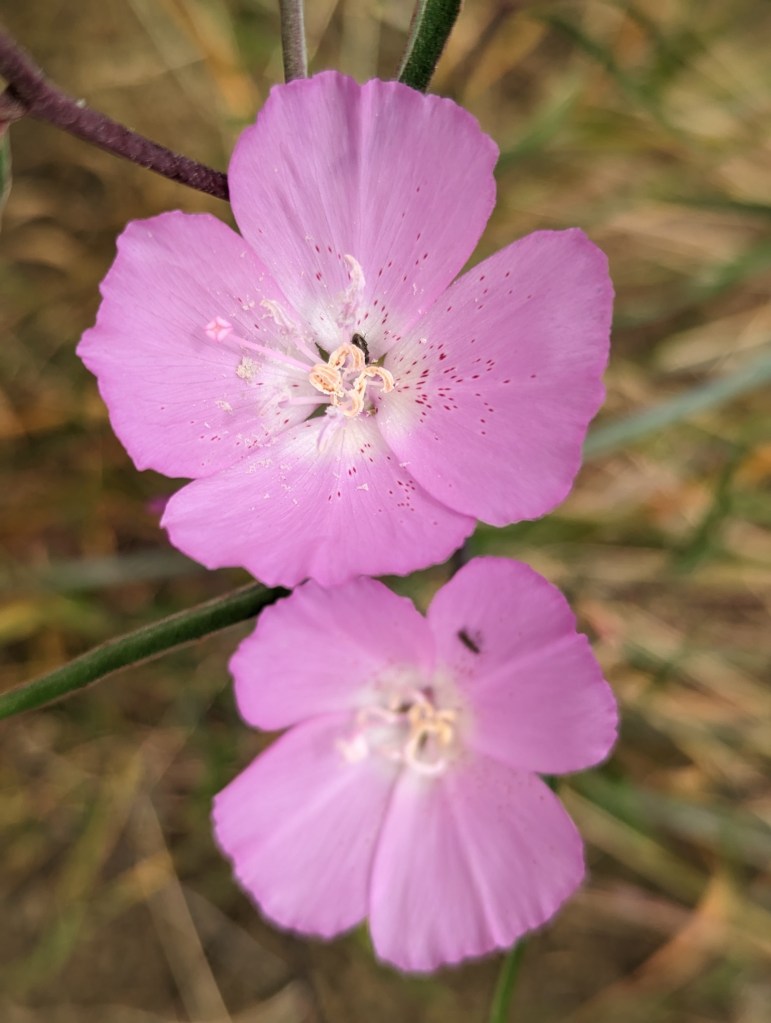
All forty-one species of Clarkia that are native to North America are native to California. Punchbowl godetia, Clarkia bottae, inhabits almost all counties of Southern California. It is absent only from Imperial County. It also inhabits Monterey and San Benito Counties. Its name may allude to its floral shape, or its bloom in Devil’s Punchbowl near Valyermo.
Punchbowl godetia is an ephemeral annual that blooms briefly for spring. Bloom is early in some regions but late in other regions. Also, its schedule is variably from year to year. Because it does not transplant easily, it is rarely available from nurseries. It grows better from seed, which is available online. Within favorable situations, it self sows after bloom.
Bloom is delicate and airy, on limber and lightly foliated stems less than three feet high. Individual flowers are barely an inch wide. Floral color is slightly purplish pink with white centers and tiny red spots. It is variable though, so might be a bit more purplish or lighter pink. Leaves are very narrow. New seedlings do not compete well with other vegetation.






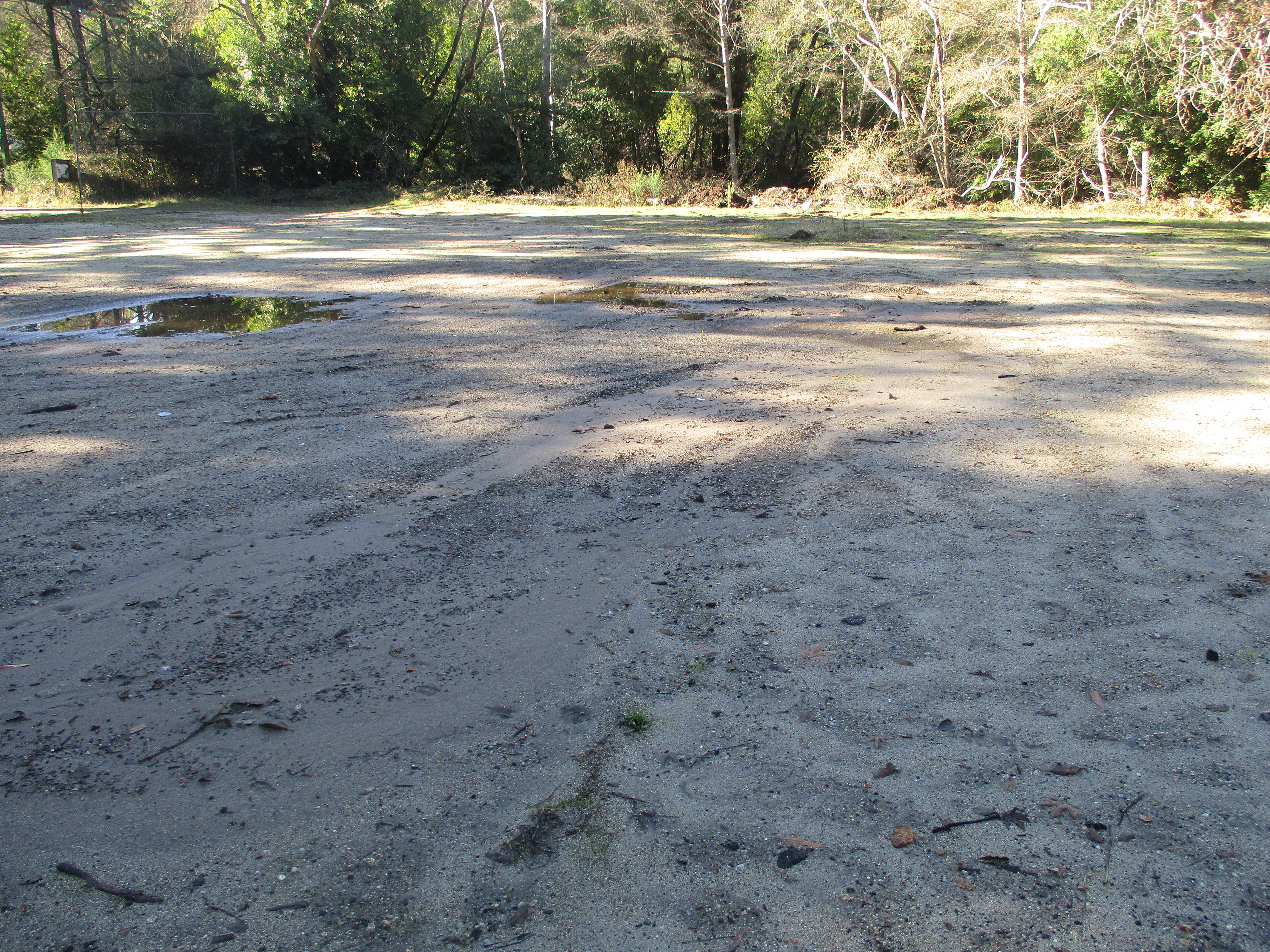 This . . . was a ball field. It might eventually be one again. The old backstop at the upper left corner of the picture is almost completely obscured under a thicket of blackberry brambles and a fallen boxelder. It would need to be replaced. So would the decommissioned irrigation system, all the bases, the basepath, the turf . . . and everything else that goes into a functional ball field.
 Tony Tomeo