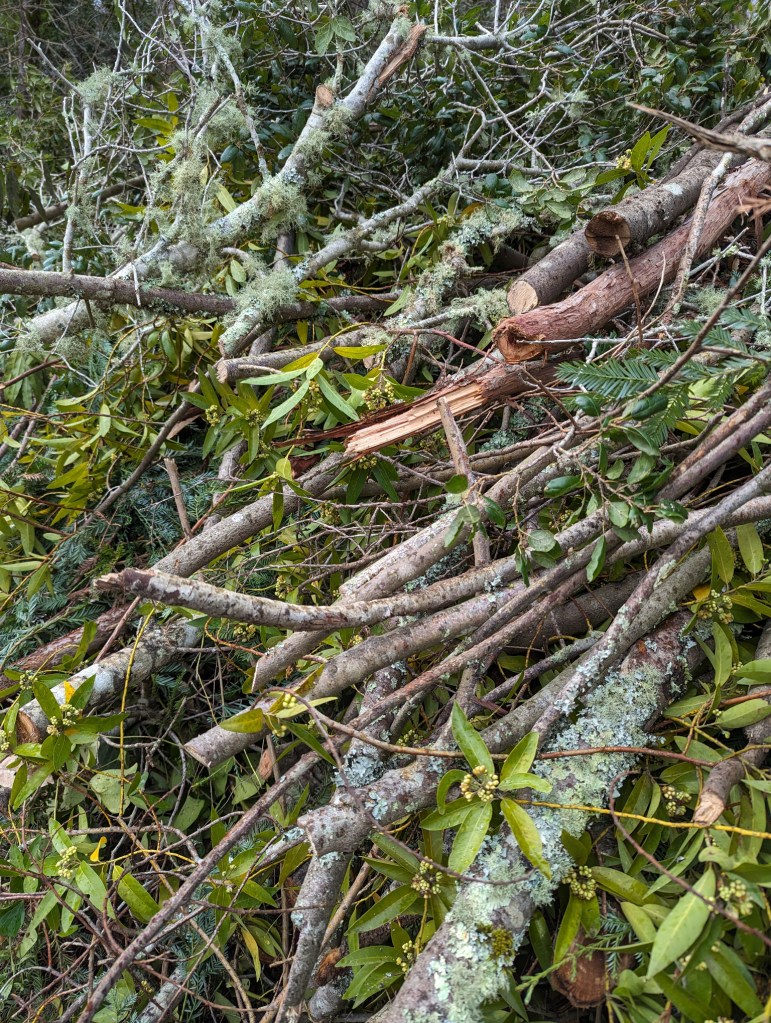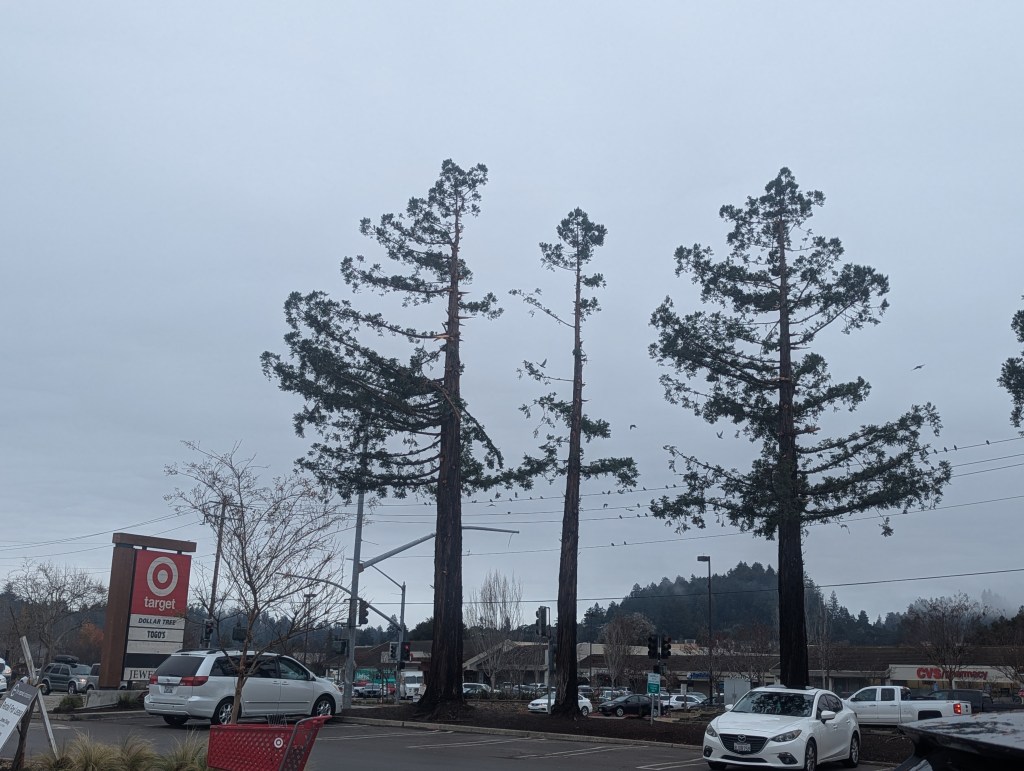
Tornado

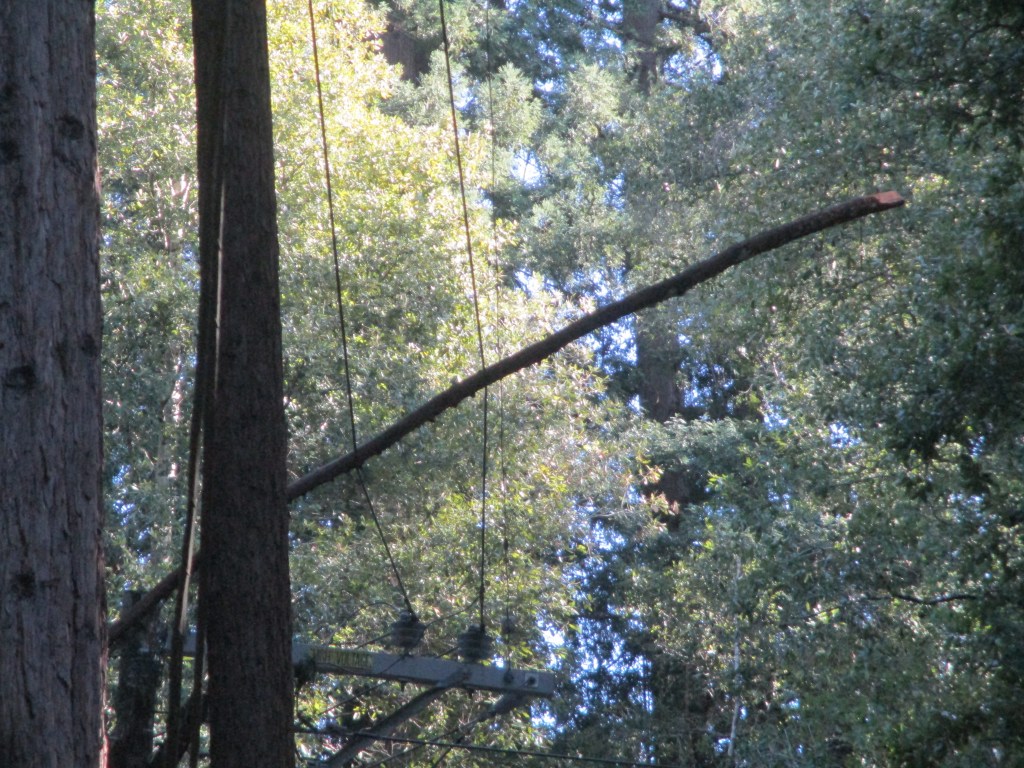
The tornado that stripped these redwoods landed right on Target. Notice the sign to the lower left.

The weather here may seem boring to those who are acquainted with other climates. It gets neither too warm nor too cold. Rain is limited to the relatively short rainy season. Humidity is minimal. Snow is so extremely rare that I can remember it only once in the Santa Clara Valley during my lifetime, and it was only half an inch deep. Tornadoes are about as rare, or at least they were. I can now remember two here, which is twice as many occurrences of snow that I can remember. Shortly after half past one last Saturday, rain, which had been falling for a while, suddenly became torrential, then instantly stopped, then instantly became torrential again. I stepped outside with Rhody to observe, and noticed Heather, Rhody’s feline ‘associate’ who prefers to stay inside during such stormy weather, had also come outside to observe, and was staring to the south. When I looked to see what she was looking at, I saw that not only were dark clouds speeding to the east, but that a portion of them was backtracking, as if swirling. My comment to Rhody and Heather was something like, “Well, at least tornadoes do not happen here.”. A few minutes later, a tornado did happen, right on Target, literally. It landed right on the Target store in Scotts Valley, less than two miles away. It was rated as an EF1 tornado, which apparently means that it was rather minor. It lasted for five minutes, though, while travelling only about a quarter of a mile. That is much slower than the clouds that we observed only a few minutes earlier. Fortunately, injuries were minimal, although a few cars were tossed. Utility cables, streetlamps and traffic signals were thrashed. So was much of the vegetation of the urban landscape.

Six on Saturday: Red Flag Warning

A Red Flag Warning that began Thursday night continues at least until five this evening. Arid wind severely increases the risk of wildfire during this time. The strong wind can be hazardous, even without fire. Big trees become big problems.

1. Wind developed soon after sunrise yesterday. I tried to get a picture of foliar debris as it fell from the forest canopy, but took only this. Sequoia sempervirens, coastal redwood makes the background, with Quercus agrifolia, coast live oak in the lower left quadrant.

2. Turkeys should hide from such wind. This one was alone and in a hurry, likely to find a sheltered situation with others, and just as likely, after shredding the red berries of the firethorn, Pyracantha coccinea. I saw no others as the wind continued through the day.

3. Sequoia sempervirens, coastal redwood is remarkably stable but structurally deficient where exposed to wind, which is why it grows in dense and mutually sheltering colonies. These big fractured limbs are very heavy, and fell with deadly velocity from very high up.

4. Umbellularia californica, California bay is often destabilized by structural deficiency. In other words, although its trunks and limbs are generally not structurally deficient, rot often compromises the structural integrity of the roots, which then become destabilized.

5. Two California bay trunks that destabilized and blocked the road in the picture above are obscured on the ground by their own foliage here. The fractured trunk that is visible was not structurally deficient, but was pulled down by the other two as they destabilized.

6. Hedychium coccineum X coronarium ‘Peach Delight’ ginger is likely too late to finish blooming. I would like to see it bloom to confirm its identity, but may need to wait until next year. Although irrelevant to the wind, I thought I should feature at least one bloom.

This is the link for Six on Saturday, for anyone else who would like to participate: https://thepropagatorblog.wordpress.com/2017/09/18/six-on-saturday-a-participant-guide/

Wind Is Messy And Hazardous

Trees lose limbs to strong wind.

Arborists become more popular after storms. That is when consequences of negligent tree maintenance become more apparent. Wind dislodges limbs and destabilizes whole trees. Unfortunately, the most diligent of tree maintenance can not prevent all damage. Trees and other vegetation are naturally vulnerable to frequently stormy winter weather.

Deciduous trees try to be less vulnerable to wind by defoliating prior to winter. Without foliage, they are less resistant to wind. In other words, they are more aerodynamic. Wind blows through them rather than against them. Some unfortunately defoliate slowly within the mild climate here. With such minor chill, some retain foliage until spring replacement.

For example, some sweetgum still retain much of their foliage. That is an advantage for the display of their autumn foliar color. It is a major disadvantage for their aerodynamics though. As a deciduous species, it does not expect to be so vulnerable to wind through wintry weather. What is worse is that sweetgum trees are innately structurally deficient.

Evergreen trees and other vegetation seem to be less concerned about wind. Actually, they merely employ different defensive tactics. Most cypress and some spruce are too dense and sturdy for wind to penetrate. Many pines develop sparse canopies that wind blows through. On the coast, coast live oak stays low and broad for wind to blow over.

Regardless of their efforts, trees of all sorts are vulnerable to damage from wind. Falling limbs or entire trees are very hazardous. Also, they can damage or destroy what they fall onto. That is why timely maintenance of trees is so very important. Any tree that becomes too hazardous to salvage necessitates removal. All trees eventually age and deteriorate.

Also, all trees, as well as all other vegetation, are messy. Some are messier than others; and many get messier as a result of wind. Some of such mess clogs eavestroughs and downspouts when they are most helpful. Detritus fills curbside gutters also. Actually, it gets everywhere. Its removal will be easier between the windy storms that generate it.

Horridculture – Weather

So close to ripening!

The weather here made national news on Sunday night. It was apparently quite a storm, with unusually windy wind. A few trees fell in the neighborhood. The roads were messy with debris. The electricity at home was disrupted. Otherwise, to me, it did not seem like a particularly bad storm. After all, this is winter.

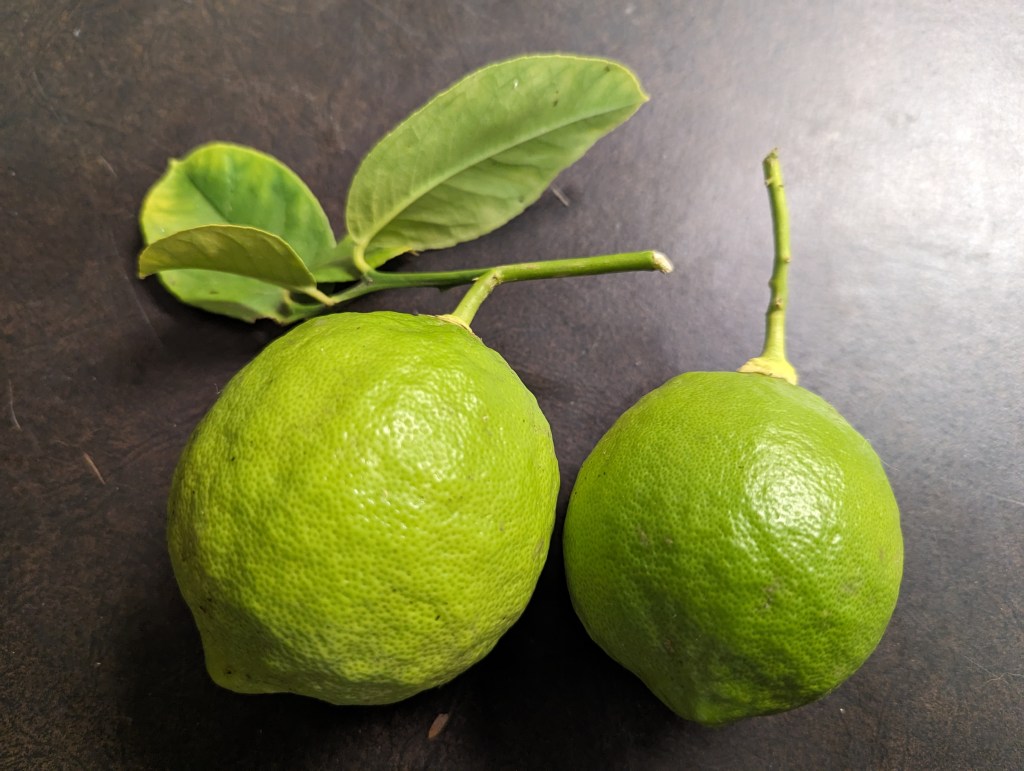
HOWEVER, on Saturday, even before the worst of the weather on Sunday, the wind knocked over my small ‘Ponderosa’ lemon, only a few hours after I posted a picture of one of its two developing fruit. It is a dinky tree in a #1 can, but its lemons are disproportionately large. As I mentioned on Saturday, I should have removed the lemons to divert resources to vegetative growth, but wanted to see if they would develop and ripen. The weather did it for me.

Now I am annoyed. I do not like to be one who complains about the weather. There is not much to complain about in that regard here. This is a pleasantly mild climate that lacks the sort of severe weather that other climates must contend with. The gust that blew over the small lemon tree was not nearly as strong as those that blew over trees within the surrounding forests and neighborhoods. I am just annoyed that after letting the lemons grow as much as they did, their effort will now be wasted.

The two lemons did not develop as they should have, but are still bigger than average ‘Eureka’ or ‘Lisbon’ lemons. I put them aside to ripen if they can. I doubt that they will. I can prune the small tree to remove the stems that had previously supported the two lemons, and make cuttings of them, to grow more small trees. Actually, I should have done this anyway.

Wintry Weather Can Damage Trees

(This posted in 2011.)

Wind brings out the worst in trees.

Pasadena sustained the worst of the damage caused by the strongest Santa Ana Winds in three decades. Huge piles of debris from broken trees are much more than can be removed any time soon. Falling debris and trees damaged many roofs, cars and anything else that happened to get in the way.

Other towns and neighborhoods throughout the area, particularly those at the base of mountains, also sustained major damage. At the same time, severe winds ravaged the San Francisco and Monterey Bay Areas as well, particularly in the Santa Cruz Mountains and the hills of the East Bay.

Some of the damage caused by wind in urban areas might have been less disastrous if trees had gotten the respect and attention that they deserve. Some trees develop structural deficiencies that need to be corrected by pruning, either to eliminate the problems, or at least to decrease the strain exerted onto the structurally deficient parts. A few trees that become unstable as they mature may likewise need to be pruned or even removed.

It is not always possible to prune trees to remove all structural deficiencies without damaging the affected trees more, or causing more structural problems to develop. For example, major pruning to remove all parts that may get blown down by wind, such as pollarding or ‘topping’, may seem to be effective for the short term, but actually stimulates the development of vigorous secondary growth or watersprouts that are disproportionately heavy and even more likely to tear off from the older limbs.

Structural pruning more often involves thorough reduction of weight and wind resistance. Weight of foliage and stems directly applies leverage against unions where smaller stems are attached to the larger stems from which they originate. Wind resistance adds more leverage as foliage gets blown about by wind. Thinning obviously removes significant weight, and also decreases wind resistance to allow wind to blow though the affected canopies.

Besides helping to compensate for structural deficiency, structural pruning is also beneficial to potentially unstable trees for the same reasons. However, unstable trees typically need even more reduction of weight and wind resistance. Some of the most unstable trees and those that are deteriorating need to be removed because their instability cannot be accommodated.

During winter, while deciduous trees are bare, evergreen trees are more susceptible to wind damage, obviously because they retain their weight and wind resistance through winter while the weather is the most severe. Unstable trees become even more destabilized as rain softens the soil. Regardless of the potential for susceptibility to wind damage, this would be a good time of year to get any needed tree maintenance done, prior to any more windy and rainy winter weather.

Arborists certified by the International Society of Arboriculture are the most qualified to identify potential structural problems or instability, and to prescribe corrective procedures. A list of certified arborists can be found at the website of the International Society of Arboriculture at http://www.isaarbor.com.

Humidity And Wind Affect Heat

Heat is more than mere temperature.

Gardening is not so much fun when the weather gets as warm as it has been recently. It is more comfortable to stay inside with air conditioning, or at least where it is shadier. The plants out in the garden are on their own. Except only for those that are potted, they do not have the option of coming in out of the heat.

Most plants actually do not mind the sort of heat that is uncomfortable for us. Some actually enjoy it. The problem is that heat often occurs in conjunction with other weather conditions that can collectively become really unpleasant for plants.

Minimal humidity makes otherwise unpleasantly warm weather more comfortable for us, but can desiccate foliage that prefers more humidity. Japanese aralia, fuchsia, rhododendron, split-leaf philodendron and many other plants that should not mind warmth can get roasted if warm weather is also too dry. Because sunlight enhances the process, exposed foliage is much more susceptible to damage. To make matters worse, sunlight is more penetrating through clear dry air.

Wind that makes us feel a bit cooler in warm temperatures can likewise cause desiccation as it draws more moisture from foliage. Finely textured plants like Japanese maple, many ferns and some grasses, are particularly susceptible. Offshore wind, like the famous Santa Anna Winds of Southern California, are the worst, because they come in both hot and dry from more arid inland areas, combining all three factors of minimal humidity, heat and wind.

Many of the plants that are susceptible to damage from heat happen to be tropical or subtropical plants that typically enjoy heat as long as the air is humid and still. Others are ‘understory’ plants that naturally live in the shelter of higher trees, so do not like direct sun exposure or wind. Yet, even substantial trees, like fern pine (Podocarpus spp.) and even redwood, can get a bit roasted if the weather gets hot, dry and windy enough.

Conservation of water makes warm weather even more uncomfortable for sensitive plants. They really want more water to keep their foliage and stems well hydrated. Hosing ferns and grasses when things get really hot helps to cool the foliage, and briefly increase the ambient humidity. Because thin young bark is more susceptible to sun-scald in hot weather, pruning that would expose more bark should be delayed until the weather turns cool again.

Humidity Is The Other Weather

Some delicate foliage prefers more humidity.

It is difficult to always ignore the weather. Regardless of how pleasant it typically is here, it sometimes gets warm or cool. It occasionally gets hot or cold. Rain is wet and perhaps messy. A breeze is comforting while the weather is warm. Strong wind can be damaging. However, humidity is one major component of local weather that gets little consideration. 

Humidity gets more consideration in climates that are either uncomfortably humid or arid. Some parts of Florida get famously humid and hot simultaneously during summer. Some flora and insects enjoy such weather. Unfortunately for the rest of us, humidity enhances the already unpleasant heat. Locally, hot or warm weather is rarely bothersomely humid.

Similarly, local weather is rarely unpleasantly arid (lacking humidity). This is a chaparral climate, which is ‘semiarid’. Relatively minimal humidity makes heat a bit more tolerable than it would be with more humidity. Yet, humidity is generally sufficient to sustain foliage that would desiccate in a more arid desert situation. Actually, this is an excellent climate.

Although, it is not perfect. Flora and fauna have different standards for exemplary climate and weather. The relatively minimal humidity that makes uncomfortably warm weather a bit more tolerable for people and animals is much less appealing to some plants. Except for those that are native to desert or chaparral climates, most plants prefer more humidity.  

Many popular plants are understory plants, that naturally live in the partial shade of taller vegetation. With shelter from desiccating arid wind and harsh sunlight (to enhance heat), most do not mind heat. Otherwise, foliage might roast. Those with finely textured foliage, such as astilbe, ferns, grasses and some Japanese maples, are particularly susceptible.

Some tropical and subtropical plants, such as split leaf philodendron and fuchsia, prefer to be understory plants here, even if they would prefer more exposure within their natural ecosystems. The shelter provided by more resilient vegetation compensates for deficient humidity. Furthermore, adequate irrigation promotes healthy hydration of delicate foliage. 

Six on Saturday: Ill Wind

There are no flowery pictures here this week. Nor is there a picture of Rhody. I know that everyone loves Rhody. Also, I had been trying to include something flowery as everyone else does. Instead, I got only pictures of damage that was caused by very strong wind that blew through here on Monday night and Tuesday. I missed it while at my other work, but now have a major mess to contend with. Redwoods are very big and very messy, even without wind. With wind, they are very dangerous too. No one can remember stronger wind here.

1. Electricity sometimes gets disabled prior to strong wind. This wind storm disabled the electricity first. Debris such as this needed to be removed before the electrical service was restored.

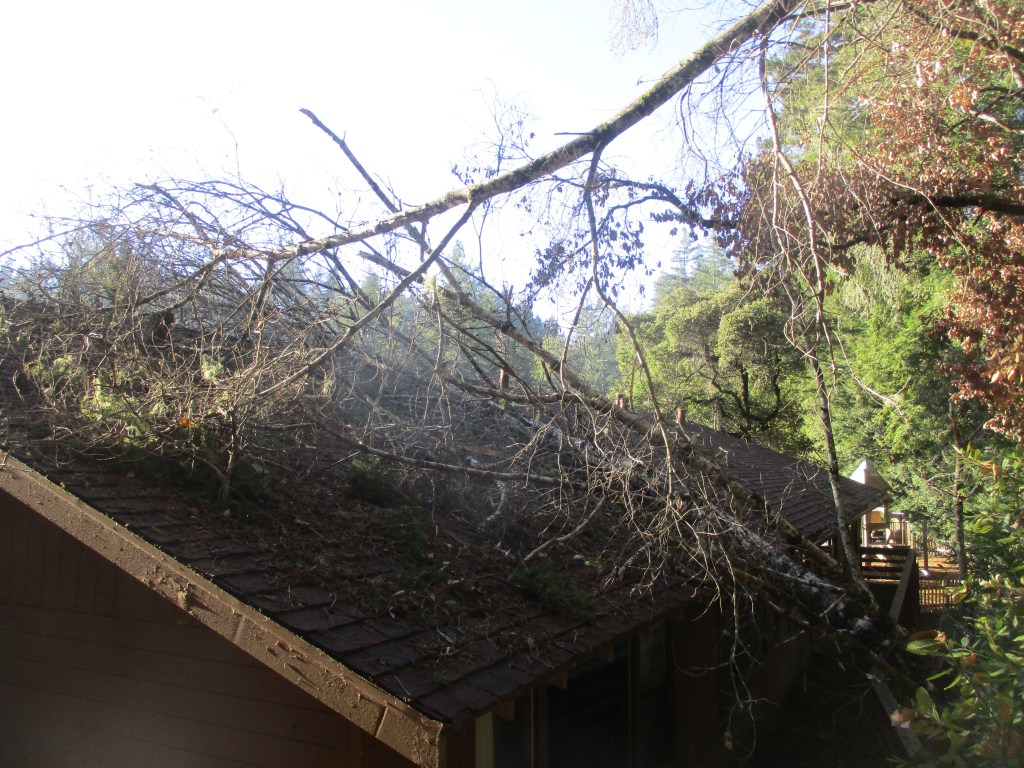
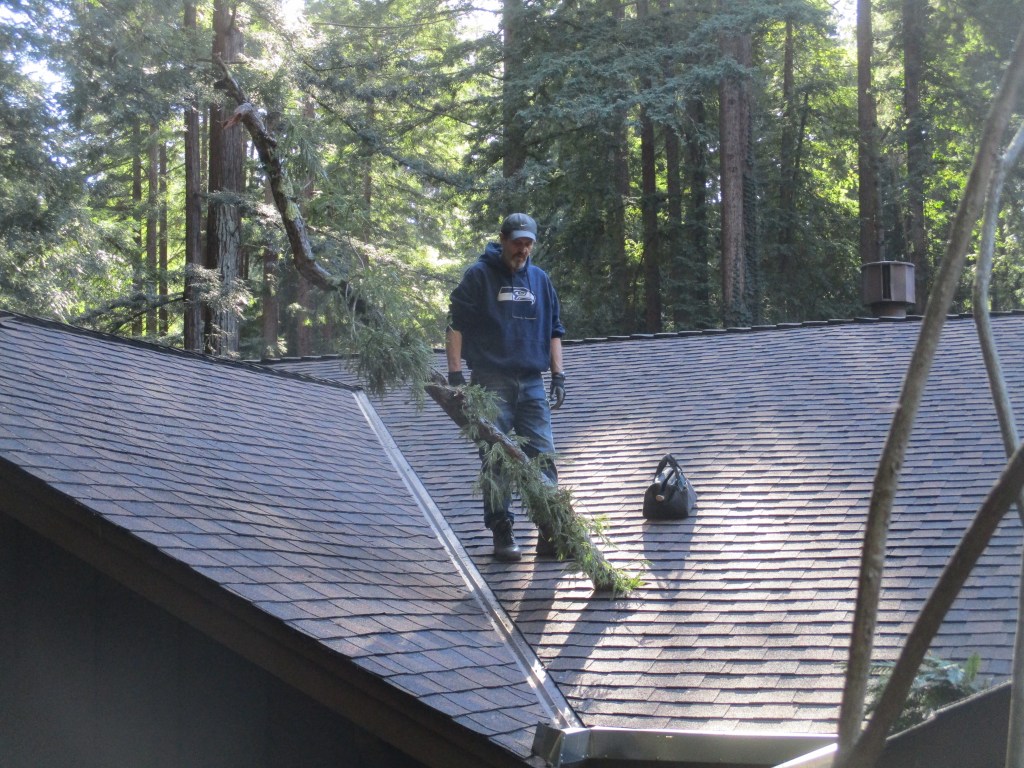
2. Decayed dead trees blow down easily, even without much drag. They are not as heavy as viable trees, but are not as flexible either. A few stubs of broken limbs perforated this lodge roof.

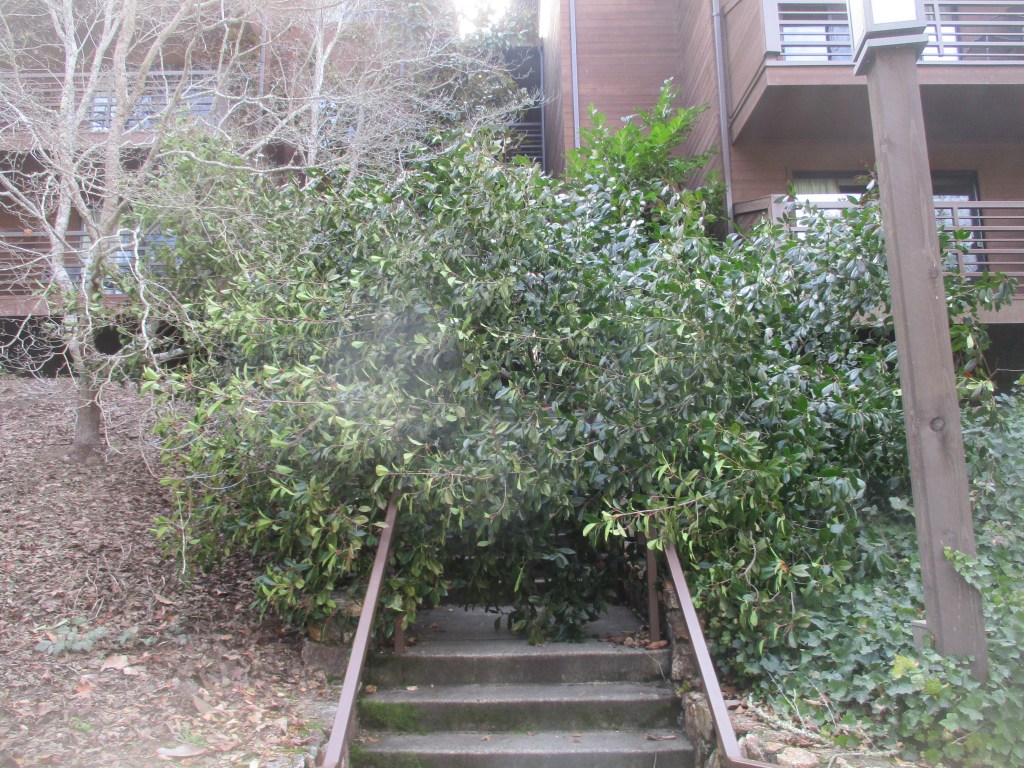
3. Stairway to photinia was too silly to not get a picture of. The photinia looks as if it had always been there. I certainly did not expect it to fall over. We took the necessary steps to remove it.

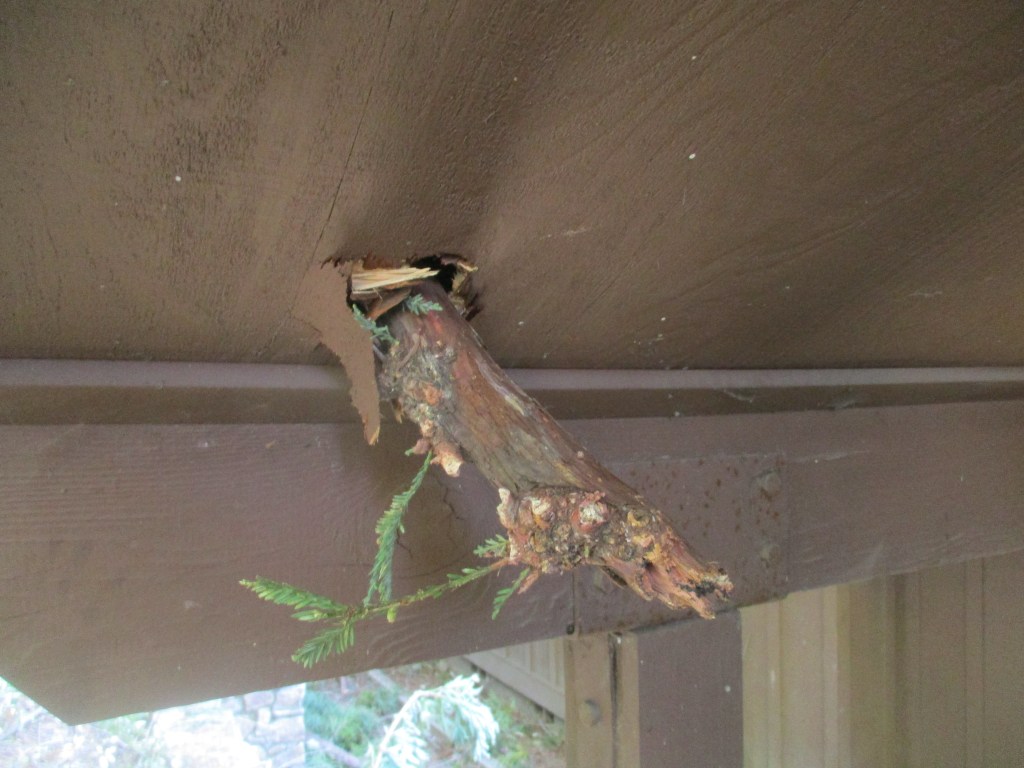
4. Redwoods are hundreds of feet tall. Even small limbs that fall from such heights come down with significant momentum. This limb punctured the roof and this plywood porch ceiling below.

5. Several limbs such as this perforated this same roof. Abundant other debris was raked and blown off before these limbs could be removed, and the roof could be patched. Rain is expected.

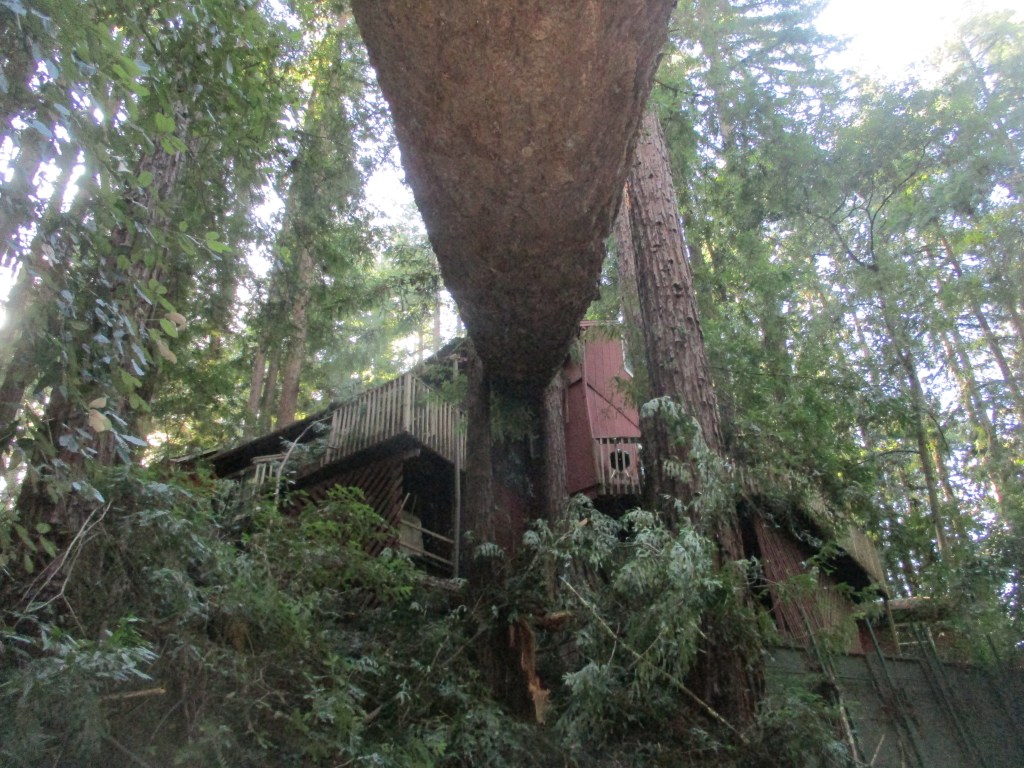
6. This roof, as well as the house below it, got the worst sort of damage when this big fir came down. Sadly, this is not the only home that was destroyed by falling trees. Several cars died too.

This is the link for Six on Saturday, for anyone else who would like to participate:

https://thepropagatorblog.wordpress.com/2017/09/18/six-on-saturday-a-participant-guide/

Blow Out

P00216
Wind is messy!

While strong Santa Anna Winds were blowing through Los Angeles four hundred miles to the south, and Storm Ciara was arriving in Scotland and Norway, we were getting some remarkably strong winds of our own. They were not nearly as strong as winds that were causing so much damage in Europe, and involved no flooding rain, but they were dangerously messy nonetheless.

We live and work among dense forests of coastal redwood, the tallest tree species in the World. Beyond the upper edge of the redwood forests are more forests of huge Ponderosa pine. Huge Douglas fir are mixed throughout. Their understory includes trees that would be considered to be massive anywhere else, such as coast live oak, tanoak, Shreve oak, bay laurel and madrone.

Such big trees drop big limb, and in abundance. Furthermore, limbs that fall from such great heights are significantly more dangerous than those that fall from smaller trees that are closer to the ground. They gather major inertia on the way down. They do not necessarily fall straight down either, but can get blown significant distances to where falling limbs may not be expected.

While the winds were blowing through, I could hear crashing of falling limbs and entire trees from the mostly deciduous riparian forest outside. I know that many of the big cottonwoods, box elders, willows, alders and sycamores are deteriorating, but did not expect so many to be blown down while bare. I suspected damage would be worse among the bigger and evergreen trees.

The pile to the left in the picture above is just the debris that was collected last Monday (while I was conveniently not here to help). It is more spread out but at least twice as voluminous as the pile on the right, which is pruning debris that took me several days prior to the wind to collect. The green cargo containers in the background demonstrate how big the piles of debris are.

More debris was collected on Tuesday (while I was still doing other work). The mess was not the worst of it. The roofs of a few buildings were impaled by falling limbs. Some of the damage is significant. Fortunately, the only big trees that fell did so into forested areas where there are no buildings, and electrical service was disrupted for less than a day. No injuries were reported.

Pasadena Windstorm

P90727K

The weather in the parts of California that most of us are familiar with is generally rather mild. Some of the hottest temperatures every recorded were in the Mojave Desert, but not many of us even know how to get there. Some of the heaviest snowfall ever recorded was near Tahoe, but many of us think of that as almost Nevada. San Jose, Los Angeles and the most populous regions enjoy mostly comfortable weather throughout they year.
‘Drought’ is often an inaccurate description of the naturally prolonged dry chaparral and desert weather, as if it is abnormal. There would be no chaparral or desert if it rained here as much as it does in other climates. What is considered to be normal rainfall in some regions would be disastrous to regions that do not normally get so much precipitation. Drought does happen here sometimes, but it is not as common as outsiders believe it to be.
Once in a while, we get something that really is strange. The floods and mudslides of the Winter of 1982 were disastrous. The wicked frosts of late 1990 were the worst in recorded history, even though they would not have been much of a problem in most other climates farther inland. On the morning of December 1 in 2011, Pasadena and the surrounding regions of the San Gabriel Valley experienced historically strong and destructive winds.
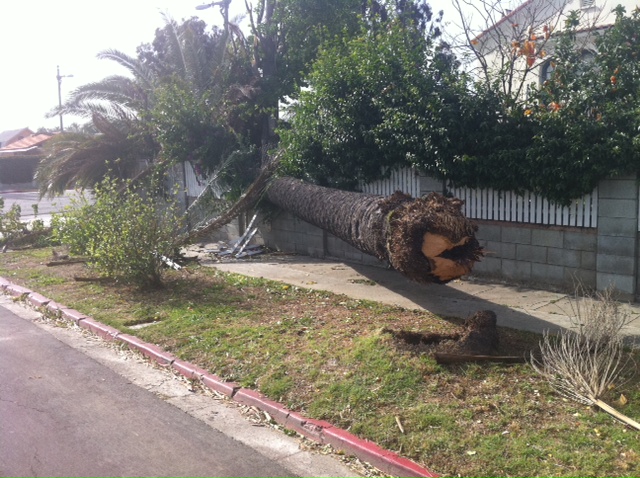
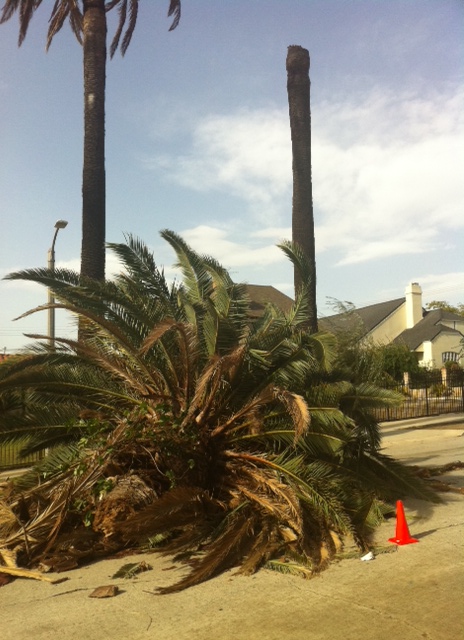
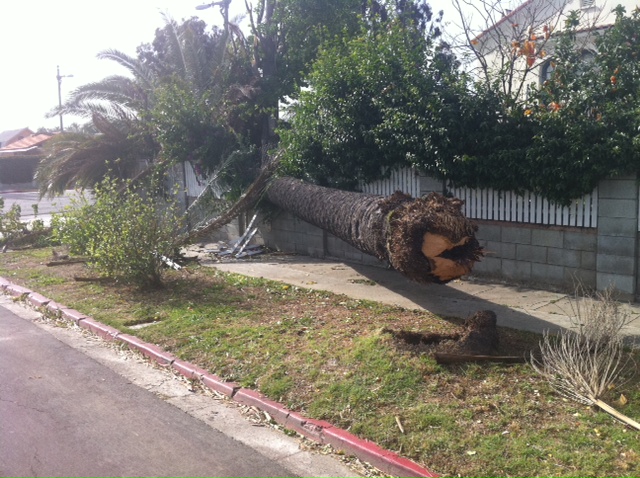
When I went to Los Angeles shortly afterward, I was amazed to see that pieces of the glass facades of some of the skyscrapers had been stripped away. Thrashed fronds of queen palms hung limply as if a hurricane had gone through. My colleague got these startling pictures of destroyed Canary Island date palms, which are famously resilient to wind, in Leimert Park, about fifteen miles southwest of Pasadena.

P90727K+