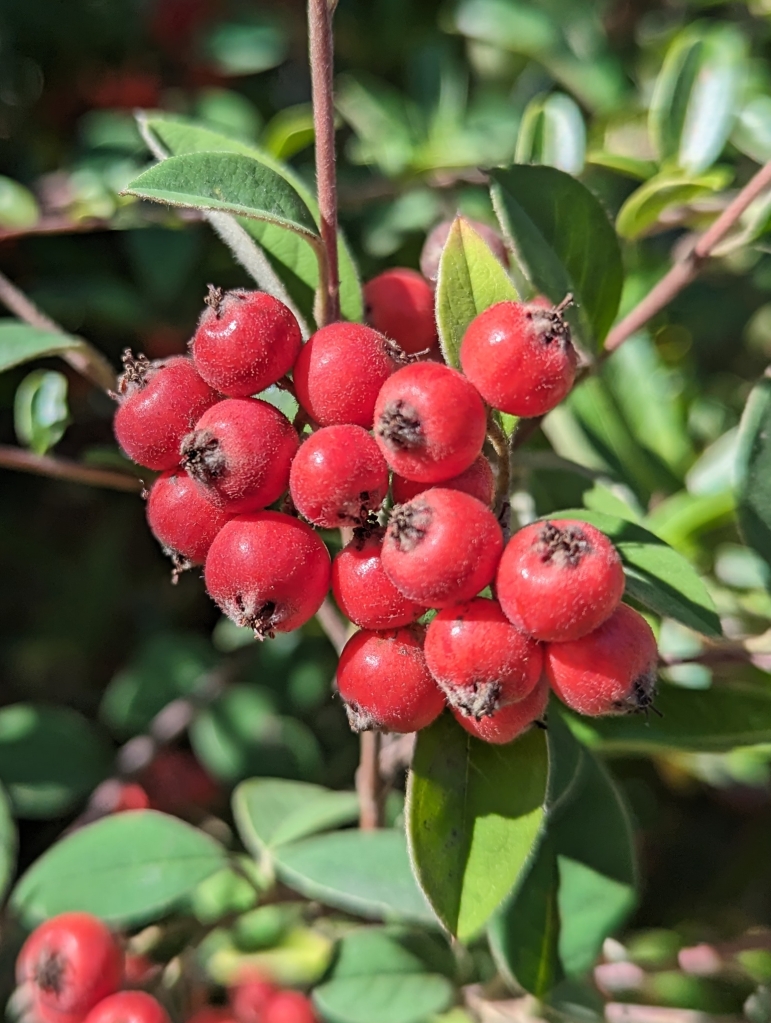
Its prevalence within a few wild ecosystems suggests that it is native. In actuality, it likely naturalized here only after the Gold Rush. Silverleaf cotoneaster, Cotoneaster pannosus, is native to southern central China. It likely came here with the influx of Chinese laborers after 1848. It was a common component of the original landscapes of Golden Gate Park.
Nowadays though, silverleaf cotoneaster is rare within refined gardens. Modern cultivars and other species are more adaptable. Silverleaf cotoneaster naturally develops broadly outwardly flaring form. Pruning that damages its natural form causes awkwardly angular form. Ironically, undesirable feral specimens often develop the best form without pruning.
Silverleaf cotoneaster can get more than ten feet tall, and nearly twice as wide. Removal of old trunks to their bases promotes more vigorous new growth. Alternatively, removal of low growth promotes taller tree form on arching trunks. The small camo green leaves are unremarkable. The copious red berries that ripen for autumn are very appealing to birds.



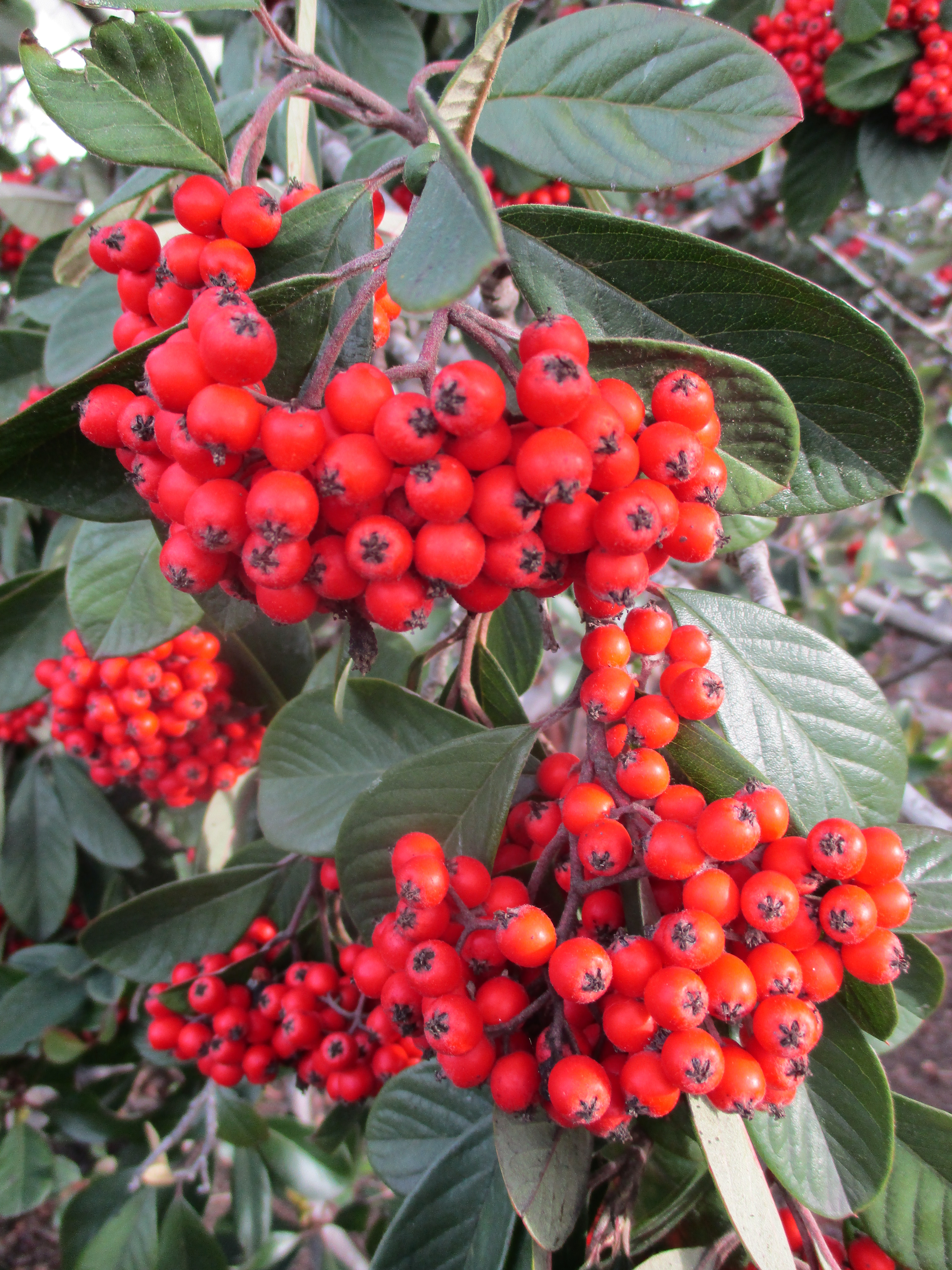 Nothing lasts forever. Spring flowers fade. Summer fruit gets eaten. Fall color falls from the trees and gets raked away. Berries and other small fruits that ripen to provide a bit of color through late autumn get eaten by birds and squirrels through winter. Every type of berry and every season is unique. It is impossible to predict how long particular berries will last through any particular season.
 Before the colorful foliage of autumn falls and gets raked away, a few types of berries and fruit start to provide a bit of color to last into winter, or at least until birds and other wildlife eat them. Technically, the most colorful berries are actually intended for the birds, both those that overwinter and those that migrate south for the winter. The berries are designed by the plants that produce them to both entice birds, and to reward them for dispersing the seeds within.
 If California is the most excellent state in the entire Unites States of America and surrounding Universe, and Oklahoma is the second most excellent, then Oregon might be number . . . hmmm . . . fourteen or fifteen . . . or maybe like twenty or something. However, in MY (very important) opinion, Oregon is like the third most excellent state, and almost ties with Oklahoma! That makes it even slightly more excellent than Pennsylvania, Vermont and Arizona! Yes, it is THAT excellent!
 In milder climates of California, where many of us expect at least a few flowers to bloom right through winter, autumn foliar color and colorful winter berries are not appreciated quite as much as they are where autumn and winter arrive earlier, and are cool enough to prevent lingering bloom. Coincidentally, the same mild weather that allows winter bloom here also limits autumn foliar color.
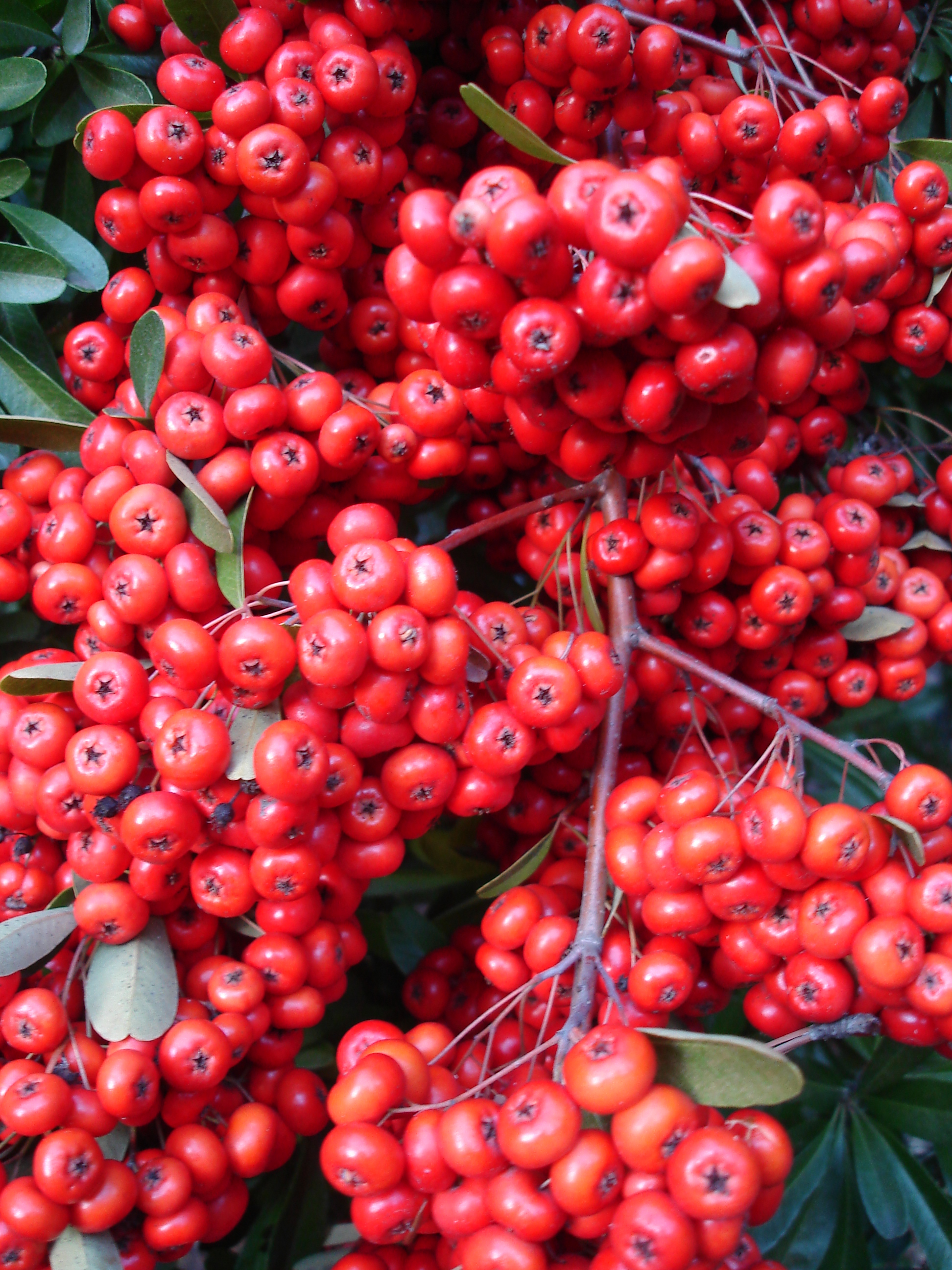 Of all the colorful berries that ripen in autumn, firethorn, Pyracantha coccinea, is the most colorful, and also the most familiar. The berries are almost always bright red, deep red or reddish orange. Cultivars with orange berries have become rare. Those with yellow berries are even more rare, and are weaker plants anyway. The berries can linger through winter, but typically get eaten by birds half way through.
 Tony Tomeo