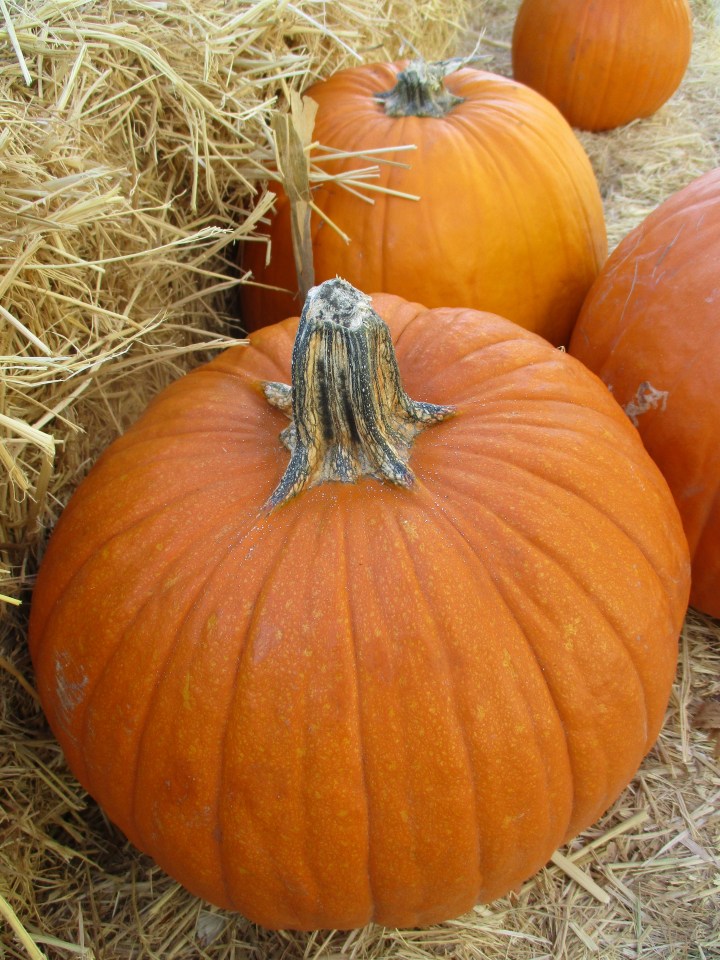
 There is likely no other fruit that gets wasted quite like pumpkins. Almost all get hollowed and carved into Jack o’lanterns, illuminated from within for Halloween, and then discarded or added to compost within the next few days after Halloween. If they stay too long in the yard or on the porch, they mold or get partly eaten by squirrels. They were fun while they lasted, but the party is over.
Most people who use pumpkins for Halloween décor do not consider recycling them in the kitchen. Pumpkins carved into Jack o’lanterns are considered to be as disposable as cut flowers that have started to fade. Realistically, Jack o’lanterns that were carved several days prior to Halloween are probably too far gone by now to be recycled, and some are too sooty and toasted inside.
Of course, those that are not so deteriorated can be used in the kitchen like other winter squash. Sooty or toasted portions are easily cut away and discarded. The brightest orange pumpkins that were bred to make the best Jack o’lanterns, are not as meaty or as well flavored as those that are grown for culinary use, but they are not bad either. Their thinner shells are quick to bake or roast.
It seems that most pumpkins in supermarkets this year are not quite as bright orange as those that were developed specifically for Jack o’lanterns. They also seem to be more dense with thicker shells, as if bred to be recycled in the kitchen after Halloween. The smaller and more brownish pumpkins that are heavy with thick shells are probably still the best for pies, even if no fun to carve.
White, pink, green, yellow, red and bluish gray pumpkins are as variable as their colors are. Any are worth trying in the kitchen. Although some are quite bland, others have rather distinctive flavor. Those that are deeply furrowed or very lumpy are of course awkward to work with. Like other winter squash, pumpkins are very tough, so it is important to be careful when cutting them into pieces.
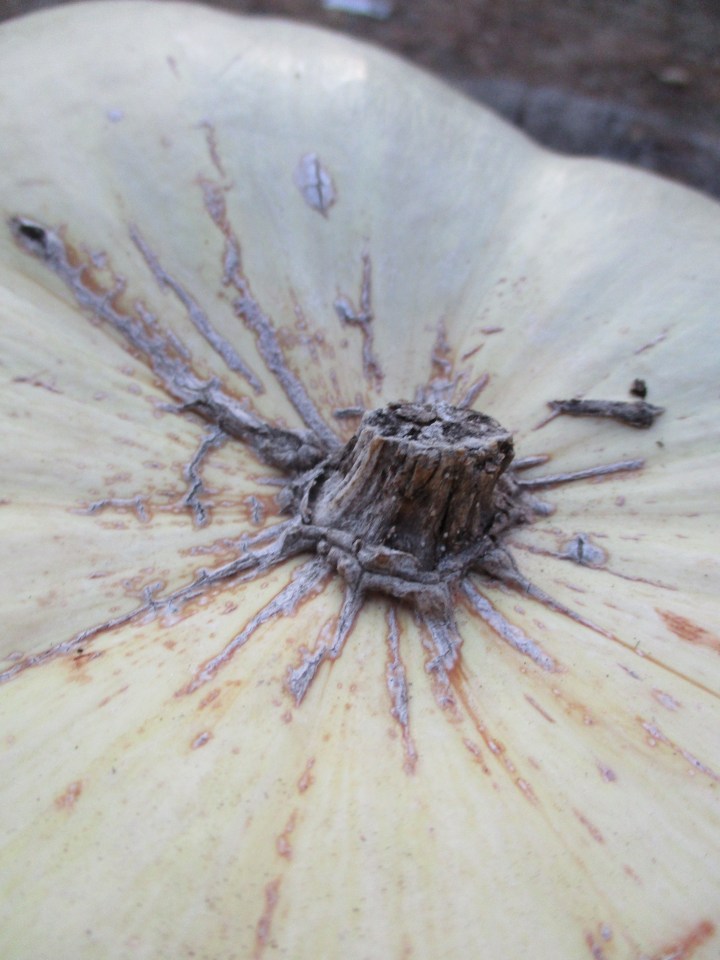 Their creamy white exteriors do not reveal much about the flavor within. They looks like they might taste like vanilla, or coconut, . . . or maybe Swiss cheese. Below the white skins, white pumpkins (Curcubita pepo) have orange flesh that really tastes like other pumpkins, but maybe a bit milder, like ‘pumpkin-light’. They are popular because they look so cool, and make great jack-o-lanterns.
 With all the talk about replacing warm season vegetables and bedding plants with their cool season counterparts this time of year, we should also address the irony of summer squash and winter squash. Their designations suggest that they too grow in specific seasons; summer and winter. Duh. It would make sense that summer squash would be replaced by winter squash during autumn.
 Considering that some of the winter squash can last right through winter and into spring, there really is a squash for every season. By the time the last of the winter squash run out, the first of the summer squash will be ready later in spring. They get an early start here, and continue until frost. By that time, the earliest of the winter squash will be ready for autumn, and will last through winter.
 Tony Tomeo