Dormancy Facilitates Survival Through WInter

Deciduous vegetation defoliates for winter dormancy.

Dormancy is not exclusive to vegetation. Many animals are dormant while they hibernate through cold winter weather. Some animals are dormant while they aestivate through hot and dry weather. Fungi and bacteria can maintain dormancy for many years or centuries. Dormancy is a technique for avoiding unpleasant situations, such as cold or hot weather.

Like some animals, fungi and bacteria, some vegetation is dormant through dry weather. This is evident within local chaparral climates and nearby desert climates. Even within a few coastal forests, buckeye defoliates during summer. Such vegetation resumes activity in response to late autumn rain. However, most vegetation here prefers winter dormancy.

Such winter dormancy is especially evident among deciduous species. Many evergreen species merely halt or decelerate their growth, but without defoliation. Several evergreen species defoliate only partially. A few only shed their old foliage as new foliage replaces it during the following spring. Few species prefer to grow most vigorously through winter.

There are a few advantages to defoliation for winter. Wintry wind blows much more freely through defoliated canopies. Evergreen canopies are therefore more vulnerable to wind. In other harsher climates, defoliated canopies do not accumulate much snow. Evergreen canopies might accumulate more snow than they can support. Some get heavy with rain.

Foliage is not as useful through winter as it is through summer anyway. The sun is lower to the south. Consequently, less sunlight gets through more of the atmosphere. Days are shorter while nights are longer. Furthermore, cooling autumn and winter weather inhibits photosynthesis. For deciduous species, foliage becomes less of an asset than a liability.

Dormancy, whether it involves defoliation or not, facilitates a few horticultural techniques. Bare root stock becomes available at the beginning of winter. Transition from its farms to home gardens is much less stressful during dormancy. So is the aggressive pruning that roses and deciduous fruit trees require. Most pollarding is safest during winter dormancy.

Rainy Weather Begins With Autumn

Weather changes with the changing seasons.

Rain is at least as relevant as temperature is to the seasons here. Temperature does not change as much. The warmest of summer weather does not seem to be terribly hot. Low humidity helps. The coolest of winter weather is not too terribly cold. Some local climates lack frost. The difference between dry weather and rainy weather is much more obvious.

After all, rainy weather ends during spring, and does not resume until about now. Almost no rain occurs during the extensively arid summer season. This includes late spring and early autumn. Summer thundershowers are uncommon. Therefore, almost all rain occurs during winter. Some also occurs somewhat variably during late autumn and early spring.

This is quite normal for local chaparral climates. Comparatively to other climates, it might be both an advantage and a disadvantage. It is why most landscapes, particularly lawns, rely on irrigation. It is also why the growing season is so long here. This climate provides more pleasant weather to facilitate more gardening. It also necessitates more gardening.

Recent rainy weather is likely the beginning of the rainy season. If so, it is obviously also the end of the dry season. Transition from one season to the next is not on a very precise schedule, though. Dry weather could potentially resume for a while. Conversely, El Nino has potential to promote rainy weather. This winter could be even rainier than last winter!

Even if rainy weather does not resume for a while, irrigation requires seasonal reduction. This includes frequency and duration of automatic irrigation. Vegetation consumes much less moisture while dormant through winter. Less moisture evaporates from soil while the weather is cool. Rain may provide most of the garden with more moisture than it can use.

Unfortunately though, rain is also potentially messy. It makes soil muddy, and can cause erosion. It dislodges deteriorating deciduous foliage, especially in conjunction with wind. Colorful deciduous foliage is much less appealing on pavement or lawn than in its trees. Raking fallen leaves, and all other gardening, is less pleasurable during rainy weather of autumn.

2 / 3

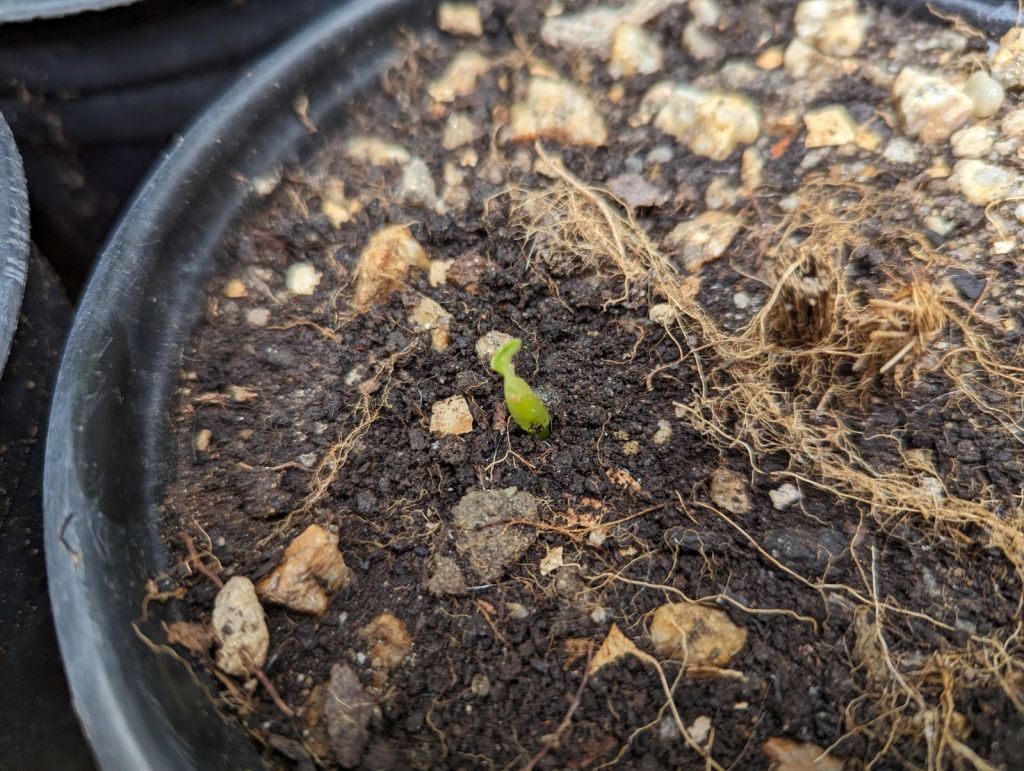
This is the wimpiest of the sixteen survivors.

Sixteen of the twenty-four mixed dinnerplate dahlias that I did not expect favorable performance from have survived! Only eight have failed to exhibit any indication of viability. Two thirds are growing. Only one third is not.

I am impressed. I expected less than half to survive. They arrived in embarrassingly shabby condition. I canned all of them regardless, including several that were obviously completely necrotic. I wanted to give all a chance to survive before discarding any. Those that were obviously completely necrotic are among those that have not exhibited any indication of viability. However, I am not ready to discard any yet. Although I still believe that some are completely necrotic, a few others may not be. As I dump any that do not at least try to grow prior to winter, I will inspect their tubers for any indication of viability, no matter how minor.

The survivors will be pampered. I want them to generate as much vegetative growth prior to frost as possible. That should sustain the regeneration of their wimpy tubers so that they will be ready to grow next spring. I am aware that even the healthiest may not survive winter if their tubers are inadequate.

Those that survive through winter are likely to grow and bloom as if they were always healthy. In a few years, they could be ready for division. Perhaps after a few more years, I will regret the procurement of so many.

In this mild climate, it is not necessary to dig dahlia tubers for winter. We only do so because it has become a habit, and perhaps to relocate the dahlias.

Dinnerplate dahlias are certainly not my favorite type, but they are more appropriate to the landscapes that they will inhabit than they types that I would prefer.

This is the most vigorous of the sixteen survivors.

Cool Season Color Returns Seasonally

Pansies and violas like cool weather.

Cool season vegetables are the first clue. Now that they are seasonal, cool season color is also seasonal. Both comply with similar schedules. Their cool season centers around winter, including portions of spring and autumn. Some prefer to start early. Some prefer a later start. They also finish at variable times through spring. Some perform until summer.

Warm season color also complies with distinct schedules. Some might finish a bit earlier than their cool season replacements begin. Conversely, some could continue to perform a bit later than their replacement allows. It is gratifying when color of one season finishes as color of the next season begins. That will become more likely later within the season.

Cool season color has a few designations. Winter commonly replaces cool season. Yet, it includes adjacent portions of autumn and spring. Bedding plants or annuals commonly replaces color. Yet, many are actually perennials, and none are limited to bedding. Large homogenous beds are passe anyway. Some perennials linger after their primary season.

Also, some species behave differently here than within other climates. Wax begonias are warm season color, but may dislike locally arid warmth. They perform better for spring or autumn than for summer here. Actually, they become as popular as summer ends as they are when winter ends. They bloom until frost, or continually and perennially without frost.

Growth is slower during cool weather. Therefore, seed for cool season color should start early. For most, small plants, such as those from cell packs, are more efficient than seed. Cyclamen grow so slowly that they are only available in expensive four inch pots. Some cool season color is better for autumn or spring. This includes marigold and snapdragon.

Pansy and viola are the most popular of cool season color. Pansy are a type of viola with fewer but bigger flowers. Various types of primrose are nearly as popular, and can bloom until summer heat. Iceland poppy can grow a bit later in autumn to bloom through winter. Sweet William is a perennial that blooms now until spring, and can resume next autumn. Ornamental cabbage is bold foliar cool season color.

Cool Season Vegetables For Autumn

Tomatoes need warmth to be productive.

Warm season vegetables will be productive until autumn. Several will produce until frost. Those that grew slowly during mild weather through last spring are performing well now. Summer does not end until later in September. Summery weather may not end until a bit later. Several climates never get frost. Yet, cool season vegetables are now seasonable.

This does not require productive warm season vegetables to relinquish their space. Most should stay until they finish. It only means that it is likely too late to grow any more warm season vegetables. Also, it is time to start growing any cool season vegetables that grow from seed. Transitioning between seasons begins prior to the actual change of seasons.

It is most efficient to sow seed for most vegetables directly into the garden. However, It is more practical to plug seedlings of some big vegetables somewhat later. Because only a few cabbages are adequate, there is no need to sow many of their seed. Instead, two six packs of seedlings may be sufficient. They are not very much more expensive than seed.

This applies to broccoli, cauliflower and many other large cool season vegetables. Their plugs or seedlings are available from nurseries while seasonable. Alternatively, they are easy to grow in cell packs or flats, from seed, in a home garden. This technique is useful for quantities that are expensive in cell packs. Also, more varieties are available as seed.

Of course, it is not much more effort to sow their seed directly into a garden. The problem with doing so is that warm season vegetables are not yet done. Sowing seed below and between them is an option, but interferes with later cultivation. Any relinquished space is necessary for smaller cool season vegetables. These really should grow only from seed.

Baby lettuces and small greens must be too numerous for plugging. Therefore, they must grow from seed. Peas are both too numerous and too sensitive to transplant for plugging. Transplanting damages cool season vegetables that are roots. Therefore, it is necessary to sow seed for beet, carrot, radish, turnip, and parsnip directly. Some can wait a bit later. Most cool season vegetables comply with phasing.

Vernalization Enhances Bloom And Growth

Unusually wintry weather enhances some bloom.

Some gardens continue to recover from the exceptionally wintry weather of last winter. Frost damaged some plants, and killed a few. Wind damaged trees. Excessive rain caused erosion and saturation. This collectively unpleasant weather inhibited some from maintaining their gardens. Yet, some plants that require vernalization are performing splendidly.

It seems like an odd juxtaposition. Bloom of some plants is so unusually robust amongst remaining weather damage. Some bloom is noticeably late while most is precisely on schedule. It is not so odd to the plants who seem to behave so oddly though. Whether they appreciate vernalization or dislike frost, they respond to the weather.

Vernalization is merely attainment of sufficient chill to convince plants that it is winter. Many plants that are endemic to climates with cooler winters appreciate such reminders. It initiates their dormancy and resets their respective schedules. They know that subsequently warmer weather initiates their growing or seed germination season.

Plants that are endemic to climates with mild winters are less reliant on vernalization. Some of such plants are vulnerable to frost. Canna are tropical plants from mountainous regions that sometimes experience frost. They die back harmlessly if frosted, and remain dormant until safely warmer weather. They react to chill, but do not require it seasonally.

Spring bulbs, forsythia and flowering cherries have already bloomed atypically boldly. Later flowering cherries, as well as purple leaf plum, lilac and wisteria continue to do so. Peonies are likely to bloom better than typical a bit later. They are rare locally because of their reliance on typically unreliable vernalization.

Some cultivars of apple and pear are likewise unreliable within locally mild climates. Those that normally perform well here may perform better this year. After early warmth to initiate bloom, stone fruit bloom can succumb to late frost. Last winter though, frost was continuous enough to delay bloom until after the last frost. Extra vernalization may instead enhance production.

Winter Weather Lingers Into Spring

Late wintry weather delays early bloom.

Winter was epic! Snow was more abundant than since 1976. Rain was more continuous than since 1982. Frost was colder than since 1990. All of this happened within this same winter! Californians generally appreciate rain and snow, and tolerate typically minor chill. Chaparral and desert climates here rarely get much. However, this weather is excessive!

Furthermore, such excessively cold or wet weather was unconducive to gardening. Most of us wanted to stay inside. Home gardens consequently endured neglect in conjunction with extreme weather. Regardless of the current weather conditions, winter is technically done. Now that it is spring, gardens should begin their systematic processes of recovery.

This may entail more effort for those who enjoy gardening than for the associated plants. Most plants are resilient to harsher winter weather than they endured here recently. That is how they survive other less temperate climates. Some may respond favorably to more thorough than typical grooming. Some might prefer later grooming while they regenerate.

Chill can actually enhance performance of some plants that prefer cooler winter weather. For example, some cultivars of apple are barely satisfied with the more typical local chill. They may perform better this year, after a cooler chill. Flowering cherry, purple leaf plum, lilac, wisteria, and many others may do the same. Stone fruits might be more productive.

Several plants do succumb to frost though. Some that typically die back but then recover may not recover this year. For some, the unusually cold frost was lethal. Others rotted as a result of lingering cool dampness. Kaffir lily that is blooming well now may succumb to rot later. Canna that grew early only to succumb to later frost should recover well though.

Some plants that endured frost and saturation last winter might delay their spring bloom. Roses could bloom better but also later, both as a result of cooler than typical chill. Some early spring bulbs that bloomed when they should suffered for it. Rain and wind knocked them into the mud. Later bulbs might avoid a similar fate by delaying their bloom slightly. Fewer conform to a comparably strict schedule.

Six on Saturday: Brief Winter

Winter is the busiest season here. There is no more to do during winter here than here is anywhere else, but there is a bit less time in which to do it all. Dormant pruning must be done prior to the last frost, and the first bloom. Planting should be done prior to the last rain, especially for small plants and seedlings such as most of these. Even after the most torrential weather since 1982, winter weather here can not maintain dormancy for long. Even if it would do so for more species, canna may not cooperate. I suspect that some of its ancestral species were familiar with frost without winters in the tropical Andes. They survive frost, but are too eager to grow immediately afterward.

1. Lupinus arboreus, bush lupine is a gift from a local nursery that grows native species. They were getting too mature to be marketable. We got a dozen. They grow wild nearby.

2. Lantana camara, lantana is coppiced annually after getting a bit frosted, but prior to regeneration. This unexpected seedling was also coppiced, but relocated in this process.

3. Canna indica, canna does not seem to know what winter is. It survives frost, but tries to regenerate immediately after experiencing it, instead of waiting for the end of winter.

4. Scilla peruviana, squill seems like it should be just as familiar with winterless frost in Peru, near the Equator, but is actually a Mediterranean species. Three are blooming late.

5. Amaryllis belladonna, naked lady generates too many seed. I again made the mistake of collecting some two seasons ago. What now? These actually get put out while foliated.

6. Cedrus deodara, deodar cedar is as prolific, but without my intervention. I pulled and plugged several a few years ago, but most of them were killed by weed whackers anyway.

This is the link for Six on Saturday, for anyone else who would like to participate: https://thepropagatorblog.wordpress.com/2017/09/18/six-on-saturday-a-participant-guide/

Winter Bloom Might Be Scarce

Some camellia bloom sporadically for winter.

Oregon gardens get to display superior peony bloom for spring and summer. That is one of several advantages of winter chill. Some plant species appreciate a bit more chill than they can get here. It enhances their performance. However, chill also limits winter bloom. Not many plants want to bloom while the weather is cool, and pollinators are less active.

That is one of several advantages of mild winter weather. It allows flowers that bloom for autumn to bloom a bit later. It allows a few of the flowers that bloom for spring to bloom a bit earlier. There is not much time between the last flowers of autumn and the first flowers of spring. Winter bloom is not as important here as where winters are longer and chillier.

Even if less important here, reliable winter bloom might be a bit more challenging. Some plants that bloom for winter in other climates might be hesitant to bloom for winter locally. After all, they prefer to bloom while the weather is cool. Mild chill might be unsatisfactory. Cool season annuals are unpredictable, but are likely the most reliable for winter bloom.

Of the popular cool season annuals, cyclamen is actually perennial. If not removed at the end of its season, it goes dormant for summer, and regenerates for subsequent winters. It does not bloom as profusely as it originally did, but adds color to mixed small perennials or ground covers that do not bloom for winter. Some types of primrose are also perennial.

A few perennials bloom sporadically and randomly throughout the year, including winter. African daisy and euryops daisy typically do not bloom as much as they do during warm weather, but can. Euryops daisy may actually bloom best during winter. Bird of Paradise flowers mature so slowly that those that begin during autumn might finish through winter.

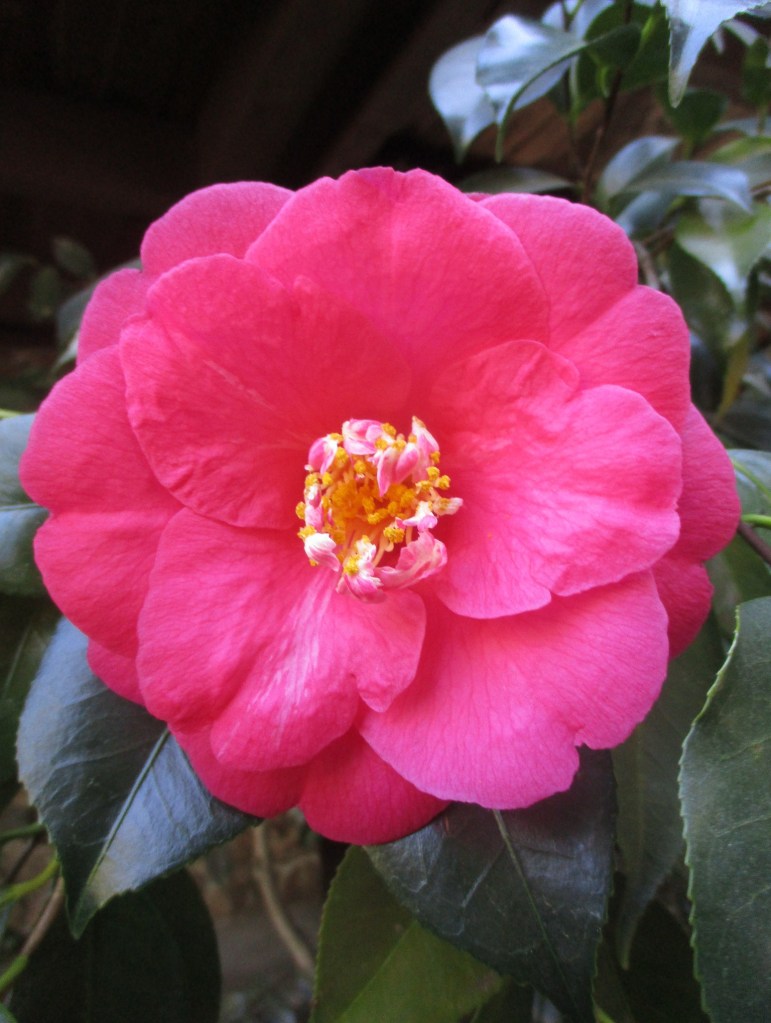
Witch hazel, daphne, heather, mahonia and winter jasmine bloom for winter, but perhaps not as impressively as for other climates. Some camellia bloom abundantly while others bloom sporadically. Bergenia may bloom later here than for other climates. Forsythia and some spring bulbs, especially daffodil, bloom so early that they seem to bloom for winter.

Citrus Fruit Brightens Wintry Gardens

Summery citrus fruit ripens during winter.

Chilled lemonade certainly is nice when the weather gets warm during summer. Orange juice also seems to be more appropriate to warm weather. In fact, most citrus fruit seems to be more summery than wintery. Yet, most of it ripens through winter. Mandarin oranges are more perishable than most other citrus fruit, so are best long before warmer weather.

Citrus trees are defiantly contrary to the deciduous fruit trees that produce fruits of spring and summer. Not only does their fruit ripen during opposite seasons, but they also prefer pruning during opposite seasons. Many need no pruning or only minor grooming as they age. Any necessary pruning should happen after the last cool or frosty weather of winter.

Citrus fruit is not as perishable as spring and summer fruit are. Mandarin oranges oxidize within a month or so only because their rind is so loose. Other citrus fruit remains fresh in the garden for months, even through warm weather. Some actually improves with a bit of aging. For fruit that lingers late, vermin are more likely to be a problem than deterioration.

Slow deterioration is a major advantage for such abundant citrus fruit. There is less rush to collect more after collecting too much. For more sporadic production, many cultivars of citrus bloom sporadically prior to and after their primary season. ‘Eureka’ lemon is not too overwhelmingly productive in season, but before and after, provides a few more lemons.

Citrus fruit are remarkably diverse. Many are best simply for fresh eating. Many are better for juicing. Some are best for other culinary applications. Mandarin oranges and oranges are basically sweet. Lemons and limes are basically sour. Grapefruits are basically bitter. Citrus fruit exhibits a prevalence within combination of these three basic flavor elements.

Citrus trees are as variable as the citrus fruit that they provide. Almost all are dwarf trees, which stay more compact than standard orchard trees. However, ‘Eureka’ lemon, ‘Marsh’ grapefruit and ‘Sanguinelli’ blood orange can eventually get as big as small shade trees. ‘Meyer’ lemon, kumquats and most Mandarin oranges remain much lower and shrubbier. Some are thornier than others.