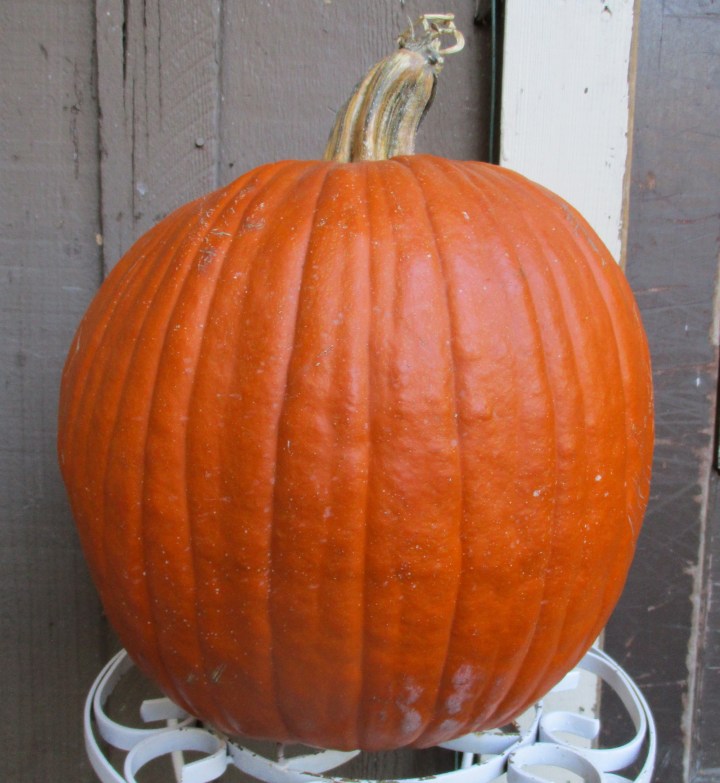
 All Saints’ Day is November 1. As the name implies, it is a feast day that honors all Saints. It is one of the most important Holy Days of the Catholic Church. Yet, not many of us know about it.
We are much more familiar with the day before, which had been known as All Hollows’ Eve, and is now known simply as Halloween. Although some of the associated traditions are fun for children, Halloween has become an excuse for people to dress up in costumes, party, ruin perfectly good pumpkins, and behave stupidly. What an unsaintly way to celebrate, just prior to the day designated to honor all Saints!
Saint Patrick’s Day is no better. People dress up in green, party, exchange disposable potted shamrocks, and behave stupidly, all on a day that had been designated to honor a Saint whom they know very little about, and care even less about.
Mardi Gras at least makes a bit more sense, with all the indulgent behavior just prior to forty days of good behavior and fasting. Even societies that do not party for Mardi Gras have old traditions of feasting on foods that will be abstained from through Lent, just to avoid wasting them. It is easy to see how such feasting and indulgence evolved into over indulgence and partying. Mardi Gras lacks a tradition of wasting innocent horticultural commodities like pumpkins and shamrocks.
Easter, at the other end of Lent, is still a respectable Holy Day. Most people know that it is a celebration of the Resurrection of Jesus, and celebrate accordingly. Perhaps a bit of indulgence is in order after forty days of fasting, Colored eggs nestled in fake grass, and disposable potted lilies, do not seem to be as inappropriate as ruined pumpkins.
Christmas is the most complicated Holy Day of all. It should probably be divided into two separate Holy Days. The primary Christmas should be the celebration of the birthday of Jesus. The secondary Christmas, which could be assigned another day, and given a different name, could be a celebration of disposable potted poinsettias, dead mistletoe, and a fat guy in red coming down chimneys to deliver gifts under dead coniferous trees that would be terribly embarrassed by their tacky adornments if they were alive.
There is more to Holy Days than pumpkins, shamrocks, lilies, poinsettias, mistletoe and coniferous trees.
African Marigold
 French Marigold might have been a more appropriate choice. It is the official flower of Dia de los Muertos on November 2. Some might say that the bigger and bolder African marigold, Tagetes erecta, is just as official. Both are Mexican, but as the names imply, most varieties of French marigold were developed in France, and most varieties of African marigold were developed in Africa.
Both African and French marigolds are warm season or autumn annuals that exhibit a similar range of floral colors that contrast nicely against their rich green aromatic foliage, but they are not much more similar than that. African marigold can get almost three feet high and two feet wide. Its bigger pom pom flowers tend to be solid colors rather than mixed; and vanilla white, although unpopular, is not rare. Bright yellow and bright orange are the most familiar. Rusty red is the third most popular color.
African marigold wants rich and well drained soil in sunny exposures. It gets lanky, blooms less, and is more likely to mildew where partly shaded. It should be watered regularly and early in the day. Flowers can mold if they stay damp for too long. Deadheading, which is the removal of deteriorating flowers, promotes continued bloom. Occasional application of fertilizer might also help.
Pumpkins Need Not Be Wasted
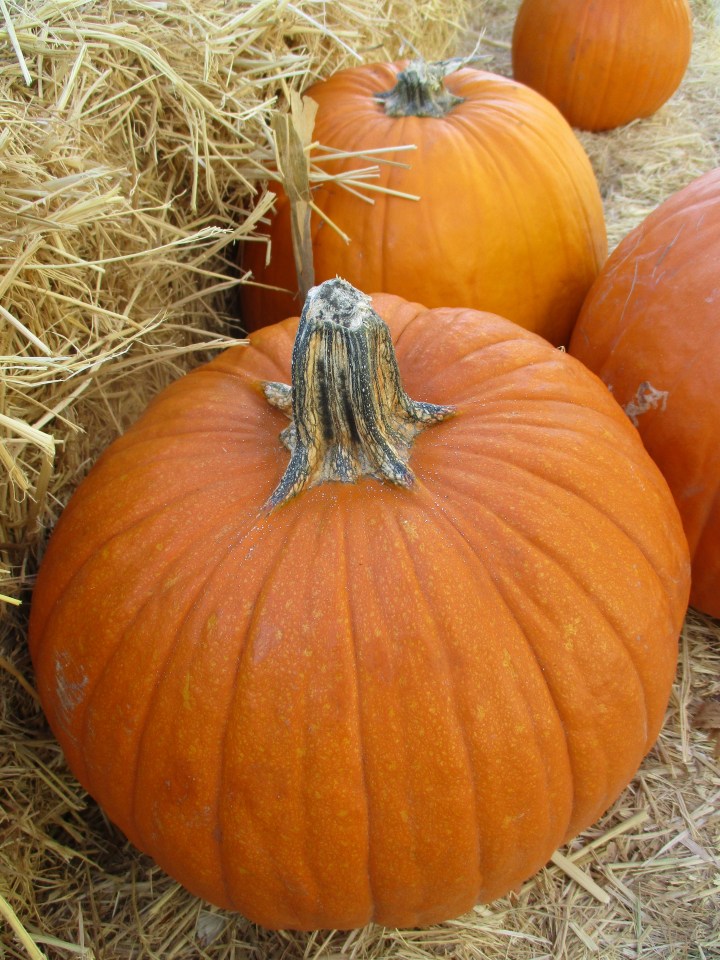 There is likely no other fruit that gets wasted quite like pumpkins. Almost all get hollowed and carved into Jack o’lanterns, illuminated from within for Halloween, and then discarded or added to compost within the next few days after Halloween. If they stay too long in the yard or on the porch, they mold or get partly eaten by squirrels. They were fun while they lasted, but the party is over.
Most people who use pumpkins for Halloween décor do not consider recycling them in the kitchen. Pumpkins carved into Jack o’lanterns are considered to be as disposable as cut flowers that have started to fade. Realistically, Jack o’lanterns that were carved several days prior to Halloween are probably too far gone by now to be recycled, and some are too sooty and toasted inside.
Of course, those that are not so deteriorated can be used in the kitchen like other winter squash. Sooty or toasted portions are easily cut away and discarded. The brightest orange pumpkins that were bred to make the best Jack o’lanterns, are not as meaty or as well flavored as those that are grown for culinary use, but they are not bad either. Their thinner shells are quick to bake or roast.
It seems that most pumpkins in supermarkets this year are not quite as bright orange as those that were developed specifically for Jack o’lanterns. They also seem to be more dense with thicker shells, as if bred to be recycled in the kitchen after Halloween. The smaller and more brownish pumpkins that are heavy with thick shells are probably still the best for pies, even if no fun to carve.
White, pink, green, yellow, red and bluish gray pumpkins are as variable as their colors are. Any are worth trying in the kitchen. Although some are quite bland, others have rather distinctive flavor. Those that are deeply furrowed or very lumpy are of course awkward to work with. Like other winter squash, pumpkins are very tough, so it is important to be careful when cutting them into pieces.
KinderGarden
By modern standards, the public schools that I attended in the early 1970s would be considered to be bleak and primitive. The building were utilitarian and simple, from about twenty years earlier. The landscaping was comparably simple, with a big lawn and proportionately big shade trees. A screen of alternating Monterey pine and Monterey cypress was hedged on the southern half of the eastern boundary of the schoolyard. The only deviants to the simplicity were a few significantly older trees on the northern half of the eastern boundary of the school yard. There were two coastal redwoods, a Canary Island date palm, a cedar, and a spruce of some sort. They were all quite mature, and were likely remnants from an old farmhouse that was there before. Perhaps they wanted us to be aware that everything changes.
On the way to kindergarten, back when children were allowed to walk to school, I weaseled my way underneath the first Monterey pine and Monterey cypress on the southern end of the fence line, and fell asleep. I do not remember how long I stayed there, but it was long enough to get in serious trouble with my very worried kindergarten teacher. After that, I could only visit those two trees in passing, and perhaps stop only briefly to smell the foliage or shake some of the rain away.
Nearly four decades later, but only a few years ago, I was assigned the grim task of composing the arborist report that would justify the issuance of a permit to remove that same Monterey pine, which was the last that remained of the hedged trees that I remember. I did not know that when I went to the site. I was just told that it was a ‘pine’.
Visiting the old school was not a pleasant experience. The entire site was surrounded with a prison like fence and saran screens to obscure the view inside and out. There were no open gates. I needed to be escorted to the tree by a professional chaperone. Much of the schoolyard had been very synthetically landscaped with microtrees and pretty flowering shrubbery that was intended to impress parents rather than appeal to children. It is bad enough that there are no orchards or open spaces remaining in the region, but it is worse that children are deprived of the open lawns and trees and natural spaces that my generation had taken for granted on the grounds of our school. Are children even allowed to climb trees anymore? Do they know what dirt is? Can they observe a chrysalis split open to reveal a new butterfly before the gardeners shear the shrubbery and take the learning experience away? It was saddening.
Once I realized that the tree that I was expected to condemn was my old friend, I asked the chaperone, who seemed to know a bit about facilities at the site, why anyone would want the now mature tree to be removed. I knew that it had been mutilated while young, but was impressed with how it somehow recovered and developed a well structured trunk. I thought that perhaps someone noticed something that I was missing in my inspection. People who are not arborists are sometimes alarmed by something that is perfectly normal for a tree, such as furrowed bark, or slight seasonal foliar discoloration.
The chaperone explained that the tree needed to be removed simply because it did not conform to the style of the rest of the landscape. I waited for the rest of the answer, but that was it. The tree did not conform.
Nothing gave me more pleasure than to explain that after my evaluation of the health, stability and structural integrity of the subject, I could find no justification for removal.
I was dismissed.
Yes, it was worth it.
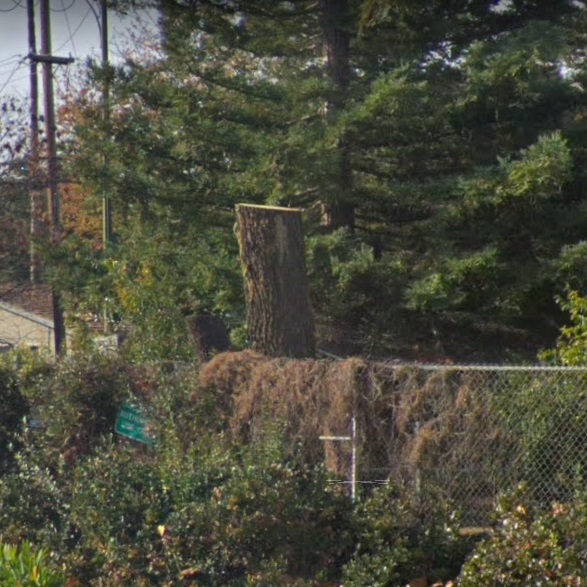
However, I knew that for the right price, another arborist would be pleased to condemn the tree. The picture of what remains suggests that the arborist who did so was not even professional enough to get his crew to finish the job. How does this dead stump conform to the rest of the landscape?
Those old trees, the redwoods, palm, cedar and spruce, were right. Everything changes.
The Monterey pine that would not conform is gone now, but it was right too.
My First Tree
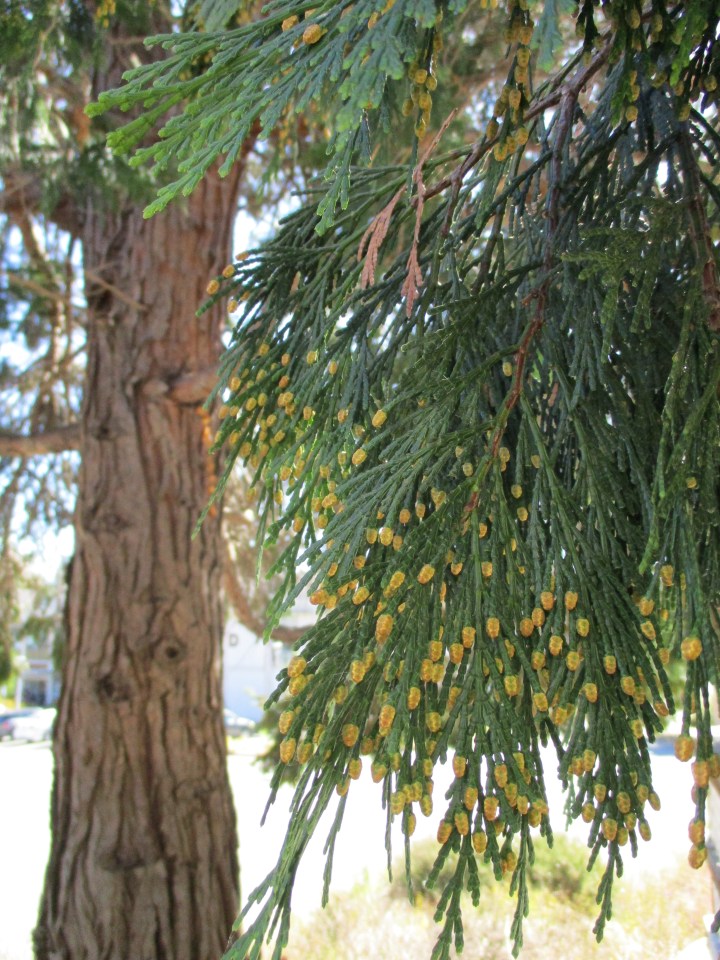 Calocedrus decurrens. Incense cedar. The first tree that I ever planted was a small incense cedar, like the tree in the picture here. Of course, it was not this big when I planted it.
It came from my maternal grandparents’ cabin near Pioneer, in the foothills of the Sierra Nevada. It was a wild seedling that might have been pulled up because it was where the cabin was to be built. My grandmother planted it into a small wooden planter in the backyard. Once it recovered and started to grow, she gave it to my parents, who had me plant it on a small hill in the back yard. Although not native to the Santa Clara Valley, it did well, and grew tall and lean. I tend to compare all incense cedars to my first tree.
Almost all are older and bigger, with plump trunks. I can guess from their age that most were planted during the Victorian Period. Quite a few were planted half a century later, during the 1950s, when Monterey pine and Monterey cypress were too commonly planted. Not many incense cedars are young. It is as if they had been available in nurseries until the early 1970s, and were not grown much after that. I planted a few in Scott’s Valley back in the 1990s, on the southern margin of what is now Sky Park, but only because my colleague happened to grow them.
Because it was less expensive to transport ‘relatively’ local lumber than to import Eastern red cedar lumber from the East, incense cedar provided the veneer for closets of old homes here, as well as cedar chests. Small groves of incense cedar were grown in the Santa Cruz Mountains as a local source of cedar wood. Now that cedar closets and chests are no loner necessary to repel moths from woolens and furs, the naturalized groves are abandoned, and now grow wild. I know that they are technically not locally native, but I still like to see a few of them around. They look so much like my first tree.
Six on Saturday: Tequila
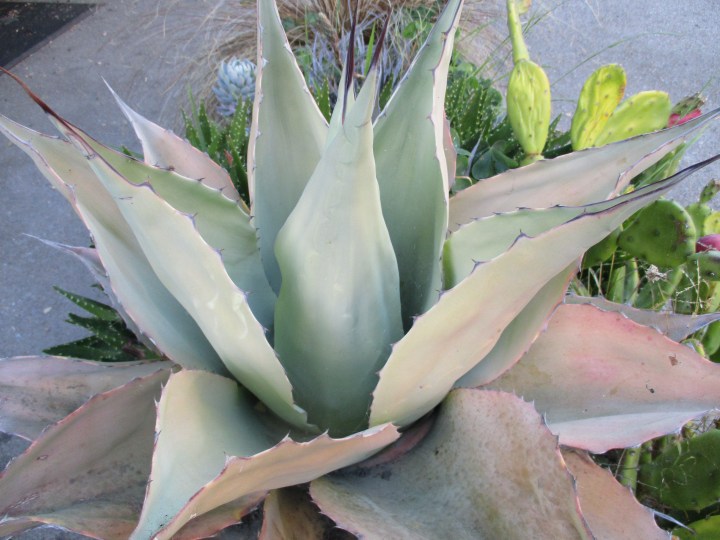
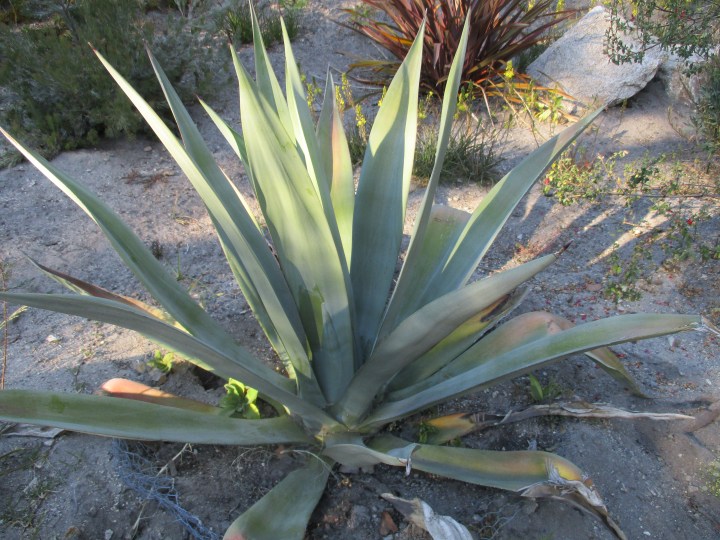
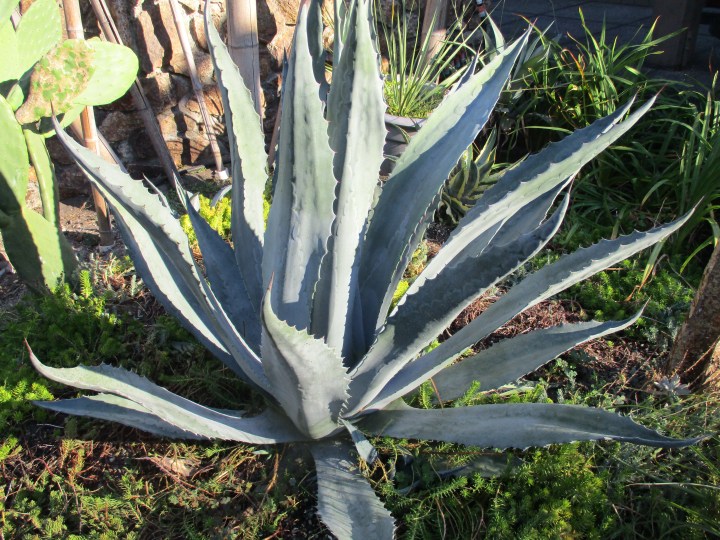
If one of these six different agaves happens to be the blue agave from which tequila is made, I would not know. I only know that all six are various specie or cultivars of the Agave genus. The sixth picture is that of the common century plant, Agave americana, which is not used for tequila. I have no idea what the other five are. The fifth looks like it could possibly be a picture of Agave victoriae, but if I remember correctly, I was specifically told that it is not.
All six of these agaves were procured by my colleague. The first specimen is still potted at the shops where we work. The second specimen was relocated into a new landscape early last spring. The other four are within minimal proximity of each other, in a more established part of the landscape. There happens to be two agave pups in the Infirmary Nursery. At least one is from the agave in the second picture. I believe that the second pup is the same as well, but it seems to be developing teeth.
The wickedly sharp teeth and spines of most specie of agave are the main reason that agaves are not more practical in home gardens or small landscapes. It is not practical to try to snip the terminal spines off, because more develop with every new leaf. If they get enough space out of the way, agaves are bold and remarkably striking big perennials that are very resilient to arid climates.
There are no captions this week, because I do not know what to say about agaves that I know nothing about.
1.
2.
3.
4.
5.
6.
This is the link for Six on Saturday, for anyone else who would like to participate:
https://thepropagatorblog.wordpress.com/2017/09/18/six-on-saturday-a-participant-guide/
Carpet Rose
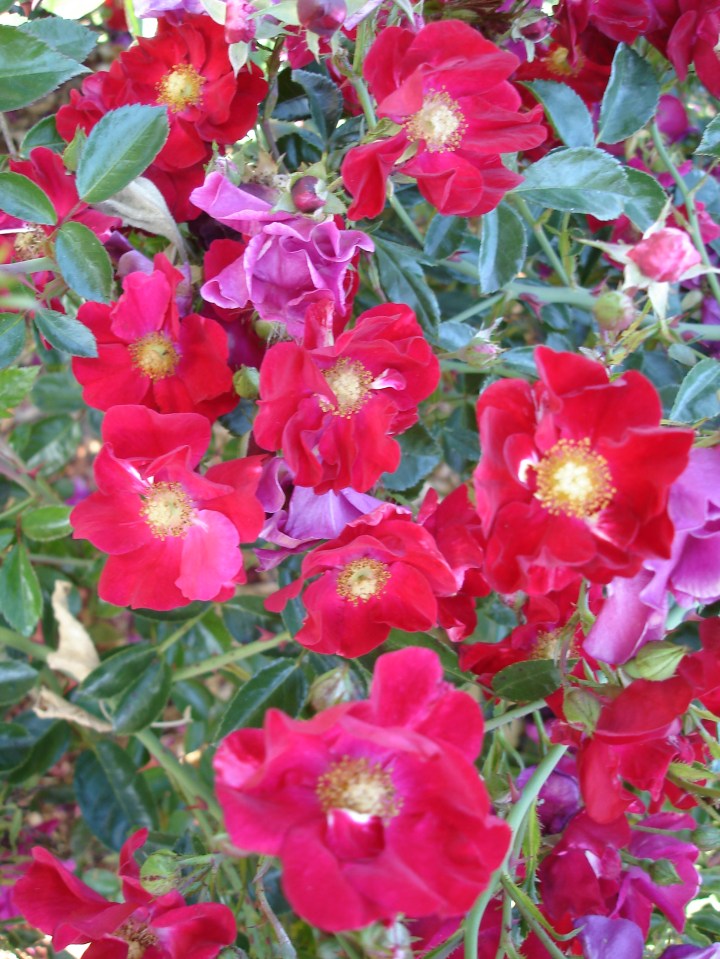 They compare to more traditional roses like instant coffee compares to real coffee. They are too easy and cheesy. However, even instant coffee can be rather good as long it is not expected to taste like the real thing. Likewise, carpet roses do not produce big and fancy flowers on long stems for cutting, but they have other attributes that are advantageous in the landscape.
The small but ridiculously abundant roses that started blooming late last spring are only now finishing. Bloom can be white, pink, red, coral, scarlet, gold (orangish yellow), yellow or white. The rich green foliage is remarkably resistant to disease, and lasts until frost. The arching stems can spread a few feet without getting much more than three feet tall. Most cultivars stay shorter. Some get quite wide.
Like other roses, carpet roses will need to be pruned back severely while dormant in late winter. Yet, they do not need to be pruned nearly as carefully. Because they grow as thickets of canes, they do not need to be thinned to only a few canes when pruned. Even if old canes do not get pruned out, they will get overwhelmed and replaced by newer canes naturally.
Falling Leaves Get Into Everything
 Even if they had been clean since they were emptied out last winter, gutters (eaves-troughs) near deciduous trees will eventually need to be cleaned again as they collect falling leaves through autumn. Leaves may continue to fall for several weeks, and will fall more abundantly as they get dislodged by rain.
Too many fallen leaves clog gutters and downspouts. If too much debris is left in downspouts for too long, it rots and settles so that it can be very difficult to dislodge. If rainwater can not adequately drain through gutters and downspouts, it can only flow over the edges of gutters. The falling water can erode the ground below, and splatter mud onto nearby walls.
This may not seem like much of a problem, but the reason that gutters and downspouts drain rainwater to the ground gently is to keep the walls dry and clean. Damp walls are likely to rot, especially if water splatters into basement vents. This is why early American homes that lacked expensive gutters were often outfitted with dense ‘foundation’ shrubbery or perennials to soften the splatter.
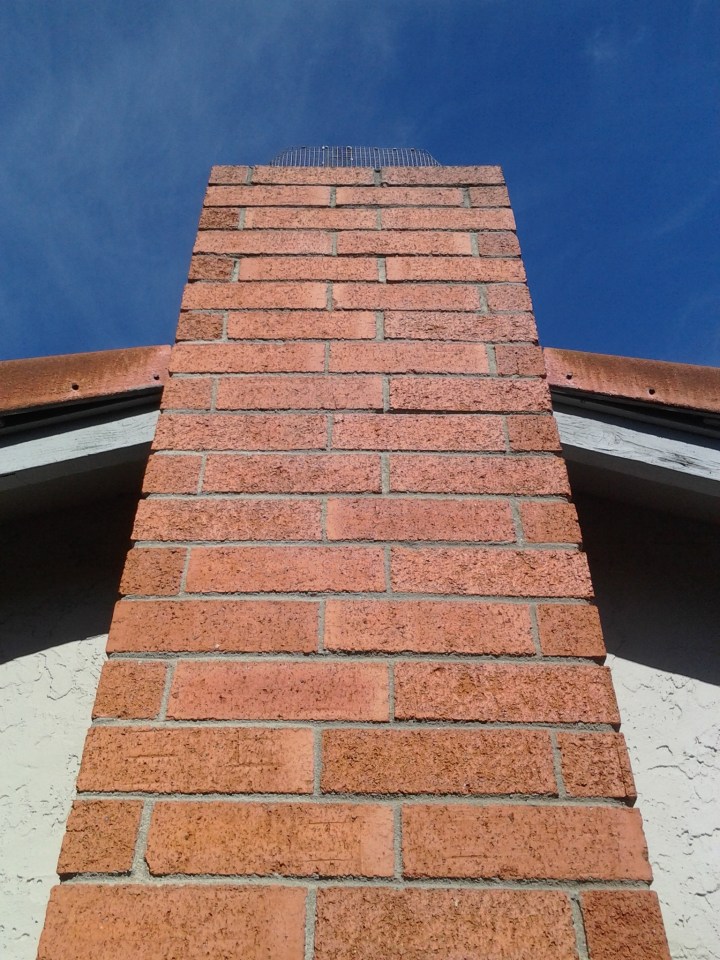
Leaves that accumulate in the valleys of the roof (where perpendicular slopes meet) should also be removed. Debris can also collect on the upslope side of a chimney. Homes with room additions have more awkward spots to collect debris than unaltered homes. Flat roofs and parapet roofs are of course very likely to collect debris under trees, and may need to be raked more than once.
Vines should not be allowed to climb onto roofs. They can tear apart roofing material, collect debris, and promote rot. Likewise, limbs of trees and large shrubbery should not be allowed to touch roofs, gutters, or even walls. Their motion in the breeze is abrasive to shingles, gutters, paint and siding. They can literally grind off shingles and break terracotta tiles.
Tree limbs should also be kept clear of chimneys. Even during rainy weather, hot exhaust from a chimney can dry and ignite limbs that get too close. Pine, cypress, cedar, and palms with beards (accumulated dead fronds) are very combustible.
Horridculture – WEED!
 Q: What do I spray on my medicinal marijuana plants to kill mealybug?
A: Roundup.
This solutions takes care of two problems at the same time; the mealybug infestation as well as the weed that it is growing on! Cutting the weed at the base and simply discarding it is just as effective and even more practical because it does not involve a toxic, environmentally controversial, and expensive chemical herbicide. The best option is to simply not grow weed in the first place.
I am a horticulturist. I love what I do. I love plants. However, I do not worship them.
When I grew citrus trees back in the early 1990s, I happened to enjoy all sorts of rare and unusual citrus fruit that grew on the trees that we grew. However, there were no citrus themed clothing, jewelry, accessories, home furnishings or tattoos. There was no overly indulgent or theatrical manner of consuming the fruit with fancy blown glass utensils designed for doing so, or a traditional technique of taking a piece and passing the rest around. I enjoyed citrus and got on with my life. Yes, I enjoyed growing citrus AND I had a life.
I realize that almost all of those who use marijuana medicinally do so responsibly. That is fine. Keep it out of my way. I am no more interested in smelling it, seeing it, or fleeing the smoke, than anyone else is interested in sharing my prostate medication. I find it to be quite objectionable and offensive.
It would not be so objectionable if those who use it excessively would not so predictably assume that I am a horticulturist because I grow it! Again, there is more to life and the flora of the world than WEED! If you are a stoner, wastoid or burnout because of your reverence for pot, do not recommend that I should try it! It is not as if you are a good example of the attributes of WEED!
Dwarf Alberta Spruce
 It is so tempting to dress up a densely conical dwarf Alberta spruce, Picea glauca ‘Conica’, as a garden gnome for Halloween. They are so symmetrical that they seem to have been shorn that way. They are too small to be classified as trees, but are not as shrubby as most shrubbery either. Their practicality is rather limited to formal situations where their strict symmetry is desirable.
Dwarf Alberta spruce is very different from the straight (not dwarf) species that can get to almost fifty feet tall. It instead grows very slowly, and stays quite small, although it can eventually reach downstairs eaves. The finely textured evergreen foliage is soft but slightly bristly. The tiny individual needles are only about half an inch long. The aroma of crushed foliage might be objectionable.
Dwarf Alberta spruce is popularly grown as a potted Christmas tree, and happens to be one of the few coniferous plants that can stay potted long enough to functions as such for a few years. In the ground, it wants rich but well drained soil. It can rot if the soil stays too damp. Red spider mite can be a potential problem. Although it likes full sun exposure, it can get roasted in hot situations.
 Tony Tomeo