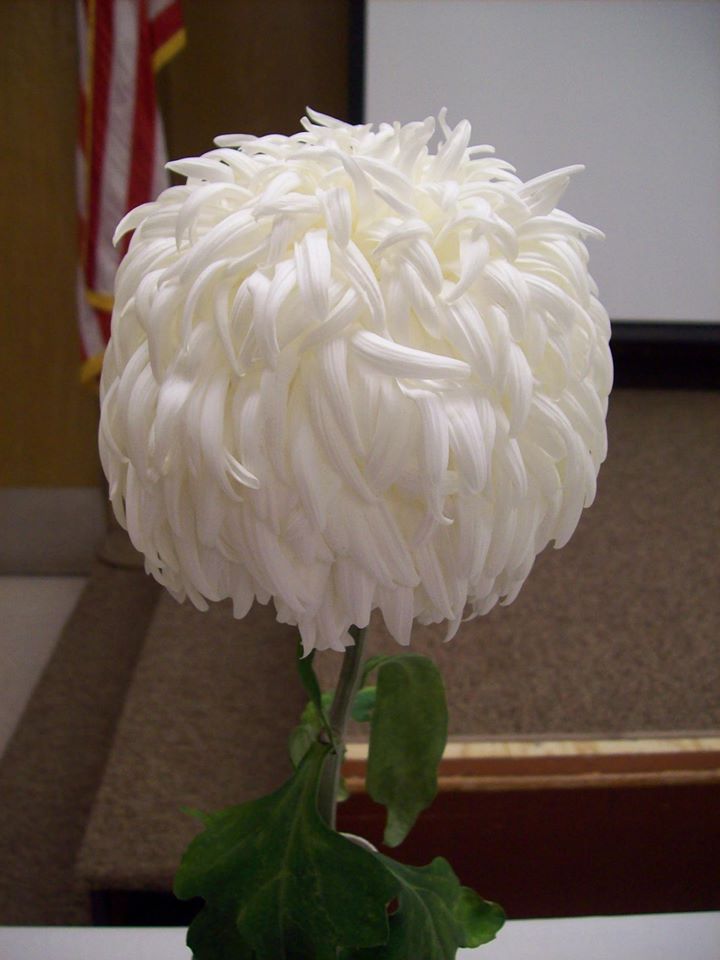
 Only a few decades ago, when horticulture was taken more seriously, potted blooming plants like chrysanthemums, orchids, azaleas, hydrangeas, lilies and even poinsettias, got the respect that they really deserve. Now they are more commonly purchased in full bloom, enjoyed only as long as their bloom lasts, and then discarded as their blooms deteriorate.
Some get put outside, but often die before they actually get repotted or planted into the garden. Many of those that do get planted, die when their sensitive greenhouse-grown foliage gets scorched by real sun exposure. Others succumb to desiccation before they can disperse their roots. Only orchids want to stay in their original pots for a while, but they rarely get the attention and regular watering that they crave.
Chrysanthemums happen to be in season now, both as potted plants for the interior of the home, and as autumn annuals in the garden. Yet, they are quite sustainable as perennials that can live for quite a few years. They only need to be groomed accordingly so that they can bloom in season, and new stems can replace the old. When they get planted into the garden, multiple plants in a single pot should be separated.
Many chrysanthemums get tall enough to require staking. If left to perform naturally, they bloom profusely. Hobbyists who want to grow larger flowers remove axillary flower buds (sideshoots) to concentrate resources into single terminal (top) flowers that most effectively display their distinctive colors, textures and forms. Sadly, many of the most impressive chrysanthemums have become rare as more profuse bloomers have become more popular.
The Chrysanthemum Society, which can be found on Facebook, is one of the most reliable resources for anyone wanting to grow some of the rare but really fancy exhibition types of Chrysanthemums. The internet makes it possible to get involved with regional chapters well beyond their designated regions. Chrysanthemum fanatics are more than happy to show off and talk about their favorite flowers.
 Tony Tomeo
I have several of the “cheap” chrysanthemums in my garden and I love them. They were sold as annuals, which has always puzzled me, but I’ve had some for a few years now. They are in full bloom at this point and they are literally coated with flowers. I just let them do their thing and enjoy the show. I cut them back after any frost that may have caused damage, and I get another bloom in the spring!
LikeLiked by 1 person
Yes, that is what ours do. My colleagues just planted some out that had been removed after blooming last spring. He did not want to toss them either.
LikeLiked by 1 person
That one is gorgeous!
LikeLiked by 1 person
That one was sent to me be one of the Chrysanthemum Societies when they had me write an article about one of their events. I think it looks weird, which is why I like it . . . as well as the color.
LikeLiked by 1 person
When I was sharing a garden plot at one point, we had a stand of chrysanthemums outside the fence, where we had to weed between plantings. One day I cam and all the Chrysanthemums had been ripped out by my friend, who thought they were weeds. I’ve never planted them again there, but I’ve thought about it.
LikeLiked by 1 person
Oh, that would be so frustrating! When I lived in town, the neighbors on either side had ‘gardeners’ who would destroy anything that ventured over the property line, and had even come into my garden to kill things with weed whackers. When the ‘gardener’s are busy killing something, they steal my fruit.
LikeLiked by 2 people
That flower looks like a sheep dog! It’s really cool. When I was in grade school, I learned how to spell chrysanthemum by turning it into a phrase: Chrys an(d) the Mum. Silly, but effective.
LikeLiked by 1 person
Ha! It does look like a sheepdog. It looks sort of like Sam Sheepdog who works the same shift as Wile E. Coyote.
LikeLiked by 1 person
This seems to be wearing the plant version of a wig.
LikeLiked by 1 person
I thought it looked like unkempt feathers.
LikeLiked by 1 person