This is the more foliar counterpart to the closeups for my Six on Saturday from last week. Some are closer than others. Some would be more easily identifiable without captions than others. All are quite random. All these subjects are in the storage nursery; but only #1 and #5 will eventually find homes in the landscapes here. The others will likely go into one of my own gardens. I have no idea of what to do with #2.
1. Agave pedunculifera – provided the most abstract picture of the six. The name is only a guess. Someone else might have been able to identify it as something else if more of it were visible.
2. Eucalyptus globulus ‘Compacta’ – compact blue gum – was my second choice for juvenile blue gum foliage. It was easier to reach because it is more . . . compact. The other blue gum is tall.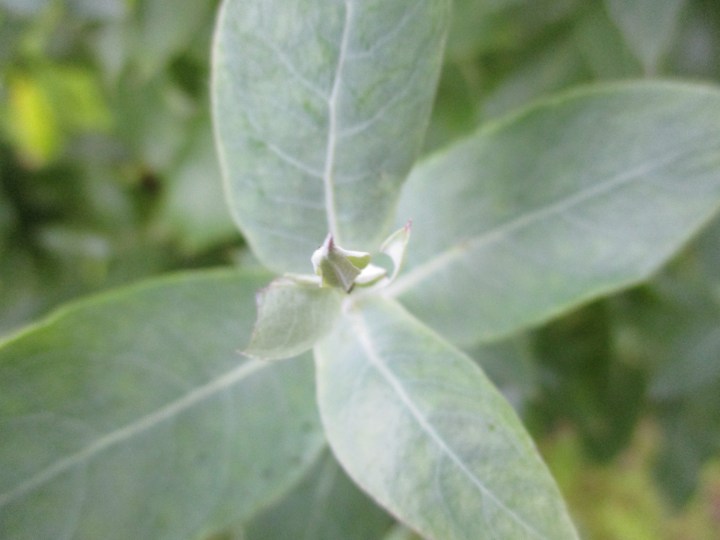
3. Cinnamomum camphora – camphor – is light yellowish green most of the time, and then gets slightly blushed with new growth late in spring. This young tree started late in partial shade.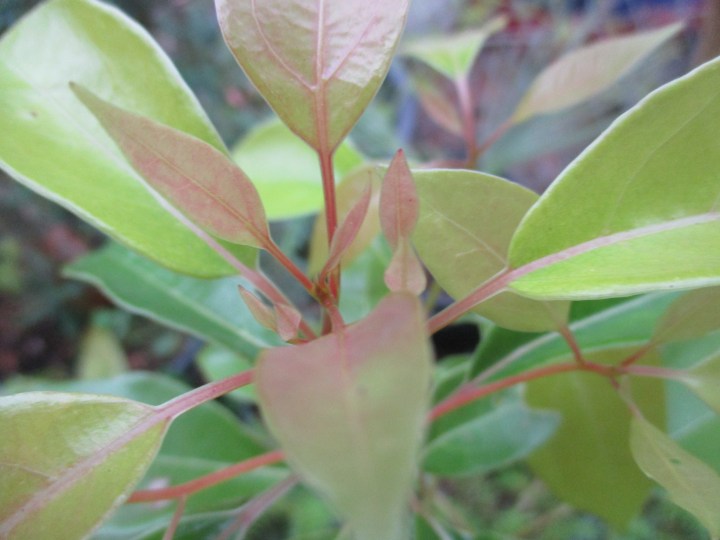
4. Trachicarpus fortunei – windmill palm – provided the second most abstract picture of the six. It is more recognizable though. Mediterranean fan palm is darker. Other fan palms are light.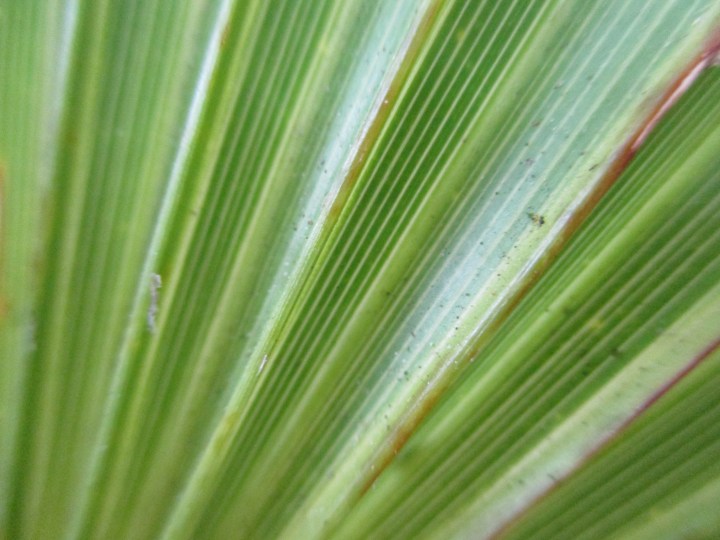
5. Picea sitchensis – Sitka spruce – was brought from Smith River, on the coast just south of Oregon. It does not seem to mind being so far from home. The happy new growth is impressive.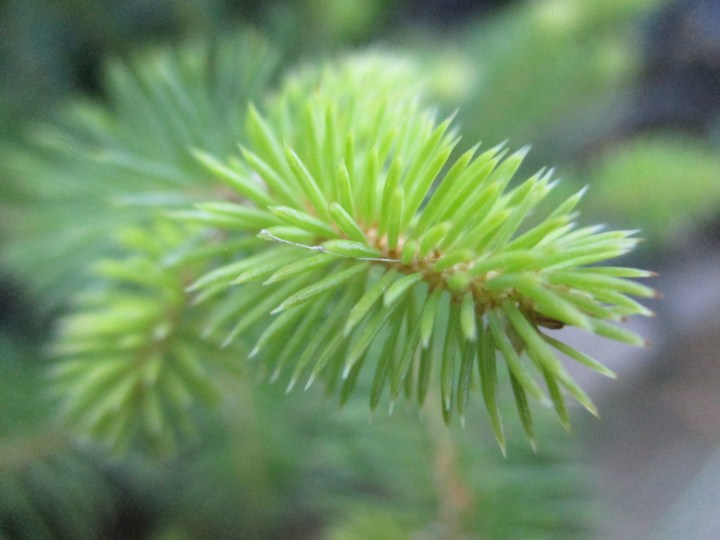
6. Juniperus virginiana – Eastern red cedar – is my favorite this week because I brought it from Oklahoma. Cedrus deodara – deodar cedar – is the real cedar that provided the background.
This is the link for Six on Saturday, for anyone else who would like to participate:
https://thepropagatorblog.wordpress.com/2017/09/18/six-on-saturday-a-participant-guide/
 Tony Tomeo
Love your photos this week.
LikeLiked by 1 person
Thank you.
LikeLike
Love a good close up!
LikeLiked by 1 person
Of course. You know how to do them.
LikeLike
I always like close-ups in the garden! I have one deodar cedar, and just love it. I also have a few incense cedars, which, while of course are not related and shouldn’t be compared, are not nearly as loved. Just not as pretty, and drop those duck billed sticky seeds.
LikeLiked by 1 person
Incense cedars are better in the wild, although I do like the bark and foliage. It was the first tree I ever planted when I was a kid.
LikeLike
Excellent close ups. Didn’t know Sitka spruce could thrive there!
LikeLiked by 1 person
We still do not know. We will find out. We want a few spruce in the landscape, and would like to try others besides the blue spruce.
LikeLike
Nice! Camphor is invasive here – how odd you can grow Sitka Spruce, Camphor and Windmill Palms – odd to me, anyway.
LikeLiked by 1 person
This camphor was self sown. Only a few others here are. It is well behaved. It is funny to think of it as invasive, although it does well. So does windmill palm, which will live in the Pacific Northwest, into the range of the Sitka spruce. However, I am not sure that Sitka spruce will do well here yet.
LikeLiked by 1 person
Camphor is nasty business south of me. I rarely see one.
LikeLiked by 1 person
Nice look at the foliage. And a fine idea to give us close-ups. I may copy you one week! Imitation is the most sincere form of flattery!
LikeLiked by 1 person
Others do it more often than I do.
LikeLike