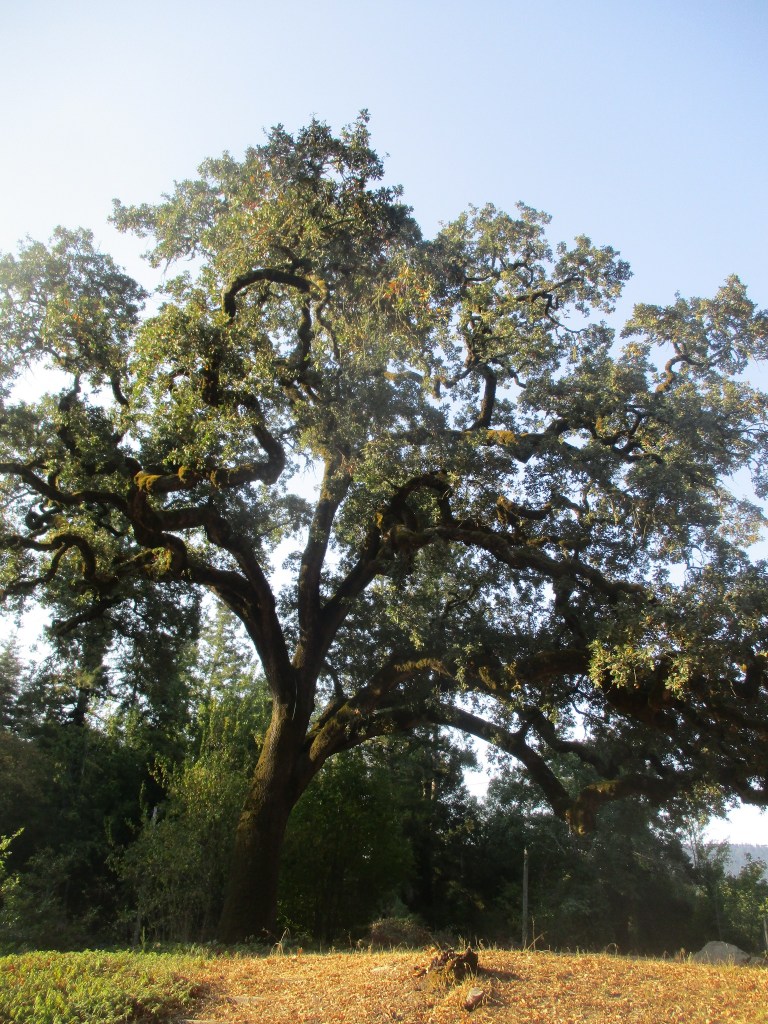
From the northern end of the Sacramento Valley to Santa Catalina Island, valley oak, Quercus lobata, is as Californian as Valley Girl. It inhabits mixed riparian forests and low hillsides up to about 2,000 feet, but prefers alluvial valley meadows in between. Although unpopular for landscaping, it sometimes self sows into home gardens. New landscapes sometimes develop around old trees.
Valley oak is one of the biggest of oaks, and the tallest oak of North America. Mature trees can be more than a hundred feet tall, and several centuries old. Trunks may be more than ten feet wide. Such big trees make big messes of acorns and deciduous foliage, which shed for weeks. Unfortunately, old valley oaks within new landscapes are susceptible to spontaneous limb failure and rot.
Where space is sufficient, new valley oaks are for future generations. They develop their distinctively sculptural branch structure slowly through several decades. If irrigation is not excessive, roots are remarkably complaisant. The evenly furrowed gray bark is rustically distinguished. The elegantly lobed leaves are about three inches long and half as wide. Yellowish autumn color is subdued.


They are truly beautiful and magnificent trees. Not for the average home landscape, but it shines in large natural spaces. Wish I had a plot of land big enough!!
LikeLiked by 1 person
Some of the grandest to be seen from a highway while passing through happen to be around Atascadero and Templeton. Paso Robles is named after them; el Paso de los Robles, and ‘Robles’ are the valley oaks.
LikeLike