After their distinctive and colorful bracts are gone, poinsettias can become handsome foliar houseplants or tall and lanky blooming shrubbery.
The tiny, yellow buds at the center of poinsettia (Euphorbia pulcherrima) blooms are actually the unimpressive flowers. The colorful red, white, pink or rarely pale orange bracts surrounding these flowers are merely colorful leaves. Some varieties have marbled, blotched or spotted bracts. Compact potted plants that are mostly less than two feet tall and broad can get quite lanky and taller than ten feet in the garden. The dark green leaves are about three to five inches long.
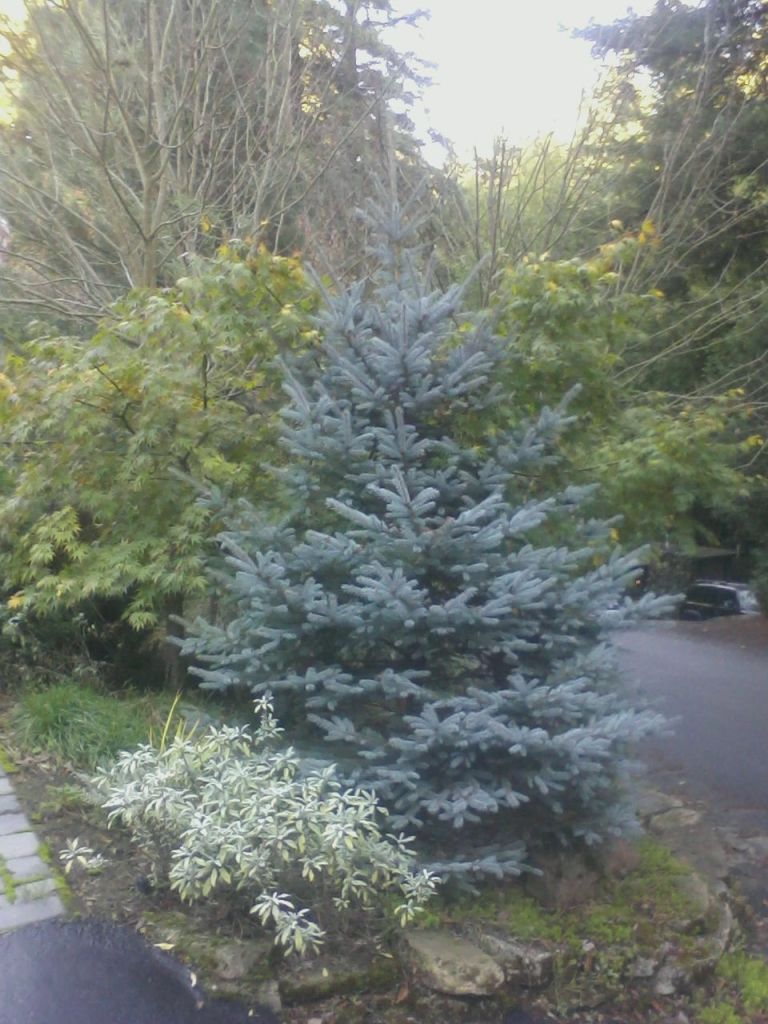
Blue spruce is a good choice for a living Christmas tree, since it can be happy for years in containment.
Just three weeks after Christmas, many of us are already wondering what to do with poinsettias, cyclamens, Christmas cacti, hollies and living Christmas trees. Christmas cacti and hollies are perhaps the easiest of these to accommodate. Christmas cacti do not even need to leave the home as their flowers eventually deteriorate, since they are happy as foliar houseplants or potted on sheltered porches, and with good sun exposure, will bloom annually. Hollies make handsome shrubbery where their prickly foliage will not be a problem. Since some hollies get quite large, and others stay low and compact, it is helpful to know which variety any particular holly plant is.
Cyclamens are popular as cool season bedding plants as well as blooming potted plants. Gardeners typically dispose of those grown as bedding plants as if they were mere annuals. However, they are actually cool season perennials that go dormant through summer. If they are not in the way of warm season annuals in spring, and are among other plants that will cover for them during their dormancy, they can be left in the garden to regenerate and bloom again next winter. Individual potted plants that get too tired to be appealing in the home can be retired to partly shaded shallow ground cover or mixed perennials for a bit of winter color.
Poinsettias are a bit more complicated, which is why so many people simply discard them as they slowly lose their color after Christmas. They can keep their color for many months, and be happy as houseplants, but rarely bloom again in the home once their first bloom is gone. Alternatively, they can be planted into sheltered and partly shaded spots in the garden after frost. Through summer, they develop taller scrawny stems that bloom early in January or so. (Yes, they bloom ‘after’ Christmas.) They are sensitive to frost, so like to be under eaves.
Of all the popular potted plants associated with Christmas, living Christmas trees are the most problematic, not because they are difficult to care for, but because they so often get planted in bad situations. Only the compact conifers, like spruces, junipers and Scots pines, can stay potted to function as Christmas trees for a few years or more. Almost all other pines grow too vigorously to be happy for long in containers. After Christmas, they should instead get their circling roots severed, and then be planted into the garden.
The problem is that most living Christmas trees are Italian stone pines or Canary Island pines, each of which gets much too large for confined garden spaces. If there is not enough space for such a tree to grow to maturity without causing trouble, it best to find another home for it, or to discard it when it outgrows containment.
Much of California is chaparral. Much of what is not chaparral is full blown desert. Some coastal climates gets quite a bit of rain; and some climates up in the Sierra Nevada are among the snowiest places in America. Generally though, the most populous and most agriculturally productive parts of California do not get much water to spare.
I certainly do not mean to say that we do not get enough water from rain and snow. We get what the region has always gotten longer than anyone can remember. Those who do not want to live in chaparral or desert need not live in California. If there seems to be insufficient water for all of us to share, it is merely because there are too many people wanting too much of it, and too many who profit from controlling and selling it to them. Some of us conserve water and…
This weird tropical cactus gets mixed reviews. Pitahaya fruit, or dragon fruit, is abundant in favorable conditions, but develops potentially bland flavor. The green succulent stems may be vigorous, but develop distinctly pendulous form that resembles Sigmund the sea monster. Bloom lasts from summer to autumn, but individual flowers open for just a night.
Selenicereus undatas is the most popular pitahaya. Its fruit weighs between half a pound and a pound, and has white flesh. Selenicereus costaricensis fruit is similar, but with red flesh, and perhaps slightly more flavor. Selenicereus megalanthus fruit is smaller, thorny and yellow, with white flesh and richer flavor. Home grown fruit is superior to market fruit.
Pitahaya grows very easily from cuttings or pruning scraps. Young stems climb with wiry aerial roots, so need substantial support. Fruiting stems hang downward from the tops of such support. Most modern cultivars need no pollinator. Some old cultivars need another of its same species for pollination. Pitahaya is vulnerable to frost where winters are cool.
Bare root season began as the Christmas season ended. Literally, as the last Christmas trees relinquished their space in nurseries, bare root stock occupied it. Most of this stock grew in Oregon, where winter weather is cooler, so was ready for digging and relocation prior to arrival. Now that it is here, the season for planting bare root stock is quite limited.
Almost all bare root stock is deciduous. It defoliated through autumn, so the stems are as bare as the roots are. Most bare root stock is fruit and nut trees, such as almond, apricot, cherry, plum, peach, apple, pear, persimmon and fig. Grape, currant, gooseberry, wisteria and rose are ready for planting bare root too. All are dormant, so unaware of the process.
They do not stay dormant for long though. They must be planted in their new homes prior to the end of winter, when warming spring weather stimulates new growth. They can not sustain such growth if their roots are unable to disperse into soil. This is why the season for relocating and planting bare root stock is so limited to winter. It relies on cool weather.
Fortunately, planting bare root stock is surprisingly simple. Soil amendment that prompts root growth away from confined root systems of canned (potted) stock is not so important. Since new roots grow directly from formerly bare roots into surrounding soil, amendment is only helpful for soil of inferior quality. Fertilizer will not be helpful until growth resumes.
A hole for planting bare root stock needs to be just big enough to contain the flared roots. It must be shallow enough to suspend any graft union above grade, without loose soil to settle below. Watering is only needed to soak and settle soil around roots, and will not be needed again until after the rainy season. Pruning removes crowded or damaged stems.
Of course, not all fruit trees are conducive to planting bare root. Evergreen plants are not as dormant during winter as deciduous plants are. Their roots are therefore less resilient to separation from the soil. Pitahaya, avocado and some citrus, which can be marginally vulnerable to frost in some climates, are more vulnerable after autumn or winter planting.
Oh, I still feel badly about this. The rose never regained its original height, and was removed because it did not bloom much either. It lives here now. I really should plant it in the ground somewhere.
Winter is for pruning. Any good native of the Santa Clara Valley knows that. It starts as soon as the first deciduous fruit trees defoliate and continues to the last minute rush to finish before the buds start to swell at the end of winter. It may seem like there would be no last minute rush now that all the orchards are gone, but there is so much in landscapes to prune that prioritizing and scheduling pruning takes a bit of effort. Just like we know that apples and pears can be pruned slightly later than apricots and prunes, in the landscape, we know that sycamores might be delayed until the birches are done. Naturally, I feel compelled to prune the flowering cherries and fosythias, but am almost content to wait until after they finish blooming in early spring. Of course, I cringe as I write this. Roses are getting…
The last green roof that I wrote about was planned, although not in a typical manner. https://tonytomeo.com/2017/11/25/green-roof/ It is still my favorite green roof. Otherwise, I am none too keen on the fad. Very few buildings benefit from green roofs, and green roofs really do take more work than conventional landscapes in the ground.
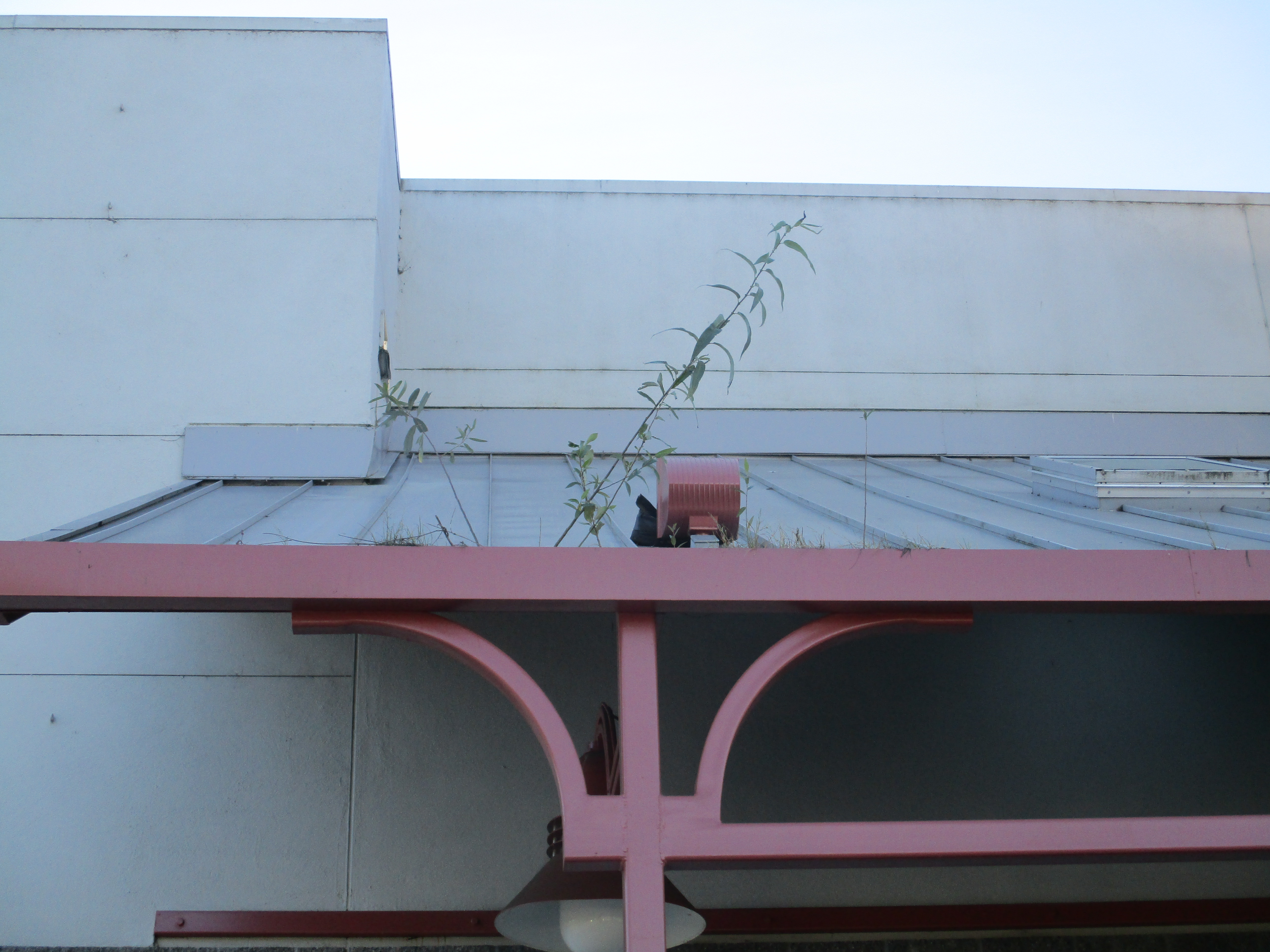
The sort of green roof pictured here was most certainly not planned. It could have been the result of a an uncleaned gutter. All sorts of weeds can grow in the damp debris that can wash off of roofs, particularly in damp and foggy coastal climates where moisture so often drips from the edges of roofs. This gutter is just a short distance from the beach in Santa Cruz. The willows in the San Lorenzo River are next door.
Knowing what I know about this particular type of willow, I would guess that the cleanliness of…
Valley oak, Quercus lobata, and Coast live oak, Quercus agrifolia, which I featured here last week, are the two formerly prominent native oaks of the Santa Clara Valley. I do not know if valley oak is native to the Santa Cruz Mountains above the Santa Clara Valley. It should be; and I should know for certain. However, I am not convinced. It is a chaparral species, not a forest species. The several old specimens in the Santa Cruz Mountains are on roadsides and in other situations where they seem to have been planted intentionally. Yet, this region developed mostly after the Great Earthquake of 1906, and not much was here prior to that, but some of the valley oaks seem to be a few centuries old.
1. A different perspective of the same valley oak from last Saturday conceals major storm damage that is otherwise so prominent. This really is a grand tree, in a perfect situation.
2. Although this is not a good picture, and does not seem to show much, it demonstrates how this tree is squarely centered within this view from the old depot baggage platform.
3. From the opposite side, the trunk obscures the baggage platform. Was it planted there intentionally? If so, why was it not centered on the window or doorway of the old depot?
4. It is just coincidence that the tree is situated so ideally on the edge of an area that was formerly used for parking? It was already old when cars still had horses in front of them.
5. Valley oak is such a grand tree. As big and sculptural as this specimen is, it is perhaps a century or so younger than the other tree. It was still quite small and shrubby in 1906.
6. Even the leaves are distinguished. The leaves of the trees in my former neighborhood had rounder lobes and sinuses. I do not know if such traits are environmental or genetic.
This is the link for Six on Saturday, for anyone else who would like to participate:
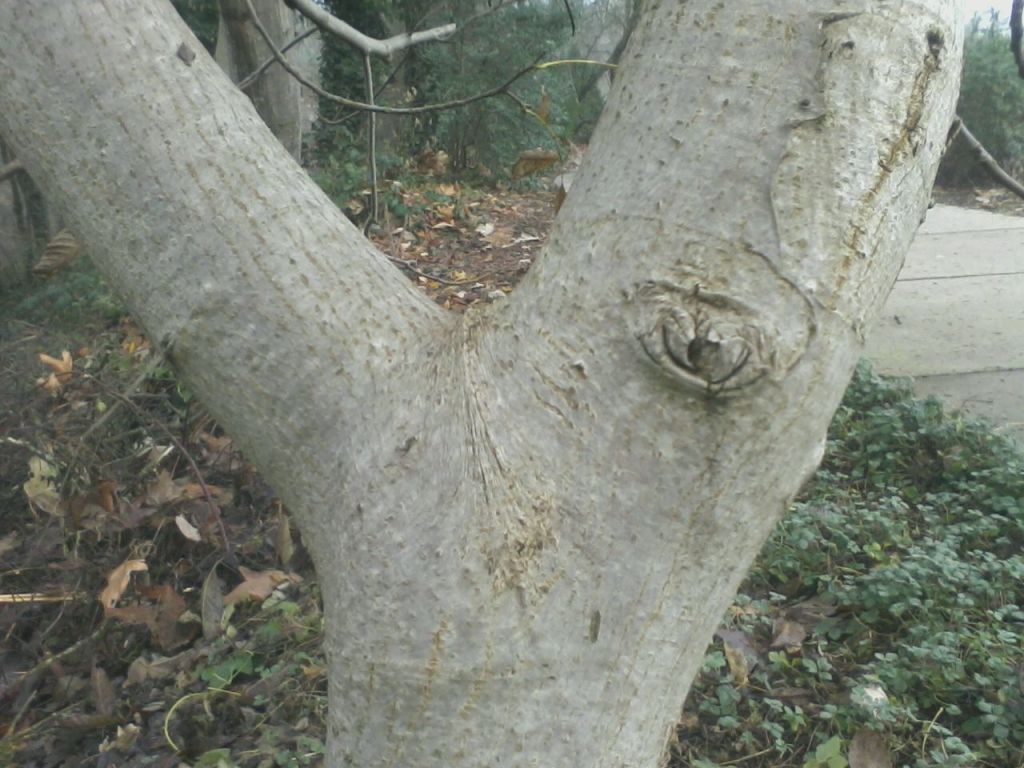
It may take a few years for a walnut tree to grow into a sculptural specimen with striking white limbs.
Like many ‘English’ plants, the English walnut, Juglans regia, is not actually from England. It is Persian, so is quite comfortable here in California. However, the foliar litter and husks contain a natural herbicide that can make nearby seed grown plants and annuals uncomfortable. Planted trees are typically grafted onto native California black walnut understock (roots) that is more resistant to disease, and improves stability.
Mature trees can be as tall as seventy five feet with trunks as wide as five feet, but are almost always significantly smaller, and even proportionate to urban gardens, although notoriously messy with bloom, leaves and nuts. The pinnately compound leaves are generally less than a foot long, with five to nine leaflets that can be between two to six inches long, and about two inches wide. The bark is notably smooth and gray until trees get quite old and furrowed.
This big perennial ‘sticks of fire’ produces a thicket of bright yellowish orange stems that changes shades through the seasons.
Everyone knows that flowers provide color in the garden, particularly through spring and summer. As blooms become less abundant in autumn, fall color of deciduous plants and trees becomes more prominent. After most plants are finished blooming, and most of the fall color is gone, the garden may seem relatively bleak for winter. Only evergreen foliage remains. This is when plants that exhibit colorful bark or bare twigs really get noticed.
Various types of birch trees exhibit striking white bark all year. While the trees are bare in winter, the bark becomes even more prominent, particularly against a backdrop of evergreen trees. English walnut trees are not as striking, but are more sculptural. Fig trees (fruiting types) are more gray than white, so are more reliant on a backdrop of rich evergreen foliage or a darkly painted wall for contrast; but they grow fast enough to become interesting sculptural specimens within a few years.
Bright white or light gray bark are certainly no substitute for the colors of flowers or foliage, but are striking nonetheless. They exploit the starkness of winter, and the sculptural nature of bare trunks and limbs.
Even without the sculptural structure of birch, walnut or fig trees, the more colorful twiggy growth of coral bark Japanese maple and osier dogwood trees can be quite an advantage in a stark winter landscape. As the name implies, coral bark Japanese maple has pinkish orange twigs. Osier dogwood can be ruddy brown, brownish orange or pale yellow. Frost improves color.
Unlike other Japanese maples that get pruned only lightly to enhance their form, coral bark Japanese maple can get pruned rather harshly just prior to spring growth in order to promote an abundance of the twiggy growth that is so colorful in winter. Osier dogwoods can get pruned down almost to the ground at the end of winter to eliminate tired older stems and promote colorful new stems for the following winter. They lack the colorful bloom that flowering dogwoods provide; so it is no bother that such harsh pruning prevents them from blooming.
Like trees with white or gray stems, coral bark Japanese maples and osier dogwoods are more striking against a backdrop of rich green foliage. Because winters are so mild here, they should be located where they will be most exposed to chill.


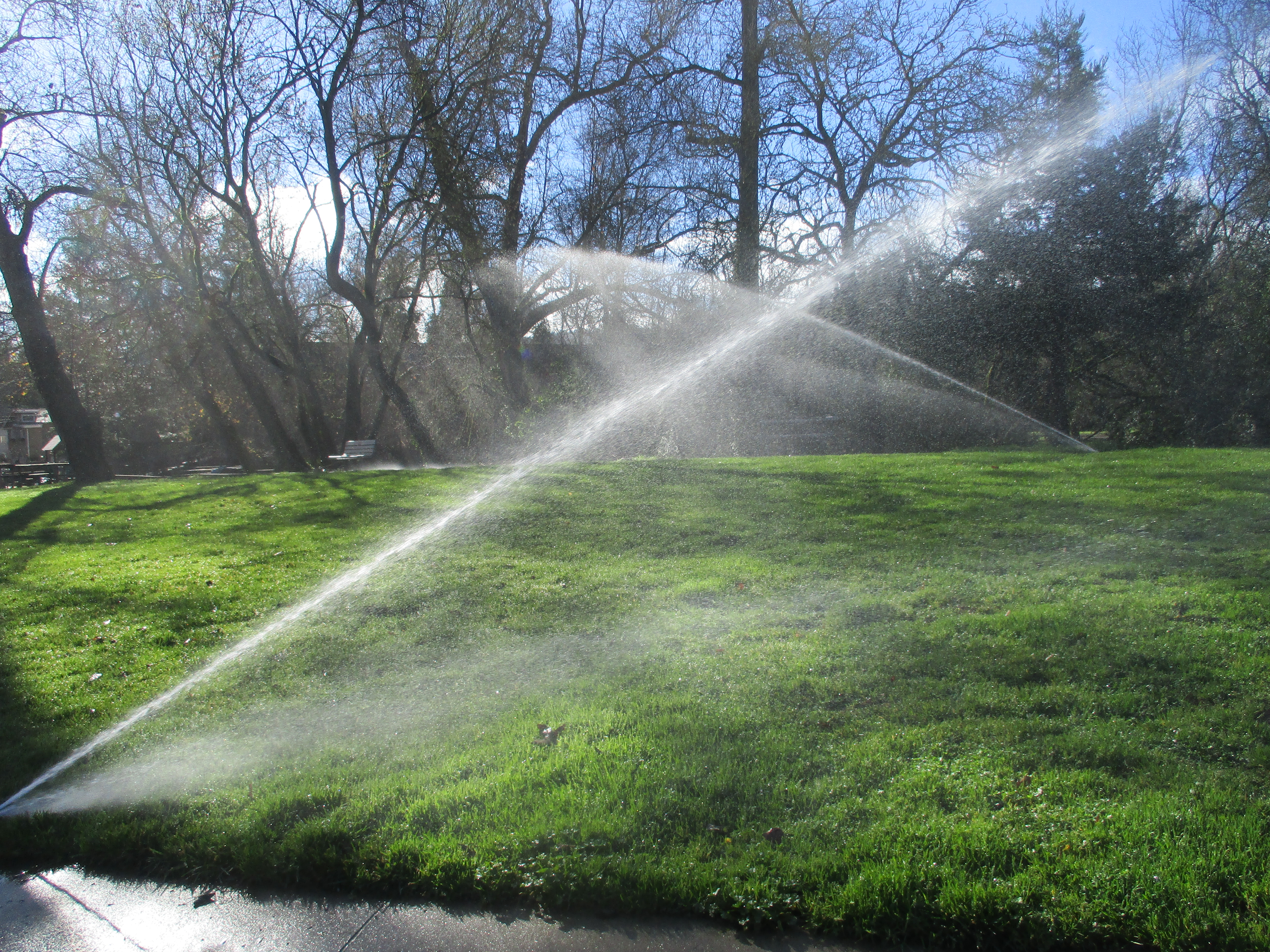 Much of California is chaparral. Much of what is not chaparral is full blown desert. Some coastal climates gets quite a bit of rain; and some climates up in the Sierra Nevada are among the snowiest places in America. Generally though, the most populous and most agriculturally productive parts of California do not get much water to spare.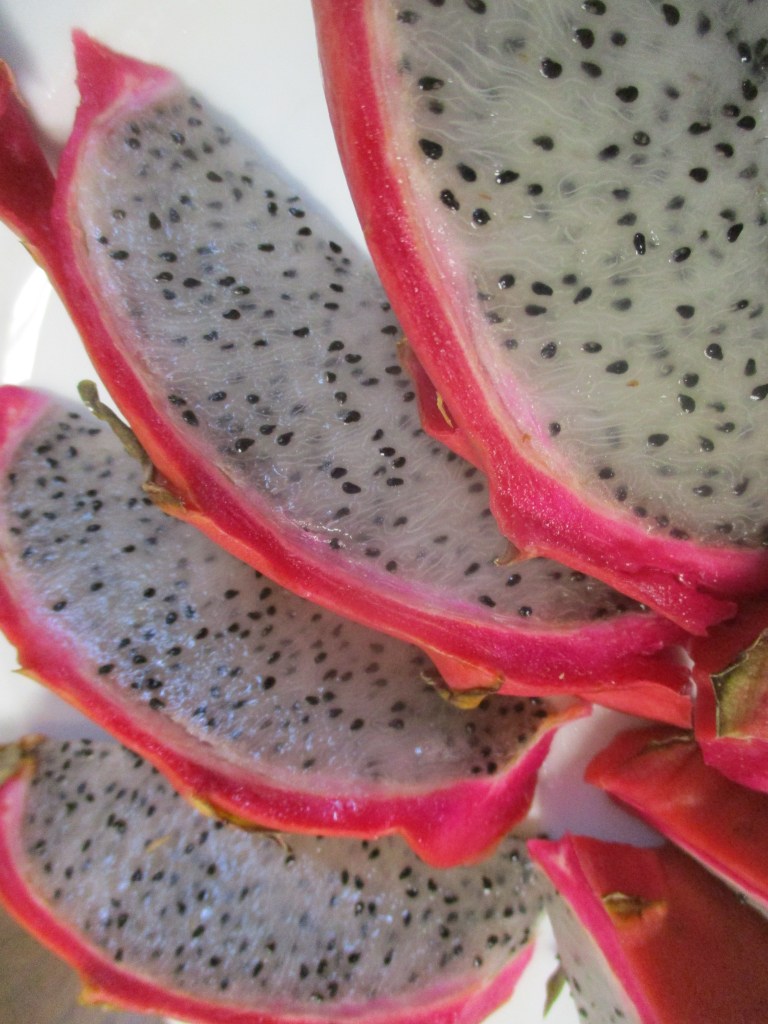
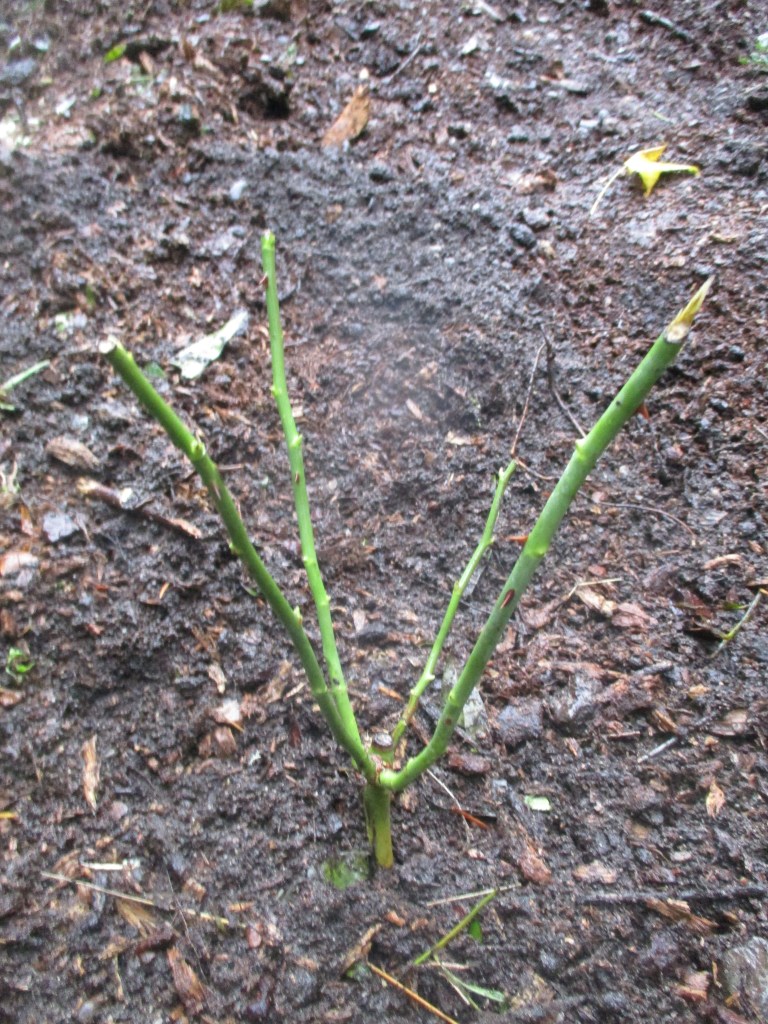
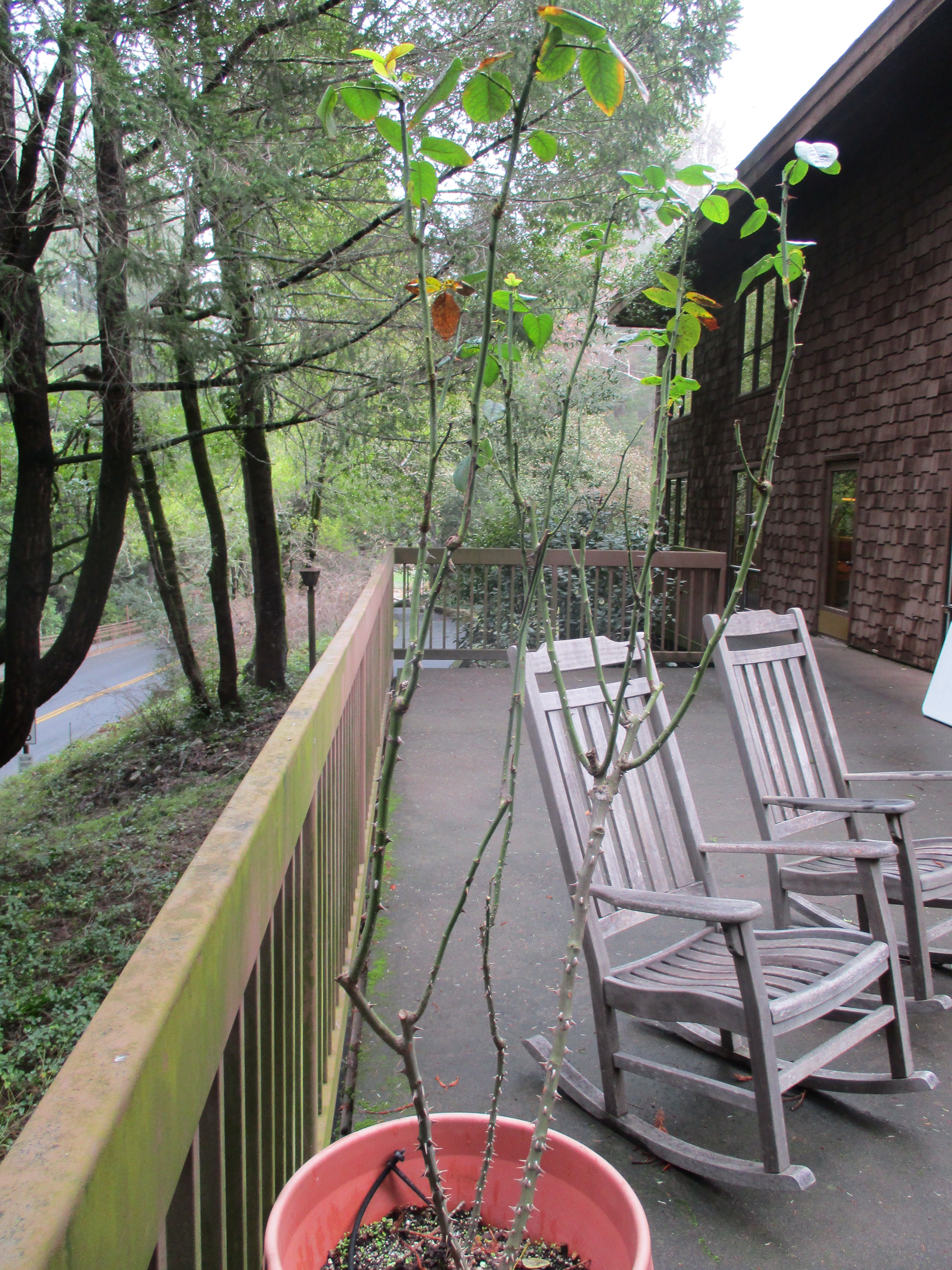 Winter is for pruning. Any good native of the Santa Clara Valley knows that. It starts as soon as the first deciduous fruit trees defoliate and continues to the last minute rush to finish before the buds start to swell at the end of winter. It may seem like there would be no last minute rush now that all the orchards are gone, but there is so much in landscapes to prune that prioritizing and scheduling pruning takes a bit of effort. Just like we know that apples and pears can be pruned slightly later than apricots and prunes, in the landscape, we know that sycamores might be delayed until the birches are done. Naturally, I feel compelled to prune the flowering cherries and fosythias, but am almost content to wait until after they finish blooming in early spring. Of course, I cringe as I write this.
 The last green roof that I wrote about was planned, although not in a typical manner.



 Tony Tomeo