Between A Rock And A Hard Place

Well, . . . I have not seen any since this posted three years ago. It was good while it lasted. It could still be out there somewhere, and if it were to reappear, it would be more likely to become noticeable after this last unusually wintry winter.

tonytomeo's avatarTony Tomeo

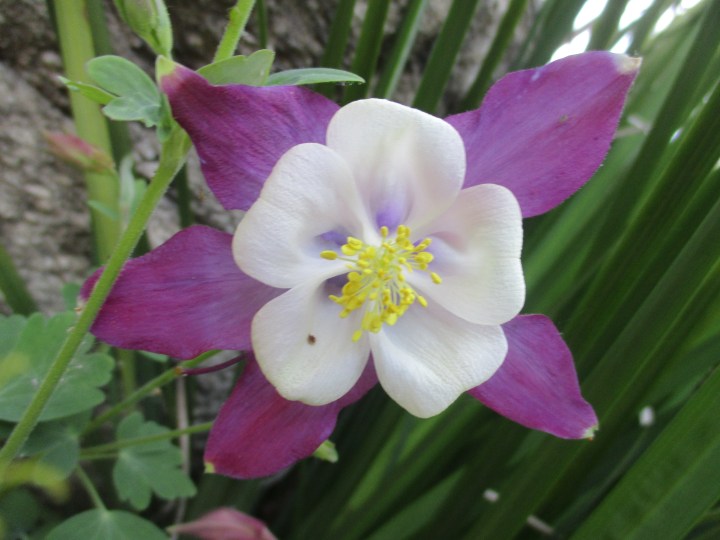
P00509K Where does this delightful columbine think it is?!

Columbine does not do well here. I do no know why. It does well enough in Colorado to be the Official State Flower there. Yet, the mildest of climates is Colorado are harsher than the climate here. It does not get too terribly warm in summer here. Humidity is minimal, but not as minimal as in much of Colorado. Nor does it exceed that of other regions where columbine does well.

We have certainly tried to grow columbine. It just does not work. Some of it succumbs to powdery mildew. Some succumbs to rust. The last batch just succumbed. Because it was expected, I did not bother to investigate. I got the impression that it was taken out by both powdery mildew and rust. Flowers that bloomed so delightfully when planted went to seed on their way out.

That should have been…

View original post 158 more words

Six on Saturday: Bearded Iris

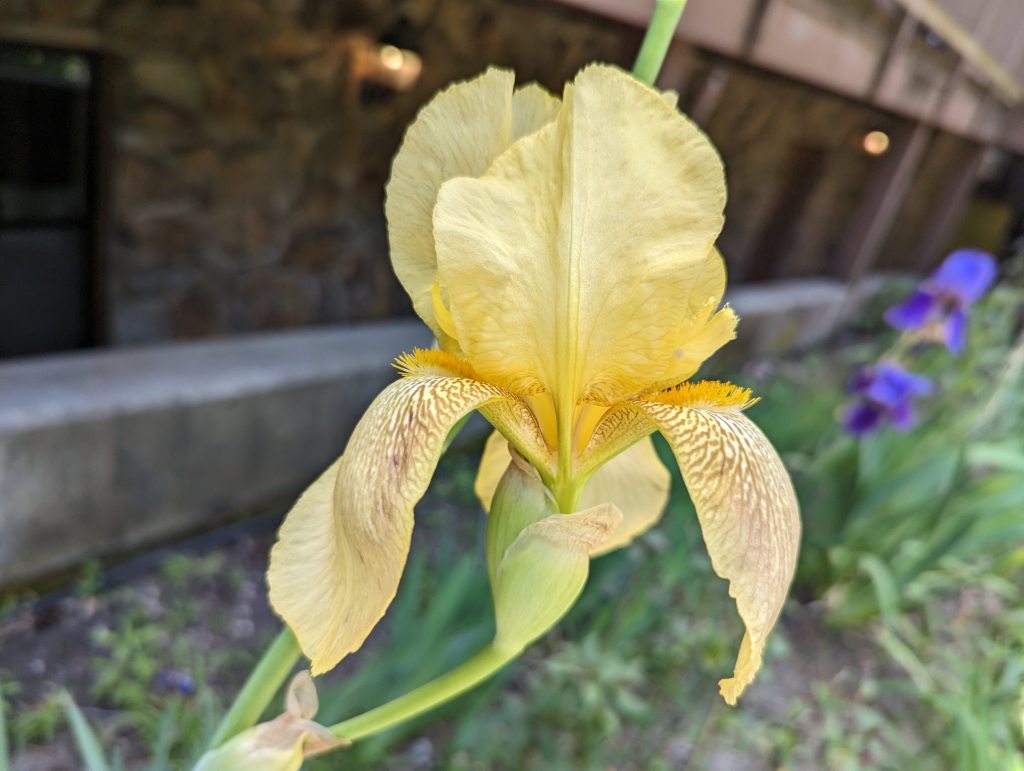
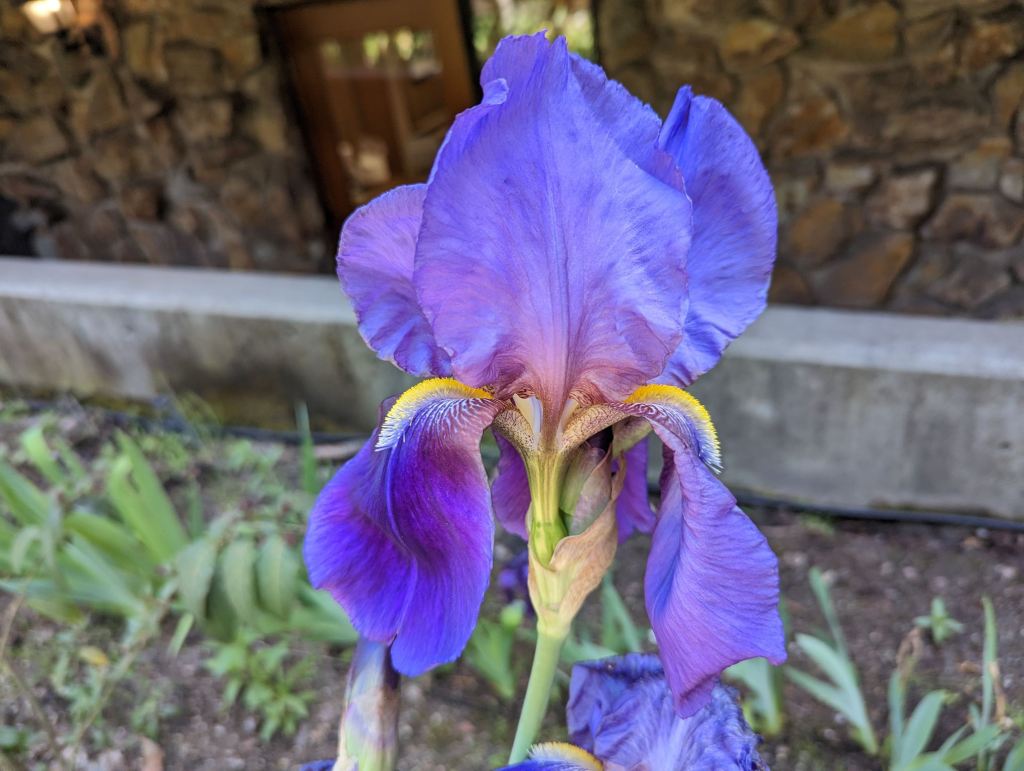
Iris are blooming late but splendidly within the new iris bed. It is gratifying to assemble various bearded iris within their dedicated garden. #1 and #2 do not inhabit the new iris bed yet, but are tempting because they resemble cultivars that I crave. I purchase no iris. Doing so would be an egregious violation of my very discriminating standards. However, if I ever find it, the one cultivar of bearded iris that I would make an exception for is ‘San Jose’.

1. ‘Los Angeles’ looks just like this, although this is not exactly an exemplary specimen. I should get a copy of it, regardless of its identity. Perhaps an expert could identify it later. It was a few days old, but stayed on tables for a luncheon at Felton Presbyterian Church.

2. ‘San Jose’ looks almost like this, but frillier, with less veining of the purplish falls. This blooms in front of the White Raven coffee shop in Felton. I likely will not request a copy.

3. Purple intermediate iris is still the most abundant in the iris bed. It was recycled from a garden in Santa Cruz, where it was a bit too abundant. To me, it seems to be deep blue.

4. Feral yellow iris may not actually be so feral. Now that it inhabits the iris bed, where it is irrigated regularly, it has grown as tall and performs like the tall bearded iris cultivars.

5. Purple tall iris was a gift from a neighboring residential garden. To me, it seems about as blue as the purple intermediate iris. I have been assured that it truly is purple though.

6. Blue and white tall iris was also a gift from the same neighboring residential garden. I am very confident that this really is blue, rather than purple. This is the frilliest cultivar.

This is the link for Six on Saturday, for anyone else who would like to participate: https://thepropagatorblog.wordpress.com/2017/09/18/six-on-saturday-a-participant-guide/


Hair Grass

This is one of the more complaisant of ornamental grasses.

A rather sloppy style of the 1970s combined with a weird color of the 1980s might explain the resemblance of hair grass, Muhlenbergia capillaris, to real hair. The lime otter-pop green color of the foliage, which looks so fresh in the garden, is actually quite dated for hair. So is the pleasantly soft texture. The sparse, fuzzy cloud of purplish pink bloom that hovers just above the foliage in autumn is extraordinary, although only slightly more contemporary for hair color. Happy hair grass plants that get plenty of water in sunny spots can get more than two and a half feet tall. Yet, the perennial foliage is so soft that it tends to fill in space between other sturdier plants instead of overwhelming them.

Ornamental Grasses

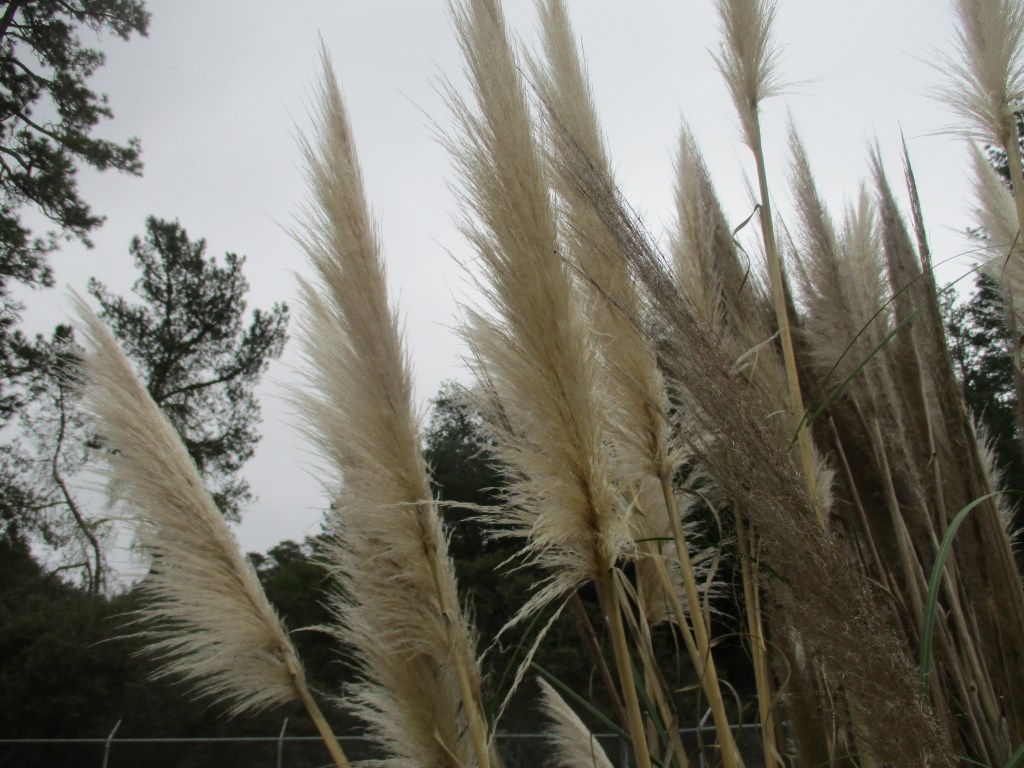
Pampas grass was once appreciated for its appealing foliar texture and strikingly elegant bloom.

Lawns are among the most useful of landscape features, but are also the most horticulturally incorrect. They require such constant maintenance and so much water that they give grass a bad reputation. Yet, the turf grasses that are used for lawn are actually a minority among grasses. There are so many more grasses, including a few turf grasses, that can add color, texture and the seldom considered asset of ‘motion’ to the landscape.

Most grasses move nicely in a breeze. Old fashioned pampas grass, with remarkably limber and long leaves, is one of the best for motion. As if the elegant foliage were not enough, billowy white flowers on tall sturdy stalks nod gracefully in season. (However, pampas grass gets quite large, has potentially dangerous foliage that can cause nasty paper cuts, and in rural areas, can escape into the wild to become an invasive weed.) Red fountain grass does the same on a smaller scale that is more proportionate to suburban gardens.

Red fountain grass also provides striking brownish red foliage. Blue festuca and larger blue oat grass, although insensitive to a breeze, provide really excellent pale blue foliage. The most popular variety of miscanthus grass is variegated with white. Hair grass is a weird yellowish green that resembles that of a rubbery fishing lure.

Besides the odd color, hair grass also has an oddly soft texture that allows it to spill over the edges of retaining walls and pots, with delicate autumn flowers that hover above like a swarm of gnats. Mexican feather grass seems somewhat coarse up close, but has the uniform texture of wheat at a distance. Switchgrass has a more rigid texture, and stands more vertically than other softer grasses. Feather reed grass does both, with flowers that stand vertically above the soft billowy foliage below.

There are as many different kinds of grasses as there are variations of color, texture and motion. Only a few are annual. Almost all are perennial. There are a few in between; perennials that die out in a few years. Most grasses are only a few feet tall. Some never get taller than a foot. Yet, a few get several feet tall.

Most grasses are at their best if they get cut to the ground every few years or even annually. However, some need no maintenance except only for watering. If satisfied with watering, some grasses can sow their seed to cover the outskirts of a landscape, and can be an appealing alternative to ground cover. There are even a few grasses that will naturalize without watering.

Horticulture – It’s What I do.

Oh my! This was three years ago, and I still have not resumed my more typical work! Well, It has been very enjoyable!

tonytomeo's avatarTony Tomeo

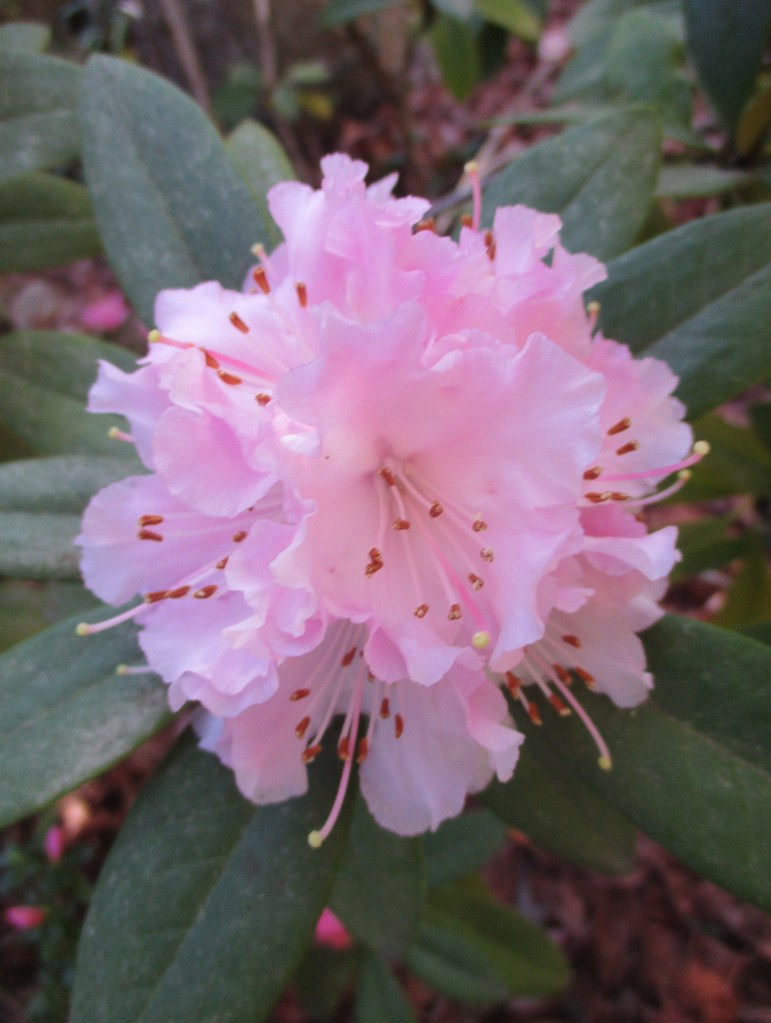
P00506 Rhody, . . . because everyone loves Rhody, . . . and this is not about horticulture anyway.
This is not a misspelling of a misspelling. There is no misspelling of “Horticulture” in the title this week. “Horridculture” is typical of my rants on Wednesday. It is not the only deviation from the norm here. I included the contraction of “It’s” in the title. I have been trying to relax my otherwise objectionably uptight writing style; but a contraction in the title still makes me cringe.

Horridculture – It Is What I Do Not Do.” would be consistent with my style, but silly, and not so relevant to the subject matter. I am a horticulturist, arborist and garden columnist. I enjoy what I do very much, which is why I made a career of it. It is demanding work though, and does not afford much time for blogging. The…

View original post 565 more words

Pride of Madeira

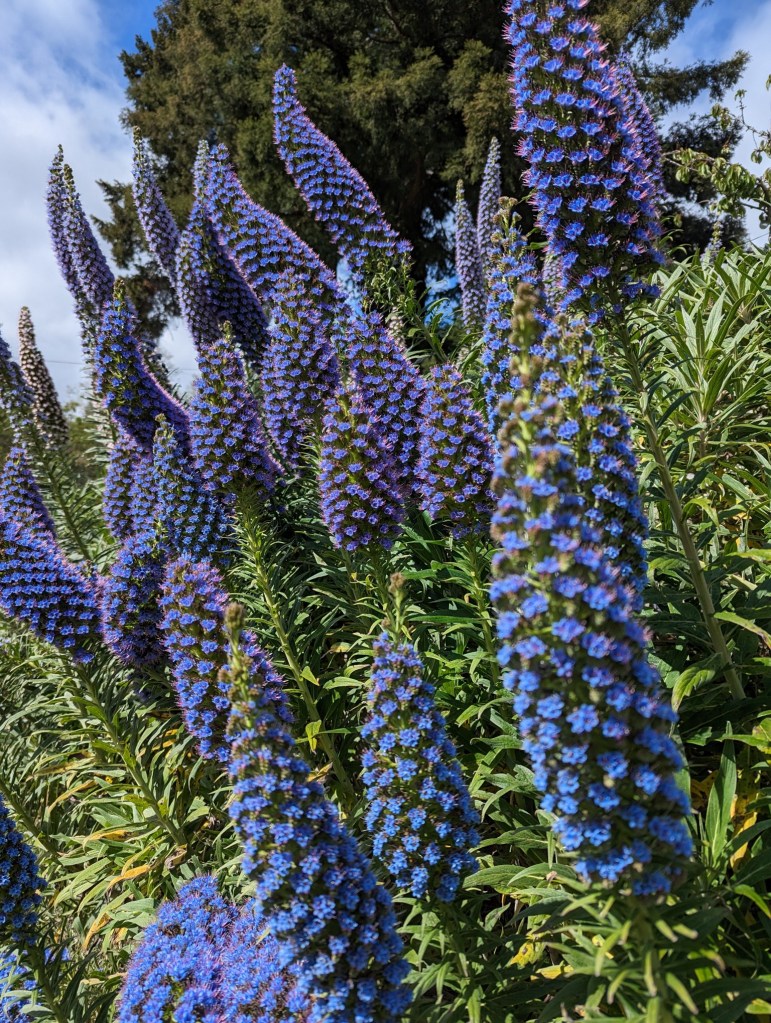
Pride of Madeira blooms through spring.

This is most certainly something to be proud of. Pride of Madeira, Echium candicans (or fastuosum), can bloom perfectly blue. Varieties that bloom white or lighter lavender blue are rare locally. Feral specimens might exhibit such floral color variation though. Bloom occurs only annually, but can last through spring. Butterflies and bees are very fond of it.

Pride of Madeira occasionally self sows, but is not too aggressively invasive. It performs exceptionally well within coastal climates. Feral specimens on inaccessible coastal cliffs are only briefly scruffy after bloom. Deadheading within home gardens is tidier and limits seed dispersion. Moderate watering enhances foliar color. Excessive watering rots roots.

Small new specimens of pride of Madeira grow fast, but perform for only about five years. They generally get about six feet tall and eight feet wide. Cool or foggy coastal weather promotes taller and more vigorous growth. Warm exposure might promote more compact growth. The narrow and grayish leaves are rather raspy. ‘Star of Madeira’ is a variegated and compact cultivar.

Bloom Is Bountiful For Spring

Many flowers bloom only for spring.

Bloom that was delayed by the unusually wintry winter is making up for lost time. Spring bulbs, flowering cherries and deciduous magnolias were amazing. Wisterias and lilacs continue their pastel display within some climates. More flowers bloom during springtime than at any other time of year. Even roses of summer will begin their performance soon.

Pollination is the priority of all flowers. The majority of flowers exploit wind for pollination. Because they need not attract pollinators, they are neither very colorful nor very fragrant. Colorful and fragrant flowers are the minority that compete for the attention of pollinators. This includes the same colorful and fragrant flowers that are desirable for home gardens.

Whether reliant on wind or pollinators for pollination, flowers adhere to a strict schedule. Some colorful and fragrant flowers want to be receptive while their pollinators are active. However, pollinators are more likely to adjust their schedules to exploit favorite flowers. After all, there is another major incentive for spring bloom. Seed needs time to develop.

Pollination is the priority of all flowers because it is how they generate seed. Some seed develops fast enough to grow into new plants within the same year. Some annuals can actually procreate for a few fast generations annually. Most seed develop slower though. They mature during summer, overwinter, and ultimately grow during the following spring.

For now, garden enthusiasts should enjoy the most abundant bloom of the year. That will not require too much exertion. Fresh fruit of summer will develop later. Some flowers that deteriorate without producing fruit may justify deadheading. This redirects resources for vegetative growth, and eliminates any unwanted seed. Besides, it might be a bit neater.

The most profuse spring flowers generally bloom only once annually. They will not do so again until next spring. Some less profuse bloomers may repeat with later bloom phases through summer. Of course, some flowers bloom within other seasons between summer and even winter. Their individual schedules are appropriate to the climates that they are originally native to.

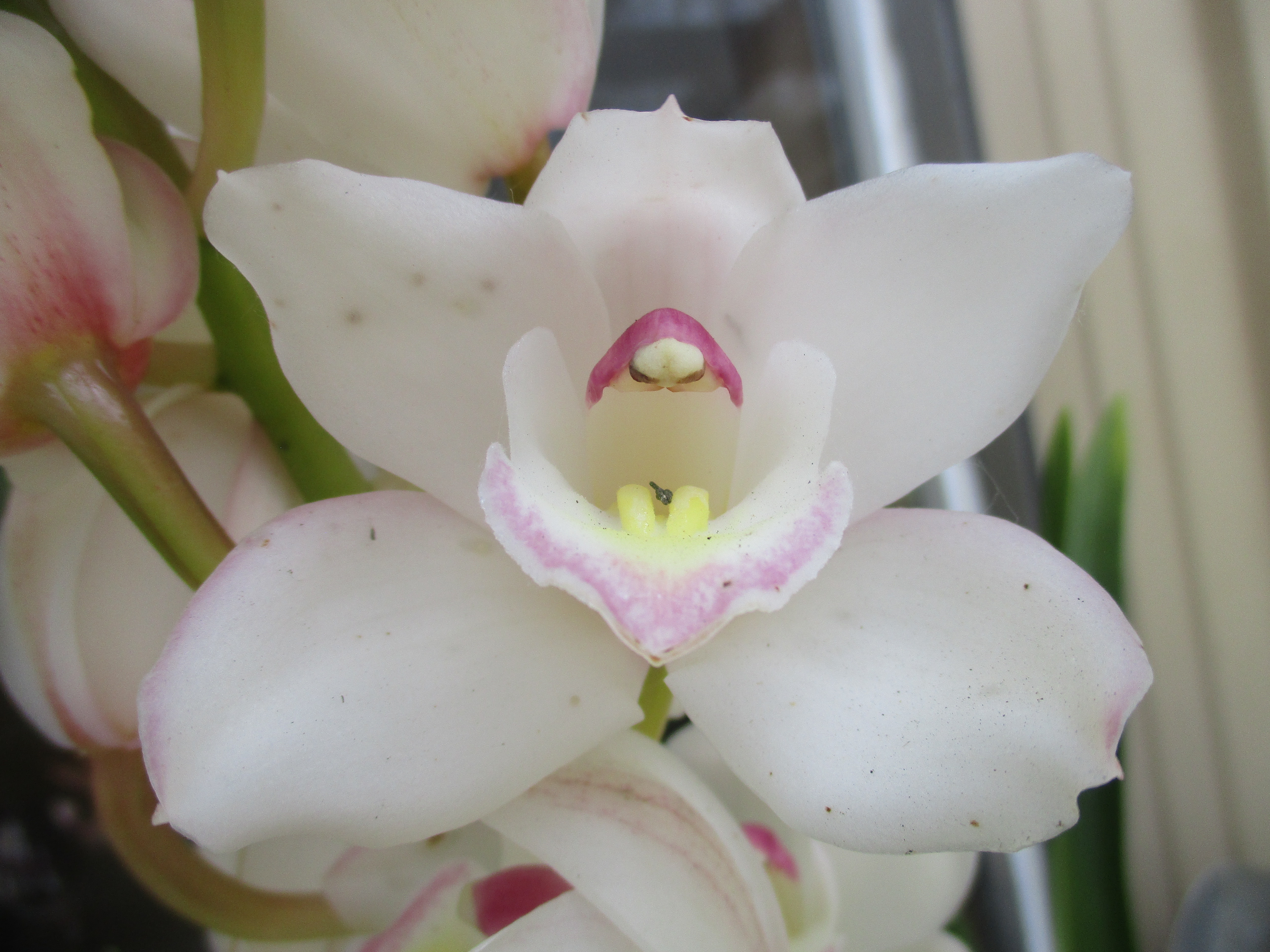
Finally! A White Cymbidium!

This white cymbidium continues to perform well three years later. While blooming, it gets relocated to situations where others can enjoy it. It might have bloomed with nine spikes last year. It bloomed with seven this year, so may prefer to be divided.

tonytomeo's avatarTony Tomeo

P00503-1 This is what a simple white Cymbidium orchid should look like.
Cymbidium orchids have been popular here for as long as I can remember. Back when horticultural commodities were still more commonly grown around the San Francisco Bay area, many genera of orchids, particularly Cymbidium, were grown in acres of greenhouses in the hills of South San Francisco. They are still grown near the coast of San Mateo and Santa Cruz Counties.

In home gardens, they are often pampered under the shelter of lath, where they are protected from frost and direct exposure to sunlight. Some Cymbidium orchids live and bloom for many years or decades, and sometimes get divided into more as they get overgrown, just like lily-of-the-Nile. Some live longer than those who originally grew them, and go live with someone else.

I never pampered my Cymbidium orchids. I grew all of them out in the garden, with…

View original post 173 more words

Steven Michael Ralls Memorial Tree

This little Memorial Tree is not so little after three years. I should get a new picture of it.

tonytomeo's avatarTony Tomeo

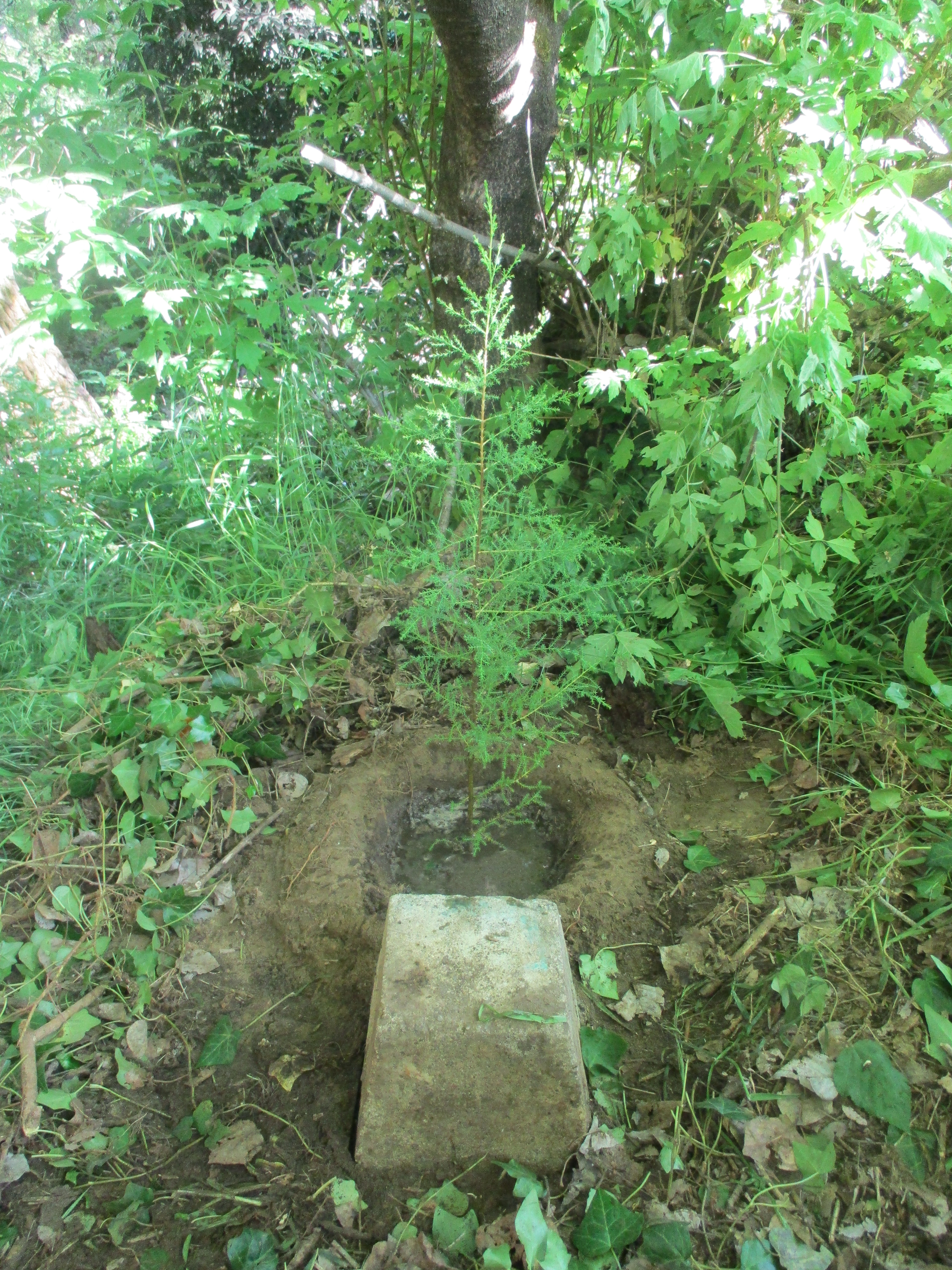
P00502K Steven Michael Ralls Memorial Tree is mostly camouflaged by the surrounding forest.

Steven Michael Ralls got his Memorial Tree this morning, three years after he passed away on May 2, 2017. The circumstances that coincided for this event were impossible to ignore. Just like the other Memorial Tree, which was installed to replace an oak that was missing from a parking lot island, the Steven Michael Ralls Memorial Tree also has a practical application.

The small tree is a young Monterey Cypress, Cupressus macrocarpa, that needed to be removed from one landscape, and was waiting in the recovery nursery to be installed into another. Of course, a Monterey cypress in no easy tree to accommodate. It is too big and too dark to be compatible with most of the landscapes into which we add smaller and mostly deciduous trees.

However, it happens to be ideal for obscuring…

View original post 176 more words

Six on Saturday: State Flowers

Just coincidentally, a few of the flowers that have been blooming here are State Flowers. These are four of them. Grand specimens of the State Tree of California live here, but the picture here shows unimpressive specimens that are not here, which is actually why they are amusing. The four State Flowers are those of California, Alaska, Idaho and Oregon. State Flowers of Washington and West Virginia are lacking.

1. Sequoia sempervirens, coastal redwood is not actually a State Flower, but is the State Tree of California. The two specimens at the center of this picture are unremarkable, but happen to be in Poulsbo in Washington, nearly five hundred miles north of their natural range. They seem to be three specimens only because the specimen on the right has two trunks. They are from the same old crop that went to become street trees in Los Angeles.

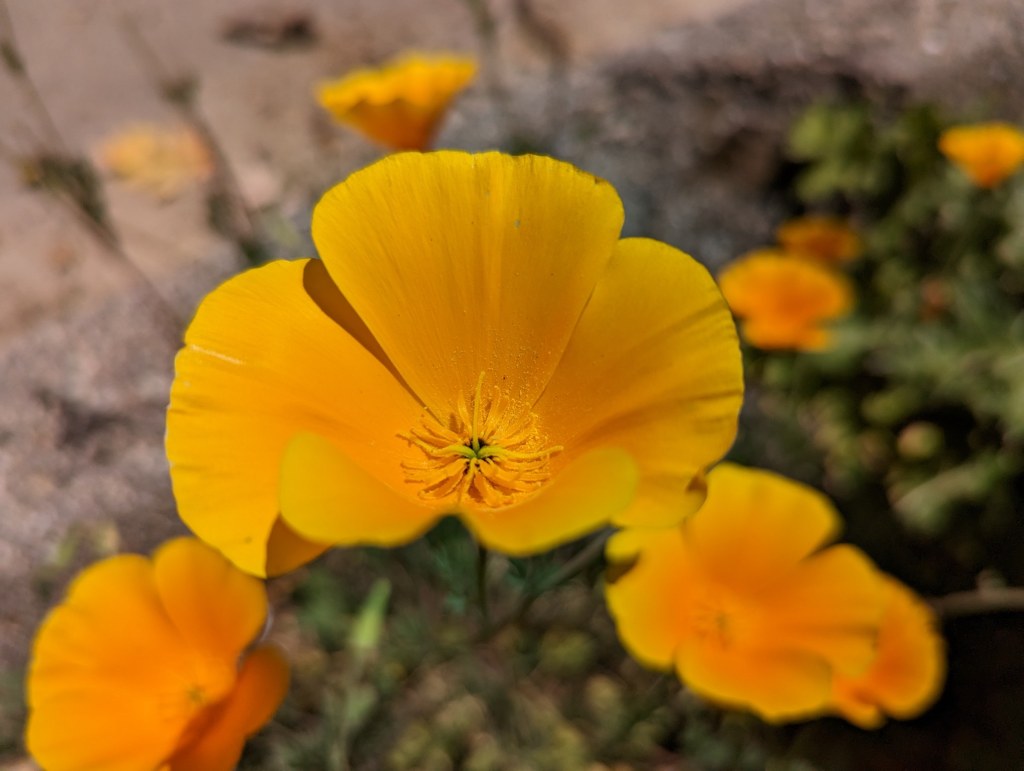
2. Eschscholzia californica, California poppy, as its name suggests, is the State Flower of California. It exemplifies Californian diversity, and in native to all but only two counties.

3. Myosotis sylvatica var. alpestris, forget-me-not is the State Flower of Alaska! It is not native, but it and Myosotis latifolia are naturalized. I do not know which species this is.

4. Philadelphus lewisii, mock orange is the State Flower of Idaho! It is native nearby but is naturalized here. Some bloom with fluffier double flowers like fancy modern cultivars.

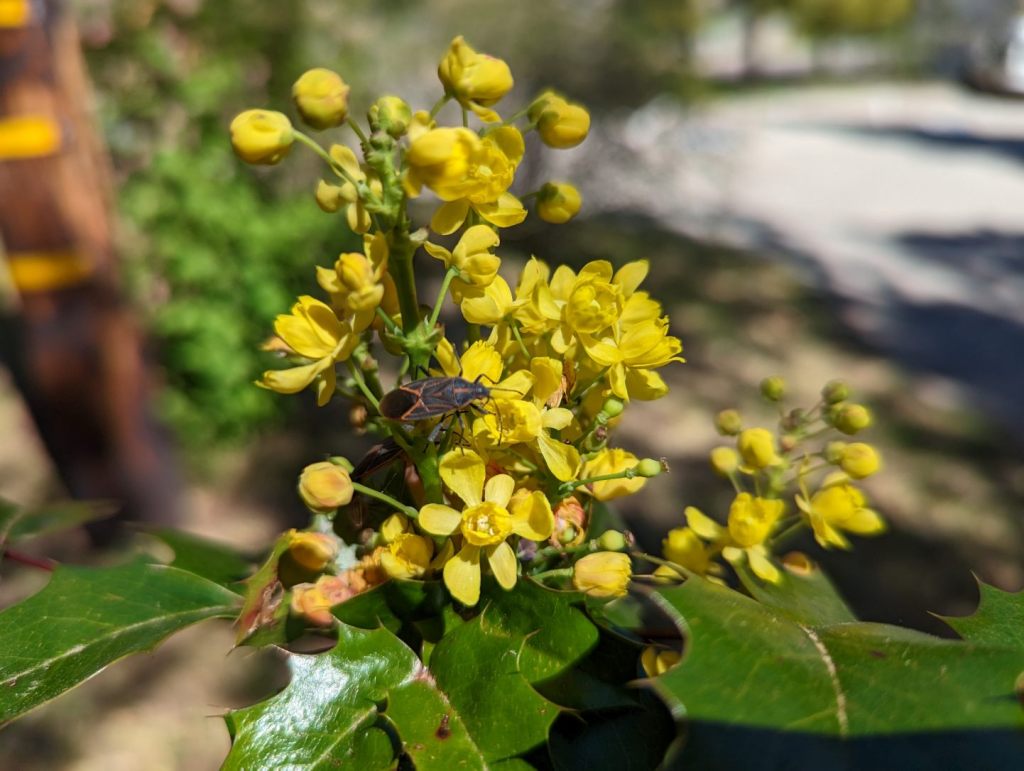
5. Mahonia aquifolium, Oregon grape, like California poppy, is named for the State that it is the State Flower of, which is Oregon. It is unrelated to actual grape. It is native here.

6. Rhody is similarly unrelated to Rhododendron macrophyllum, Pacific rhododendron, which is the State Flower of Washington, or Rhododendron maximum, great or rosebay rhododendron, which is the State Flower of West Virginia. The former of these is native.

This is the link for Six on Saturday, for anyone else who would like to participate: https://thepropagatorblog.wordpress.com/2017/09/18/six-on-saturday-a-participant-guide/