So much of the vegetation that we work with is unidentified. I know most of the species, but not all. Cultivars and varieties are more difficult to distinguish. There are too many! I am completely unfamiliar with some of the most modern of them. Of my Six this week, only the second might be a cultivar. The others are likely straight species. I am uncertain of their identities though, because I am unfamiliar with them. Actually, the third is not as labeled! That is because I thought it was something else until it foliated last spring. This Six on Saturday is about six questions of identity. I hope that someone might identify #1 for me.
1. Opuntia littoralis, prickly pear came from the Bat Cave in Los Angeles County, where a few other species of this genus are also native. I do not know if I identified it correctly.

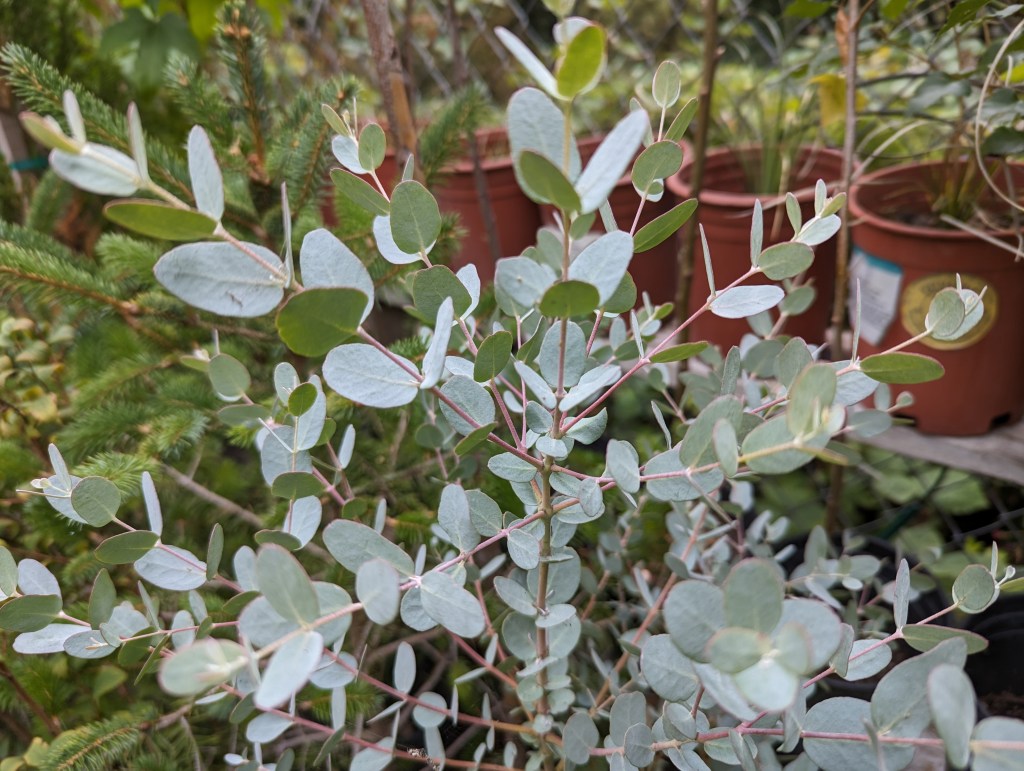
2. Eucalyptus gunnii, cider gum looks just like this while young, but so does the juvenile foliage of a few other species. Adult foliage and associated bloom is easier to distinguish.
3. Vitus californica, California grape looks nothing like this. I brought this here from the roadside while it was defoliated for winter. I hoped that it would be the California grape.

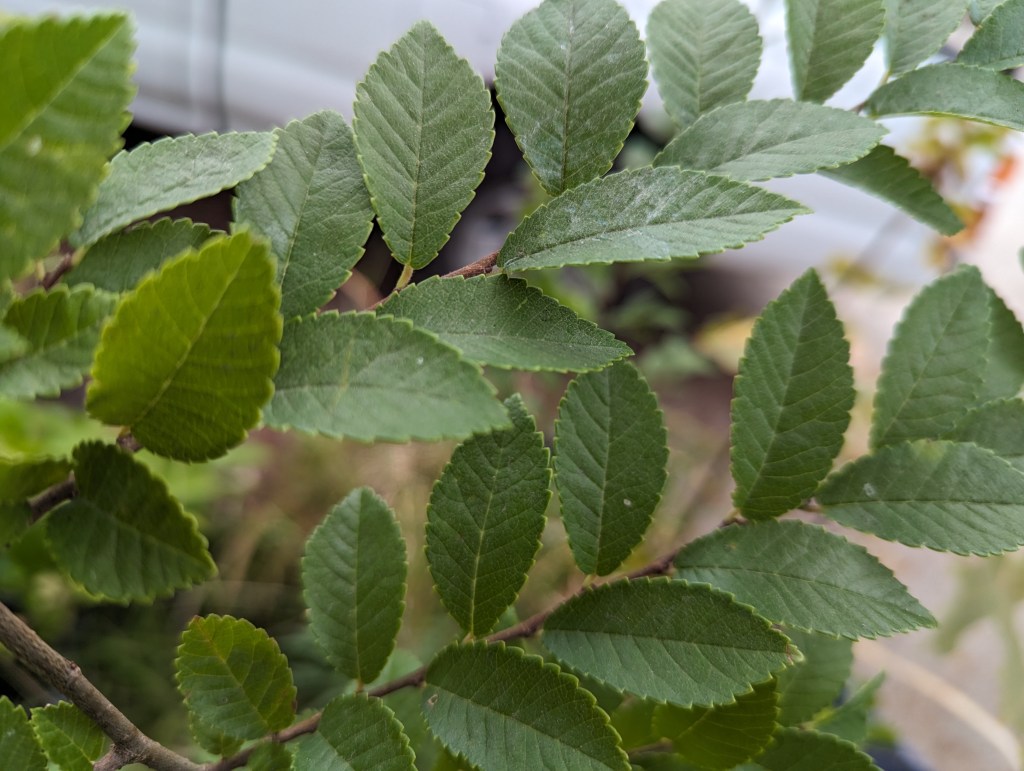
4. Ulmus parvifolia, Chinese elm was common when I was a kid. Only modern cultivars and hybrids are available nowadays. If this is common Chinese elm, it is now quite rare.
5. Populus alba, silver poplar is what I believe this might be. I grew it from cutting from a tree that I met in San Jose a few years ago. I am unfamiliar with this particular species.

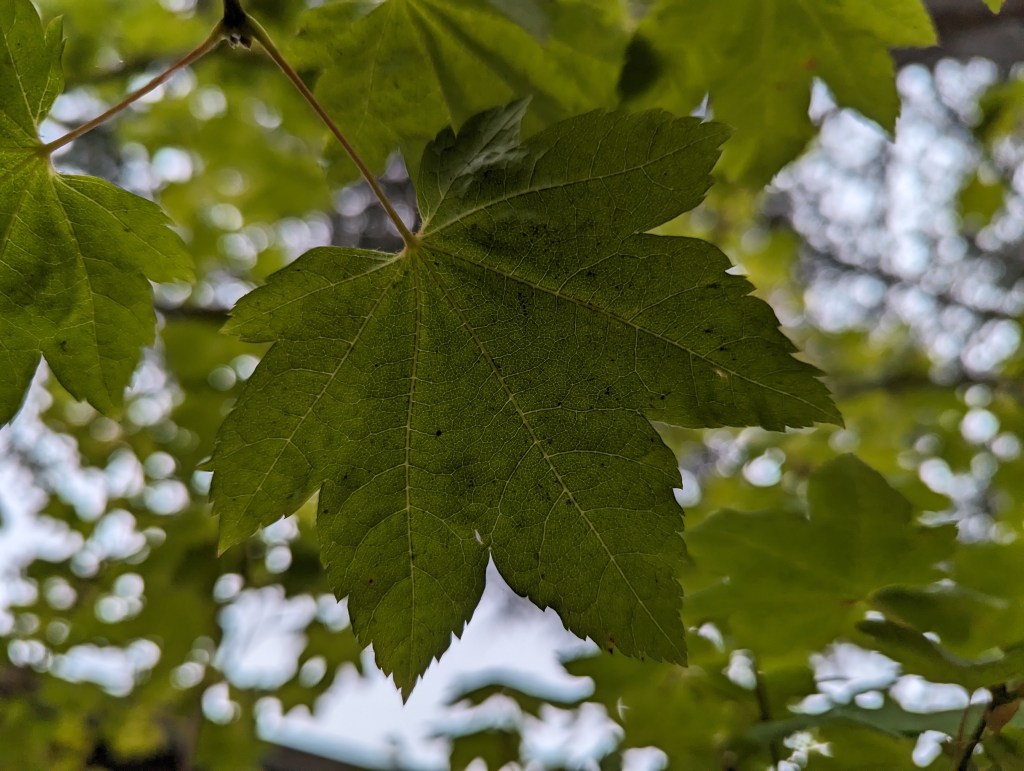
6. Acer circinatum, vine maple should be a gratifying alternative for another ubiquitous Japanese maple. I could be disappointed if this is merely another passe Japanese maple.
This is the link for Six on Saturday, for anyone else who would like to participate: https://thepropagatorblog.wordpress.com/2017/09/18/six-on-saturday-a-participant-guide
 Tony Tomeo
There’s only one there that I’m familiar with and that’s Populus alba, which you are calling silver poplar and we know as white poplar. It definitely looks right. Acer circinatum is rare here, but the description in my book matches your picture; less lobes than A. japonicum.
LikeLiked by 1 person
Do prickly pear grow in greenhouses because they need to? Some are common here, but they are quite variable, and their identities are not often a concern. I mean, we all know what a prickly pear is, but we do not know their names. Grapes are likewise common, but commonly unidentified.
LikeLike
I agree! Difficult.
LikeLiked by 1 person
Yes; they seem like they should be easier to identify. I mean, we see some of this stuff commonly. We should know what it is.
LikeLiked by 1 person
Chinese Elm…I couldn’t.
LikeLiked by 1 person
?
LikeLiked by 1 person
Tell them apart
LikeLiked by 1 person
Although I can not identify the particular cultivars of the modern hybrids, I can identify those that are not the common Chinese elm, but only as they mature. The street trees on Santa Monica Boulevard through West Hollywood are supposed to be Chinese elms, but are actually a modern cultivar. Chinese elms would have been messier, but prettier.
LikeLiked by 1 person
Interesting six! 👍🏽 Your Eucalyptus gunnii certainly looks correct, I can’t grow it here in my garden in Australia, can you believe! Because it is one that needs more rainfall than we get in SA. Your pricky pear looks correct too, we sometimes see this as a roadside week here.
LikeLiked by 1 person
Gads! A Eucalyptus that needs more rain?! I really do not know if it needs more rain here because I see it, or what looks like it, within refined gardens that get irrigation. Prickly pear is difficult to identify because a few species that resemble it live within the same region.
LikeLiked by 1 person
Plant mysteries are always fun. What is in a name, really, when you love the plant? Just our natural curiosity to know more about the plant. The Vitus leaf is particularly beautiful. It reminds me somewhat of native grapes in our area, but is more intricately cut.
The underside of the poplar leaf should show you whether it is a white/silver poplar. The shape looks correct. We have them in our area, but many consider them invasive because they seed in other areas so easily. They are elegant and beautiful, particularly in winter.
LikeLiked by 1 person
Yes, the underside of the leaves looks just like it should for a silver poplar. I like to know what some species are so I know what landscapes they are appropriate for. The identity of the grape was important because I wanted to grow the native grape. I do not know what it is, but I know what it is not. Now, I do not really care about the cultivar.
LikeLiked by 1 person