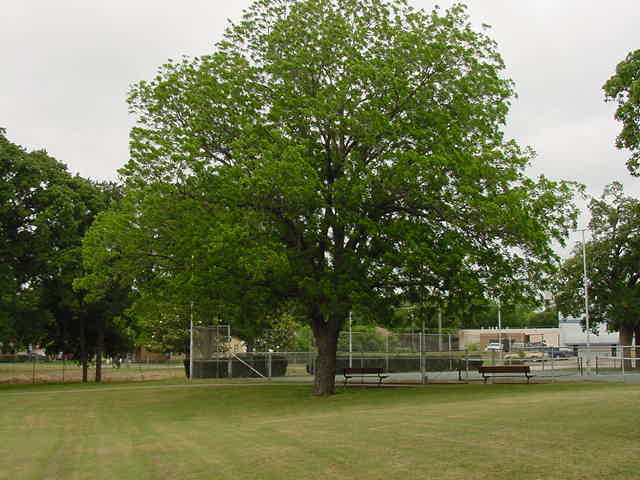
Texas selected a distinctive state tree; the pecan, Carya illinoensis. It is happy in the south and middle mid-west, where naturally grows about seventy feet tall. It can get almost as large here, so is best in big spaces. Summers are a bit too mild for reliable nut production in autumn, but single trees can sometimes make plenty. Two different trees (to pollinate each other) can actually be quite productive, although not quite as well flavored as in warmer climates. The pinnately compound leaves have about eleven individual leaflets that are about five or six inches long. Shade is not too dark.
 Tony Tomeo
One of my early childhood memories is going out with my grandmother to pick up pecans. She tucked up a corner of her apron (which she wore every day but Sunday) in her hand to hold the nuts until she could get back to her kitchen. I love ‘PEEkans, but I really love ‘piKAHN’ pie.
LikeLiked by 1 person
GADS! That pronunciation can make it seem so much less appealing! When we were in school, Brent liked going to International House of Pancakes, but I would get so annoyed by the waitress saying ‘butter piKAAAAAHN’ syrup! GAK! I SO can not eat something that sounds like that! (Besides, maple is best.) Almond is another regularly mispronounced nut. Although they were only a minor orchard crop of the Santa Clara Valley, they are still a significant orchard crop of the San Joaquin Valley. ‘AHmun’, as it is almost always pronounced, is the actual nut as a finished product. However, prior to that, while unprocessed or still on their trees, they are ‘Amun’ (pronounced like ‘salmon’). the trees are ‘Amun’ trees. The orchards are ‘Amun’ orchards, and so on. Yet, people who are completely unfamiliar with their production want to argue otherwise.
LikeLike