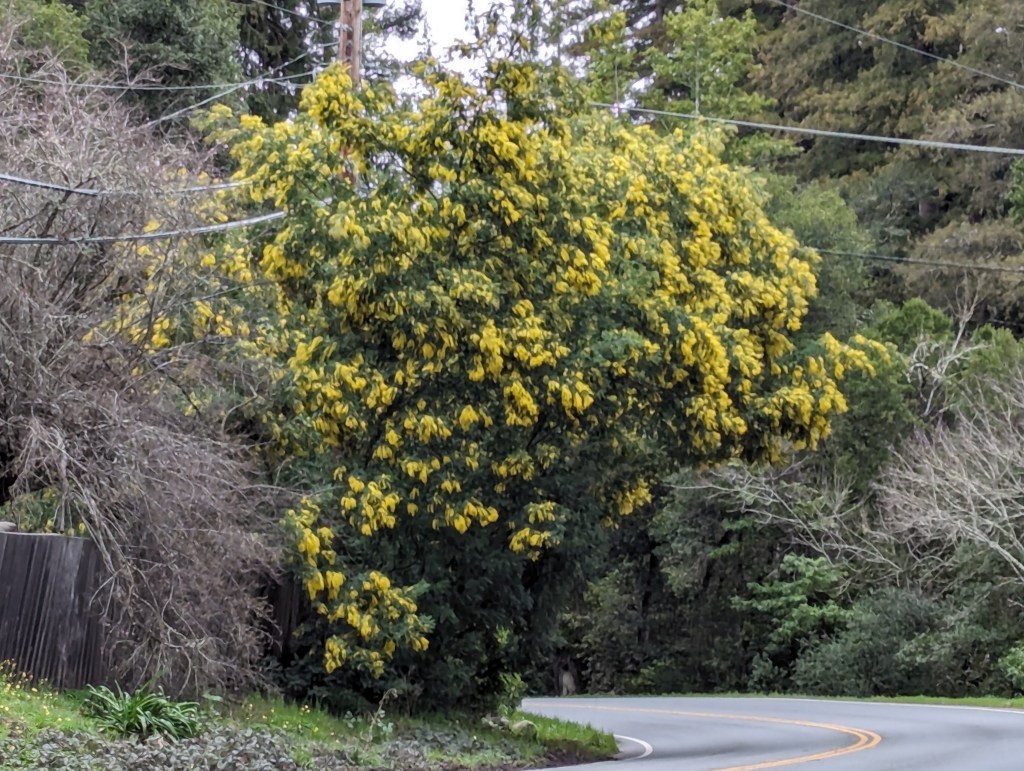
From my window, I can see across the way to one of my all time favorite weeds in my neighbor’s garden. A healthy acacia tree is nearly in full bloom! Throughout the year, I occasionally remind my neighbor that we really should cut the tree down before its seedlings overwhelm the neighborhood. This time of year though, I am secretly glad that we have not gotten around to it yet.
Even though most people find the fragrance objectionable, I actually find it appealing. It reminds me of Southern California, perhaps because, even on a cool wintry day, it smells like a sun roasted freeway on a hot smoggy day. I suppose that its pollen is a problem for anyone with even mild allergies; and after all, it is still a major weed.
Other trees that are now blooming are not so problematic, or equipped with a petroleum based fragrance. Shrubby forsythia and flowering quince were the first to bloom. Forsythia is the best bright yellow besides acacia. The most popular flowering quince are rich pinkish orange. Apricot, cherry, peach, plum, prune, nectarine, almond and a few other fruit trees, as well as their fruitless ‘flowering’ counterparts, including purple leaf plum, are blooming about now. (Flowering apricot, peach, nectarine and almond are rare.) Fruiting pear and apple trees typically bloom a bit later; but flowering pear and some flowering crabapple are already blooming. Later, redbuds bloom bright purplish pink.
When pruning fruit trees during winter, I sometimes leave a few branches to cut and bring inside while in bloom. Fruitless flowering trees do not need to be pruned like fruiting trees, so can provide even more flowering stems with more flower variation. Stems of forsythia, flowering quince and flowering cherry are often ‘forced’ into bloom by getting cut and brought in just as flower color start to become visible, so that they can finish their bloom inside. Except for redbud, any of the other spring bloomers can also be forced, but are more likely to get desiccated by the dry air inside.
As red maple and red oak begin to break dormancy, they develop delicate pendulous ‘blooms’ that are not very colorful, but might be interesting enough to add to more colorful cut flowers. Of course, pussy willows are always traditional.
 Tony Tomeo
That is the sign of spring over here, love them
LikeLiked by 1 person
It is likely the sign of spring in most climates. It is amusing that so many of the same flowering cherries and flowering crabapples that are popular here are also popular there.
LikeLiked by 1 person