Even annual bloom can be surprising after a few or many months without it. Perhaps an unexpected bloom is more surprising. Familiar wildlife might be surprising when it does something unexpected. Unexpected or unplanned ‘wildlife’, even if domesticated, is a bit of a surprise. Ultimately though, the major surprise is the fifth of these Six. The first two pictures are from Brent’s garden, not here.
1. Persea americana, avocado fruit ripens in the tree above Brent’s office for quite a few months. The tree rarely lacks fruit completely. These spiral stairs are from the roof deck. This squirrel saw Brent taking a picture of it taking its avocado down, so took it back up.

2. Hippeastrum papilio, butterfly amaryllis was left at Brent’s garden by a neighbor who relocated. It is as perennial here as it is there; so I want a copy. Brent did not know what it was until, after two years or so, it surprised him with bloom. Brent takes bad pictures.

3. Malus X (floribunda?) ‘Prairie Fire’ flowering crabapple bloomed spectacularly. It is a relatively modern cultivar from 1982, but is surprisingly old fashioned. I grew up with a tree that was a decade or so older than I am, but it bloomed with a similar reddish pink.

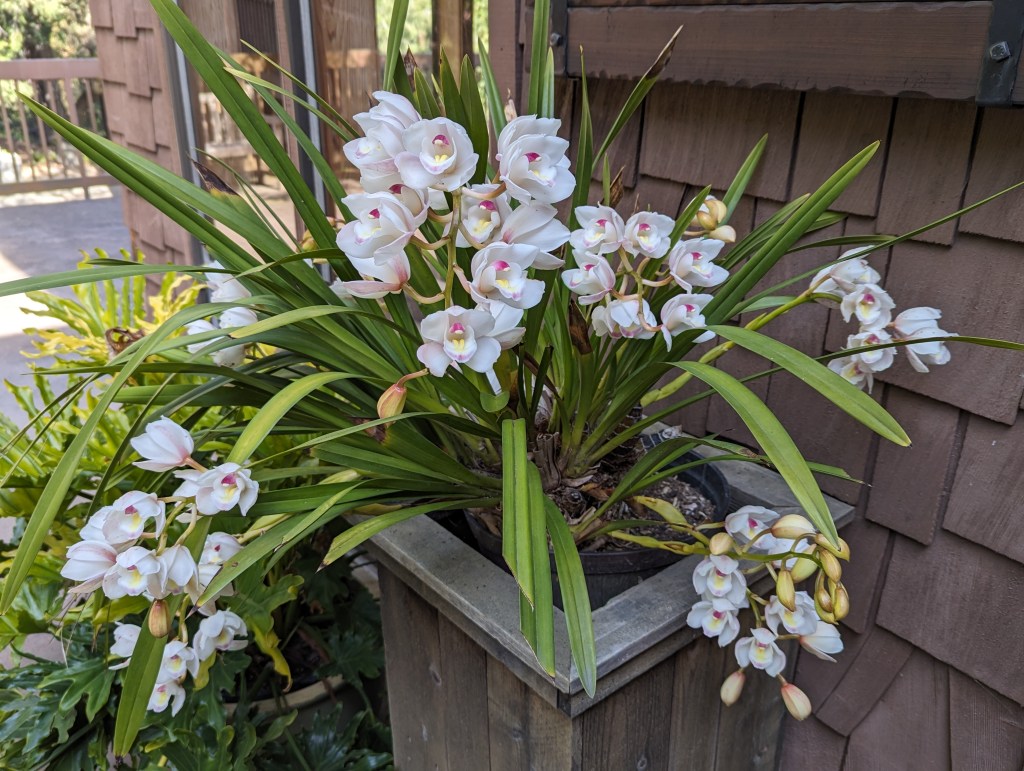
4. Cymbidium orchid of an unidentified cultivar was left by a colleague who only wanted it off his porch. It gets only watering, but blooms annually, and surprisingly abundantly. I should eventually divide it, but I am hesitant to interfere with such a reliable specimen.
5. Koi met an unfortunate demise two winters ago as someone who was unaware of their presence drained their pond. However, a neighbor inquired about two small fish that he saw in the pond soon afterwards. More recently, the same neighbor inquired about this. It seemed to be about a foot and a half long, with a slightly smaller and darker associate.
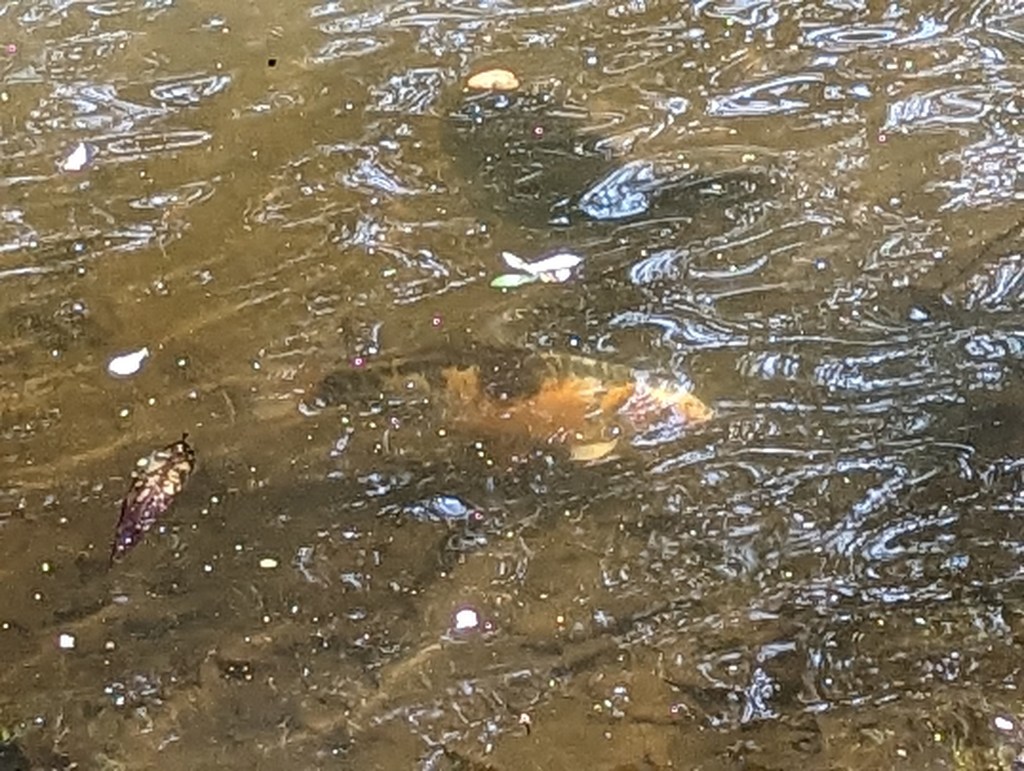
6. Koi are supposedly schooling fish. Two do not qualify as a school. So, now they have a few more friends to go to school with. These tiny koi should be able to evade their larger classmates, who might otherwise eat them. Actually, I doubt that the larger koi are large enough to eat them anyway. This is not something that I expected to be contending with.

This is the link for Six on Saturday, for anyone else who would like to participate: https://thepropagatorblog.wordpress.com/2017/09/18/six-on-saturday-a-participant-guide/
 Tony Tomeo
Squirrels and avocadoes are a thing! Laughing, they are pesky if you want to eat the fruit. That butterfly amaryllis is different from the one here, it is Coral with similar markings.
LikeLiked by 1 person
That avocado tree produces more avocados than the neighborhood can eat, so no one minds sharing with squirrels. Floral color of butterfly amaryllis is somewhat variable genetically, and might be more variable in response to environmental conditions.
LikeLiked by 1 person
Great photos this week, even if two were from Brent. What a garden paradise he has created! Just amazing. So I grow Amaryllis in pots, and they have a fairly large bulb. I’m trying to figure out how you grow a bulb 5″ or so across epiphytically in a tree…? Do you wrap it in moss and wire it to a branch?
The squirrel with the avocado makes me laugh because the Virginia squirrels are just as pesky. I would love to have watched the little guy carry the avocado back up the spiral stairs! I bet he still ate it, just as they steal and eat our pears, etc. But they are very smart and know when we are watching them.
Great surprises this week!
LikeLiked by 1 person
The bulbs are epiphytic naturally, so they figure it out on their own. If I grow them as such, I will merely put them into a rotting tree trunk with a bunch of leaf litter on top of them at the beginning of autumn. They would need watering through the summer here of course. Some species of Agave and one species of Yucca are epiphytic. They must look very weird.
Squirrels will steal anything, but I can not imagine how that particular squirrel moved an avocado that weight more than it did.
LikeLiked by 1 person