Six pictures can not represent all that is blooming now. I did not even try. Nor did I post six pictures of six different cultivars of the same species, as I typically do with camellias, azaleas, rhododendrons, flowering cherries, roses, or other flowers that we grow several cultivars of. I posted three pictures of bearded iris, but I could have procured more than six if I wanted to. I likewise could have posted more than six pictures of different African daisy. I tried to mix it up a bit more than I typically do, as I did with the snakeroot here.
1. Persicaria bistorta, snakeroot and (likely) Iris ensata ‘Variegata’, variegated Japanese iris from Tangly Cottage Gardening are happy on the edge of the pond. The Japanese iris is barely visible at the center. The rest of it is on the edge of another stream. Naturalized exotic Nasturtium officinale, watercress to the upper right shows how close the water is. I thought that there were two cultivars of snakeroot, but found three labels for ‘Superba’, ‘Firetail’ and ‘Dimity’. I can segregate their copies later, but will likely leave these mixed.
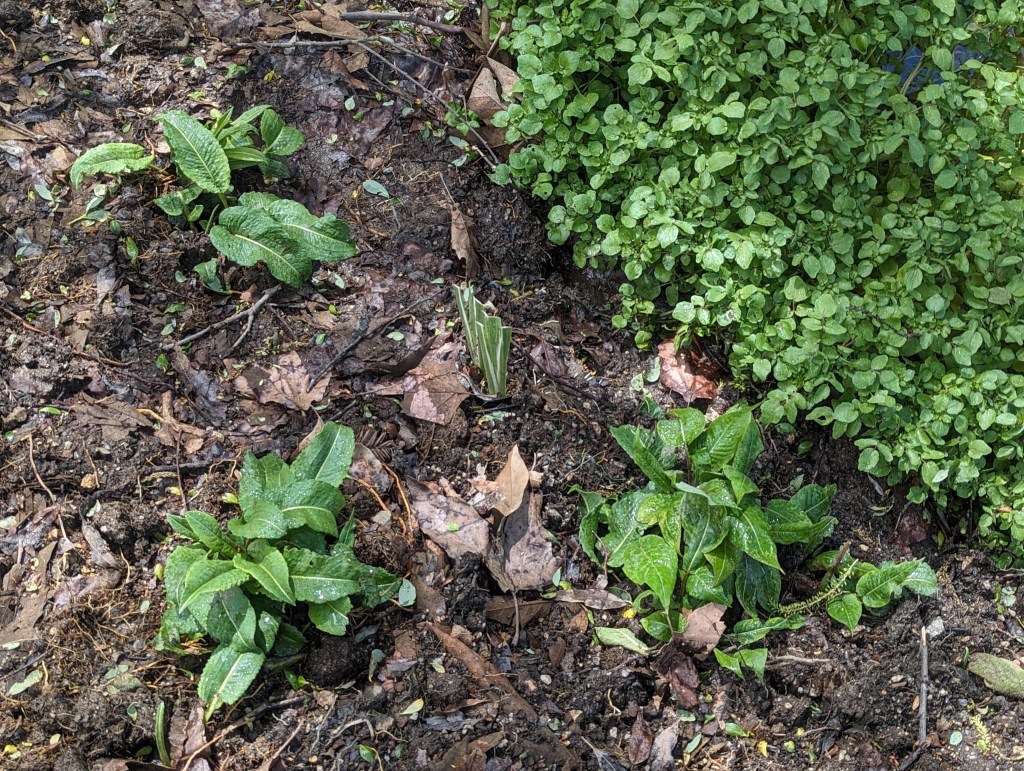
2. Clivia miniata ‘Variegata’, variegated Natal lily from Brent’s Jungalow tried to bloom, but this happened before I took a picture. Its cultivar is unidentified, but it is variegated.

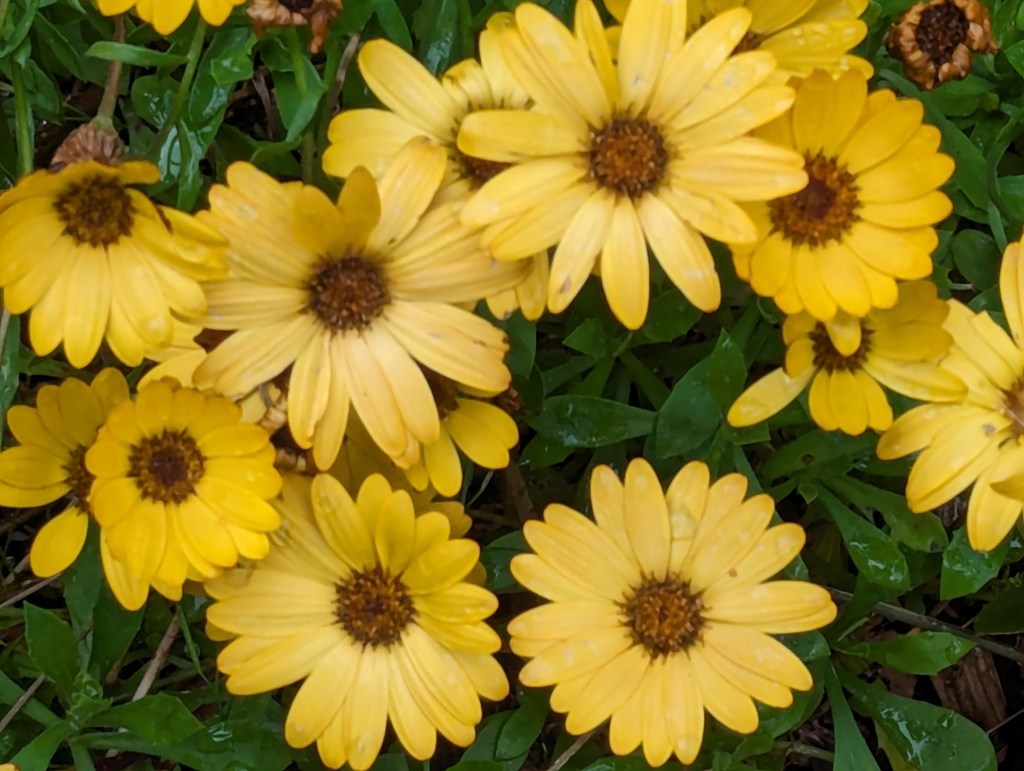
3. Osteospermum ecklonis, African daisy blooms too generously for anyone to take all its flowers. About six cultivars inhabit this particular landscape with a few more in another.
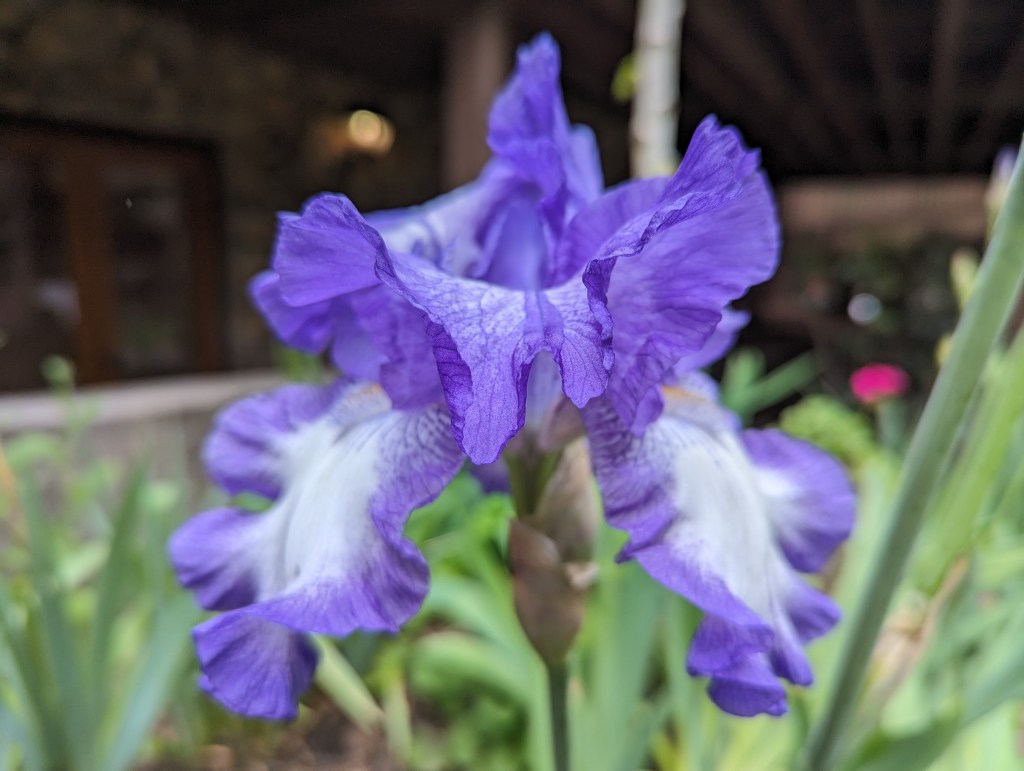
4. Iris X germanica, bearded iris are blooming so tall that some should be staked. There are too many cultivars in the Iris Bed to take pictures of, so I will show only these three.
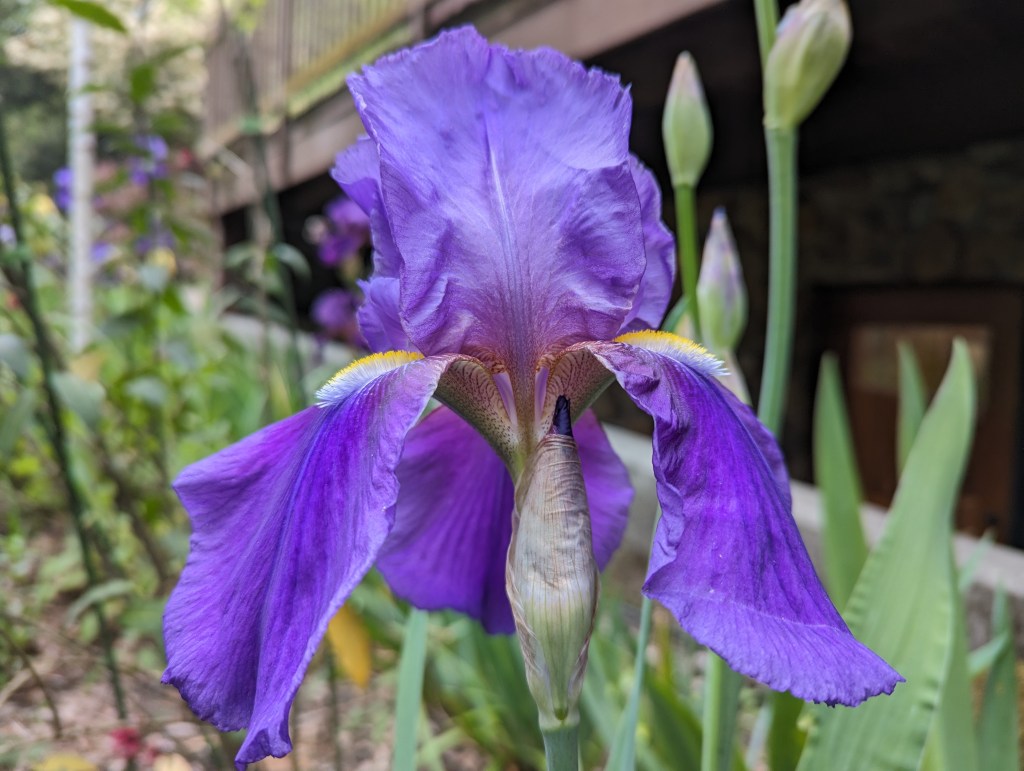
5. All cultivars of the primary Iris Bed are unidentified. At least three that were relocated from the forest are likely feral. One is pale white. This pale yellow looks like Tweety Bird.
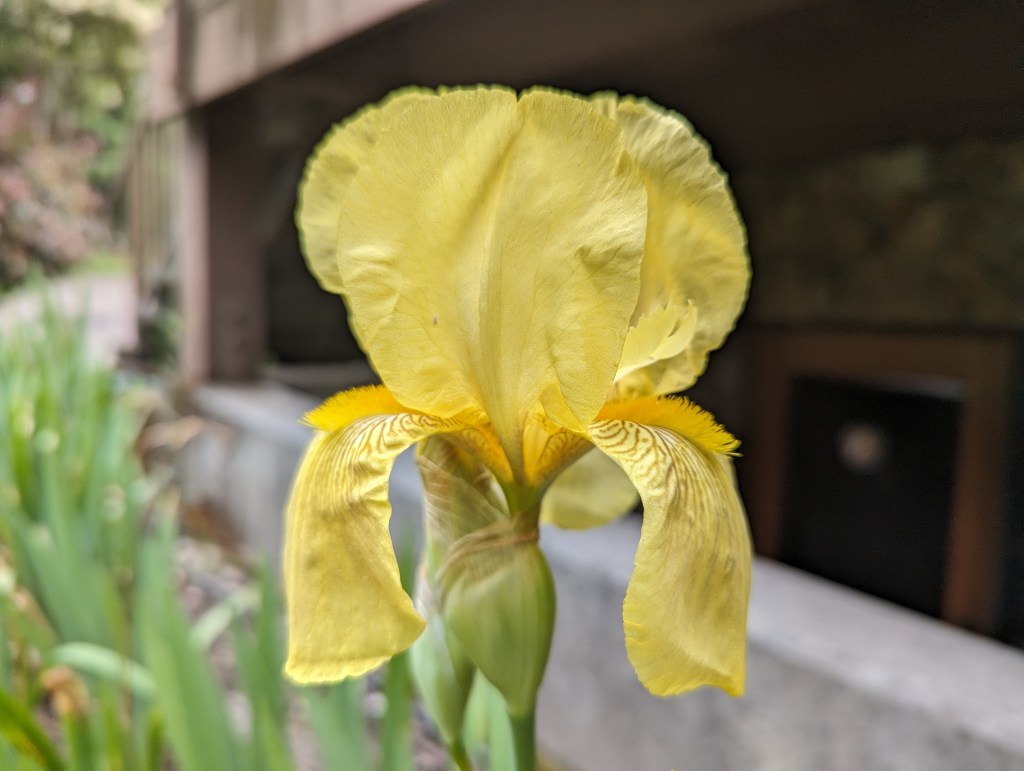
6. All of the iris here, like the iris in my garden, have history. This iris is from the former home of an respected colleague. He brought it to me before the garden was demolished.
This is the link for Six on Saturday, for anyone else who would like to participate: https://thepropagatorblog.wordpress.com/2017/09/18/six-on-saturday-a-participant-guide/
 Tony Tomeo
Fabulous irises! It is good to have plants with stories, makes them even more special.
LikeLiked by 1 person
Yes, but it also makes them impossible to part with. I will grow them for the rest of my life.
LikeLiked by 1 person
Love the Irises, and their stories..did the Clivia flower stem break or did something else happen to it?
LikeLiked by 1 person
‘Something else’ happened to it.
LikeLike
I always have iris envy at this time of year! My last Seattle allotment has maybe 20 varieties of bearded iris. Every color you can imagine! It was great. If it weren’t for my native fetish reining me in from buying every plant that catches my eye, I’d have found a spot for some by now. I also love the deep purple siberian iris that blooms in May or June on campus, depending on location. I would love to plant a clump at the end of my baby arbor vitae hedge. The leaves are attractive and stay upright and based on where they are planted on campus they must be a little salt resistant – my street gets salted and there is a spray when it is plowed in winter, but the plant is dormant at that time, so it does not seem to suffer. I also love the Japanese iris that is ubiquitous in southern California landscapes.
LikeLiked by 1 person
Ubiquitous? I just got my first variegated Japanese iris from Tangly Cottage Gardening. I do not remember seeing them while in Southern California, although I do not exactly look for iris. Except for the African iris (Morea species), iris of most species are more common here than there.
LikeLike
I must be thinking of a different iris that we colloquially called Japanese iris when I lived in San Diego. Maybe the Moraea you mention. I lived in apartments back then and didn’t have a vested interest in knowing what plants were really called, since I had no place to put a plant and didn’t know about community gardens back then either.
LikeLiked by 1 person
Japanese iris certainly could have been ubiquitous there and then. I just do not know. I have only been to San Diego once, and was not watching for iris at the time. I can remember when Canna were ubiquitous in certain neighborhoods of Santa Clara and San Jose a long time ago, perhaps because they did well in someone’s garden, and that someone shared them. I would not know now that they were ever so common as they were then.
LikeLike
Nice Iris. I always wonder how I completely missed Persicaria, I have just learned about them from blogs.
LikeLiked by 1 person
That was my situation until I acquired these without a plan. I am quite pleased with them for the same riparian landscape that I got the Louisiana iris for.
LikeLiked by 1 person