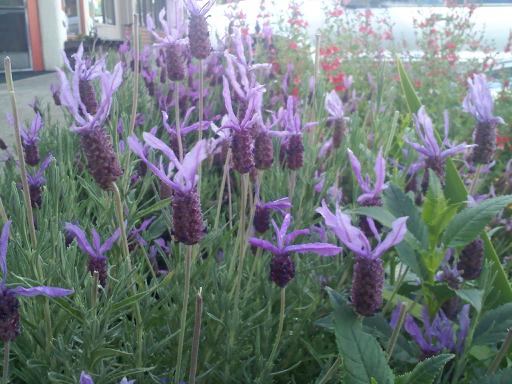
It is neither as variable as the many varieties of English lavender, nor as traditional as French lavender, but Spanish lavender, Lavandula stoechas, has the most unusual flower spikes. These short plump spikes are less than two inches long, but are topped with one or two pairs of distended terminal bracts that are almost as long; like simple little packages with big ornate bows. The flower spikes get their color from densely set bracts that surround the minute flowers, and can be various shades of purple or purplish pink or even grayish white. The large terminal bracts are lighter shades of the same colors.
Bloom begins during warm spring weather and continues into summer. Flower may stay close to foliage on stems less than two inches long, or may stand more than six inches above the foliage. The aromatic grayish leaves are narrow and about an inch long.
Mature plants may be three feet wide, and nearly as tall. Aggressive shearing after bloom promotes secondary bloom later, and keeps plants compact. Without pruning, old plants eventually die out in the center.
All lavenders want good drainage and good exposure, but do not want mulch or fertilizer. Inadequate drainage, crowding or mulch can promote rot. Fertilizer can inhibit bloom. Once established, lavenders do not need much water.
 Tony Tomeo
I’ve always liked this lavender.
LikeLiked by 1 person
It is distinctive. I like they symmetry of the more popular cultivars of English lavender, but can not help but appreciate how Spanish lavender is so undemanding. One grew from seed outside the gate here, and performs well without irrigation or any attention. Not many species will do that. It does not naturalize enough to become invasive though. Although it is rather irregular in form, the floral color is better than that of the others.
LikeLike