
The internet never ceases to amaze with its inefficiency of providing information that should be more readily available. Old fashioned horticultural texts and even encyclopedias were more reliable. I remember reading that elderberry could be self pollinating, but that it would be more productive with another cultivar of the same species. Because I could not remember what species of the genus that information was relevant to, I more recently tried to determine the requirements of each of the few species that I grow. Ultimately, it seems to me that all are about the same in regard to both their ability to self pollinate to a minimal degree, and their ability to pollinate more efficiently with other cultivars. However, I still do not know. Furthermore, I am now confused about the identity of American elderberry, which many sources insist is merely a variety of common black elderberry of Europe.
Sambucus caerulea, blue elderberry is native and too common for me to know or care if it is more productive with other genetically distinct specimens, which, since the species lacks cultivars, are merely other wild specimens. In other words, blue elderberry specimens here can not be adequately isolated from other specimens to determine how reliant they are on others for pollination. Regardless, I will grow about four together within my garden.
Sambucus racemosa, red elderberry is supposedly native here, but I have never seen it in the wild. Consequently, I do not know if other specimens are close enough to pollinate specimens within my garden. Rather than experiment with single and potentially isolated specimens, and because there is no need to separate the four specimens here anyway, I will grow all of them together within my garden. I am considering adding ‘Sutherland Gold’ or other ornamental cultivars in the future.
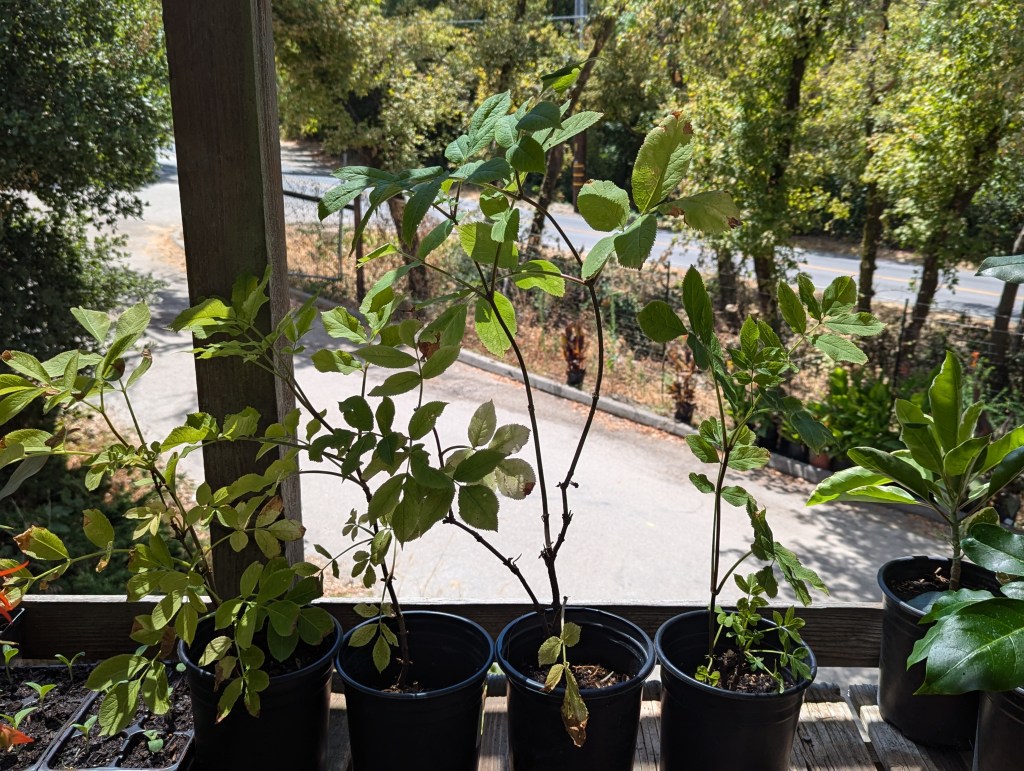
Sambucus canadensis, American elderberry is not native, so could be grown in isolation here. However, I want berries more than I want to know how reliant this species is on pollination from other genetically distinct specimens. Before I grow cultivars, I will grow about four specimens within my garden from seed. I might consider cultivars in the future, but for now, would prefer to grow them as most people within their native range experience them, and as I grow blue and red elderberries.
Sambucus nigra, black elderberry is a species that I find to be less interesting than the three North American species that I actually want to grow. However, I have grown ‘Black Lace’ at work for a few years, and recently got it ‘Madonna’ as a pollinator so that the two can make berries together. Because I grew several more copies of each than we can accommodate at work, I will likely grow a pair of each within my own garden. Both are ornamental cultivars that happen to also produce berries. However, formerly without a pollinator, ‘Black Lace’ has been fruitless. This year, one of the copies managed to make these few berries in the picture above without bloom from ‘Madonna’. I suppose that this is consistent with what I read about its ability to self pollinate somewhat. Now, I want to see what it does next year if ‘Madonna’ blooms well.
 Tony Tomeo
Thank you for noticing. I found that ‘Black Lace’ remains patented until February! I will not mention it again. I found no information about ‘Madonna’. However, I did happen to notice that the patent for ‘Black Beauty’ has expired. Anyway, I deleted your comment because I have a stalker who would make this a problem if she thought she could.
LikeLiked by 1 person