Brightly colored berries are ripening for both migrating and overwintering birds who are enjoying the abundance.
1. Rosa californica, California wild rose produces nice small hips, but then defends them within a thicket of very thorny canes. Birds have no problem flying in from above to take all they want. I get only what is left when it is time to cut the thicket down during winter.

2. Sambucus cerulea, blue elderberry is one of only two of these six that is designated as a berry by its common name, but is the only one of these six that is not a berry. Its fruits are drupes. Its jelly wins ribbons every time I bring it to compete at the Harvest Festival.

3. Cornus florida, flowering dogwood should stay almost fruitless. Yet, it produces more berries than the red flowering currant produces. It and the red cestrum are the only two of these six that are not native here. Rhody says it is dogwood because the ‘bark’ is ‘ruff’.
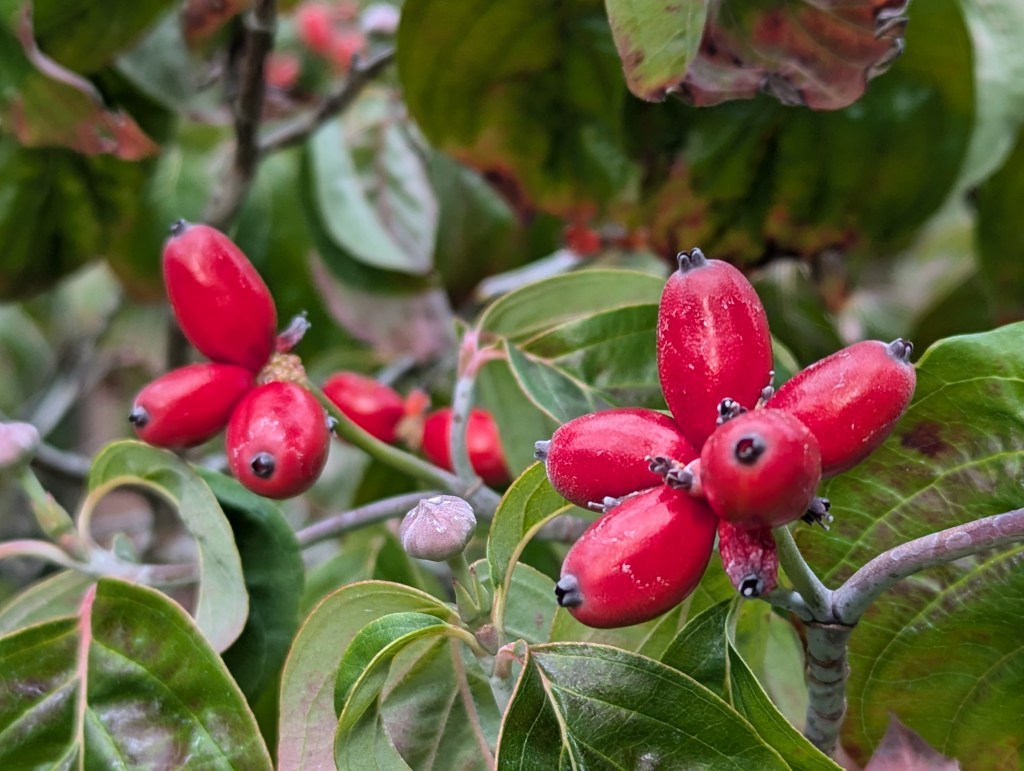
4. Ribes sanguineum, red flowering currant should produce more berries than flowering dogwood, but this is about as abundant as it gets. The berries do not even look appealing enough to collect. Their flavor is no more impressive than their oddly grayish blue color.

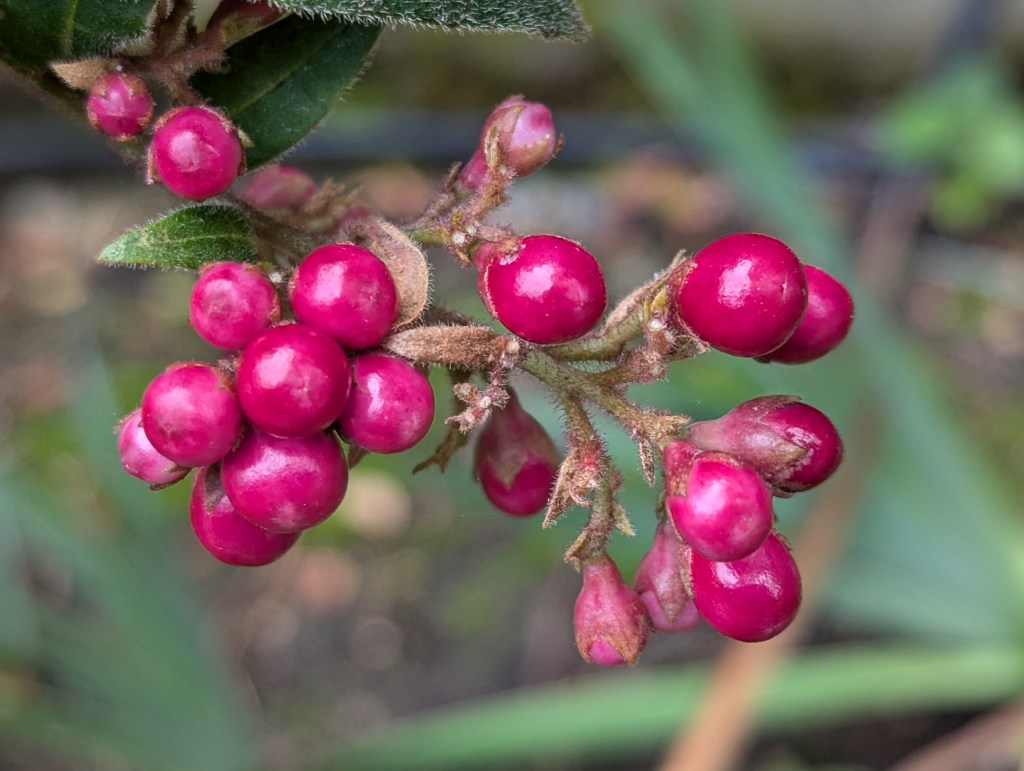
5. Cestrum fasciculatum ‘Newellii’ red cestrum berries are toxic, like those of snowberry and flowering dogwood. However, they are not toxic to birds who sometimes eat them as soon as they become colorful enough to be pretty. Birds can be pretty in the garden also.
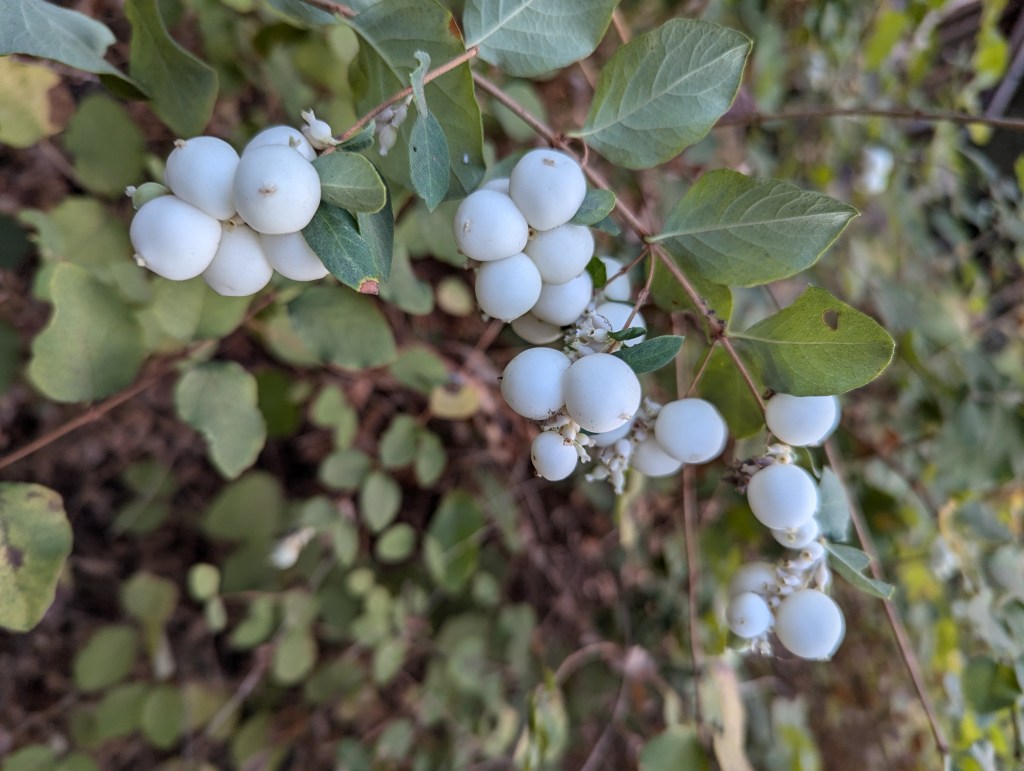
6. Symphoricarpos albus, snowberry is a rather skimpy species. Its thin and wiry stems form low and sparsely foliated thickets. It only stays because it produces these unusually white berries. It might be prettier and more prolific if coppiced during winter dormancy.
This is the link for Six on Saturday, for anyone else who would like to participate: https://thepropagatorblog.wordpress.com/2017/09/18/six-on-saturday-a-participant-guide/


It’s a berry party in your six this week!
LikeLike
Love all the berries!. My elderberries (Sambucus canadensis) are long gone, and I will be cutting it back once the leaves have left. I have to say that my elderberry has showier berries that the blue one you have. My husband hates the berries, as he stains his clothes mowing the lawn near the shrub. He suggested I remove them when green, but then I and the birds would not get the lovely dark shiny berries!
LikeLiked by 1 person
Black elderberries from eastern North American only recently became available here. Rather than grow improved or selected cultivars, I am growing some from seed. I want to grow the simple species, as it grows wild there. If I like it, I can procure cultivars later. (I probably will not.) The berries are icky fresh, and potentially toxic. They are completely different cooked and sweetened. I will also grow Sambucus racemosa, red elderberry, just to see what they are like. I am told that they are not worth bothering with, so may not retain them for long.
LikeLike
You’ve a couple of things I’ve seen often enough here but never with fruits; Cornus florida and Cestrum. From just the fruits I would never have guessed the Dogwood either.
LikeLiked by 1 person
Modern cultivars of flowering dogwood are mostly extensively bred, or that is what I believe. Some are hybrids, which should be sterile. I prefer the older types, but they actually seem to produce less fruit than modern sorts.
LikeLike