‘A Week Of Flowers’ at ‘Words And Herbs’ finished a week ago, but as I said last week, it reminded me that I should share more floral pictures.
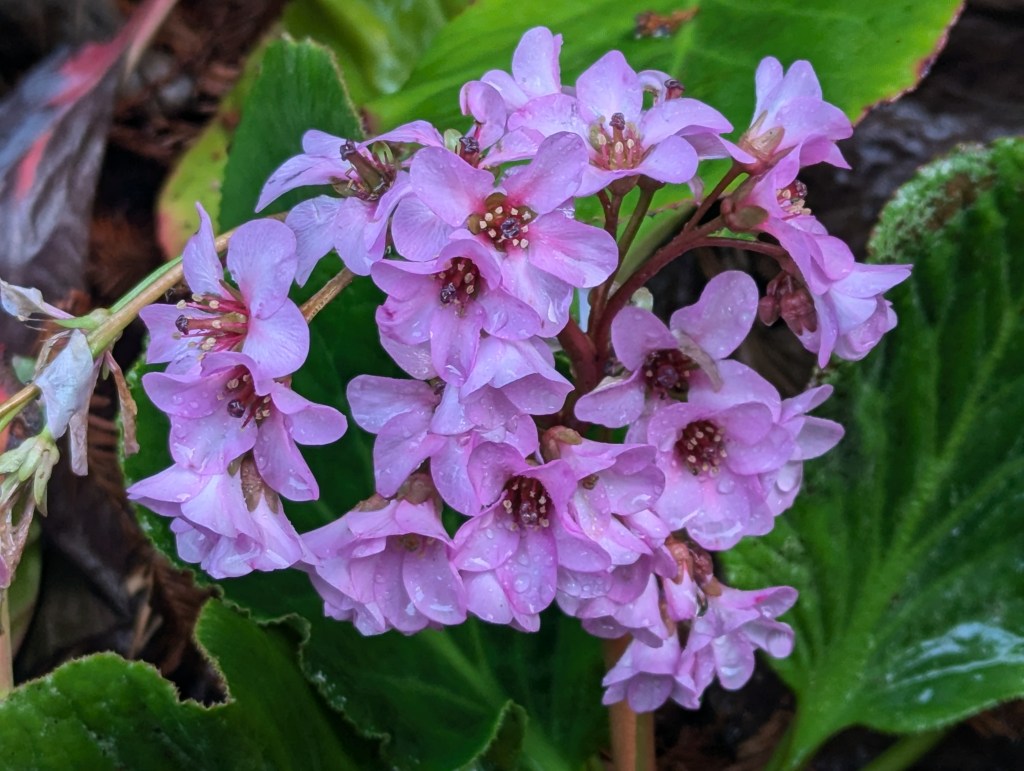
1. Bergenia crassifolia, pigsqueak is as popular as it is because it is so easy to propagate merely by relocating rhizomes that migrate where they are not wanted. These eventually creep onto a low retaining wall around their area, providing more to relocate elsewhere.
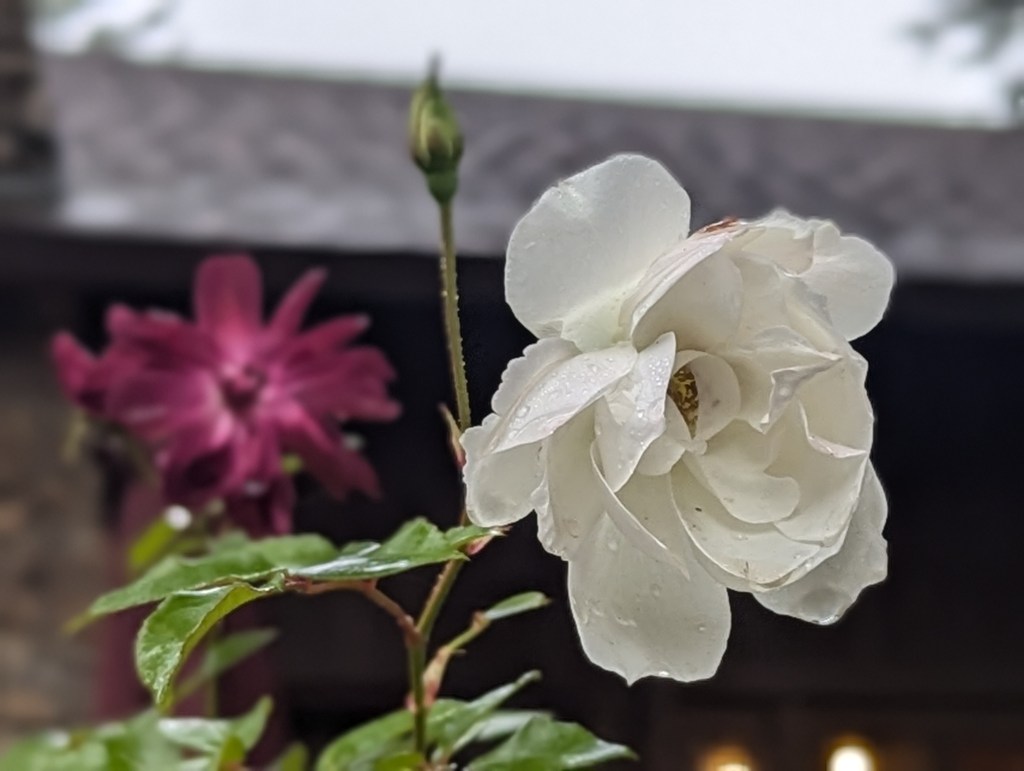
2. Rosa spp. ‘Iceberg’ rose should finish bloom anytime. That bud to its upper left is not likely to open now that the weather is cool for winter. ‘Burgundy Ice’, in the background, is grafted onto the same rose tree with this ‘Iceberg’. I think that they look odd together.
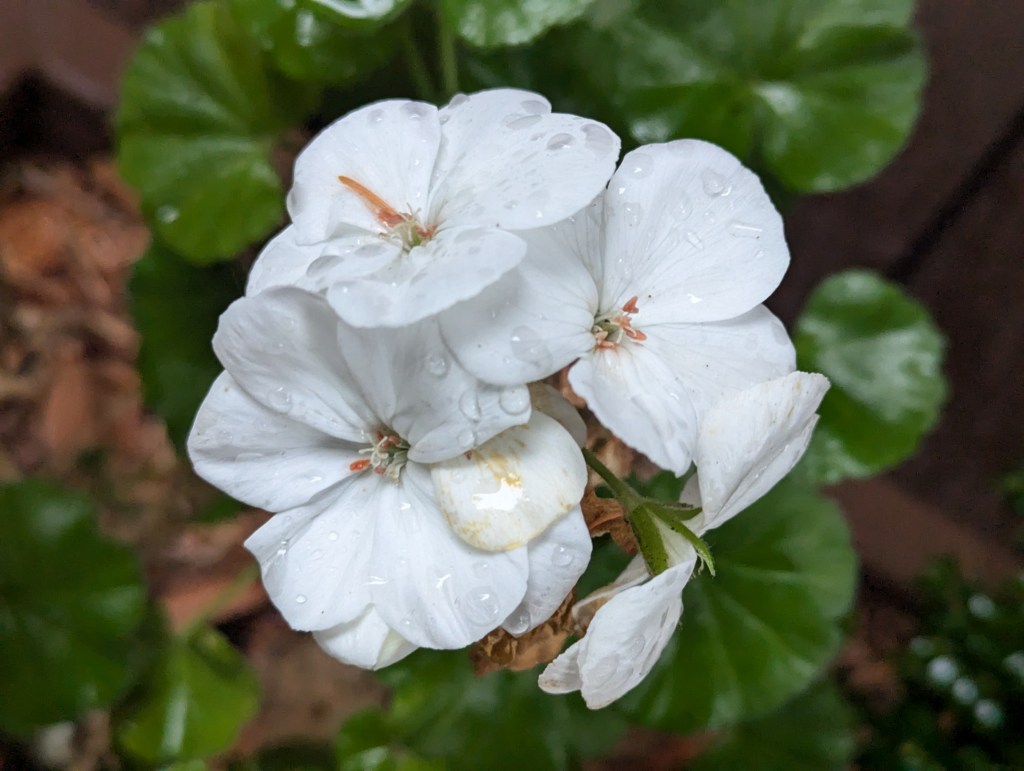
3. Pelargonium hortorum, zonal geranium is getting overgrown enough to look shabby, but should not be pruned back until the end of winter. If it gets pruned back now, it will look even shabbier until it resumes growth as weather gets warmer at the end of winter.
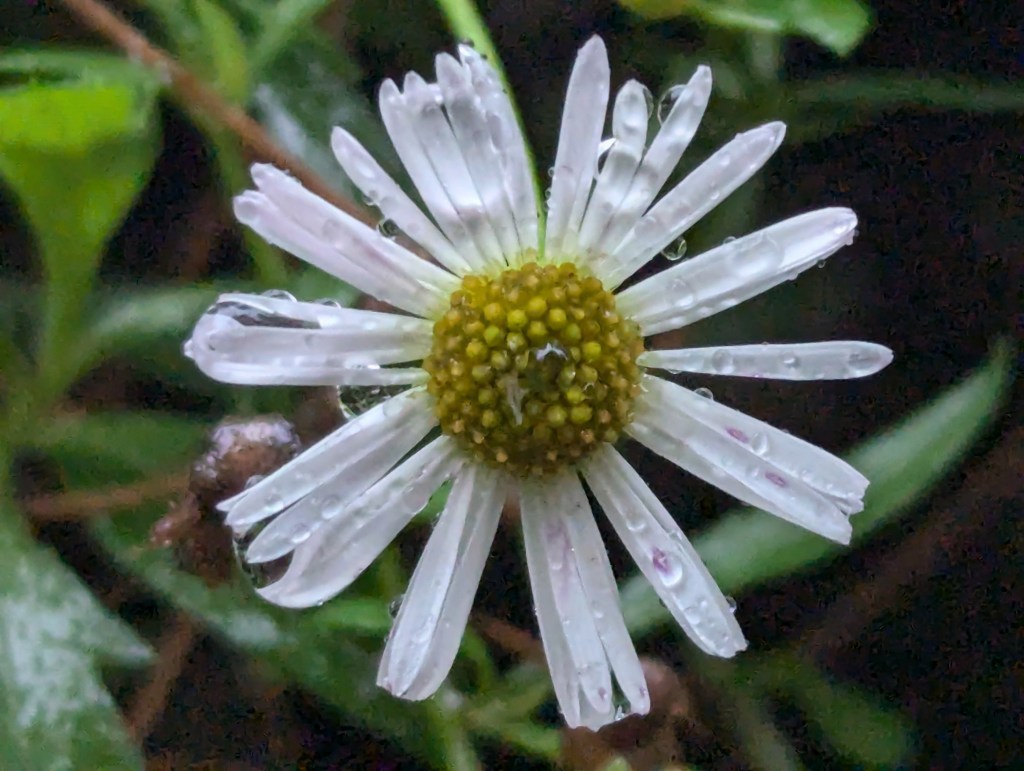
4. Erigeron karvinskianus, Santa Barbara daisy flowers seems to be a bit lean in partial shade. Santa Barbara daisy can be an annoying weed, but within our landscapes, is more often an asset, adorning otherwise bare stone walls. I pull it out to refresh it after winter.
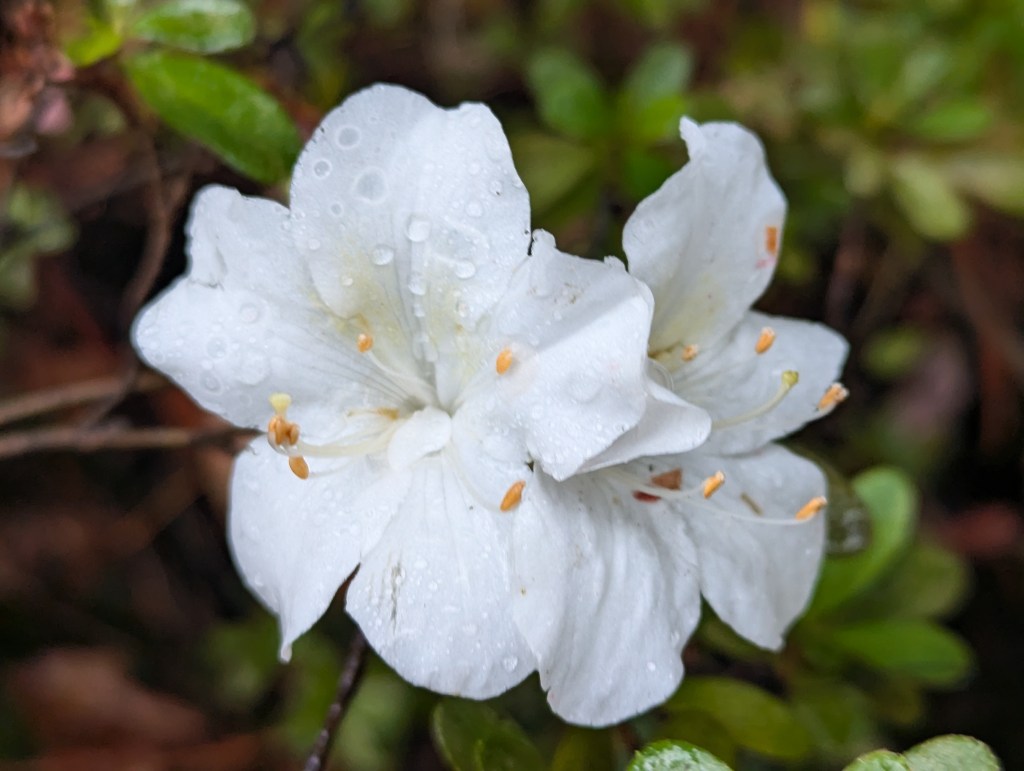
5. Rhododendron spp., azalea blooms lavishly for spring, but this particular unidentified cultivar also tosses out these few premature flowers for winter. Incidentally, it is merely coincidental that most of these Six bloom white. I just got pictures of what is prominent.
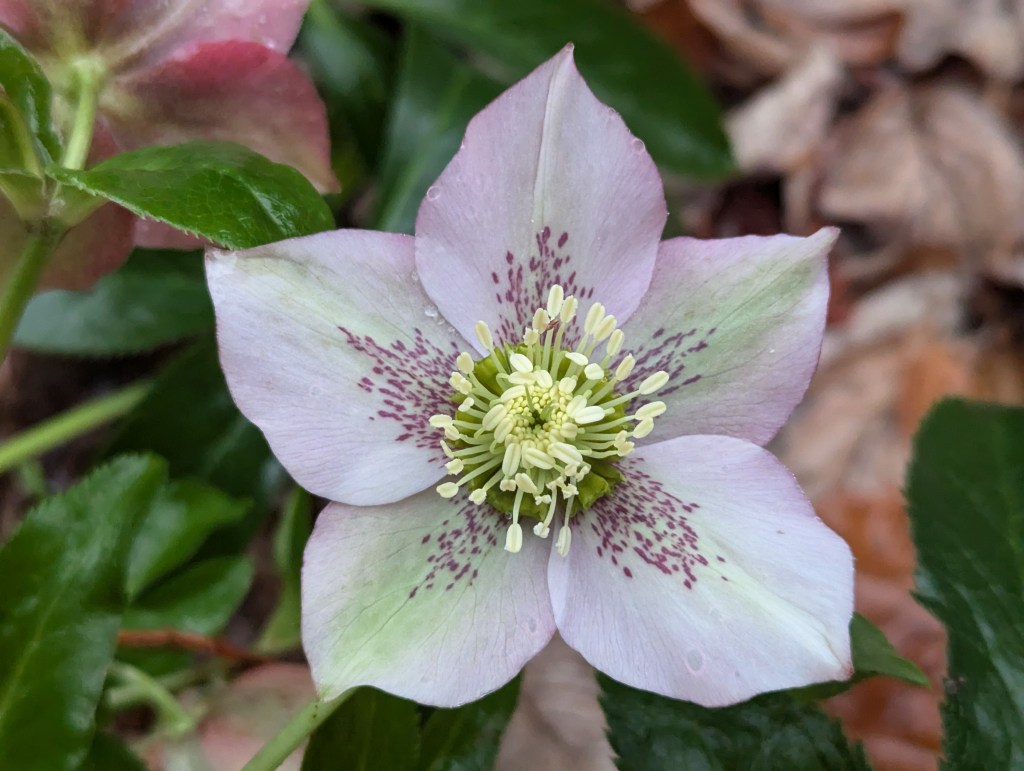
6. Helleborus X hybridus, hellebore is happy to self sow, but not as happy to perform. It does not bloom much. When it does, most of its flowers are spotty and grungy. Even the foliage is shabby. This flower, although pallid and weirdly blushed, is a delightful rarity.
This is the link for Six on Saturday, for anyone else who would like to participate: https://thepropagatorblog.wordpress.com/2017/09/18/six-on-saturday-a-participant-guide/
 Tony Tomeo
Lovely to see more flowers this week Tony. The Hellebore is really pretty. I have a few that don’t do very well, and I think it is because they don’t get enough shade and/or moisture in summer. There are lots of seedlings in the meantime though, so perhaps they will eventually flower and be more robust than their parent plant.
LikeLiked by 1 person
I suspect that they enjoy humidity. Otherwise, they get all that they supposedly need where they are here. I keep thinking that, eventually, they might perform decently, and sometimes, they actually do.
LikeLiked by 1 person
I like that Helleborus! and the rest of your white flowers.
LikeLiked by 1 person
I was impressed with it also. It is rare to find such an exemplary flower. Only one hellebore here is reliable for good bloom, but it is a weird pale pink color. This particular flower (in the picture) is not as white as it seems to be in the picture. It is sort of grayish, . . . and sort of slightly blushed with pale pink, . . . and with those odd very pale greenish center stripes, it is . . . weird. However, the flower is perfect, so I can not complain.
LikeLike
At my first apartment in Seattle, the front landscaping was azalea heavy and there was a branch that was lit up as it was encroaching on the signage. I always assumed it was the light and heat from the lighting, but it may have been a rogue bloomer! That is an enticing hellebore – I find I favor speckled flowers, foxglove, lillies, alstromeria, etc.
LikeLiked by 1 person
Light and warmth from lights can stimulate premature bloom, as well as delay defoliation of deciduous foliage. It can influence vegetation considerably. Although I am not so keen on the hellebores here, they, on rare occasion, impress.
LikeLiked by 1 person
That Bergenia is looking pretty smart, and seems to stand up to the rain very well.
LikeLiked by 1 person
More importantly, it stands up to the aggressive redwood roots. Many other perennials, such as Clivia, get crowded out.
LikeLike