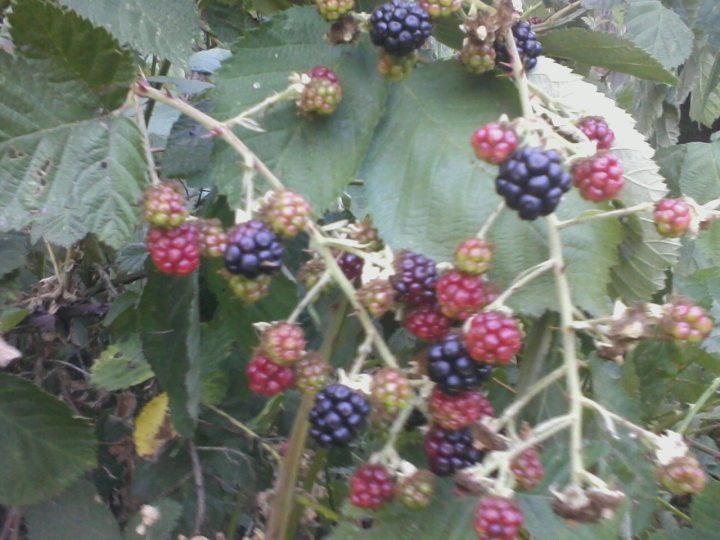
Their habit of overwhelming untended gardens gives blackberry canes a bad reputation. Their thicket like growth in their native habitats does not help. They are certainly not ‘low maintenance’ and need intensive specialized pruning later in the year. Yet, they become available with other bare-root plants this time of year for a reason. They make great blackberries!
New bare-root blackberry plants do not look like much when they are first planted, and do not produce berries in their first year. They will instead be busy dispersing roots and producing biennial canes that will produce berries the following year. Root barriers can prevent their aggressive roots from getting into neighbors’ gardens, particularly since south or west facing fences are just as practical for supporting trailing canes as trellises are.
‘Trailing’ types like ‘Marion’, ‘Boysen’ and ‘Olallie’ blackberries, which are also known as ‘boysenberry’, ‘marionberry’ and ‘olallieberry, are the most popular locally. ‘Erect’ types, like ‘Arapaho’, ‘Choctaw’ and ‘Navaho’ are more tolerant to frost, so are more popular where winters are colder. ‘Semierect’ types are hybrids of trailing and erect blackberries.
In their second year, trailing and semierect canes that grew during the first year should be trained onto trellises, fences or wires. As their fruit gets depleted later in summer, these canes can be cut to the ground. Some of the new canes that developed through the season need to be trained onto the same supports to replace the older canes as they get removed.
There should be more than enough new canes. About ten to fifteen of the best canes of trailing types should be selected and pruned to about six or seven feet long. Semierect types need about half as many canes, and can be pruned about a foot shorter. Extra canes should be cut to the ground. A few of the smaller extra canes can be left through summer to be separated with roots as new plants during the following winter.
Side branches that grow from the pruned canes through late summer and early autumn should get pruned to about a foot long at the end of the following winter. New growth from these stubs will produce fruit during the following summer. The process of replacing the old canes with new canes can be repeated as the fruit gets depleted. The process is similar for erect blackberries, but no support is needed. During the second year, canes should be cut to about two and a half feet tall in the middle of summer. Secondary branches from these canes should be cut to about a foot long in winter. As fruit gets depleted and replacement canes develop during the following summer, these mature canes can get cut to the ground. New canes then get pruned just like the older canes were.
 Tony Tomeo