Giant bird of Paradise may not look so good in its picture, but started the trend for these Six for this Saturday. White is my favorite color.
1. Strelitzia nicolai, giant bird of Paradise did not pose for a good picture, but impresses with its fancy bloom nonetheless. It bloomed nicely last year too, just three months after getting relocated from another garden. It is still canned, so is not even in the ground yet.

2. Nerium oleander, oleander reminds me that, contrary to the mild weather, it really is the middle of summer. This particular oleander was so overgrown and shabby from bad pruning for many years that it was coppiced. It worked so well that we could do it again.

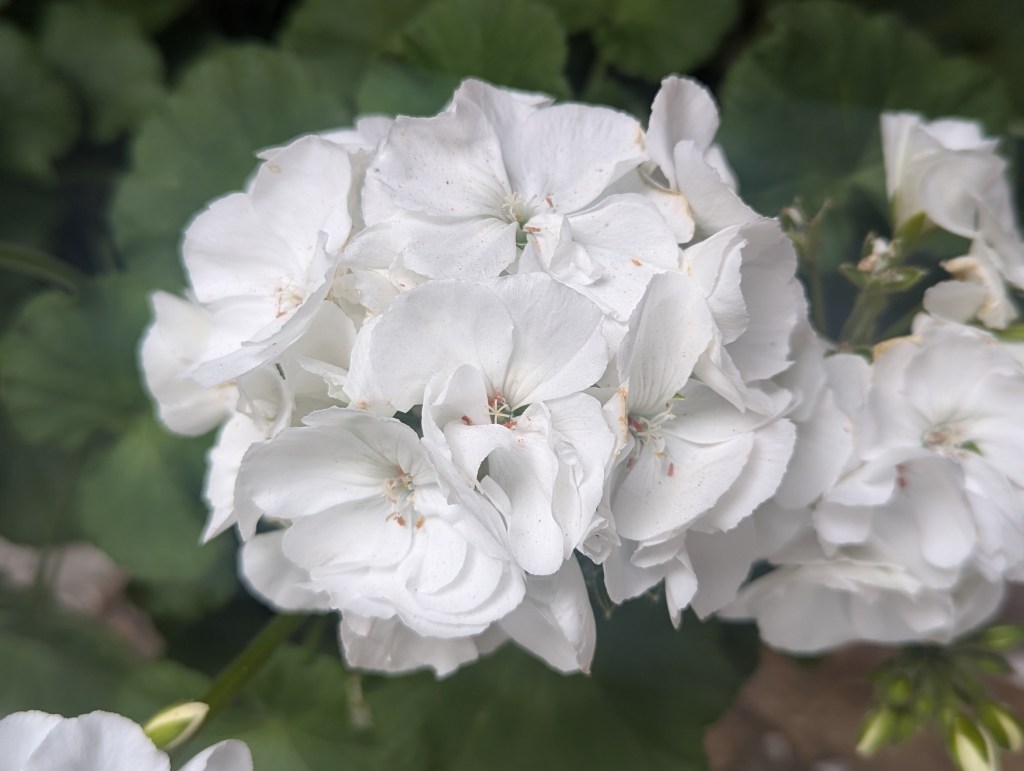
3. Pelargonium X hortorum, zonal geranium is a short term perennial, but provides too many replacement cuttings for extinction. I do not know how long it has been here, but I do enjoy propagating it now, not just because it blooms white, but also because it is easy.
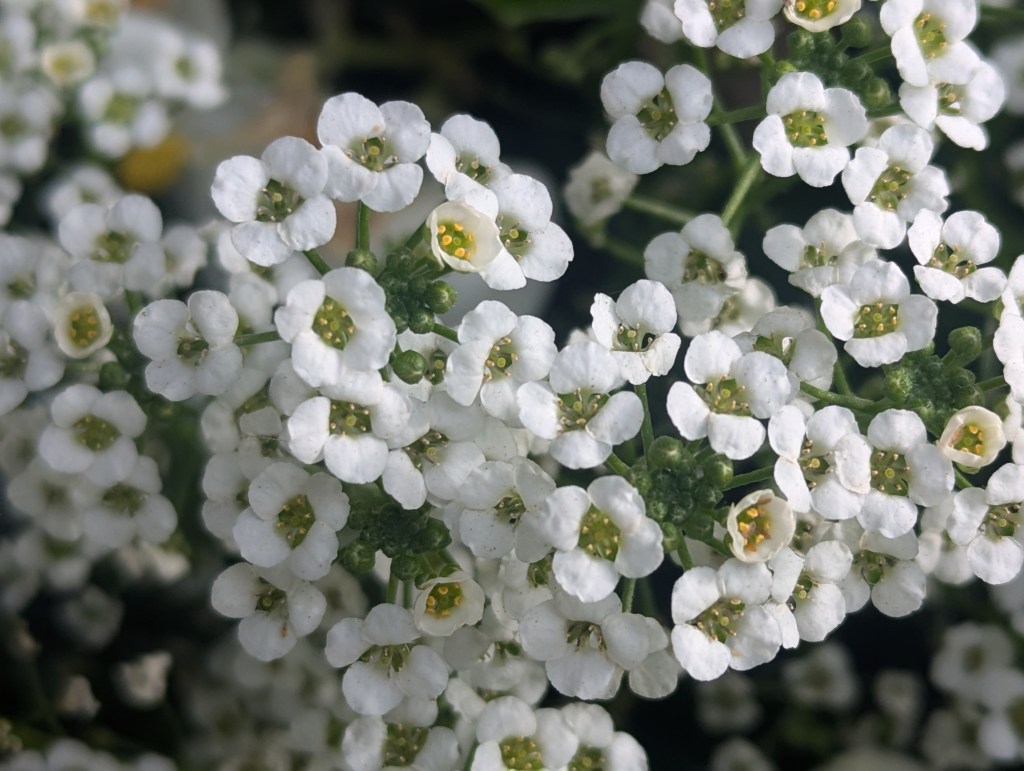
4. Lobularia maritima, sweet alyssum has been here a bit longer than expected also, but is not as perennial as zonal geranium. It was planted as a warm season annual early last summer. Because wax begonia is growing around it, it will not be replaced, but removed.
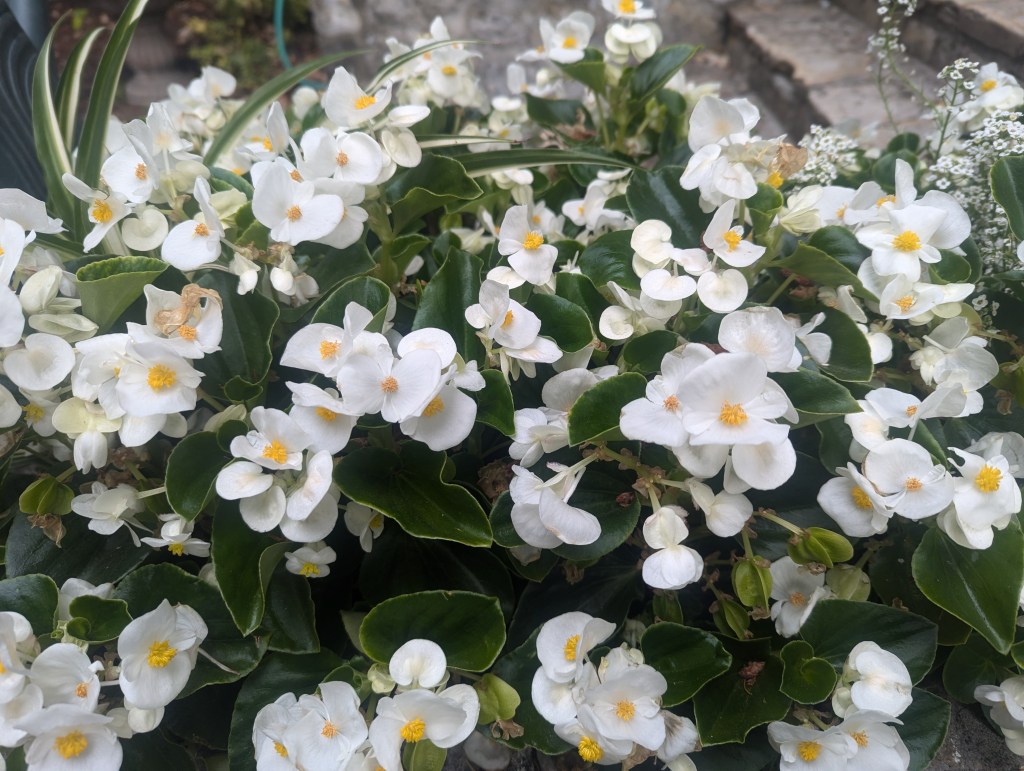
5. Begonia X semperflorens cultorum, wax begonia has been doing remarkably well now that it has its planter boxes within planter boxes to exclude aggressive redwood roots. It has been growing slowly but surely since last summer, so it now needs no replacements.
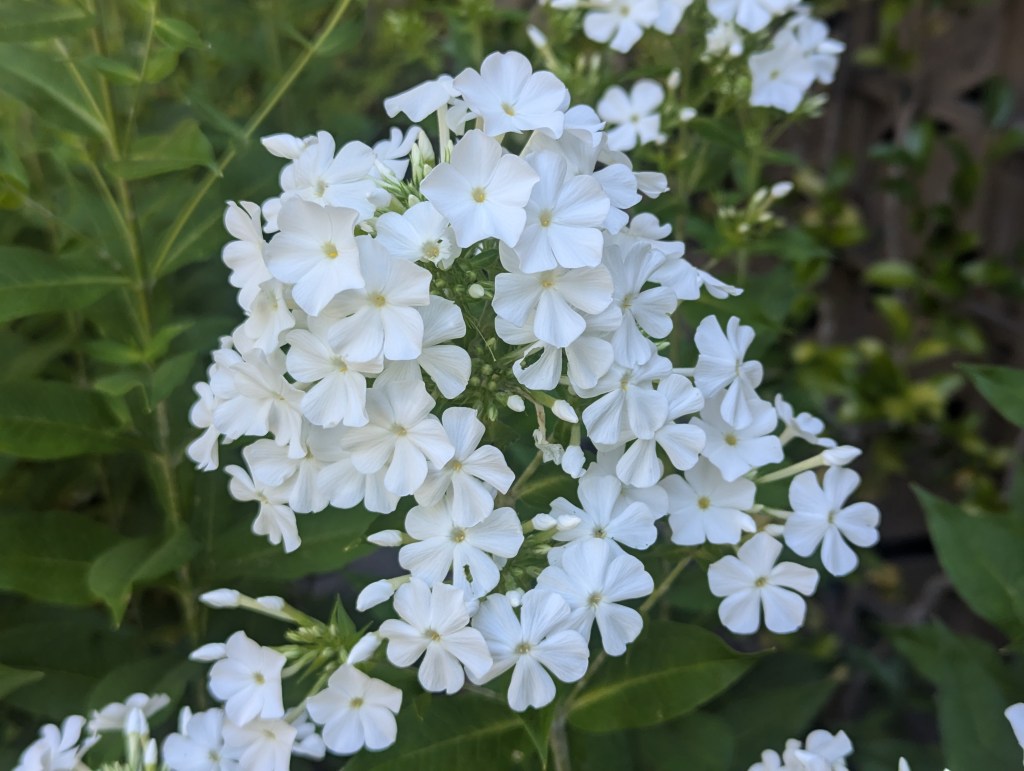
6. Phlox paniculata, garden phlox self sowed from an unknown source several years ago. It continued to self sow with such vigor that we thought it could become invasive. Then, it unexpectedly became docile, and now grows only where it is an asset to the landscape.
This is the link for Six on Saturday, for anyone else who would like to participate: https://thepropagatorblog.wordpress.com/2017/09/18/six-on-saturday-a-participant-guide/
 Tony Tomeo
Nice white six! I didn’t know the giant strelitzia is white. Love the oleander best though.
LikeLiked by 1 person
Giant bird of Paradise is more foliar than floral. The bloom is not as garish as that of the more common terrestrial bird of Paradise, but is a bonus when it happens. Oleander used to be so common here that it was the most common vegetation within freeway medians. Even now, I suspect that one could drive from San Jose to San Francisco on Highway 101 without ever losing sight of oleander.
LikeLike
I have white and purple alyssum in my pansy bowl on the front steps. The white blooms like crazy. The pruple, not so much.. No idea why. Nice whites. I have buckwheat, a single Shasta daisy survivor, and soon, the Asclepias verticillata will bloom its frothy white blooms.
LikeLiked by 1 person
Purple alyssum seems to be smaller than white alyssum, so even if it is covered with bloom, there is not as much of it. Feral alyssum is more fragrant, but not as colorful, and can look a bit weedier.
LikeLike
I can see a cluster of large white oleanders from my desk. They’ve almost finished for the year; the height of their bloom tends to be late May into early June. In fact, the city of Galveston has an annual oleander festival. The plant’s so tolerant of the hot, humid, salty conditions there that masses of variously colored plants fill the city.
That white begonia is gorgeous.
LikeLiked by 1 person
Oh, I forgot about the Oleander Festival. That still seems weird. It is such an overly common species that grows in freeway medians. Although I happen to be fond of it, I am also aware of its commonness.
LikeLiked by 1 person
It’s common, but it stands up well to heat, humidity, and salt spray — common conditions on the Island!
LikeLiked by 1 person
A white post! I enjoy it when there’s a color theme or another commonality in the choices. All the blooms are beautiful, but the Alyssum and the Lobularia are so lush and healthy!
LikeLiked by 1 person
? Alyssum and Lobularia are the same. I do a white theme every once in a while merely because white is my favorite color. Some of our white flowers are not quite as pretty as their counterparts, like white bougainvillea; but some excel at white, like callas!
LikeLike
I am loving the Phlox today. I like white as a foil to other colors. I think, in color theory, white is the absence of color.
LikeLiked by 1 person
Oh, the phlox is rad! I did not know what it was when it first arrived, since I had never seen phlox before. I can see why it is so popular elsewhere. I still have no idea how it got here.
LikeLiked by 1 person
I had Davidii phlox in Atlanta –
LikeLiked by 1 person
That seems to be the popular one, and outside of the West, everyone else seems to be familiar with it.
LikeLiked by 1 person
The Phlox is quite lovely in pure white, and I have never seen a white Oleander either. I think the white looks nice if you have a lot of greenery around it.
LikeLiked by 1 person
Both phlox and oleander excel at white. (Some flowers are too pretty in other colors to be as pretty in white.) White oleander is the most common sort here. It is VERY common.
LikeLike
Amazing. Only pink ones here! And they all get put into garages or sunrooms over winter as they would freeze outside.
LikeLiked by 1 person
Is the bloom fragrant, and followed by odd pods of fuzzy seed? If so, it is not a fancy overly bred sort, or may even be the straight species.
LikeLike
No, I have never seen fluffy seedpods or noticed fragrance. But I DID see some ‘off-white’ ones at the garden centre yesterday so they are around, just not so popular perhaps.
LikeLiked by 1 person
Off white with double flowers might be a cultivar that is rare even here. They look almost very pale orange or yellow from a distance.
LikeLiked by 1 person