Not many fruit trees have been in cultivation for as long. After several thousands of years of breeding, there are quite too many cultivars to count. Pomegranate, Punica granatum, is now common in many regions throughout the World. It is particularly productive within Mediterranean climates, including locally. Bare root trees are now available in nurseries.
Without pruning, old trees can grow fifteen feet tall, with dense and thorny thicket growth. Fruit is easier to collect from tamer trees that are subject to regular thinning and pruning. Individual trees typically develop a few trunks, but can have only one. They may survive for centuries. Ruddy orange flowers bloom for spring. Foliage yellows prior to defoliation.
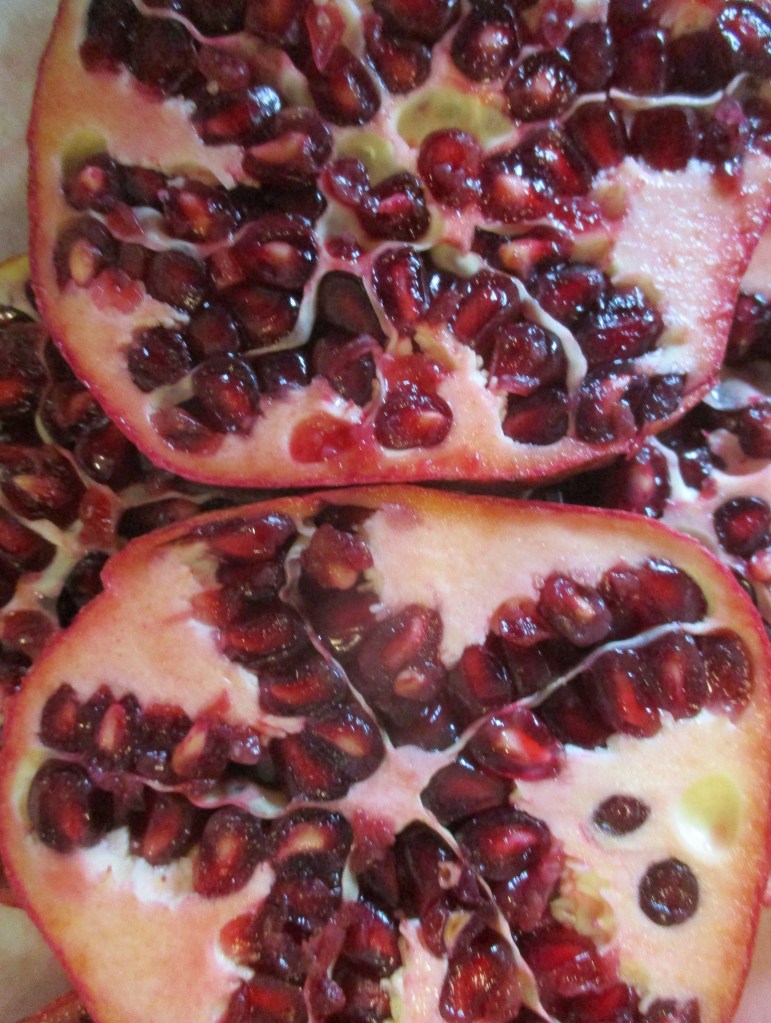
Pomegranate fruit ripens so late during autumn that it can linger after autumn defoliation. It is generally brownish red. Individual fruits are about three or four inches wide, but may be wider. They contain hundreds of seeds, which are surrounded by juicy and succulent flesh. Such flesh is generally garnet red, but might be purplish, pinkish or even colorless. Flowers are edible too.
 Tony Tomeo