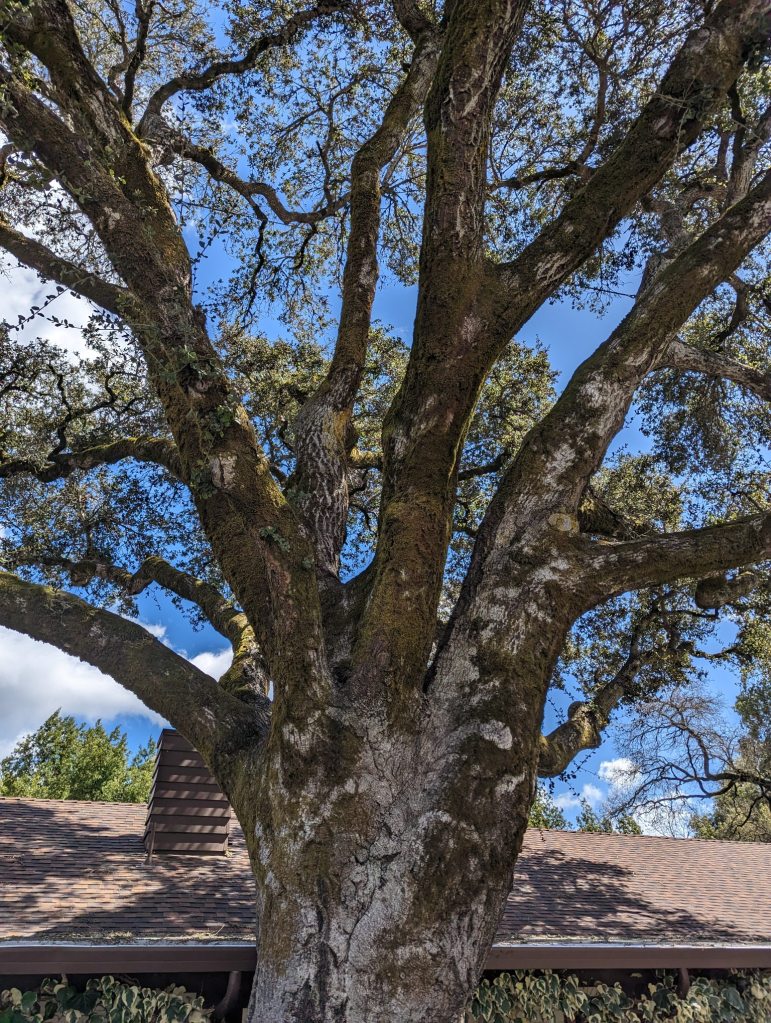
Coast live oak, Quercus agrifolia, is more adaptable in the wild than in home gardens. It can grow in groves or mix with other tree species, particularly at the coast. Alternatively, it can grow solitarily in open grassland, particularly inland. Solitary specimens can be a few centuries old. They can grow as tall and wide as seventy-five feet, with a few trunks.
Within irrigated home gardens, though, coast live oak likely does not survive for as long. It is impossible to know because no home garden here is a few centuries old. With water, young specimens mature faster than they would in the wild. Once established though, no irrigation is needed. Mature wild specimens often succumb to root rot with new irrigation.
Coast live oak is more appealing in the wild than within home gardens anyway. It sheds foliar debris continually, particularly as new foliage emerges during spring. Although it is technically evergreen, it replaces its foliage annually. Its foliar debris is mildly herbicidal to delicate plants below, and stains pavement. Every few years, acorns are very prolific. Seedlings can appear in the oddest of situations.


I enjoyed your previous post, and this one, too. We have a backyard full of Oaks–not as large as the Live Oaks, but we have several species in the back woodland. They were all here when we moved in many years ago.
LikeLiked by 2 people
Not many oaks are as big as the big live oaks, but the valley oak is the biggest oak species.
LikeLike