These are a few less than glamorous pictures from work, featuring normal deterioration, insect infestation, and desiccation. It will all work out in the end.
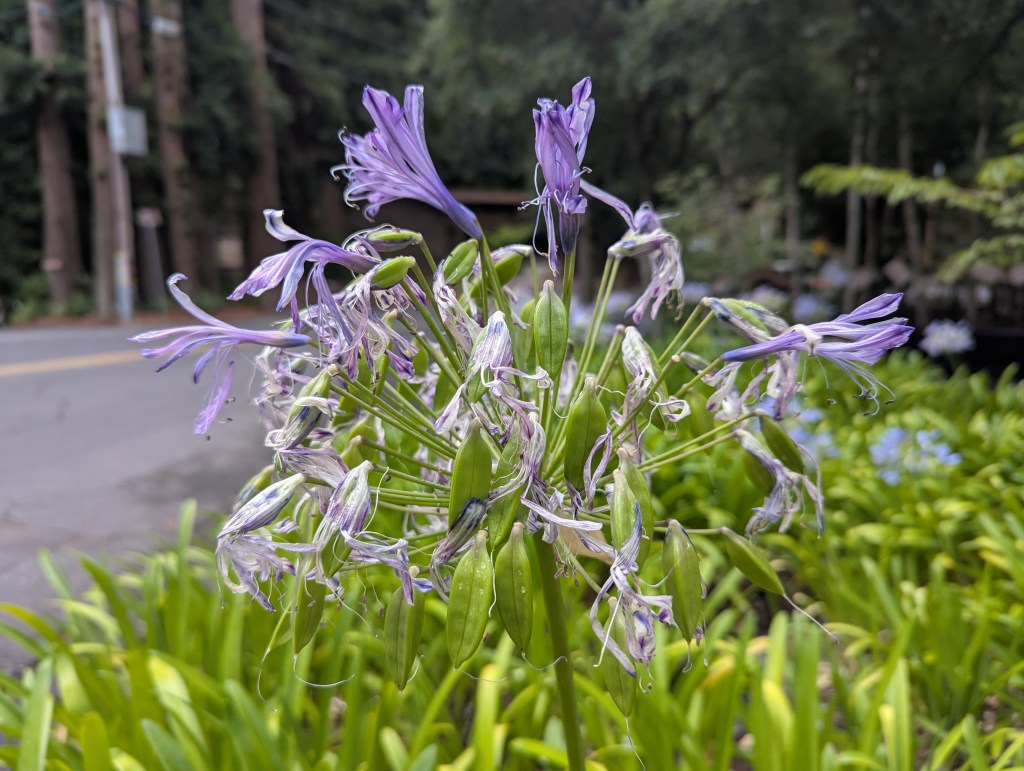
1. Agapanthus orientalis, lily of the Nile is slowly finishing its bloom cycle. Its florets are shriveling as its seed pods are growing. Blooms might stay until they look about like this.
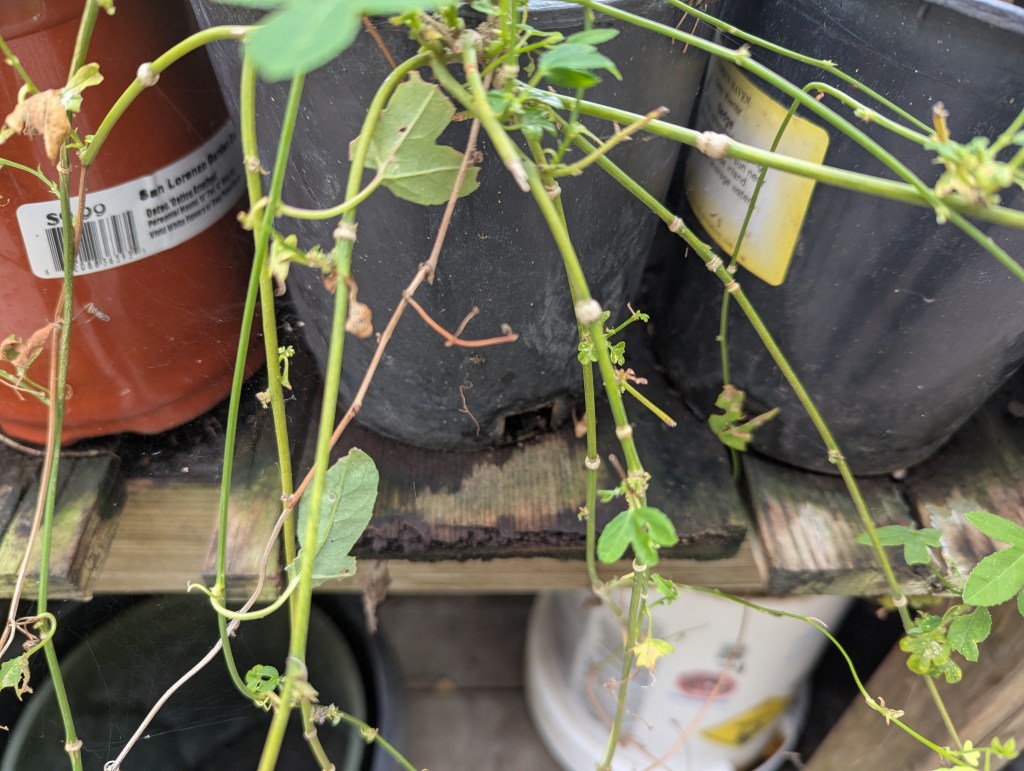
2. Passiflora coccinea, red passion flower vine rarely has much intact foliage on it. Fuzzy caterpillars defoliate it as fast as it can grow. The caterpillars are active most of the year.
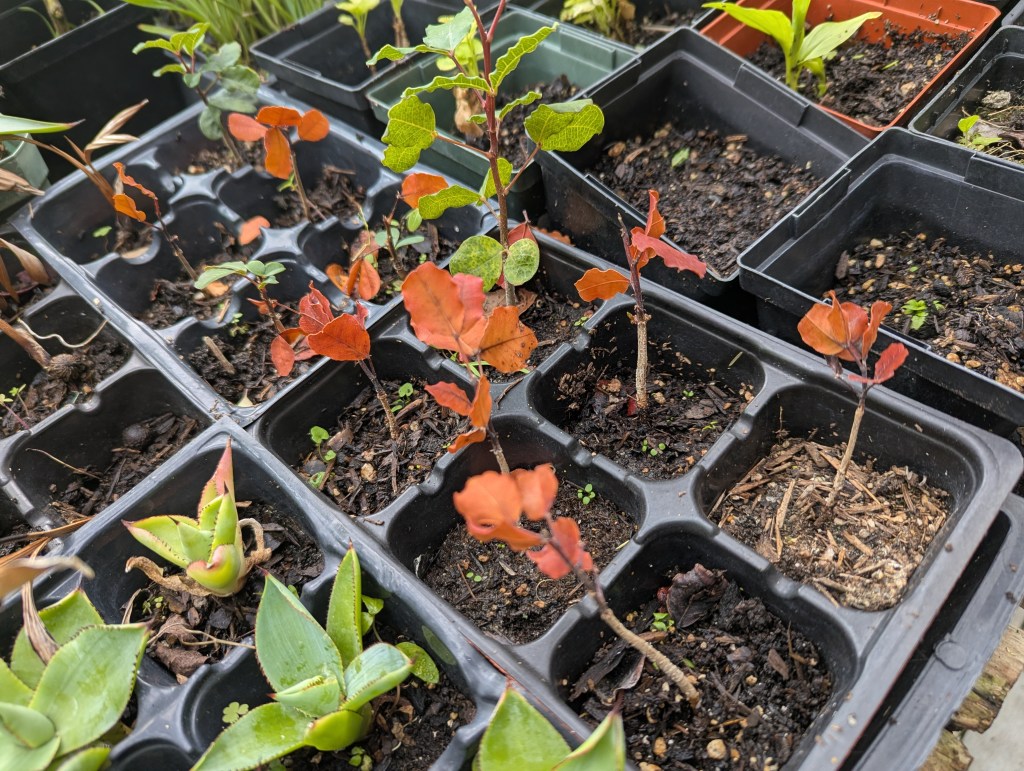
3. Ceratonia siliqua, carob seedlings succumbed to a very brief lapse of irrigation during warm weather. Fortunately, there were already more than enough, and enough survived.
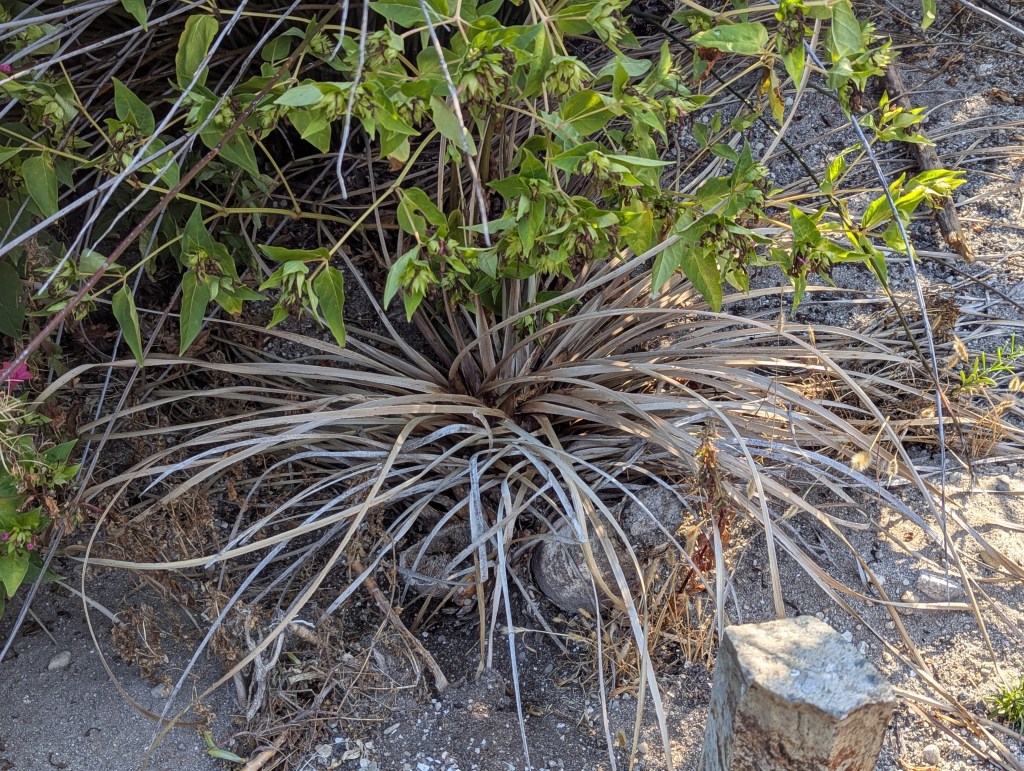
4. Hesperoyucca whipplei, our Lord’s candle generated hefty pups as its original rosette bloomed and died. The pups are now dead. Maybe this subspecies really is monocarpic.
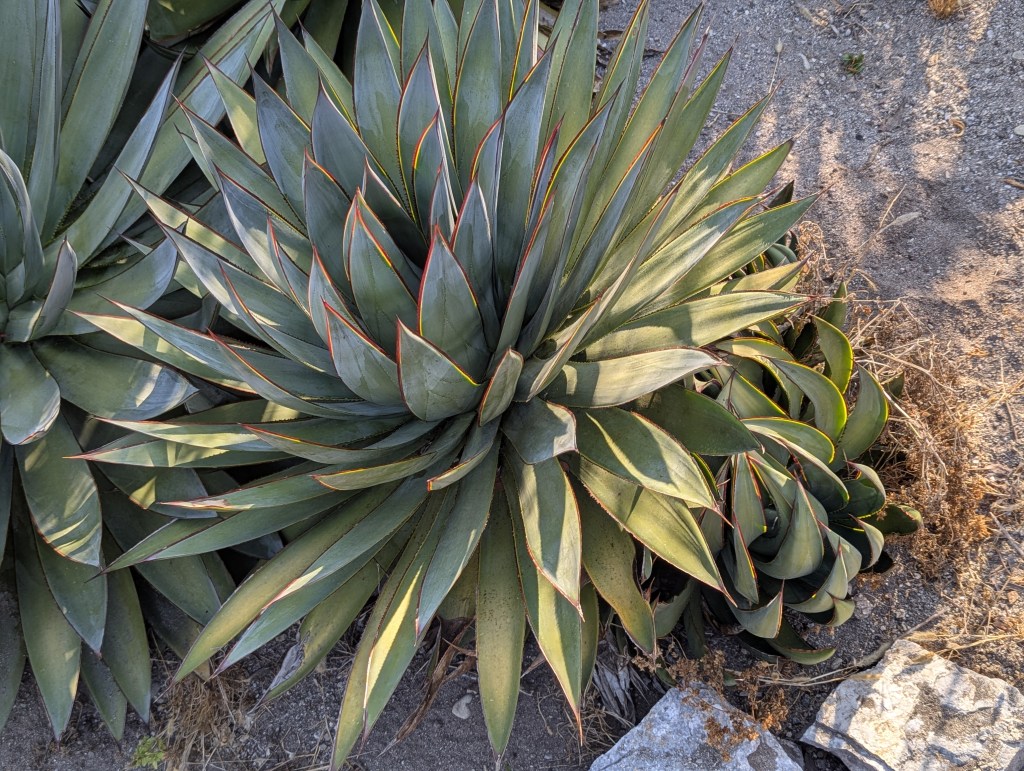
5. Agave attenuata X ocahui ‘Blue Glow’ agave is demonstrating how it is done properly. Now that it is generating young pups, the original rosette will likely bloom and die soon.
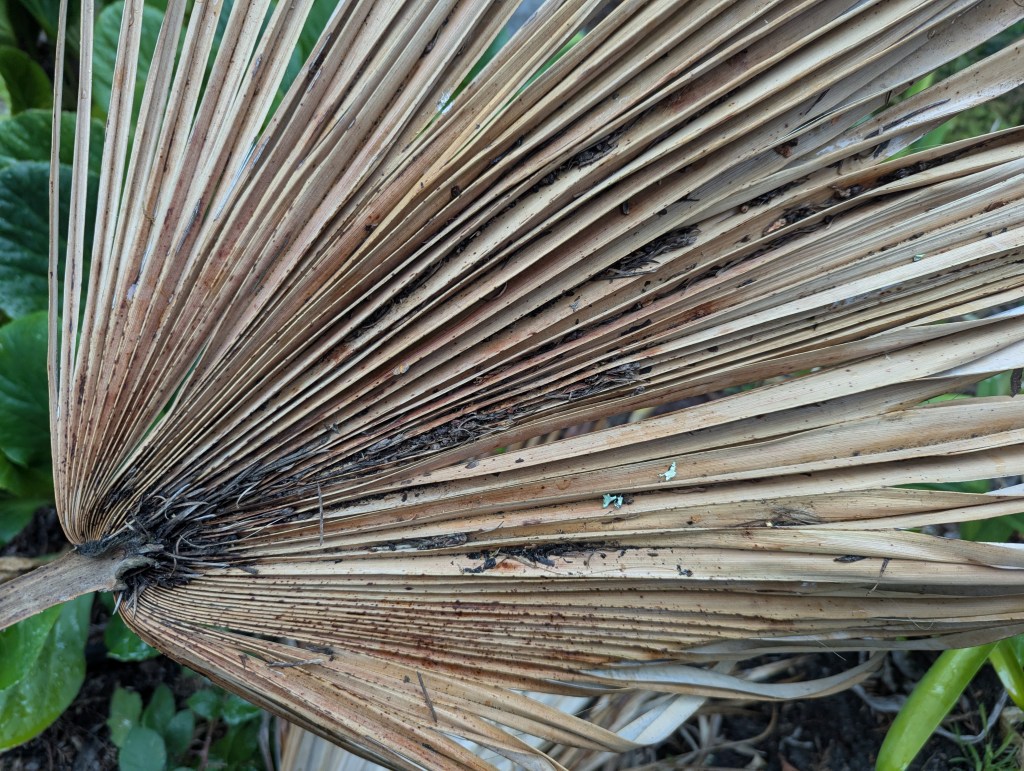
6. Trachycarpus fortunei, windmill palm abandones an old leaf below for every new leaf that it extends above. I cut the old leaves off to keep it looking tidy. It is notably healthy.
Anyone who would like to participate in this meme should peruse this participant guide for Six on Saturday.
 Tony Tomeo
2 things: regarding the Trachycarpus fortunei, do you gardeners in your area clean the trunk using the technique known here as “banding” ( cerclage in French) ? It’s easy with other palms, but trickier with the windmill palm. Also, I don’t have any caterpillars on my passionflowers here; however, since I do have them on my cabbages, I spray *Bacillus thuringiensis*. It’s an organic solution that keeps caterpillars away for 3 months, wherever it’s applied.
LikeLiked by 1 person
Banding is rare here. I have seen it on Canary Island date palms with smooth trunks, and on only a few Mexican fan palms. I have never seen it on a windmill palm.
The caterpillars on the passion flower vine is not enough of a problem to justify spraying, even with Bacillus thuringiensis. I keep hoping that the vine will grow faster than the caterpillars can proliferate.
LikeLiked by 1 person
Tks for the banding opinion. That was my thought too.
LikeLiked by 1 person
I may rant about the Frozen North but one good thing is no year round pests (except occasionally in mild winters, ticks may stay active. But those are people pests–that’s a different problem!)
LikeLiked by 1 person
Those caterpillars are more of a nuisance than a serious pest. They annoy me, but not enough for me to do anything about them. Fortunately, they eat only the passion flower vines.
LikeLiked by 1 person
Oh dear. Well at least the agave is thriving.
LikeLiked by 1 person
So are the lily of the Nile and windmill palm. They just do not look like it in these pictures.
LikeLike
You’ve got me lusting over Agave ‘Blue Glow’ now, I must see if I can find it over here.
LikeLiked by 1 person
Goodness, your garden is already crowded! ‘Blue Glow’ agave might be a bit too much. Besides, you already got the variegated Yucca gloriosa.
LikeLike
What kind of caterpillars? What do they become? Interesting – the Agave puts on pups and then blooms, whereas my Tillandsia have the opposite strategy, bloom and then pup. Ok, not all of them. T neglecta pups continuously and has not bloomed in my hands, so I have no idea what to expect. Also, the pups tend to fall off, so I have these darn things accumulating on the wndowsill. Growing slowly.
LikeLiked by 1 person
When I posted a picture of the caterpillars earlier, another blogger mentioned that they were fritillary larvae. The agave may have initiated bloom before pups, but it takes a very long time for bloom to become apparent.
LikeLike