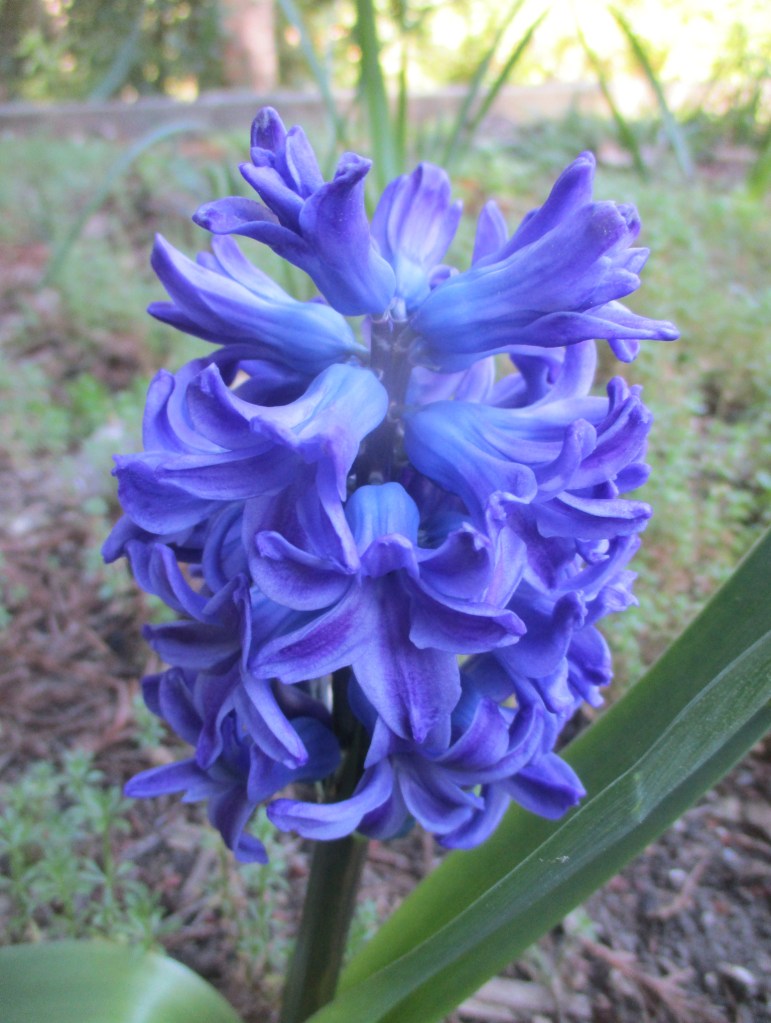
Autumn is time for planting. This does not apply to all plants, but is certainly relevant to spring bulbs. Many have been available from nurseries for a while already. They all are dormant by late summer or early autumn. So, they are unaware of their relocation from their farms to home gardens. They will learn about it when the resume growth next year.
Actually, though, spring bulbs begin growth sooner than that. It merely does not become visible until foliage emerges above its soil after midwinter. Roots begin to disperse when their soil is dampened either by irrigation or rain. Growth is initially slow because of cool autumn and winter weather. It accelerates as weather warms, as spring replaces winter.
Spring bulbs know how the seasons change from temperature. They adjust their growth accordingly. They know that they can disperse roots early. They delay other growth until after a specific duration of cool weather, or vernalization. From the nursery, many spring bulbs are prechilled, or already vernalized. That is why they are so conducive to forcing.
Summer bulbs prefer later planting because they do not need vernalization to bloom. In fact, some are susceptible to rot if they must overwinter in cool and damp soil. They are more resilient once established, after their first summer. These include gladiola, canna, calla, dahlia, tuberous begonia and most lily. They become available after spring bulbs.
Because winter is so mild here, some spring bulbs are unreliable after their first season. They may not receive the degree of chilling, or vernalization, that they require. Hyacinth and tulip, for examples, may bloom only once for their first spring. Afterward, they might not be reliably perennial. Dutch iris and Dutch crocus are only somewhat more reliable.
Freesia and narcissus, including daffodil, are some of the most reliable of spring bulbs. Within favorable conditions, they can multiply and slowly migrate. Grape hyacinth might actually become slightly invasive. Ranunculus and anemone may be reliably perennial, but may not bloom much. Bluebells are supposedly very reliable but remain uncommon.


Thanks for all the great info! The summer-blooming bulbs tend to be a little trickier in my zone 5b climate. I dig up the Gladioli and I tend to keep most of the others in nearly dry pots in the sunroom during the winter. Then I slowly add more water as the late winter sun increases. It’s amazing how any bulbs survive temperatures below 0F/-18C, although I realize the ground is warmer than the air temperature.
LikeLiked by 1 person
The summer bulbs are awkward to write about here because most of us leave them in the ground once planted. Gladiolus can survive through winter in the garden, but not many get enough chill to bloom again. They would likely perform better if they were dug and chilled in a refrigerator.
LikeLike